

A single batch of corroded stamping parts nearly cost one of our U.S. clients an entire production run — and that painful lesson reshaped how we manage rust prevention and storage across every project we handle.
Rust prevention and storage for stamping parts demands a layered strategy: clean and dry parts immediately after processing, apply suitable corrosion inhibitors or protective oil coatings, use VCI packaging, maintain relative humidity below 50%, and inspect regularly. Skipping any step risks costly metal oxidation and rework.
This guide walks through every stage of the process — from choosing the right method to verifying your supplier’s protocols ASTM B117 1. Whether you source brackets, mounting hardware, or precision stampings from Asia, the details below will help you protect quality from press to warehouse to final delivery.
How Do I Choose the Right Rust Prevention Method for My Stamping Parts?
When we co-develop a new stamping bracket with a client's engineering team, one of the first questions we raise is: what environment will this part face between our factory floor and your assembly line? The answer drives everything.
Choose your rust prevention method based on the base metal, storage duration, and downstream process requirements. Carbon steel needs aggressive treatment like phosphating or protective oil coating, while stainless steel may only need passivation. Match the method to your part's lifecycle, not just its material.

Understanding Why Stamping Parts Rust
Metal oxidation starts the moment a freshly stamped part contacts air and moisture. Stamping oils, fingerprint salts, and residual cutting fluids create micro-environments where corrosion accelerates. I have seen raw steel brackets develop visible rust spots within 48 hours in a humid Vietnamese workshop — before they even reached the packing station.
The core chemistry is simple. Iron reacts with oxygen and water to form iron oxide 2. But in practice, many triggers speed this up: halogen-containing lubricants, acidic residues from pickling, or even condensation from temperature swings during ocean freight. Each trigger calls for a different countermeasure.
Surface Treatment Options at a Glance
Our process engineers evaluate surface treatments based on cost, protection level, and compatibility with the client's downstream operations. Here is how the main options compare:
| Surface Treatment | Best For | Protection Level | Cost | Notes |
|---|---|---|---|---|
| Phosphating 3 | Carbon steel, mass production | Moderate | Low | Creates iron phosphate film; good for short-to-medium storage |
| Pickling | Small-batch, high-value parts | High | Medium–High | Uses acid to form protective salt film |
| Anodizing | Carbon steel or aluminum | Very High | Medium–High | Generates thick oxide layer with excellent corrosion resistance |
| Electroplating 4 (zinc, nickel) | Parts needing long-term outdoor exposure | Very High | High | Adds a sacrificial or barrier metal layer |
| Passivation 5 | Stainless steel | High | Low–Medium | Removes free iron from surface, enhances native oxide layer |
| Protective Oil Coating | WIP parts, short-term storage | Moderate | Low | Must be compatible with downstream cleaning or welding |
Matching Method to Part Lifecycle
A powder-coated black bracket destined for automotive assembly needs a different approach than a raw steel post base stored in a distributor's warehouse for six months. When we manage PPAP documentation for a client, we define the rust prevention method during the control plan stage — not as an afterthought.
For work-in-progress parts, we often apply a water-displacing rust preventative to stop "flash rust" between manufacturing stages. For finished goods heading to the U.S., we layer the strategy: surface treatment plus protective oil plus VCI packaging. The key is to match protection intensity to exposure time and environmental risk.
What Storage Conditions Help Prevent Corrosion During Shipping and Warehousing?
One lesson I learned early in our Vietnam operations: a warehouse that feels "dry enough" to walk through can still destroy unprotected steel parts. We installed digital hygrometers in our staging areas and discovered afternoon humidity regularly spiked above 70% — well into the danger zone.
Store stamping parts in a climate-controlled warehouse with relative humidity below 50% (ideally 30–40%), stable temperatures around 20–25°C, and good ventilation. Elevate parts at least 150 mm off concrete floors, separate dissimilar metals, and use desiccant packs inside sealed containers to absorb residual moisture.
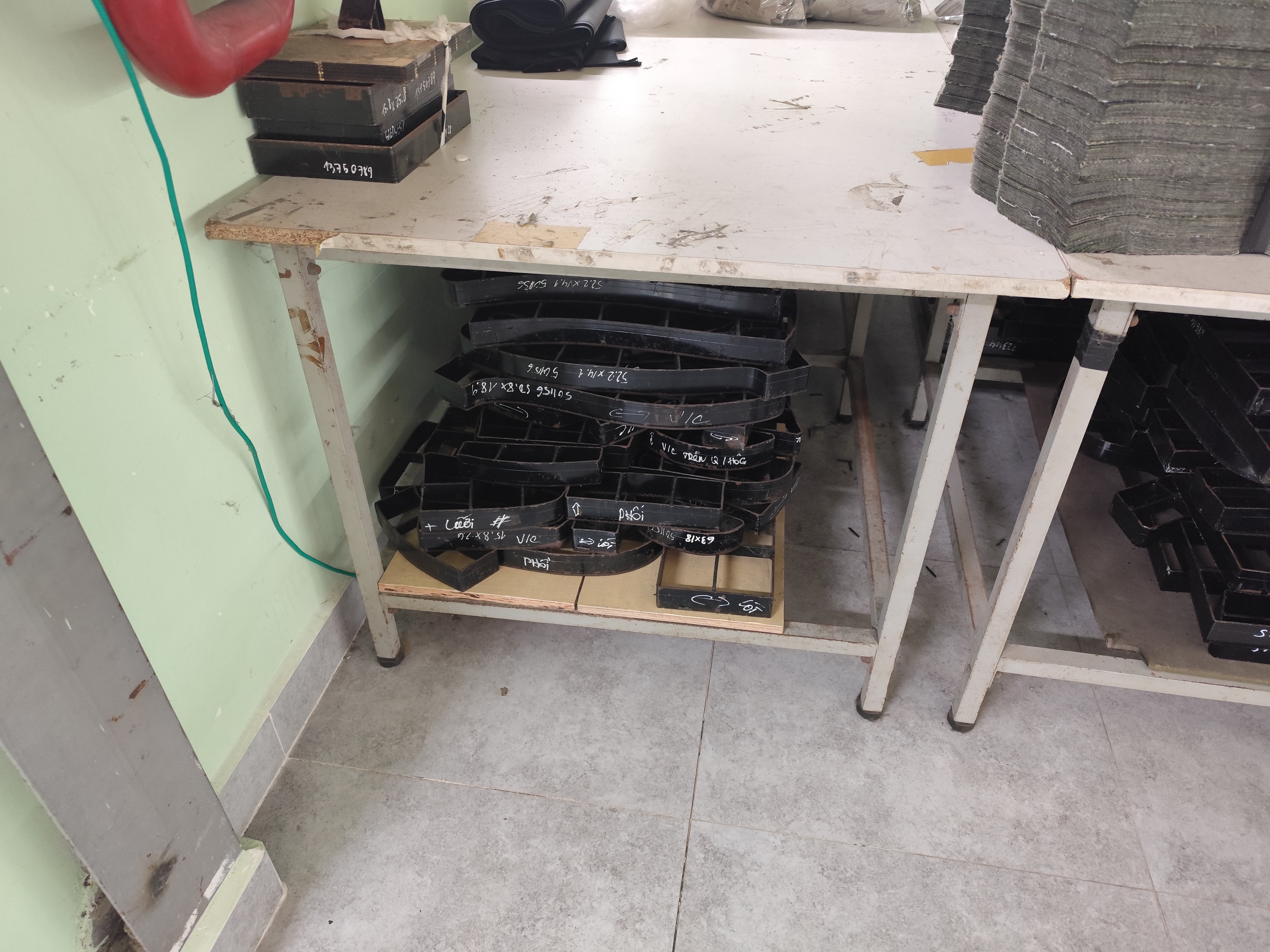
Humidity and Temperature Targets
Relative humidity control is the single most important environmental factor. Below 50% is the standard target for long-term storage. Some operations accept 60% for short stays, but our experience shipping to the U.S. East Coast — where transit can take four to six weeks — has taught us to aim tighter.
Temperature matters too, but mainly because of what temperature swings do. When warm, humid air hits a cool metal surface, condensation forms. This is why we ensure parts cool to ambient temperature before wrapping, and why we avoid loading containers in the heat of the day when possible.
| Storage Factor | Target | Why It Matters |
|---|---|---|
| Relative Humidity | < 50% (ideal: 30–40%) | Above 50%, moisture absorption accelerates metal oxidation on uncoated steel |
| Temperature | 20–25°C, stable | Rapid fluctuations cause condensation on metal surfaces |
| Floor Elevation | ≥ 150 mm on pallets | Concrete wicks ground moisture upward into packaging |
| Ventilation | Controlled dry airflow | Stagnant humid air pools around parts, especially in sealed rooms |
| Metal Separation | Store dissimilar metals apart | Contact between galvanized and bare steel triggers electrochemical corrosion |
Practical Humidity Control Tools
In our China facility, we use industrial dehumidifiers combined with air conditioning to maintain conditions year-round. Smaller storage areas benefit from desiccant packs — silica gel 6, clay-based, or calcium chloride sachets placed inside sealed bags or crates.
For ocean freight, we place container desiccant strips rated for the voyage length. A 20-foot container can experience temperature swings of 30°C during transit from Southeast Asia to the U.S., generating significant condensation — sometimes called "container rain." Desiccant packs inside the container and inside individual cartons work together to protect stamping parts from moisture and impact during ocean shipping.
Inventory Rotation and Inspection
We follow a strict First-In, First-Out 7 inventory rotation protocol. Parts that sit longest face the most risk. Our warehouse team inspects stored stamping parts on a monthly cycle, checking for pitting, discoloration, or weakening of the protective oil film.
If a batch shows early signs of corrosion, we pull it immediately, re-clean, re-coat, and repackage. We log every inspection in an anti-rust ledger that tracks maintenance dates, treatment methods, and storage locations. This data helps us predict which storage positions or seasons present the highest risk, and we share these findings with our clients during quarterly reviews.
How Do I Verify My Supplier's Rust Prevention Process Before Placing an Order?
During a recent supplier audit at a stamping factory in Vietnam, I asked to see their rust prevention SOP. The production manager pointed at a can of WD-40 on a shelf. That told me everything I needed to know about the gap between assumption and reality.
Verify your supplier's rust prevention process by requesting their documented SOP, inspecting their storage conditions in person or via video audit, reviewing salt spray testing reports, checking for VCI packaging capabilities, and confirming they track anti-rust treatment in their quality control records. A credible supplier can show you the data, not just tell you about it.

What to Ask Before You Commit
Purchasing managers often focus on dimensional tolerances and material certs — and rightly so. But rust prevention deserves equal scrutiny, especially for parts that will spend weeks in transit and more time in a U.S. distributor's warehouse.
Here is a practical checklist we use when qualifying a new stamping supplier for our clients:
- Request the written SOP for post-stamping treatment. It should describe cleaning agents, drying methods, coating type, and application procedure.
- Ask for salt spray testing results. This standardized test (ASTM B117 8) measures how many hours a treated surface resists corrosion in an accelerated salt fog chamber. For carbon steel with a zinc electroplating finish, you should see a minimum of 96–200 hours depending on the spec.
- Inspect the storage area. Look for hygrometers, dehumidifiers, palletized storage, and separation of dissimilar metals. If the factory floor doubles as the storage room, that is a red flag.
- Check packaging materials. Do they stock VCI paper, VCI film, or only generic stretch wrap? Ask to see the VCI supplier's technical data sheet.
- Review the quality control plan. Rust prevention steps should appear in the process flow and control plan — not as a verbal instruction from one operator to another.
Red Flags vs. Green Flags
| What You Observe | Red Flag | Green Flag |
|---|---|---|
| Rust prevention SOP | No written document; verbal instructions only | Documented, version-controlled procedure with operator sign-off |
| Storage environment | No humidity monitoring; parts on floor | Hygrometers visible; parts on pallets; dehumidifier running |
| Packaging materials | Generic plastic bags, no desiccant | VCI film/paper, desiccant packs, sealed containers |
| Salt spray test data | "We don't do that" or no records | Reports on file with hours-to-rust data per surface treatment |
| Glove protocol | Operators handle parts bare-handed | Clean gloves mandatory; glove station at each workbench |
| Anti-rust ledger | No tracking system | Ledger or digital system logging treatment dates and methods |
Why This Matters for Your Bottom Line
When we run final inspections before shipment, catching rust at the factory saves our clients enormous cost. A corroded batch that arrives at a U.S. port means returns, rework, production delays, and strained relationships with end-customers. The cost of verifying the process upfront is a fraction of the cost of failure downstream.
We have also found that suppliers who take rust prevention seriously tend to take everything else seriously too — dimensional accuracy, surface finish, on-time delivery. It is a reliable proxy for overall process discipline. When our team in China or Vietnam audits a supplier, the rust prevention area is one of the first stops on the factory walk.
What Packaging Solutions Protect Stamping Parts From Moisture and Oxidation?
The trade-off between packaging cost and corrosion risk is one we navigate on nearly every project. A client sourcing raw steel post bases once pushed back on VCI packaging as an unnecessary expense — until a container of parts arrived in Houston with orange rust blooming across every surface.
The most effective packaging solutions combine VCI (Volatile Corrosion Inhibitor) paper or film with desiccant packs inside moisture-barrier bags or sealed containers. For high-value or long-transit parts, vacuum packaging eliminates oxygen entirely. Layer protection: wrap individual parts in VCI material, add desiccant, then seal inside a moisture-proof outer bag or crate.

How VCI Packaging Works
VCI packaging is now the dominant technology for protecting stamping parts during storage and transit. The principle is elegant: VCI molecules embedded in paper or film gradually release as a vapor. This vapor settles on all exposed metal surfaces — including recessed areas that oil cannot reach — and forms a molecular-thin protective layer that blocks moisture and oxygen from contacting the metal.
Unlike traditional protective oil coating, VCI does not need to be manually applied to every surface. It works passively inside a sealed enclosure. When the part is unwrapped, the VCI layer dissipates harmlessly, and the part is ready for use without cleaning. This makes VCI especially attractive for parts that feed directly into welding, painting, or assembly lines.
Packaging Method Comparison
| Packaging Method | Protection Level | Best Use Case | Cost | Downstream Impact |
|---|---|---|---|---|
| VCI Paper/Film | High | Long-term storage, ocean freight | Medium | No cleaning needed; VCI evaporates on exposure |
| Vacuum Packaging 9 | Very High | High-value precision parts | High | Eliminates oxygen; parts may need re-oiling after opening |
| Moisture-Proof Cardboard | Moderate | Short-term domestic shipping | Low | Adequate for < 2 weeks in controlled environments |
| Plastic Film Wrap | Low–Moderate | Dust and scratch protection | Low | Does not block moisture vapor effectively alone |
| Sealed Container + Desiccant | High | Spare parts, long warehouse stays | Medium–High | Requires desiccant monitoring and replacement |
| Anti-Rust Paper + Plastic Film | Moderate–High | Medium-term storage (1–3 months) | Low–Medium | Effective when humidity is partially controlled |
Layered Packaging in Practice
Our standard packaging protocol for stamping brackets and mounting hardware going to the U.S. follows a layered approach:
- Clean and dry each part thoroughly to remove stamping oils and residues.
- Apply a thin protective oil coating if the client's downstream process allows it.
- Wrap individual parts or small groups in VCI paper or VCI film.
- Place desiccant packs inside the sealed bag — we size the desiccant to the volume of the enclosure and the expected transit duration.
- Seal the outer bag using a moisture-barrier film. For ocean freight, we use thicker gauge polyethylene or aluminum-laminate bags.
- Pack into corrugated cartons reinforced for stacking, then palletize.
For especially sensitive parts — like unpainted steel post bases with open channels and weld seams — we sometimes add a vapor-phase rust-proof block inside the sealed bag for extra long-haul insurance.
Emerging Trends Worth Watching
Some of our clients have started asking about bio-derived, VOC-free corrosion inhibitors. These reduce workplace safety concerns and simplify wastewater disposal at the factory. We are also exploring IoT-based environmental sensors that sit inside sealed crates and transmit humidity and temperature data during transit. This gives real-time visibility into whether the packaging held up across the Pacific.
Predictive "corrosion mapping" software is another development on the horizon. The idea is to simulate transit conditions — temperature curves, humidity profiles — for specific shipping routes and then tailor the packaging strategy accordingly. We have not implemented this yet, but it aligns with the data-driven quality approach our clients expect.
Conclusion
Rust prevention and storage for stamping parts is not a one-time step — it is a continuous process from press to delivery. Clean, coat, package, control your environment, and inspect regularly. Get these layers right, and you protect both quality and your bottom line.
Frequently Asked Questions
How Do I Choose the Right Rust Prevention Method for My Stamping Parts?
When we co-develop a new stamping bracket with a client's engineering team, one of the first questions we raise is: what environment will this part face between our factory floor and your assembly line? The answer drives everything.
What Storage Conditions Help Prevent Corrosion During Shipping and Warehousing?
One lesson I learned early in our Vietnam operations: a warehouse that feels "dry enough" to walk through can still destroy unprotected steel parts. We installed digital hygrometers in our staging areas and discovered afternoon humidity regularly spiked above 70% — well into the danger zone.
How Do I Verify My Supplier's Rust Prevention Process Before Placing an Order?
During a recent supplier audit at a stamping factory in Vietnam, I asked to see their rust prevention SOP. The production manager pointed at a can of WD-40 on a shelf. That told me everything I needed to know about the gap between assumption and reality.
Footnotes
1. Cites the official standard for salt spray corrosion testing referenced in supplier verification. ↩︎
2. Explains the core chemistry of rust formation referenced in the article. ↩︎
3. Background on the phosphate conversion coating process used for carbon steel treatment. ↩︎
4. Wikipedia reference explaining the zinc/nickel plating process mentioned in the treatment table. ↩︎
5. Background on the passivation process used for stainless steel corrosion resistance. ↩︎
6. Background on desiccant material commonly used to control moisture in packaging. ↩︎
7. ISO relates to standardized inventory and quality management practices referenced in warehouse rotation. ↩︎
8. Official standard reference for the salt spray testing method cited in the article. ↩︎
9. Explains the vacuum packaging technology used for high-value precision stamping parts. ↩︎