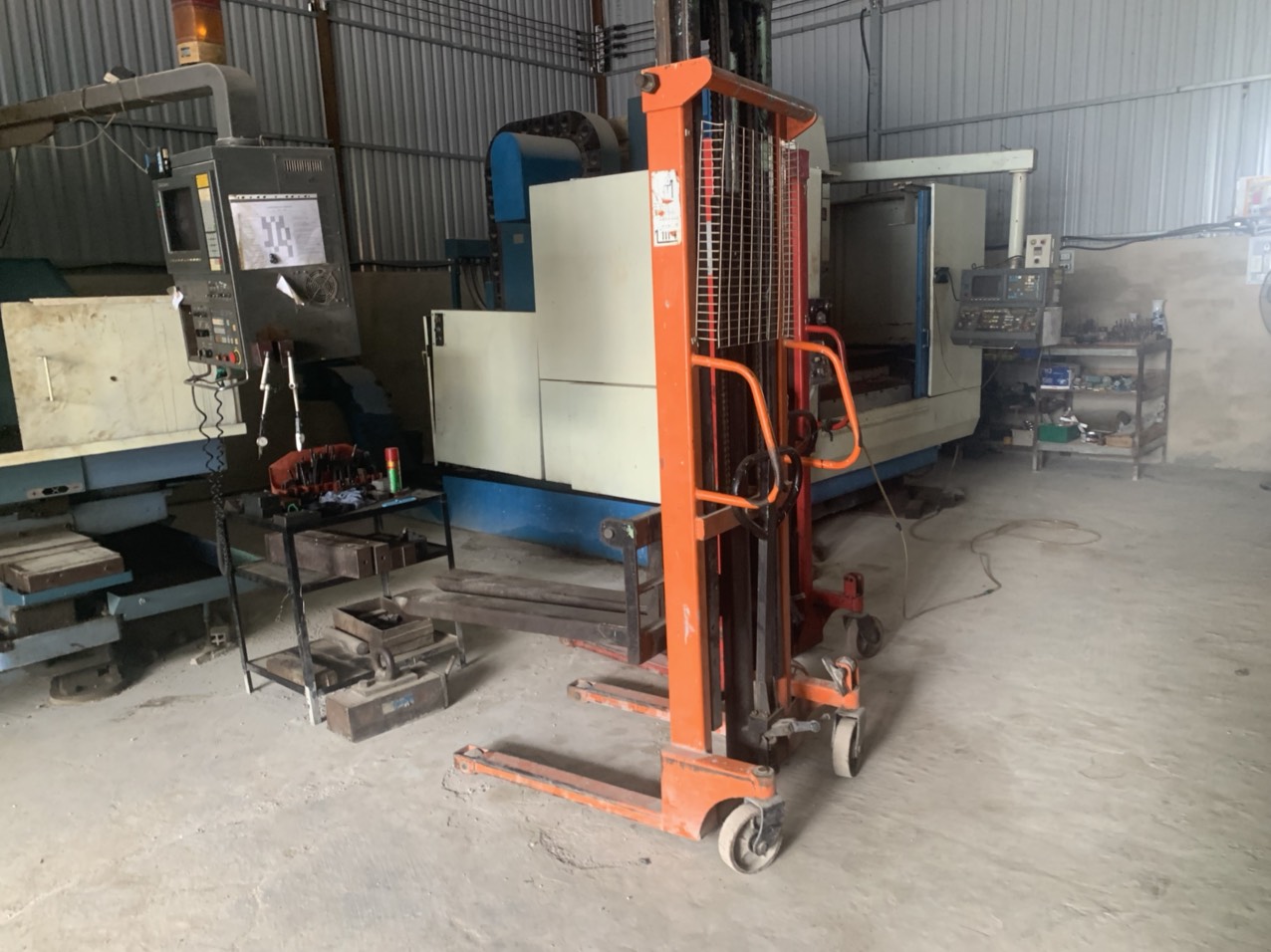

When our Vietnam office started fielding requests for stamped brackets and mounting hardware, I noticed the same problem repeating itself — buyers jumped in without understanding how Vietnam’s stamping industry actually works, got burned by the wrong supplier, and then blamed the country instead of their own vetting process.
Vietnam’s stamping industry offers 30–50% lower costs than US suppliers, zero Section 301 tariffs, and a mature ecosystem built around Samsung, Toyota, and Honda. However, success depends on understanding tooling economics, verifying press capabilities at the equipment level, and managing a supply chain where raw materials are largely imported.
This article breaks down the essentials — pricing, quality, supplier vetting, and real challenges — so you can make an informed sourcing decision before committing capital to tooling and contracts.
How reliable is Vietnam's stamping industry for meeting strict quality standards?
A few years ago, one of our US clients asked me point-blank: "Can Vietnam actually hold ±0.05 mm on a progressive die part?" I pulled inspection reports from three different suppliers we had audited in the northern industrial zones, and every single one met the tolerance consistently across a 50,000-piece run process capability indices 1.
Vietnam's stamping industry reliably meets strict quality standards when you source from the right tier of suppliers — particularly those trained by Japanese and Korean OEMs, holding ISO 9001 or IATF 16949 automotive standards certifications, and operating modern progressive die tooling with in-house quality assurance protocols.

The Japanese and Korean Quality DNA
Vietnam's precision metal fabrication capabilities did not appear overnight. Over the past two decades, anchor manufacturers like Toyota, Honda, and Samsung built local supply chains. They trained Vietnamese engineers, installed Japanese-grade equipment, and demanded compliance with international quality systems. The result is a workforce with a strong technical foundation in tool and die design, statistical process control, and first-article inspection procedures.
When we audit stamping factories in Vietnam, we frequently find operators who spent years working under Japanese supervision. They understand concepts like poka-yoke 2 (mistake-proofing) and process capability indices (Cpk). This is a meaningful difference compared to suppliers in some other low-cost countries where quality culture has to be built from scratch.
Certifications That Actually Matter
Not all certifications carry the same weight. Here is a quick reference for what to look for:
| Certification | What It Covers | Who Needs It |
|---|---|---|
| ISO 9001 | General quality management system | All buyers (baseline requirement) |
| IATF 16949 | Automotive-specific quality management | Automotive Tier-1 and Tier-2 buyers |
| ISO 14001 | Environmental management | EU-bound exports, CBAM compliance |
| RoHS / REACH | Restricted substances compliance | Electronics, consumer goods |
FDI companies from Japan and Taiwan dominate the upper tier. They bring advanced inspection equipment — CMMs, optical comparators 3, surface roughness testers — and maintain traceable calibration records. Local Vietnamese firms are catching up, but the gap is real. Our team in Vietnam always verifies calibration certificates during supplier audits rather than relying on a certificate hanging on the wall.
The Consistency Factor
Reliability is not just about one good batch. It is about repeatability over months and years. The suppliers we work with maintain SPC charts 4, log tool wear data, and schedule preventive die maintenance. This level of discipline is common among factories serving Samsung's electronics supply chain or Honda's automotive line. It is less common among smaller shops serving only domestic markets.
For buyers with mid-to-high quality requirements, the key is selecting suppliers already embedded in global supply chains. These factories understand PPAP documentation, control plans, and the expectation that every shipment matches the approved first article.
What should I expect from Vietnam stamping suppliers in terms of pricing and lead times?
The most common question our US clients raise during initial calls is not about quality — it is about money. They want to know the real landed cost, including tooling, and whether Vietnam actually beats China after you factor in shipping and lead times.
Expect 30–50% lower piece prices than US suppliers, tooling costs 40–60% below US rates (ranging from $1,500 to $25,000+ depending on die complexity), and production lead times of 4–8 weeks after tool approval. Vietnam also carries zero US Section 301 tariffs, giving it a 42% total cost advantage over China for many stamped components.

Understanding Tooling Economics
Stamping is a tooling-driven process. You pay for a die up front, then buy parts at very low piece prices. The economics only work when volume amortizes the tooling. As a rule of thumb, hard tooling starts to pay for itself somewhere in the thousands of pieces. Below that threshold, laser cutting and CNC bending are usually the smarter route.
Here is how die costs typically break down in Vietnam:
| Die Type | Complexity | Typical Cost Range (Vietnam) | US Equivalent |
|---|---|---|---|
| Single-station blanking die | Simple | $1,500 – $5,000 | $3,500 – $12,000 |
| Mid-complexity progressive die | Medium | $8,000 – $25,000 | $20,000 – $60,000 |
| Large/high-precision progressive die | High | $25,000+ | $60,000+ |
These numbers represent genuine savings. But the savings only materialize if you have the volume to justify the investment. I always tell clients: send us your annual forecast first. If it is 200 pieces, we will steer you toward CNC or laser. If it is 20,000, stamping is the clear winner.
Piece Price Breakdown
Beyond tooling, the piece price depends on three main levers: press tonnage required, material thickness, and tolerance callouts. Tighter tolerances mean slower press speeds and more frequent die maintenance, which pushes costs up.
| Cost Factor | Impact on Price | Notes |
|---|---|---|
| Press tonnage (10–500 ton) | Higher tonnage = higher hourly rate | Large automotive brackets need 200+ ton presses |
| Material thickness (0.5–6 mm) | Thicker stock = more material cost + higher press force | Aluminum alloys cost more per kg than mild steel |
| Tolerance callouts | Tighter tolerance = slower speed, more QC | ±0.1 mm is standard; ±0.05 mm adds 10–15% |
| Surface finish (powder coat, plating) | Adds secondary processing cost | Local supply chains for specialized plating are still developing |
Lead Time Realities
Most Vietnam stamping suppliers quote 4–6 weeks for tooling fabrication and 2–4 weeks for production runs after tool approval. First-article inspection adds another week if PPAP documentation is required. Shipping to the US West Coast takes roughly 18–22 days by sea.
One factor that catches buyers off guard is raw material procurement. Most stamping facilities in Vietnam rely on imported high-grade steel and aluminum from China, South Korea, and Japan. If a specific alloy is not in stock locally, material lead time can add 2–3 weeks. Our team always confirms material availability before locking in delivery dates.
The China Plus One strategy 5 works well here. Vietnam gives you tariff-free access to the US market through favorable trade agreements 6, while keeping costs competitive. With 16+ free trade agreements including EVFTA, RCEP, and CPTPP, your stamped parts can also reach EU and Asian markets with reduced or zero duties. For a deeper look at how this plays out for European buyers specifically, see our analysis of how competitive Vietnam’s stamping parts industry is for European OEM buyers.
MOQ: Economics, Not Policy
There is no universal minimum order quantity in Vietnam stamping. The constraint is economic, not a supplier policy. When the tooling investment divided by your order quantity makes each part more expensive than CNC machining, stamping does not make sense. When it makes each part dramatically cheaper, stamping wins. It is that simple.
How do I verify a Vietnamese stamping supplier's capabilities before signing a contract?
During a recent supplier audit in Hai Phong, I walked into a factory that looked impressive on paper — clean website, ISO certificate displayed prominently, good references. Then I checked their press maintenance logs and found gaps stretching back months. The lesson was clear: paper qualifications and real capability are two different things.
Verify a Vietnamese stamping supplier by conducting an on-site equipment audit (check press tonnage, age, maintenance records), confirming in-house tool and die shop capabilities, reviewing actual PPAP documentation from past projects, and requesting trial production runs with full dimensional inspection reports before committing to volume orders.

The Equipment-Level Audit
Supplier capability in Vietnam varies widely, which makes equipment-level vetting essential. Do not rely on brochures. You need to physically verify — or have a trusted partner verify on your behalf — the following:
- Press inventory: List every press by tonnage, brand, age, and condition. A factory with five 80-ton presses cannot handle your 300-ton deep draw part, no matter what they promise.
- In-house die shop: Does the supplier design and build dies internally, or outsource to a third-party mold maker? In-house tool and die design capability reduces prototyping cycles and gives you faster iterations.
- Measurement equipment: CMMs, height gauges, go/no-go fixtures, optical comparators. Ask for calibration certificates with dates.
- Material traceability: Can they show you mill certificates 7 for the steel or aluminum they stock? Raw material procurement transparency is non-negotiable.
The Middle Management Gap
Here is something the glossy trade articles rarely mention. Many local Vietnamese stamping firms have skilled operators on the floor and experienced owners at the top — but a thin middle management layer in between. This means technical details can get lost between your engineering drawings and the shop floor.
Our approach is to assign a project engineer from our Vietnam office who reviews drawings with the supplier's technical team before production starts. We flag critical dimensions, surface finish requirements, and any special callouts. This extra layer of oversight compensates for the management gap and dramatically improves first-time yield.
A Practical Vetting Checklist
Here is a step-by-step process I recommend for anyone looking to evaluate a supplier’s competitiveness when sourcing stamping parts from Vietnam:
- Step 1: Request the supplier's equipment list with tonnage, brand, and year of manufacture.
- Step 2: Ask for three PPAP packages 8 from previous projects (with customer permission). Review the control plans and capability studies.
- Step 3: Conduct an on-site audit or hire a third-party inspection firm. Check press condition, die storage, and measurement room.
- Step 4: Run a trial order of 500–1,000 pieces. Perform full dimensional inspection on a statistical sample.
- Step 5: Evaluate communication responsiveness. How fast do they reply? Do they ask clarifying questions about your drawings, or just say "no problem"?
That last point matters more than you might think. In our experience, the suppliers who ask the most questions during quoting deliver the fewest problems during production. The ones who say "yes" to everything without clarification are the ones most likely to miss critical drawing requirements.
Vertical Integration Trend
An emerging trend worth noting is vertical integration. More Vietnamese stamping providers are investing in in-house tool and die shops, secondary operations like welding and sheet metal assembly, and even surface treatment lines. This reduces dependence on external vendors, shortens lead times, and gives buyers a single point of accountability. When evaluating suppliers, favor those who control more of the process chain internally.
What quality control challenges might I face when sourcing stamped parts from Vietnam?
Last quarter, we managed a stamped bracket project where the supplier's first three production batches were perfect — then batch four arrived with a subtle burr issue on a pierced hole. The root cause? A worn punch insert that should have been replaced 10,000 hits earlier. Preventive maintenance discipline had slipped, and nobody caught it until our final inspection flagged the defect.
Key quality control challenges include inconsistent preventive die maintenance, a middle management gap that can cause drawing requirements to be overlooked, reliance on imported raw materials that may vary between lots, underdeveloped local supply chains for specialized surface treatments, and power grid instability in northern industrial zones during peak summer months.

Die Maintenance and Tool Wear
Stamping dies wear over time. Punch edges dull, forming stations develop micro-cracks, and progressive die tooling can drift out of alignment. The best suppliers track hit counts and schedule maintenance at defined intervals. The weaker ones run tools until a defect appears, which means your parts are the canary in the coal mine.
When we set up contract manufacturing services for a new stamped part, we require the supplier to document their die maintenance schedule in the control plan. We also request sample parts at defined intervals — typically every 5,000 to 10,000 hits — for dimensional verification. This catches wear trends before they become reject-worthy.
Raw Material Variability
Most Vietnamese stamping factories import steel and aluminum from China, South Korea, and Japan. Material properties can vary slightly between suppliers and even between lots from the same mill. A batch of SPCC steel from one Korean mill might behave differently in a deep draw operation than the same grade from a Chinese mill.
The mitigation is straightforward: require mill certificates with every material lot, specify the acceptable material source in your purchase order, and have your supplier run incoming material inspection (hardness, thickness, surface condition) before loading coils onto the press.
Surface Treatment Gaps
While Vietnam's stamping capabilities have matured significantly, local supply chains for specialized surface treatments — high-spec heat treatment, selective plating, anodizing to tight color standards — are still developing. This often requires multi-tier sourcing management, where your stamping supplier subcontracts finishing to a separate facility. Understanding Vietnam’s stamping industry technical level helps set realistic expectations about what can be handled locally versus what requires subcontracting.
This adds a coordination layer and a quality risk. Parts can get damaged in transit between facilities. Surface treatment vendors may not have the same quality assurance protocols as the stamping factory. Our approach is to map the entire process chain during the audit phase and inspect parts after each critical operation, not just at the end.
Power Grid and Infrastructure
Northern Vietnam's industrial export zones — particularly around Bac Ninh and Hai Phong — experience power grid instability 9 during peak summer months (June through August). If your supplier does not have adequate backup generators, an unexpected power cut can interrupt a stamping run mid-cycle, potentially damaging the die and producing scrap parts.
During audits, we always check backup power capabilities. A factory with a properly sized diesel generator and an automatic transfer switch can ride through a grid outage without losing a single part. A factory without one will shut down and push your delivery date.
Managing the Communication Chain
Supply chain diversification to Vietnam only works if you manage communication proactively. Critical drawing notes — especially GD&T callouts 10, specific material grades, and surface finish requirements — must be explicitly discussed, not just sent as a PDF attachment. We conduct a formal design review meeting (usually via video call) before every new tool is cut. This single step eliminates the majority of "misunderstood drawing" issues that plague first-time Vietnam sourcing.
Conclusion
Vietnam's stamping industry offers genuine cost and tariff advantages, but sourcing success requires homework — understand tooling economics, audit suppliers at the equipment level, and build quality controls into every stage of production. The right preparation turns Vietnam from a risky bet into a reliable supply chain asset.
Frequently Asked Questions
How reliable is Vietnam's stamping industry for meeting strict quality standards?
A few years ago, one of our US clients asked me point-blank: "Can Vietnam actually hold ±0.05 mm on a progressive die part?" I pulled inspection reports from three different suppliers we had audited in the northern industrial zones, and every single one met the tolerance consistently across a 50,000-piece run process capability indices 1 .
What should I expect from Vietnam stamping suppliers in terms of pricing and lead times?
The most common question our US clients raise during initial calls is not about quality — it is about money. They want to know the real landed cost, including tooling, and whether Vietnam actually beats China after you factor in shipping and lead times.
How do I verify a Vietnamese stamping supplier's capabilities before signing a contract?
During a recent supplier audit in Hai Phong, I walked into a factory that looked impressive on paper — clean website, ISO certificate displayed prominently, good references. Then I checked their press maintenance logs and found gaps stretching back months. The lesson was clear: paper qualifications and real capability are two different things.
Footnotes
1. NIST handbook explains process capability index calculations referenced for quality control. ↩︎
2. Background on the mistake-proofing quality technique mentioned in the article. ↩︎
3. ISO/IEC 17025 sets calibration standards for measurement equipment like optical comparators. ↩︎
4. NIST handbook explains statistical process control methods referenced for maintaining consistency. ↩︎
5. Background on the manufacturing diversification strategy referenced in the sourcing discussion. ↩︎
6. WTO resource on regional trade agreements explaining tariff-free market access. ↩︎
7. Comprehensive Wikipedia overview of Mill Test Reports and material certification standards in manufacturing. ↩︎
8. Authoritative Wikipedia entry explaining the Production Part Approval Process (PPAP) standards and requirements. ↩︎
9. IEA provides data on Vietnam’s energy infrastructure reliability challenges mentioned in the article. ↩︎
10. Background on geometric dimensioning and tolerancing standards mentioned in engineering drawings. ↩︎