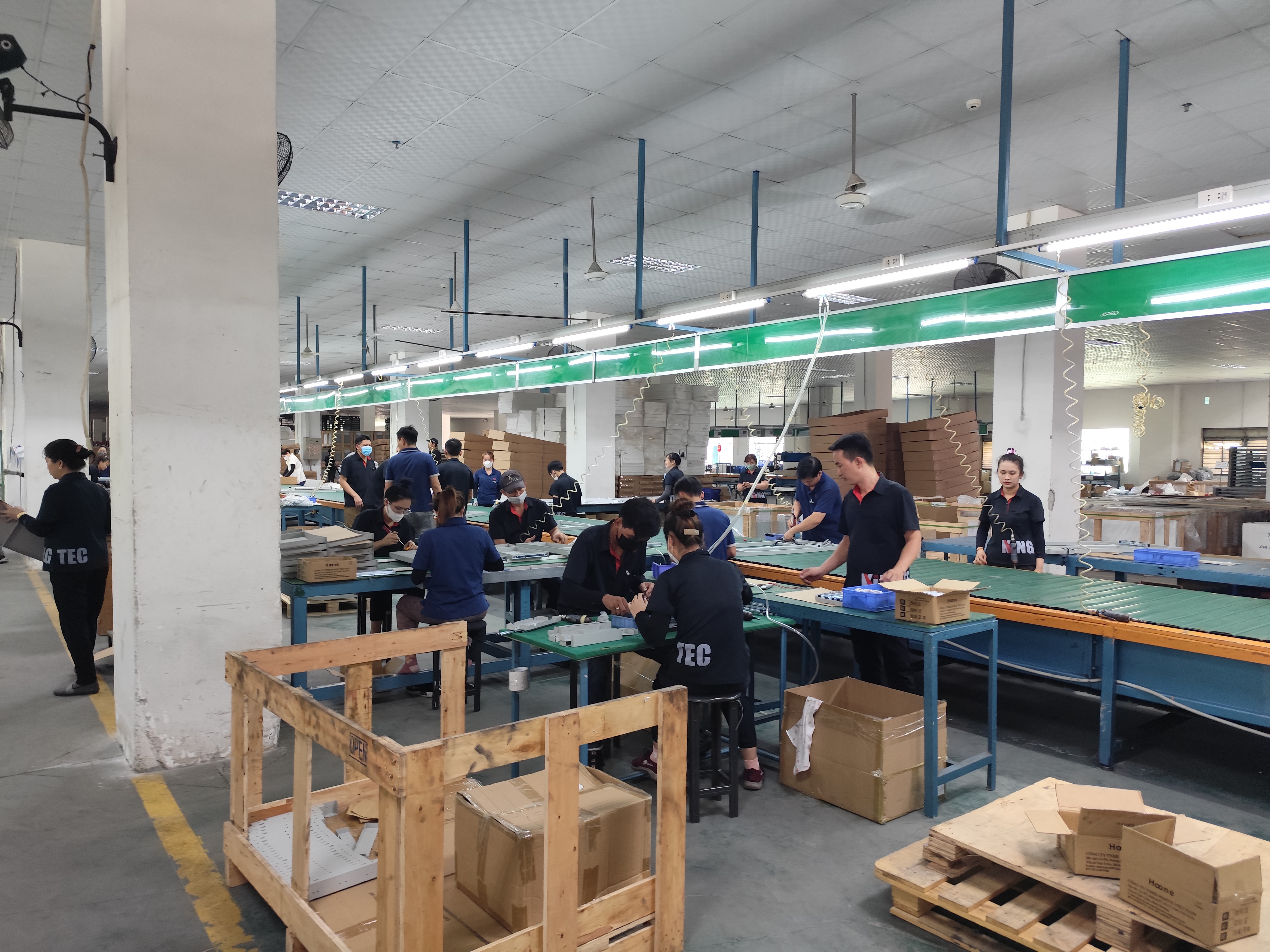

When our Vietnam office started fielding calls from U.S. buyers hit by Section 301 tariffs 1, one question kept coming up: can Vietnam’s stamping industry really replace China?
Vietnam’s stamping industry is a mature, rapidly growing sector valued at USD 880.8 million in 2024, offering 30–50% lower piece prices than U.S. suppliers and 25–40% savings over China when tariffs are included. Success requires understanding tooling economics, supplier vetting, and trade agreement advantages before committing to a program.
This article breaks down the practical knowledge you need — from quality control and certifications to lead times and risk mitigation — so you can make an informed sourcing decision Green Steel initiatives 2. Let me walk you through what we have learned managing stamping projects across Vietnam’s industrial zones.
How can I evaluate the quality control standards of stamping suppliers in Vietnam before signing a contract?
A lesson we learned early on: a factory's sample room can look perfect while their production floor tells a completely different story. Evaluating quality control in Vietnam's stamping sector demands more than reviewing a certificate — it requires equipment-level vetting and process verification.
To evaluate quality control standards of Vietnamese stamping suppliers, request a facility audit covering press calibration records, in-house tool and die manufacturing capability, SPC documentation, and first-article inspection reports. Verify ISO 9001 certification independently and insist on a trial production run before committing to volume orders.

Why Certificates Alone Are Not Enough
ISO 9001 certification 3 is a baseline, not a guarantee. In our experience coordinating supplier audits from our Vietnam office, we have seen certified factories that still lacked basic statistical process control on their stamping lines. The certificate tells you a system exists. It does not tell you whether the operators follow it daily.
When we evaluate a new stamping supplier, our team walks the production floor and checks three things immediately: press maintenance logs, die storage conditions, and how the operators handle non-conforming parts. These details reveal the real quality culture faster than any PowerPoint presentation.
The Audit Checklist That Actually Works
Here is the evaluation framework we use internally. It covers the areas that matter most for precision metal fabrication of sheet metal components.
| Audit Area | What to Check | Red Flag |
|---|---|---|
| Press Equipment | Calibration certificates, tonnage range, age of machines | No calibration records in the last 12 months |
| Die Shop | In-house tool and die manufacturing, EDM and wire-cut capability | All dies outsourced with no maintenance capability |
| Incoming Material | Raw material procurement records, mill certificates for steel/aluminum | No traceability from material to finished part |
| In-Process Control | SPC charts, go/no-go gauges at each station | Operators rely only on visual checks |
| Final Inspection | CMM or optical measurement, first-article inspection reports | No documented dimensional reports |
| Non-Conformance System | Corrective action records, quarantine area for rejected parts | Rejected parts mixed with good parts on the floor |
Trial Runs and PPAP: The Non-Negotiable Steps
We never skip a trial production run. For custom stamped parts, a Production Part Approval Process (PPAP) 4 is the clearest way to confirm a supplier can hit your tolerances repeatedly. We manage the PPAP submission on behalf of our clients, reviewing dimensional data, material certifications, and process flow diagrams before any volume order ships.
One critical detail: ask the supplier to run the trial on the actual production press, not a lab press. Some shops produce beautiful samples on slow, controlled equipment, then switch to a faster line for volume. The results can be very different.
Geography Matters
Northern Vietnam — Hanoi, Bac Ninh, Hai Phong — specializes in high-precision electronics and automotive stamping. The South — Ho Chi Minh City, Binh Duong — leans toward general fabrication and heavier assemblies. Knowing which industrial zones align with your product type helps you shortlist the right suppliers from the start.
What are the biggest risks I should watch for when shifting my stamping supply chain from China to Vietnam?
Last year, a client transferred three progressive die 5 tools from a Chinese supplier to a factory in Bac Ninh. The tools arrived damaged, the Vietnamese shop had no spare wear components, and the first production run missed the delivery window by six weeks. That project taught us exactly where the risk hides in a China Plus One strategy.
The biggest risks when shifting stamping from China to Vietnam include tooling transfer damage, raw material grade mismatches due to domestic anti-dumping duties on Chinese steel, a smaller pool of suppliers capable of tight-tolerance progressive die stamping, and underestimating the ramp-up time needed for a new production line to reach stable quality.

Tooling Transfer: The Hidden Minefield
Moving a stamping die from one country to another sounds simple. It is not. Dies are heavy, precision instruments. Shipping damage, customs delays, and compatibility issues with the receiving factory's presses are all common. Some Vietnamese manufacturers now offer tooling relocation programs with free maintenance and logistics support, but you should still budget for a re-qualification run after every transfer.
We recommend a full dimensional inspection of the die before shipping and again upon arrival. Our China office coordinates the outbound side while our Vietnam team handles receiving — having people on both ends prevents a lot of problems.
Raw Material Risks
Vietnam's domestic steel industry is growing, but many specific grades — especially high-strength automotive steels and precision copper alloys for electrical applications — still come from Japan, South Korea, or China. Here is where it gets tricky: Vietnam has imposed anti-dumping duties 6 on certain Chinese hot-rolled coil (HRC) imports. If your supplier uses that material, the cost advantage can shrink fast.
| Risk Category | Specific Risk | Mitigation Strategy |
|---|---|---|
| Tooling Transfer | Die damage during shipping, press incompatibility | Pre-ship and post-arrival dimensional inspections; confirm press tonnage match |
| Raw Material | Anti-dumping duties on Chinese HRC; grade availability | Verify material source; request mill certificates; consider Japanese or Korean alternatives |
| Supplier Capability | Fewer shops handle tight tolerances or large tonnage | Shortlist only audited suppliers with proven progressive die experience |
| Ramp-Up Time | New lines need 2–4 months to stabilize | Build a buffer stock; plan for a pilot run phase |
| Regulatory | Increasingly stringent environmental and safety laws | Confirm supplier has current environmental permits and waste treatment systems |
| Communication | Language barriers, time zone differences | Use a local project management partner or agent with bilingual staff |
The Volume Trap
Here is a reality check many buyers overlook. Stamping is a tooling-driven process. You pay a high upfront cost for the die, then get low piece prices over thousands of parts. If your annual volume is only a few hundred pieces, you may never amortize the tooling cost. In those cases, laser cutting and CNC bending in Vietnam are usually smarter — and we frequently advise clients to take that route instead.
The breakeven threshold varies by die complexity. A simple blanking tool at $1,500–$5,000 pays for itself faster than a mid-complexity progressive die at $8,000–$25,000. We always run the math with the client before quoting.
Rising Labor Costs: A Long-Term Factor
Vietnam’s labor costs remain lower than China's, but they are rising steadily. This does not eliminate the cost advantage — it narrows it over time. For a five-year sourcing program, factor in annual wage increases of roughly 5–7% when modeling your total cost of ownership.
Which certifications and technical capabilities should I look for in a reliable Vietnamese stamping manufacturer?
When we first started vetting stamping factories outside of China for our U.S. clients, the capability gap between the top tier and the average shop in Vietnam was striking. Some facilities had been trained by Samsung and Toyota for twenty years. Others were running forty-year-old presses with no measurement equipment. Knowing what to look for separates a good sourcing decision from a costly mistake.
Look for ISO 9001 as a minimum, IATF 16949 for automotive-grade work, and confirmed in-house tool and die manufacturing capability. Verify press tonnage range (10-ton to 500-ton), progressive die stamping experience, material thickness capability from 0.5 mm to 6 mm, and integrated surface treatment services like plating and powder coating.

Certification Tiers: What Each One Means for You
Not all certifications carry equal weight. Here is how we categorize them when advising clients on supplier selection.
| Certification | What It Proves | When You Need It |
|---|---|---|
| ISO 9001 | Basic quality management system in place | All sourcing programs — this is the minimum |
| IATF 16949 | Automotive-grade QMS with PPAP, APQP, and FMEA capability | Automotive parts, safety-critical components |
| ISO 14001 | Environmental management system | EU-bound exports, especially under CBAM scrutiny |
| RoHS / REACH Compliance | Restricted substances control | Electronics, consumer goods for EU markets |
| UL Certification | Product safety for electrical components | Electrical enclosures, terminals, connectors |
For most of our custom parts projects, ISO 9001 plus demonstrated PPAP capability is the practical sweet spot. If you are sourcing automotive brackets or structural components, IATF 16949 is non-negotiable.
Technical Capabilities to Verify On-Site
The best Vietnamese stamping manufacturers — the ones shaped by two decades of Tier-1 investment — offer what the industry calls "one-stop" capability. This means they design and build their own progressive dies, run the stamping production, and perform secondary operations like CNC machining, welding, and surface treatment services all under one roof. To understand Vietnam’s stamping industry technical level in greater depth, it helps to examine how these capabilities have evolved over time.
Here is the capability checklist we use:
- In-house die shop with EDM, wire-cut, and CNC milling — this means the supplier can maintain and modify dies without outsourcing, which cuts lead time dramatically.
- Press tonnage range from 10-ton mechanical presses for small clips and terminals up to 500-ton hydraulic presses for larger structural parts.
- Progressive die stamping capability for multi-step, high-volume parts — this is the most efficient method for complex sheet metal components.
- Deep draw capability for cup-shaped or cylindrical parts.
- Material range covering steel, stainless steel, aluminum alloys, and copper/brass with thickness from 0.5 mm to 6 mm.
- Secondary processes including deburring, tapping, spot welding, zinc plating, anodizing, and powder coating.
The "Reverse Technology Spillover" Effect
Something interesting is happening in Vietnam's industrial zones. Suppliers who spent years building smartphone housings for Samsung or brake brackets for Toyota are now applying that same level of precision and lean manufacturing discipline to general industrial components. This "reverse technology spillover" means that a factory making automotive mounting clips today can deliver the same tight tolerances and process control on your industrial hardware — even if you are not in the automotive sector.
We have seen this firsthand: a supplier trained on Samsung's smartphone-grade stamping standards produced a batch of electrical terminals for one of our U.S. clients with Cpk values 7 above 1.67 across all critical dimensions. That level of process capability was rare in Vietnam even five years ago.
Green Manufacturing: An Emerging Requirement
For exports to the EU, carbon footprint tracking is becoming a real concern. The EU's Carbon Border Adjustment Mechanism (CBAM) 8 will eventually affect metal products. Leading Vietnamese stamping houses are already pursuing "Green Steel" initiatives and carbon tracking to future-proof their export capability. If you are sourcing for European markets, ask your supplier about their environmental roadmap during the audit.
How do I manage lead times and payment terms when sourcing custom stamped parts from Vietnam?
A buyer we work with in the Midwest once told me his biggest frustration was not price — it was unpredictability. His previous Asian supplier would quote four weeks and deliver in eight. That experience nearly killed his confidence in offshore sourcing entirely. Managing lead times and payment terms in Vietnam requires setting clear expectations upfront and building the right buffers.
For custom stamped parts from Vietnam, expect 4–6 weeks for tooling fabrication and 2–4 weeks for production runs, with an additional 2–4 weeks for ocean freight to the U.S. Negotiate 30–60 day payment terms for production orders, with a 30–50% tooling deposit upfront and the balance upon sample approval.

Breaking Down the Timeline
The total lead time from purchase order to parts on your dock has three distinct phases. Understanding each one helps you plan your inventory and avoid surprises.
Phase 1 — Tooling. A simple blanking or forming die typically takes 3–4 weeks. A mid-complexity progressive die with multiple stations can take 5–8 weeks. If you are transferring an existing die from China, add 1–2 weeks for shipping and re-qualification. Our team tracks tooling milestones weekly and sends photo updates at key stages — rough machining, finish grinding, trial stamping — so clients are never in the dark.
Phase 2 — Production. Once the die is approved, a standard production run of several thousand pieces takes 2–4 weeks depending on press availability and secondary operations. Surface treatment services like zinc plating or powder coating add 3–5 days. If you need CNC machining on stamped blanks, add another week.
Phase 3 — Logistics. Ocean freight from Ho Chi Minh City or Hai Phong to major U.S. ports runs 18–25 days. Air freight cuts this to 3–5 days but costs roughly 5–8 times more. We handle door-to-door logistics management, including customs documentation and origin certification for trade agreement benefits.
Payment Terms: What Is Realistic
Payment terms depend on the order type and the relationship stage. Here is what we typically see and arrange.
| Order Type | Typical Payment Terms | Notes |
|---|---|---|
| Tooling (New Die) | 50% deposit, 50% upon sample approval | Die is your asset; some buyers negotiate 30/70 splits |
| First Production Order | 30% deposit, 70% upon shipment (T/T) | Standard for new relationships |
| Repeat Orders (Established) | Net 30 or Net 60 after shipment | Available once trust is established |
| Open Account (Credit Terms) | Net 60–90 days | We offer this to qualified U.S. clients to ease cash flow |
One thing that sets our service apart: we understand that purchasing managers at U.S. sourcing companies need 60–90 day payment terms to manage cash flow. Our Singapore entity absorbs that credit risk, so our clients get the flexibility they need without the factory bearing the burden.
Tips for Keeping Delivery on Track
Supply chain diversification only works if the alternative supply chain actually delivers on time. Here are the practical steps we take on every stamping project:
- Lock in material early. Raw material procurement lead times for imported Japanese or Korean steel can be 4–6 weeks. We confirm material availability before quoting a delivery date.
- Build a buffer. For critical parts, we recommend a safety stock of 2–4 weeks of consumption, especially during the first year of production.
- Confirm press scheduling. Vietnamese factories often run multiple programs on the same press. Get a written production schedule slot, not just a verbal promise.
- Stage inspections. Our team conducts in-process and final inspections before shipment. Catching a problem before the container loads is infinitely cheaper than catching it at your receiving dock.
- Use trade agreements. Vietnam's EVFTA 9 eliminates 99% of tariffs to the EU. The CPTPP and RCEP 10 provide preferential access across Asia-Pacific. We handle the certificate of origin paperwork so our clients capture these savings automatically. For U.S.-bound shipments specifically, learn more about how sourcing stamping parts from Vietnam can boost your US market competitiveness.
Conclusion
Vietnam's stamping industry offers real cost, quality, and trade advantages — but only when you vet suppliers rigorously, understand tooling economics, and plan lead times carefully. The right sourcing partner makes the difference.
Frequently Asked Questions
How can I evaluate the quality control standards of stamping suppliers in Vietnam before signing a contract?
A lesson we learned early on: a factory's sample room can look perfect while their production floor tells a completely different story. Evaluating quality control in Vietnam's stamping sector demands more than reviewing a certificate — it requires equipment-level vetting and process verification.
What are the biggest risks I should watch for when shifting my stamping supply chain from China to Vietnam?
Last year, a client transferred three progressive die 5 tools from a Chinese supplier to a factory in Bac Ninh. The tools arrived damaged, the Vietnamese shop had no spare wear components, and the first production run missed the delivery window by six weeks. That project taught us exactly where the risk hides in a China Plus One strategy.
Which certifications and technical capabilities should I look for in a reliable Vietnamese stamping manufacturer?
When we first started vetting stamping factories outside of China for our U.S. clients, the capability gap between the top tier and the average shop in Vietnam was striking. Some facilities had been trained by Samsung and Toyota for twenty years. Others were running forty-year-old presses with no measurement equipment. Knowing what to look for separates a good sourcing decision from a costly mistake.
Footnotes
1. USTR explains the Section 301 tariffs prompting buyers to shift sourcing from China. ↩︎
2. IEA resource on steel industry decarbonization relevant to Vietnam’s green manufacturing efforts. ↩︎
3. Official ISO standard defining quality management system requirements referenced as certification baseline. ↩︎
4. Background on the standardized process used to verify supplier production readiness. ↩︎
5. Wikipedia background on the multi-station tooling process central to Vietnamese stamping capability. ↩︎
6. WTO explains anti-dumping measures, directly relevant to Vietnam’s tariffs on Chinese steel. ↩︎
7. Explains the process capability index metric used to describe dimensional consistency quality. ↩︎
8. Official EU page explaining CBAM, the regulation affecting metal exports mentioned in the article. ↩︎
9. European Commission page detailing the EU-Vietnam Free Trade Agreement and its tariff benefits. ↩︎
10. ASEAN official page on the Regional Comprehensive Economic Partnership trade agreement mentioned in text. ↩︎