When our Vietnam team reviewed a batch of custom brackets last quarter, one thing became clear — buyers need a shared language around sheet metal fabrication 1 types before any project kicks off.
Sheet metal fabrication is classified into three core process categories — metal cutting, metal forming, and metal joining — with further distinctions based on tooling type (soft vs. hard), material grade, and production volume. Understanding these classifications helps buyers specify requirements accurately and achieve right-first-time results.
This guide walks through every major classification so you can speak confidently with your supplier, choose the right material, and avoid costly rework PPAP (Production Part Approval Process) 2. Let’s start with the process categories themselves.
How can I categorize the different sheet metal fabrication processes to better communicate with my supplier?
A lesson we learned early on: when a U.S. purchasing manager says "stamping" and a Vietnamese factory hears "forming," the project starts on the wrong foot entirely.
You can categorize sheet metal fabrication processes into three pillars — cutting, forming, and joining — and then further distinguish between soft tooling (low-volume fabrication) and hard tooling (high-volume stamping). Using these categories in your RFQs eliminates ambiguity and speeds up quoting.

The Three Core Process Pillars
Every finished sheet metal part passes through at least one — usually two or three — of these stages. Think of them as a sequence: you cut the blank, form it into shape, and join pieces together if needed. metal cutting 3
| Process Category | What It Does | Common Methods | Typical Use Case |
|---|---|---|---|
| Cutting | Separates material into shapes | Laser cutting 4, plasma cutting, shearing, CNC punching | Blanking flat profiles, creating holes |
| Forming | Deforms material without removal | Metal bending (press brake), sheet metal stamping, deep drawing 5, rolling | Creating angles, channels, enclosures |
| Joining | Assembles separate pieces metal joining 6 | MIG welding, TIG welding, spot welding, riveting | Building assemblies, frames, housings |
When you send a drawing to our engineering team, we first identify which of these three stages the part requires. A simple L-bracket might need only laser cutting and one press brake bend. A complex enclosure might need CNC punching for ventilation holes, multiple bends, and TIG welding at the seams.
Soft Tooling vs. Hard Tooling
Beyond the three process pillars, there is a higher-level classification based on tooling investment and volume.
Soft tooling refers to fabrication methods like laser cutting, turret punching, and press brake bending. These require minimal dedicated tooling. You can change a design between orders without scrapping expensive dies. This makes soft tooling 7 ideal for prototyping, low-to-medium volumes, and parts that evolve over time.
Hard tooling refers to sheet metal stamping with dedicated progressive dies or transfer dies. The upfront cost is significant — sometimes tens of thousands of dollars for a single die set. But once the die is built, each unit comes off the press fast and consistent. Hard tooling 8 makes sense when you are running tens of thousands or millions of identical parts.
| Classification | Tooling Cost | Flexibility | Best Volume Range | Lead Time for First Part |
|---|---|---|---|---|
| Soft Tooling (Fabrication) | Low to none | High — easy design changes | 1–10,000 units | Short (days to weeks) |
| Hard Tooling (Stamping) | High ($5K–$50K+) | Low — design locked into die | 10,000+ units | Long (weeks to months for die) |
In our experience exporting to the U.S. and Europe, most custom part projects start with soft tooling. The buyer validates the design, confirms fit and function, and only moves to hard tooling once volumes justify the investment. We guide our clients through this transition so they don't over-invest early or under-invest when scale demands it.
Why This Language Matters
When you tell a supplier "I need a laser-cut and brake-formed bracket in 304 stainless steel 9, soft-tooled, quantity 500," you have communicated the cutting method, the forming method, the material, the tooling approach, and the volume in a single sentence. That clarity reduces quoting errors and sets the quality expectation from day one.
Which sheet metal materials and forming techniques are best suited for my custom industrial parts?
One trade-off we weigh on nearly every project is whether to recommend stainless steel for longevity or galvanized steel for budget — and the answer always depends on the end environment.
The best material and forming technique depend on your part's function, environment, and volume. Stainless steel suits corrosive environments, aluminum sheet works for lightweight needs, and galvanized steel balances cost with corrosion protection. Pair these with bending, stamping, or deep drawing based on geometry complexity.

Material Selection Guide
Choosing the right material is half the battle. Here is how the most common sheet metals compare across the factors that matter most to purchasing managers.
| Material | Key Property | Formability | Weldability | Corrosion Resistance | Relative Cost |
|---|---|---|---|---|---|
| Mild / Low-Carbon Steel (0.05–0.25% C) | Affordable, strong | Excellent | Excellent | Low (needs coating) | $ |
| Galvanized Steel (zinc-coated) | Pre-coated corrosion layer | Good | Good (watch zinc fumes) | Moderate | $$ |
| Cold-Rolled Steel (CRS 1008/1018) | Tight tolerances, smooth finish | Very good | Very good | Low (needs coating) | $$ |
| Stainless Steel (≥10.5% Cr) | Rust-resistant, durable | Moderate (work-hardens) | Good (TIG preferred) | High | $$$ |
| Aluminum Sheet (various alloys) | Lightweight, rust-resistant | Good to excellent | Good (TIG or MIG) | High | $$ – $$$ |
| Copper / Brass | Conductive, aesthetic | Good | Specialized | Moderate | $$$ – $$$$ |
Mild steel remains the workhorse for indoor industrial parts. If your bracket sits inside a control panel, mild steel with powder coat surface finishing is often the most cost-effective route. But if that bracket lives on a marine vessel or in a food-processing plant, stainless steel — specifically austenitic grades like 304 or 316 — is the right call.
Cold-rolled steel deserves a special mention. CRS in 1008 and 1018 alloys offers tighter dimensional tolerances and a smoother surface than hot-rolled steel. When our quality team runs first-article inspections, CRS parts consistently show less variation. This matters when your assembly has tight stack-up tolerances.
Matching Forming Techniques to Geometry
Material selection and metal forming 10 techniques go hand in hand. A part's geometry determines which forming method is practical.
- Press brake bending is the most common forming method for custom industrial parts. It folds flat blanks into angles, channels, and box shapes. Most custom brackets and enclosures use this method.
- Sheet metal stamping makes sense for features like louvers, embossments, or lance-and-form tabs. If the design includes repeating patterns, a stamping operation is faster than manual forming.
- Deep drawing stretches a flat blank into a cup or cylinder shape. Think of a metal housing or canister. This technique requires careful material selection — aluminum sheet and low-carbon steel draw well, while stainless steel needs more force and better lubrication.
- Rolling curves flat sheets into cylinders or cones. It is common in ductwork, tanks, and pipe assemblies.
In practice, we often combine multiple techniques on a single part. A mounting chassis might be laser-cut, bent on a press brake, have a few stamped features for self-clinching hardware, and then go through welding processes to attach a secondary bracket. Each technique adds cost and lead time, so we help clients simplify geometry where possible without sacrificing function.
A Word on Prototyping
For new product development, prototyping with soft tooling lets you test a material and forming method before committing. We have had clients switch from aluminum to galvanized steel mid-development after realizing the aluminum alloy was too soft for the load requirement. Catching that during prototyping costs a fraction of catching it after a production run.
How do I determine if a specific fabrication method will meet my right first time quality requirements?
A buyer interaction last year crystallized this for me. A purchasing manager in Ohio had been burned twice by suppliers who chose the cheapest cutting method and ended up with edge burrs that caused assembly failures.
To determine if a fabrication method meets right-first-time quality, evaluate four factors: dimensional tolerance capability of the process, material behavior under that process, surface finish requirements, and whether the supplier has a documented quality control plan — including PPAP, in-process checks, and final inspection — for that specific method.

Process Capability and Tolerances
Every fabrication method has an inherent tolerance range. If your drawing calls for ±0.1 mm on a cut profile, shearing will not achieve that — but laser cutting will. If your bend angle tolerance is ±0.5°, a CNC press brake with back-gauge control can hold it, but a manual brake in the hands of an inexperienced operator cannot.
Here is a practical comparison:
- Laser cutting typically holds ±0.1 mm on thin sheets (up to about 6 mm). It produces clean edges with minimal burr.
- Plasma cutting is effective for thicker materials upward of 10 mm but yields wider kerf and rougher edges. Tolerances are typically ±0.5 mm or wider.
- CNC punching is fast for hole patterns and simple profiles. Tolerances are around ±0.1–0.2 mm. It works well for large-scale production of perforated panels.
- Shearing gives clean, straight cuts without chips or melting. It is cost-effective for straight-line cuts but cannot produce complex shapes.
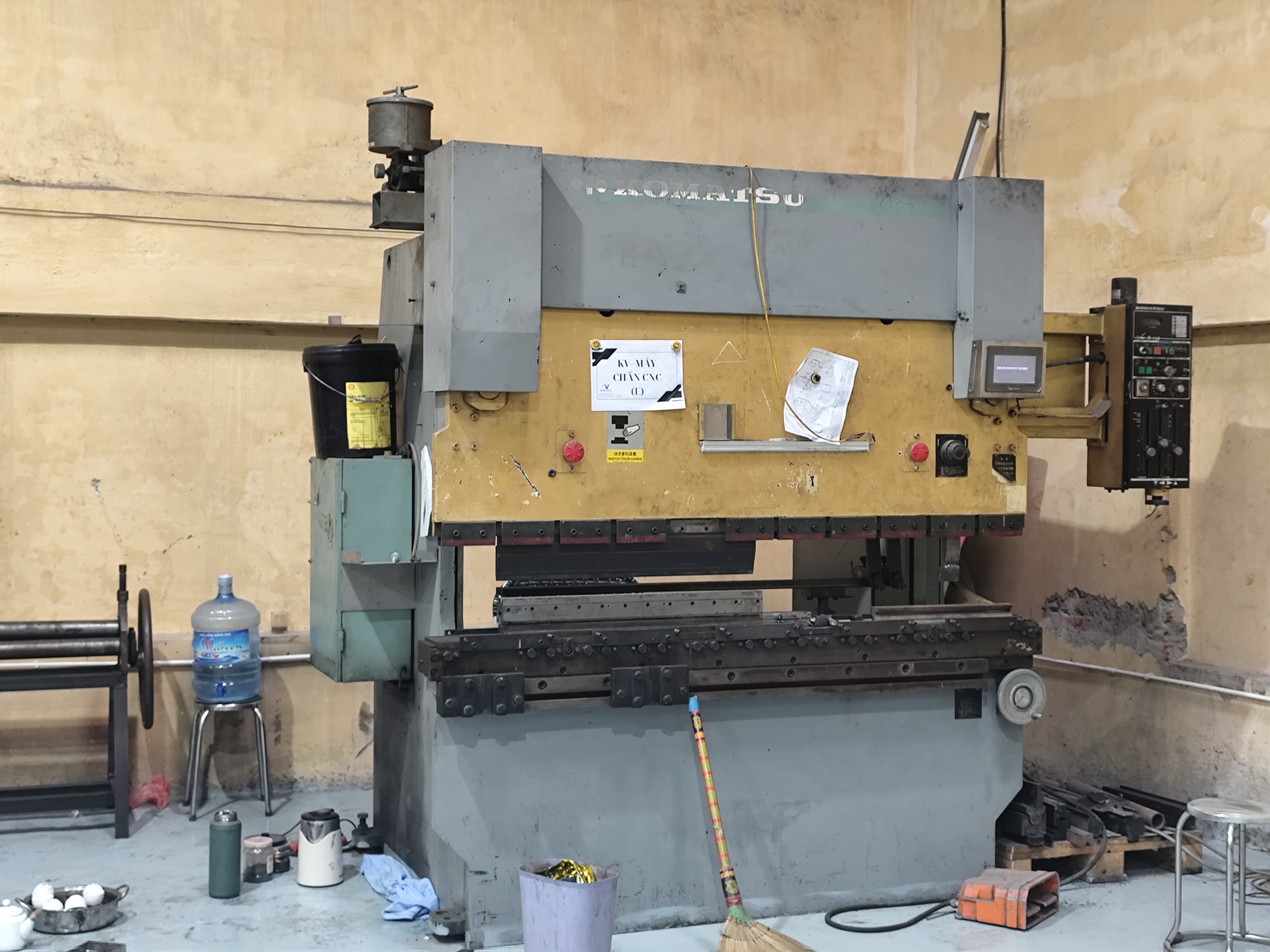
For forming operations, the press brake's CNC control level matters most. Our facilities use CNC-controlled press brakes with angle measurement feedback. This means the machine checks the bend angle in real time and compensates for material spring-back. Spring-back varies by material — stainless steel springs back more than mild steel — so the machine needs to know what it is bending.
The Role of Quality Systems
A fabrication method alone does not guarantee right-first-time results. The quality system surrounding it does. Here is what we walk our clients through during supplier audits:
- PPAP (Production Part Approval Process): Before mass production, the supplier produces sample parts and documents every dimension against the drawing. This first-article inspection report proves the process is capable.
- In-process controls: Operators check critical dimensions at defined intervals during the run. For example, every 50th part gets measured on a CMM or with calibrated gauges.
- Final inspection: A QC inspector checks a statistical sample of the finished lot against the drawing and any workmanship standards.
- Traceability: Material certificates, heat lot numbers, and process parameters are recorded and linked to each order.
Without these controls, even the most precise laser cutter will eventually drift. A bearing wears, a lens gets dirty, or an operator loads the wrong program. The quality system catches these issues before bad parts ship.
When to Push Back on a Supplier's Method Choice
If a supplier quotes plasma cutting for a part with ±0.2 mm tolerances, that is a red flag. If they propose manual welding on a cosmetic surface that will not be ground or finished, ask how they plan to control weld appearance. These are the conversations that prevent rework and returns. Our project managers are trained to flag process-tolerance mismatches during the quoting stage, not after parts arrive at your dock.
What should I consider when choosing between various sheet metal classifications for my offshore manufacturing in Vietnam?
The decision to move a sheet metal program from China to Vietnam prompted some of our most detailed supplier capability assessments — and the differences were more nuanced than most buyers expect.
When choosing sheet metal classifications for Vietnam manufacturing, consider local supplier capability in laser cutting and CNC press brake bending, material availability (stainless steel and aluminum are readily sourced, specialty alloys may need importing), surface finishing options, and whether the supplier's quality system supports PPAP documentation and English-language communication.
Vietnam's Growing Fabrication Ecosystem
Vietnam's sheet metal fabrication sector has matured rapidly. Five years ago, finding a supplier with a fiber laser cutter and CNC press brakes was difficult outside Ho Chi Minh City and Hanoi. Today, our local team in Vietnam identifies capable shops across multiple provinces. However, capability is not uniform. Some factories excel at light-gauge work for electronics enclosures. Others handle heavy structural fabrication. Matching the classification of work to the right shop is critical.
What Vietnam Does Well
Vietnamese fabricators are competitive in soft-tooling work — laser cutting, CNC punching, press brake bending, and MIG/TIG welding processes. Labor costs are lower than China for equivalent skill levels, and the workforce is young and trainable. For mid-volume custom parts — the sweet spot of 500 to 5,000 units — Vietnam offers compelling economics.
Robotic welding is also gaining traction. Several factories we audit have invested in robotic welding cells for repeatability on high-volume assemblies. This reduces labor dependency and improves weld consistency, which directly supports right-first-time goals.
What to Watch Out For
Hard tooling (stamping) infrastructure in Vietnam is less developed than in China, Taiwan, or South Korea. If your project requires a progressive die with tight tolerances, the die may need to be built elsewhere and shipped to Vietnam for production. Factor this into your lead time and logistics planning.
Material availability is another consideration. Common grades of stainless steel (304, 316), galvanized steel, and aluminum sheet are stocked locally. But if your design calls for a specialty alloy — say, Inconel or a specific titanium grade — expect longer lead times and higher costs for imported material.
Surface finishing capabilities vary widely. Powder coating is common and well-executed. Anodizing (for aluminum) is available but less widespread. Electroplating and specialized coatings may require a secondary subcontractor, which adds a link in the supply chain that needs its own quality controls.
A Decision Framework
When clients ask whether Vietnam is right for their sheet metal program, we walk through this checklist:
- Process fit: Does the part primarily need cutting, bending, and welding (soft tooling)? Vietnam is strong here.
- Material: Is the material commonly available in Southeast Asia? If yes, proceed. If not, plan for imports.
- Volume: Is the volume in the mid range? Vietnam's cost advantage is most pronounced for custom runs, not commodity stamping.
- Quality documentation: Does the supplier have ISO certification and experience producing PPAP packages for U.S. or European buyers? Our team verifies this during on-site audits.
- Communication: Can the supplier's engineering and quality team communicate in English? Miscommunication on drawing tolerances is a top cause of non-conformance. Our bilingual project managers bridge this gap.
- Logistics: Vietnam's port infrastructure (Ho Chi Minh City, Hai Phong) supports containerized export efficiently. Door-to-door transit to the U.S. West Coast is competitive with China.
Payment terms also matter. Many Vietnamese suppliers require full prepayment or 50% deposit. Through our supply chain services, we offer open account terms (60–90 days) to qualified U.S. clients, which alleviates cash flow pressure during the transition to a new sourcing region.
Conclusion
Sheet metal fabrication classifications — cutting, forming, joining, soft tooling, and hard tooling — give you a shared language with your supplier that prevents costly miscommunication, material waste, and quality failures across every project.
Frequently Asked Questions
How can I categorize the different sheet metal fabrication processes to better communicate with my supplier?
A lesson we learned early on: when a U.S. purchasing manager says "stamping" and a Vietnamese factory hears "forming," the project starts on the wrong foot entirely.
Which sheet metal materials and forming techniques are best suited for my custom industrial parts?
One trade-off we weigh on nearly every project is whether to recommend stainless steel for longevity or galvanized steel for budget — and the answer always depends on the end environment.
How do I determine if a specific fabrication method will meet my right first time quality requirements?
A buyer interaction last year crystallized this for me. A purchasing manager in Ohio had been burned twice by suppliers who chose the cheapest cutting method and ended up with edge burrs that caused assembly failures.
Footnotes
1. Replaced with a Wikipedia article covering metal fabrication, which includes sheet metal fabrication, for authoritative information. ↩︎
2. Introduces PPAP as a tool for supplier confidence and quality assurance. ↩︎
3. Defines metal cutting and outlines various methods. ↩︎
4. Comprehensive guide to laser cutting technology, process, and applications. ↩︎
5. Replaced with a Wikipedia article on deep drawing for authoritative and comprehensive information. ↩︎
6. Replaced with an article on metal joining methods from TWI Global, the original authoritative domain. ↩︎
7. Defines soft tooling and its benefits for prototyping and low-volume production. ↩︎
8. Explains hard tooling for durable, high-volume production with rigid molds. ↩︎
9. Details properties, fabrication, and applications of 304 stainless steel. ↩︎
10. Explains metal forming processes and their applications. ↩︎