A missing material test report once cost one of our US clients three weeks of production downtime — and nearly a six-figure contract loss — because incoming sheet metal parts failed incoming inspection with no traceability documentation to resolve the dispute.
For US sheet metal fabrication compliance, request a Material Test Report (MTR) or Mill Test Certificate (MTC), a Certificate of Conformance (CoC), First Article Inspection (FAI) reports, and verify your fabricator holds ISO 9001 at minimum, plus industry-specific certifications like AS9100, IATF 16949, or ITAR registration as applicable.
This article breaks down each certification, explains when you need it, and shows you how to verify authenticity — especially when sourcing custom parts from Asian manufacturing partners. Let’s walk through the essentials one section at a time.
How do I ensure my sheet metal material test reports meet US ASTM standards?
Last year, our quality team in Vietnam rejected a batch of stainless steel brackets because the supplier's material test report listed only tensile strength — no chemical composition analysis, no yield data, and no ASTM specification reference. The MTR was technically present, but functionally useless.
To ensure your material test reports meet US ASTM standards, verify that every MTR includes the official mill stamp, chemical composition breakdown, mechanical property testing results, the specific ASTM specification referenced, material grade, heat number, and production country — all traceable back to the original mill.
What Belongs on a Compliant MTR?
A material test report is not just a piece of paper. It is the DNA record of the metal in your parts. Every MTR that meets US standards must contain specific data points. If any of these are missing, the report is incomplete and potentially non-compliant.
Here is what a compliant MTR must include:
| MTR Data Element | Why It Matters | Common Gaps |
|---|---|---|
| Material Type & Grade | Confirms you received the correct alloy | Generic descriptions like "stainless steel" without grade |
| Chemical Composition | Proves alloy meets ASTM specs | Missing trace elements or incomplete analysis |
| Mechanical Properties | Tensile, yield, elongation, hardness | Only one or two properties listed |
| ASTM/AMS Specification | Links material to the governing standard | No specification reference at all |
| Heat/Lot Number | Enables full material traceability | Absent or untraceable numbers |
| Mill Stamp/Certification Mark | Verifies report authenticity | Unsigned or unstamped documents |
| Production Country | Required for trade compliance | Often omitted on Asian-sourced material |
| Test Date & Testing Lab | Confirms when and where tests occurred | Missing lab accreditation info |
How to Cross-Check Against ASTM Specifications
When I review an MTR, I compare the chemical composition values directly against the published ASTM specification for that grade. For example, if you ordered 304 stainless steel (ASTM A240), chromium must be 18.0–20.0% and nickel must be 8.0–10.5%. If the MTR shows chromium at 17.5%, the material does not conform — period.
Mechanical property testing values must also fall within ASTM ranges. Typical tolerances for standard sheet metal fabrication are ±0.5 mm on dimensions, but material properties have zero tolerance for falling outside spec. This is not a gray area.
The Difference Between an MTR and a CoC
Many buyers confuse these two documents. An MTR provides actual test data — numbers from a laboratory. A certificate of conformance is a statement by the supplier that the material meets requirements. A CoC alone does not contain test data.
For any strength-critical or corrosion-critical application, an MTR is non-negotiable. A CoC without an accompanying MTR is like a promise without proof. In our experience managing supply chains across Vietnam and broader Asia, we always require both documents before releasing any shipment to US clients.
Which environmental compliance certifications should I require for my imported custom parts?
A trade-off we weigh on nearly every US-bound project is cost versus environmental compliance documentation. Some buyers initially resist the overhead of environmental certifications — until they discover that non-compliant parts can be held at customs or rejected by their own end customers.
For imported custom parts, require RoHS compliance declarations, REACH substance reporting, Conflict Minerals (DFARS compliance) documentation, and verify your supplier holds ISO 14001 environmental management certification. ESG and recycled content certifications are increasingly expected by US OEMs in 2025.
Environmental Certifications Breakdown
Environmental compliance is no longer optional for US imports of custom sheet metal parts. REACH substance reporting 2 RoHS compliance declarations 3 The landscape has expanded significantly beyond basic RoHS in the past two years. Here is a structured overview of what you should request:
| Certification / Declaration | Scope | Who Needs It |
|---|---|---|
| RoHS Compliance | Restricts hazardous substances (lead, mercury, cadmium, etc.) | Any product sold in EU or to EU-facing US OEMs |
| REACH SVHC Reporting | Identifies substances of very high concern | Required by many US companies with EU operations |
| Conflict Minerals 4 (DFARS) | Tracks tin, tungsten, tantalum, gold sourcing | Defense contractors and DFARS compliance projects |
| ISO 14001 | Environmental management system certification | Preferred by most US OEMs; increasingly a bid requirement |
| ISO 50001 | Energy management system | Relevant for energy-intensive fabrication processes |
| Recycled Content Verification | Proves percentage of recycled material used | Growing ESG requirement from large US buyers |
| California Prop 65 | Chemical exposure warnings for products sold in California | Any product entering the California market |
Why DFARS Compliance Matters for Sheet Metal
If your sheet metal parts go into defense applications, DFARS compliance is mandatory. This regulation requires that specialty metals (including certain stainless steels, titanium, and high-strength alloys) be melted in the US or qualifying countries. The material certification must prove the country of melt and country of manufacture.
Our team has seen cases where a perfectly good part was rejected at the US receiving dock because the MTR showed the steel was melted in a non-qualifying country. The fix? We now confirm DFARS melt origin at the raw material sourcing stage — before production even begins.
The Growing Role of ESG in Procurement
Large US buyers are now asking about carbon footprint data, recycled content percentages, and supplier ESG ratings during the RFQ process. While not legally mandatory in most cases, these factors increasingly influence vendor selection. Suppliers who proactively provide this documentation win more business.
ISO 14001 certification from your fabricator demonstrates a systematic approach to environmental management. ISO 14001 environmental management certification 5 Combined with ISO 50001 for energy management, this signals that your supply partner takes sustainability seriously — a factor that matters to US purchasing managers who report to boards with ESG commitments.
How can I verify the authenticity of material certifications from my Asian manufacturing partners?
One lesson we learned early in our Vietnam operations was that not all material certifications are created equal. A supplier once provided an MTR with a mill stamp that, upon investigation, did not match any registered mill in the stated country of origin. That experience reshaped our entire verification process.
Verify material certification authenticity by cross-referencing mill stamps against registered mill databases, requesting original documents directly from the mill, conducting independent third-party chemical composition analysis on received material, and performing supplier audits that include document verification as a core checklist item.

Red Flags in Material Certifications
Spotting a questionable MTR or CoC requires knowing what to look for. Here are the most common warning signs our QC team has identified over years of managing Asian supply chains:
- Generic mill names with no verifiable address or registration number.
- Round numbers across all test results. Real lab data almost never produces perfectly rounded values for tensile strength, yield, and elongation simultaneously.
- Identical test results across multiple heats or lots. Each heat of steel is unique; identical numbers across different lots suggest copied data.
- Missing or inconsistent heat numbers. The heat number on the MTR must match what is physically stamped on the material.
- No lab accreditation mentioned or verifiable on the testing report.
- Formatting inconsistencies — different fonts, misaligned columns, or logos that appear low-resolution or distorted.
Independent Verification Methods
When material traceability is critical, we recommend a three-layer verification approach:
| Verification Layer | Method | When to Use |
|---|---|---|
| Document Review | Cross-check MTR against ASTM specs and mill registry | Every incoming shipment |
| Physical Verification | Portable XRF or lab-based chemical analysis | First shipment from new supplier, or random audit |
| Supplier Audit | On-site document and process review | Before qualifying a new supplier; annually thereafter |
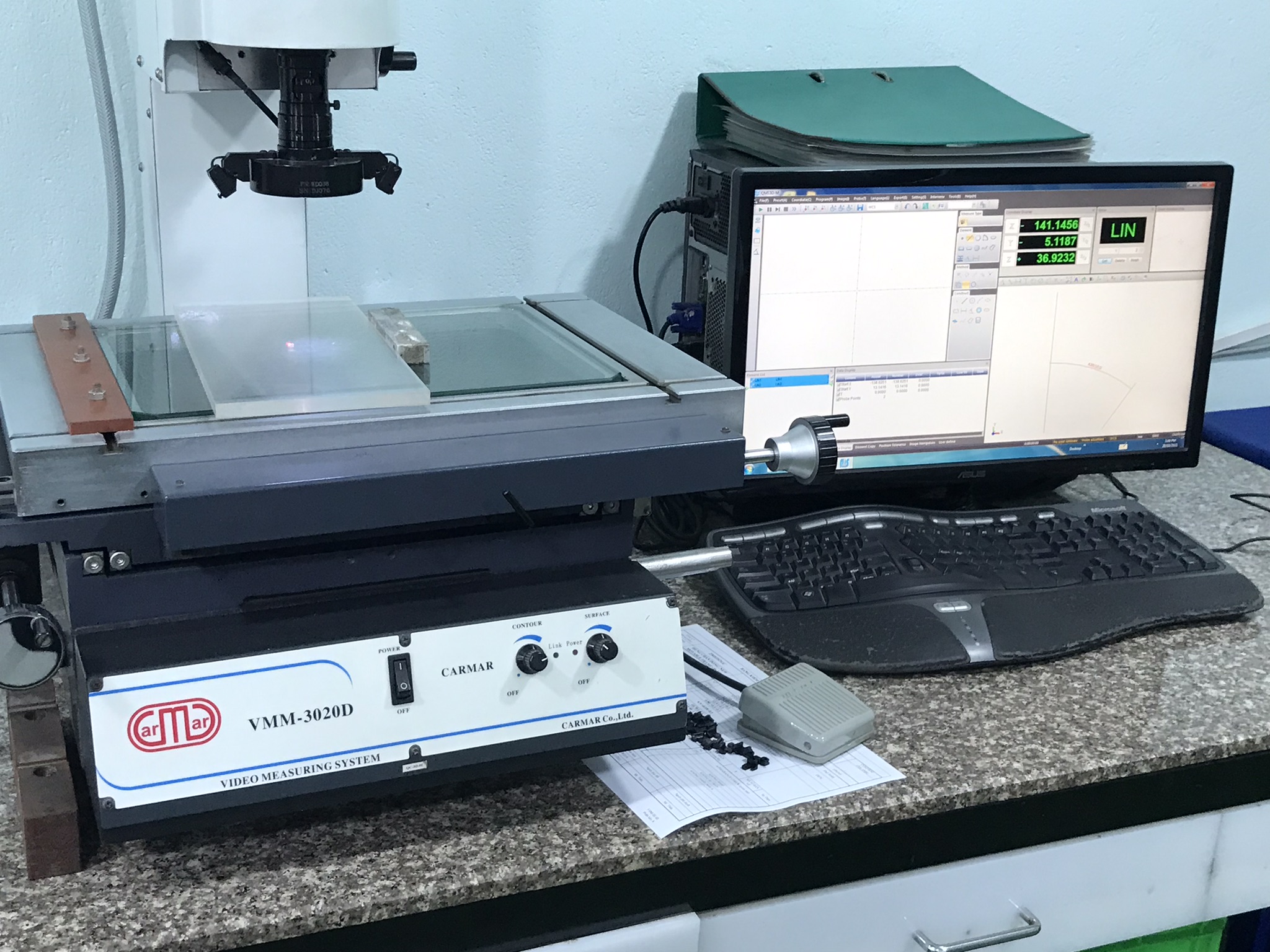
A portable X-ray fluorescence 6 (XRF) analyzer can verify chemical composition on the shop floor in minutes. It will not replace a full lab test, but it catches obvious material substitutions. We use this tool at our facilities during incoming inspection for critical projects.
Audit Your Fabricator's Quality Management System
A fabricator who holds ISO 9001 7 certification has an audited quality management system in place. But certification alone is not enough. Ask for the certificate, verify it on the issuing body’s website, and check the scope of certification. Some fabricators hold ISO 9001 for one process but not for the fabrication process you need.
For aerospace work, AS9100 certification is the standard. For automotive, IATF 16949 8. For medical devices, ISO 13485. Each of these builds on ISO 9001 with industry-specific requirements for traceability, risk management, and documentation control.
If your parts require special processes like welding, heat treating, or surface finishing, ask whether the fabricator holds NADCAP accreditation 9 for those specific processes. NADCAP is the gold standard for special process approval in the aerospace industry, and its rigor ensures process consistency that ISO alone does not guarantee.
What specific documentation do I need to include in my PPAP for US regulatory compliance?
A buyer interaction that shaped our PPAP approach happened when a US purchasing manager returned our initial submission package with a one-line email: "Where is the material cert tied to the FAI sample?" We had the MTR. We had the FAI. But we had not cross-referenced the heat number on the MTR to the specific parts in the First Article Inspection. That gap took two days to fix and delayed approval by a week.
A compliant PPAP for US regulatory purposes must include the Material Test Report (MTR) linked to specific lot/heat numbers, a First Article Inspection (FAI) report per AS9102 or customer format, a Certificate of Conformance (CoC), process flow diagrams, control plans, GD&T-referenced dimensional results, and any applicable welding, surface treatment, or ITAR documentation.
Core PPAP Elements for Sheet Metal Parts
The Production Part Approval Process 10 originated in the automotive industry under IATF 16949 but has been widely adopted across industries for US compliance. For sheet metal fabrication, here are the essential elements:
| PPAP Element | Description | Sheet Metal Specifics |
|---|---|---|
| Design Records | Customer drawings with all specifications | Must include GD&T callouts; tolerances typically ±0.5 mm for standard features |
| Material Test Report (MTR) | Chemical and mechanical test data | Heat/lot number must trace to FAI samples |
| First Article Inspection (FAI) | Full dimensional and visual inspection of initial parts | Per AS9102 for aerospace; per customer format otherwise |
| Certificate of Conformance (CoC) | Statement of compliance to all requirements | Covers material, process, and dimensional conformance |
| Process Flow Diagram | Step-by-step manufacturing process | Includes cutting, bending, welding, finishing, inspection |
| Control Plan | How each process step is monitored | Must address critical dimensions and material verification |
| Measurement System Analysis (MSA) | Gage R&R studies | Required for GD&T features with tight tolerances |
| Surface Treatment Records | Plating, anodizing, powder coating documentation | Per ASTM B633 (zinc plating), MIL-A-8625 (anodizing), or MIL-C-5541 (chemical conversion) |
| Welding Certifications | Welder qualifications and procedure specs | Per AWS D1.1 or applicable AWS code; includes SMAW, GTAW qualifications |
FAI: The Critical First Gate
A First Article Inspection is not a routine quality check. It is a complete, documented verification that the first production parts meet every single drawing requirement. For sheet metal brackets like the ones we produce — with precise folds, multiple mounting holes, and welded joints — the FAI must cover:
- Every dimensioned feature on the drawing
- Material verification (linked to the MTR by heat number)
- Surface finish and treatment verification
- Visual inspection for weld quality, burrs, and cosmetic defects
- Functional fit checks where applicable
In aerospace work, FAI must follow the AS9102 standard format. This standard requires a three-form package: Part Number Accountability (Form 1), Product Accountability (Form 2), and Characteristic Accountability (Form 3). Even outside aerospace, this structured format is the most reliable way to document first article results.
Welding and Surface Treatment Documentation
For sheet metal parts with weld marks — like the mounting brackets we fabricate with visible joints at folded and joined surfaces — welding certifications are essential. The welder must be qualified per the applicable AWS code (e.g., AWS D1.1 for structural steel, AWS D17.1 for aerospace). The Welding Procedure Specification (WPS) and Procedure Qualification Record (PQR) must be on file and referenced in the PPAP.
Surface treatment certifications are equally important. If your parts require powder coating, the applicator should provide batch records showing cure temperature and time. For zinc plating per ASTM B633, salt spray test results demonstrate corrosion resistance. For military applications, MIL-A-8625 (anodizing) and MIL-C-5541 (chemical conversion coating) certifications are standard requirements.
ITAR Considerations
If your sheet metal parts are defense-related or export-controlled, ITAR registration is a legal requirement for the manufacturer. ITAR is not a quality certification — it is a US State Department registration that authorizes a company to manufacture or export defense articles. Not every fabricator needs it, but if your parts fall under the US Munitions List, working with an unregistered supplier is a federal violation.
Our team helps US defense contractors navigate this by pre-qualifying suppliers for ITAR compliance before any technical data is shared. This prevents the common mistake of sending controlled drawings to an unregistered facility, which itself is an ITAR violation. For a broader overview of certifications needed for exporting sheet metal fabrication to Europe and the US, understanding these regulatory frameworks early in the sourcing process is critical.
Additionally, the secure handling of digital material certification data is becoming a concern. Compliance with cybersecurity frameworks like NIST 800-171 is increasingly expected when material certifications and technical data are stored or transmitted electronically in defense supply chains.
Nondestructive Testing When Required
For structural or safety-critical sheet metal components, your PPAP may need to include nondestructive testing (NDT) results. Common NDT methods for sheet metal include visual inspection (VT), dye penetrant testing (PT) for surface cracks, and radiographic testing (RT) for weld integrity. The testing personnel must hold certifications per ASNT SNT-TC-1A or NAS 410, and the PPAP should include their qualification records.
Conclusion
Getting material certifications right is the difference between smooth US customs clearance and costly production shutdowns. Request MTRs, CoCs, and FAIs for every project. Verify your fabricator's quality management system certifications match your industry. Audit document authenticity with independent testing. Build these steps into your supply chain process, and you protect your business from the start.
Frequently Asked Questions
What Belongs on a Compliant MTR?
A material test report is not just a piece of paper. It is the DNA record of the metal in your parts. Every MTR that meets US standards must contain specific data points. If any of these are missing, the report is incomplete and potentially non-compliant.
How do I ensure my sheet metal material test reports meet US ASTM standards?
Last year, our quality team in Vietnam rejected a batch of stainless steel brackets because the supplier's material test report listed only tensile strength — no chemical composition analysis, no yield data, and no ASTM specification reference. The MTR was technically present, but functionally useless.
Which environmental compliance certifications should I require for my imported custom parts?
A trade-off we weigh on nearly every US-bound project is cost versus environmental compliance documentation. Some buyers initially resist the overhead of environmental certifications — until they discover that non-compliant parts can be held at customs or rejected by their own end customers.
Footnotes
1. Official source for technical standards for materials, products, systems, and services. ↩︎
2. EU regulation for chemical substances, protecting human health and the environment from risks. ↩︎
3. EU directive restricting hazardous substances in electrical and electronic equipment for environmental protection. ↩︎
4. Replaced with the official SEC Final Rule document regarding Conflict Minerals disclosure. ↩︎
5. International standard for environmental management systems, helping organizations minimize environmental footprint. ↩︎
6. Non-destructive analytical technique used to determine the elemental composition of materials. ↩︎
7. Official standard for quality management systems, ensuring consistent products and services. ↩︎
8. Automotive quality management system standard, focusing on continual improvement and defect prevention. ↩︎
9. Industry-managed program for critical process accreditation in aerospace and defense sectors. ↩︎
10. Standardized quality assurance process in automotive supply chain for consistent part production. ↩︎