Packaging customization options for stamping parts 1 get overlooked until a shipment arrives scratched or rusted. I have seen our clients lose weeks of production over a few dollars of packaging.
Packaging customization options for stamping parts include VCI anti-rust wrapping, custom-molded foam or blister trays, poly bags, corrugated cartons, wooden crates, exact-count and kit packing, branded labels with barcodes, desiccant moisture control, and returnable container programs matched to part size, geometry, and shipping distance.
Below, I will walk through each option, when to use it, and what it costs you in time and money. Let us start with the biggest risk: rust and transit damage.
How Can I Customize Packaging to Prevent Rust and Damage During Long-Distance Shipping?
A container from Vietnam to the U.S. West Coast spends weeks at sea. Our team learned early that humidity inside that container is the silent killer of bare steel stampings.
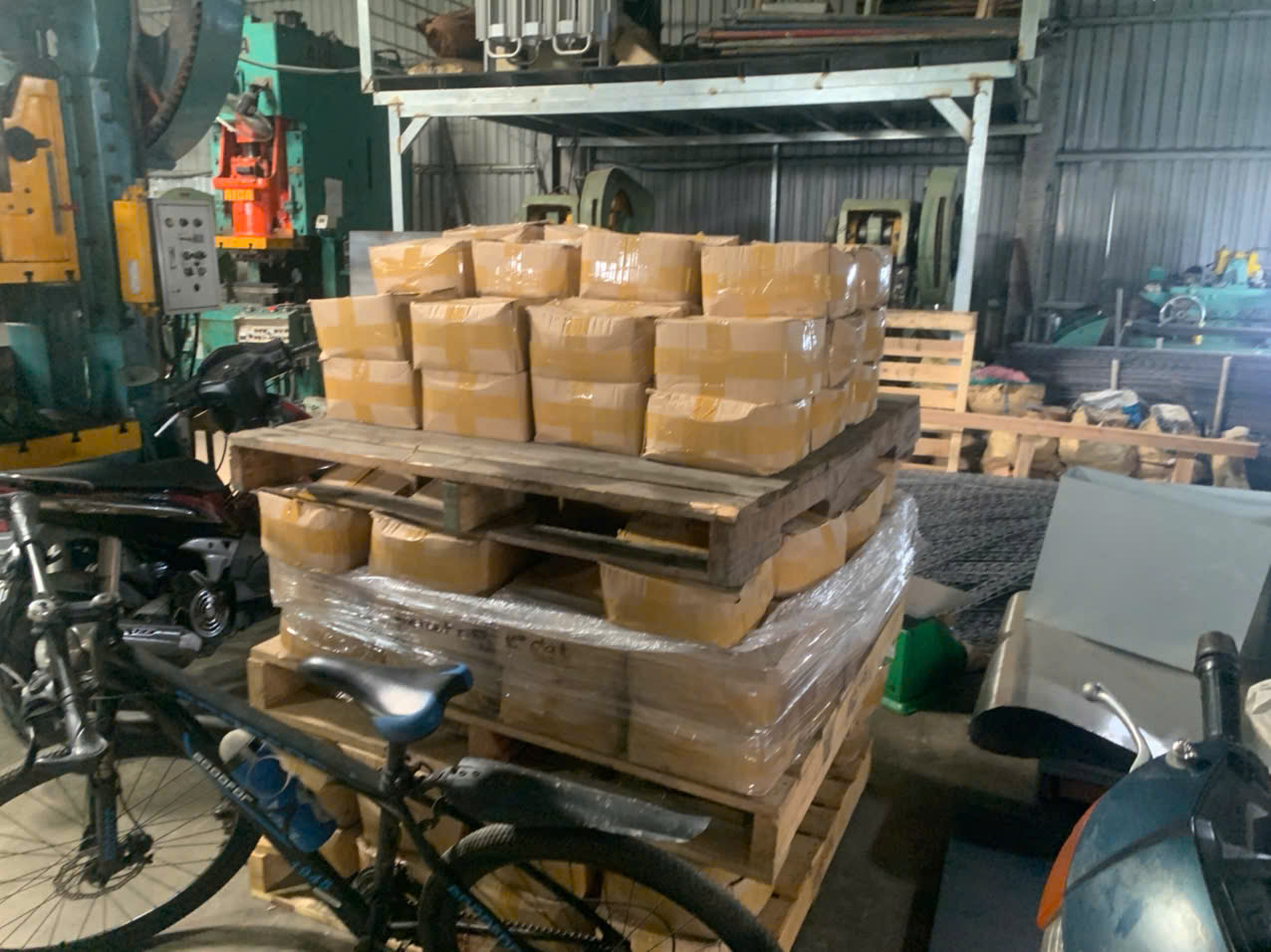
To prevent rust and damage, wrap stamped parts in VCI paper or film, add desiccant packs inside sealed moisture-barrier bags, separate layers with interleaving paper, immobilize parts with foam or dividers, and use rigid double-wall cartons or crates so nothing shifts during long-distance transit.

Corrosion protection and physical protection are two different jobs. Good packaging does both at the same time.
Corrosion Control Comes First
Bare steel, like the unfinished brackets we ship for construction hardware clients, starts oxidizing fast in humid air. VCI (vapor corrosion inhibitor 2) paper or film releases a protective vapor that bonds to the metal surface. It works only inside a closed space, so the bag or wrap must be sealed properly. For ocean freight, we usually combine three layers: VCI film against the parts, a sealed moisture-barrier bag around the batch, and desiccant packs inside that bag. Zinc-plated or galvanized parts need less protection, but we still recommend VCI for any voyage over two weeks.
Physical Damage Control Comes Second
Movement inside the box causes most scratches, not the drop itself. Parts that can slide will rub against each other for the entire trip. So we specify interleaving paper between stacked flat parts, foam layers between formed 3D parts, and cardboard partitions for parts with sharp punched edges that could gouge their neighbors.
| Risk | Packaging Solution | Best For |
|---|---|---|
| Rust and oxidation | VCI paper, VCI film, VCI foam | Bare steel, cold-rolled stampings |
| Humidity in containers | Desiccant packs + sealed barrier bags | Ocean freight, monsoon-season shipping |
| Surface scratching | Interleaving paper, foam separators | Cosmetic or plated surfaces |
| Deformation | Custom foam inserts, rigid crates | Thin-gauge or formed parts |
| Load shifting | Stretch wrap, banding, palletizing | Heavy bulk shipments |
Before mass production, we sometimes run a simple drop and vibration check on the packed carton. It is cheap insurance compared to a rejected container.
What Labeling and Branding Options Can I Request for My Stamped Parts Packaging?
One of our U.S. purchasing clients once told me his receiving team wasted an hour per pallet matching unmarked boxes to purchase orders. A two-cent label solved a real labor cost.
You can request custom labels with your logo and artwork, part numbers, batch or lot codes, scannable barcodes or QR codes, quantity counts, country-of-origin marks, and handling symbols. Options extend to printed cartons, branded tape, and drop-ship labeling for direct-to-customer fulfillment.
Labeling is not decoration. For B2B buyers, it is traceability and receiving efficiency.
Traceability Labeling
Every carton we ship for automotive-adjacent projects carries a lot code tied back to the production batch, the raw material certificate, and the final inspection report. If a quality question ever comes up, the client can trace one box back to one press run in minutes. That is exactly the kind of process control that PPAP 3-driven customers expect. Standard traceability elements include:
- Part number and revision level, matching the drawing exactly
- Batch or lot code linked to production records
- Quantity per carton, verified at final inspection
- Barcode or QR code for warehouse scanning
- Country of origin, required for U.S. customs clearance
Branding Options
If you distribute the parts under your own brand, we can print your logo and artwork on cartons, poly bags, or labels. Some clients supply their own label templates for OEM compliance, and we simply apply them. Others go further with branded inner boxes for resale-ready packaging.
Drop-Ship Labeling
When we manage door-to-door logistics, we can label cartons for direct delivery to your end customer. Your customer sees your brand, not ours. This turns packaging into part of your supply chain, not just protection.
How Do I Choose the Right Packaging Type for Different Stamping Part Sizes and Volumes?
Choosing packaging is a trade-off we weigh on nearly every quotation: protection level versus cost per part versus how the client's line actually consumes the parts.
Match packaging to the part: poly bags or exact-count boxes for small clips, foam-lined trays for formed or cosmetic parts, corrugated cartons on pallets for mid-volume orders, and crates or returnable containers for heavy, high-volume programs. Let geometry, weight, and consumption rate decide.
Here is the quick-reference matrix we use when scoping a new project:
| Part Profile | Volume | Recommended Packaging |
|---|---|---|
| Small flat clips, no tangle risk | Any | Poly bags in exact counts, inner boxes |
| Small formed clips that nest or tangle | High | Compartment trays or layer packing |
| Cosmetic or plated parts | Any | Blister or foam trays, interleaving paper |
| Medium brackets, sturdy geometry | Mid | Corrugated cartons 4, layered with dividers |
| Heavy or sharp-edged stampings | High | Wooden crates, banded pallets |
| Automated assembly feed | High | Pick-and-place trays, tube or reel formats |
| Repetitive JIT programs | Very high | Returnable plastic containers 5 (RPCs) |
Let the Part Decide, Not the Catalog
The Z-fold spring clips we produce can hook into each other if dumped loosely in a bag. For those, compartment trays or careful layer packing prevents tangling and bent tabs. Flat brackets with no cosmetic requirement, on the other hand, ship fine in bulk with just interleaving paper. More customization is not automatically better. Simple paper, cardboard, and stock foam are often sufficient and much cheaper. We only push custom-molded inserts 6 when the geometry, finish, or damage history justifies them.
Think About Consumption, Not Just Transit
Ask how your team uses the parts. If operators pull fifty parts per shift, exact-count inner bags of fifty eliminate counting errors on your floor. If a pick-and-place machine feeds the parts, trays that hold orientation save an entire handling step. Packaging that matches consumption pays for itself after arrival, not just during shipping.
Will Custom Packaging Affect My Production Lead Time and Overall Costs?
A lesson we learned the hard way: a client approved custom foam inserts late in a project, and the insert tooling arrived after the parts did. Now we lock packaging specs at the quotation stage.
Standard packaging adds essentially no lead time. Custom-molded foam, printed cartons, or blister trays typically add one to three weeks for the first order only, plus a modest tooling or setup cost. Repeat orders ship on normal schedules because materials are stocked in advance.
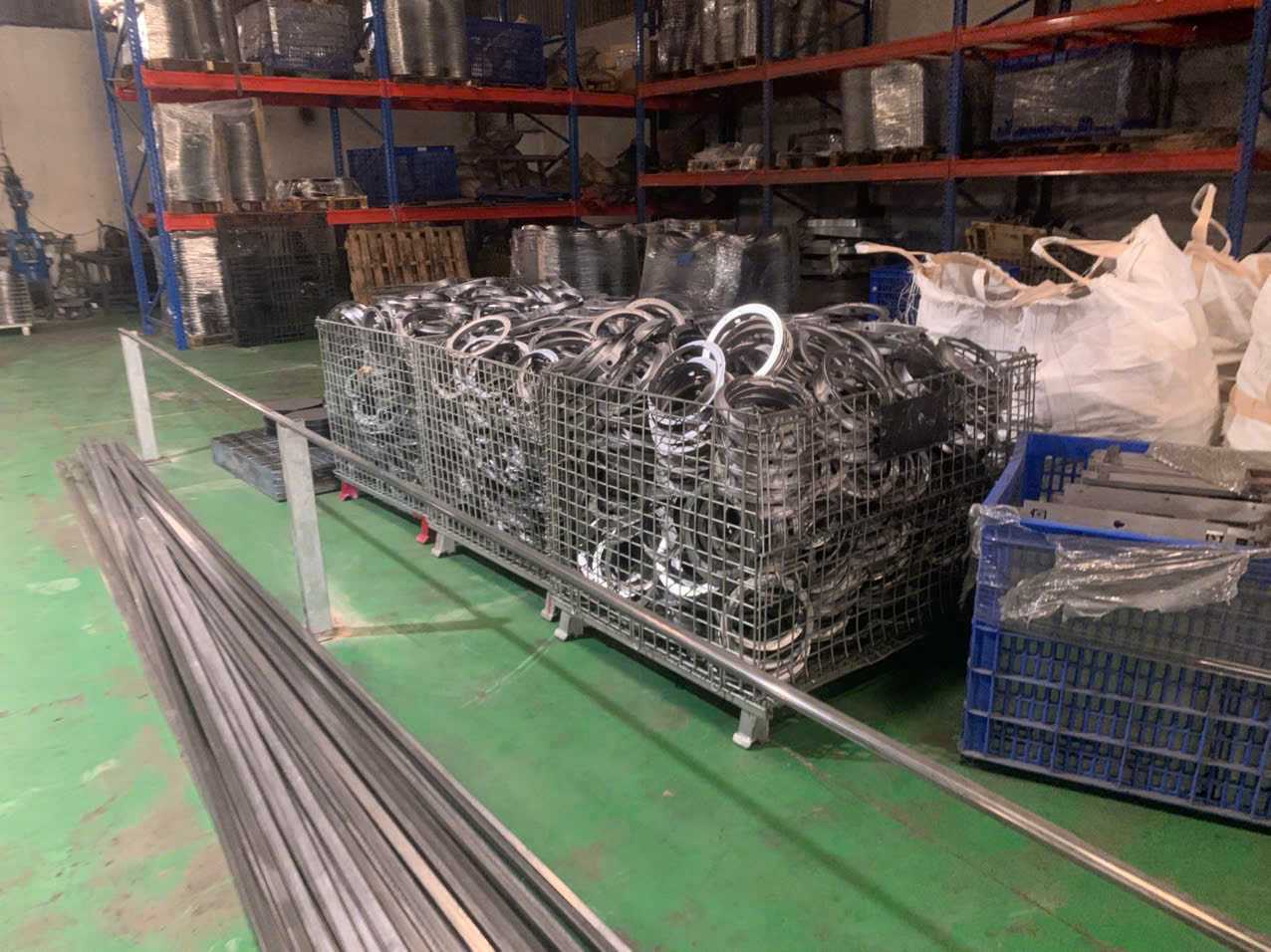
The honest answer is: it depends on what you customize and when you decide.
Where the Time Goes
Stock poly bags, cartons, and VCI paper sit in our packing area already. They add zero days. Custom items need their own supply chain. Printed labels take a few days. Printed cartons take one to two weeks. Custom-molded foam or blister trays need a die or mold, which can take two to three weeks the first time. The key is running packaging development in parallel with part production, not after it. When packaging is specified at the purchase order stage, the first article of the packaging arrives before the first article of the part needs it.
Where the Money Goes
| Cost Item | Typical Impact | One-Time or Recurring |
|---|---|---|
| Printed labels | Very low | Recurring |
| VCI wrap and desiccants | Low | Recurring |
| Printed branded cartons | Low to moderate | Recurring, plus small setup |
| Custom foam or blister tray tooling | Moderate | One-time |
| Wooden export crates | Moderate | Recurring |
| Returnable container program | Higher upfront, lower per cycle | One-time investment |
The Cost You Should Actually Compare
Do not compare custom packaging against cheap packaging. Compare it against the cost of one rejected shipment: rework, air-freight replacements, and a stopped assembly line. For our clients on 60 to 90 day payment terms, a damaged container also delays their revenue, not just ours. Justified customization is risk reduction. Unjustified customization is waste. A good supplier will tell you which is which before you pay for either.
Conclusion
Poor packaging turns good stamping parts into scrap before they reach your dock. Engineer packaging around the part, the route, and your process, and every shipment arrives ready to use.
Frequently Asked Questions
How Can I Customize Packaging to Prevent Rust and Damage During Long-Distance Shipping?
A container from Vietnam to the U.S. West Coast spends weeks at sea. Our team learned early that humidity inside that container is the silent killer of bare steel stampings.
What Labeling and Branding Options Can I Request for My Stamped Parts Packaging?
One of our U.S. purchasing clients once told me his receiving team wasted an hour per pallet matching unmarked boxes to purchase orders. A two-cent label solved a real labor cost.
How Do I Choose the Right Packaging Type for Different Stamping Part Sizes and Volumes?
Choosing packaging is a trade-off we weigh on nearly every quotation: protection level versus cost per part versus how the client's line actually consumes the parts.
Footnotes
1. Provides background on the metal stamping manufacturing process referenced throughout the article. ↩︎
2. Explains the chemistry behind VCI materials used to protect bare steel parts during shipping. ↩︎
3. ISO relevance for production part approval process standards mentioned in traceability discussion. ↩︎
4. Background on corrugated fiberboard material used widely in the packaging type comparisons. ↩︎
5. EPA resource on sustainable materials management relevant to reusable container programs discussed. ↩︎
6. Offers broader context on engineering principles used to justify custom protective packaging designs. ↩︎