
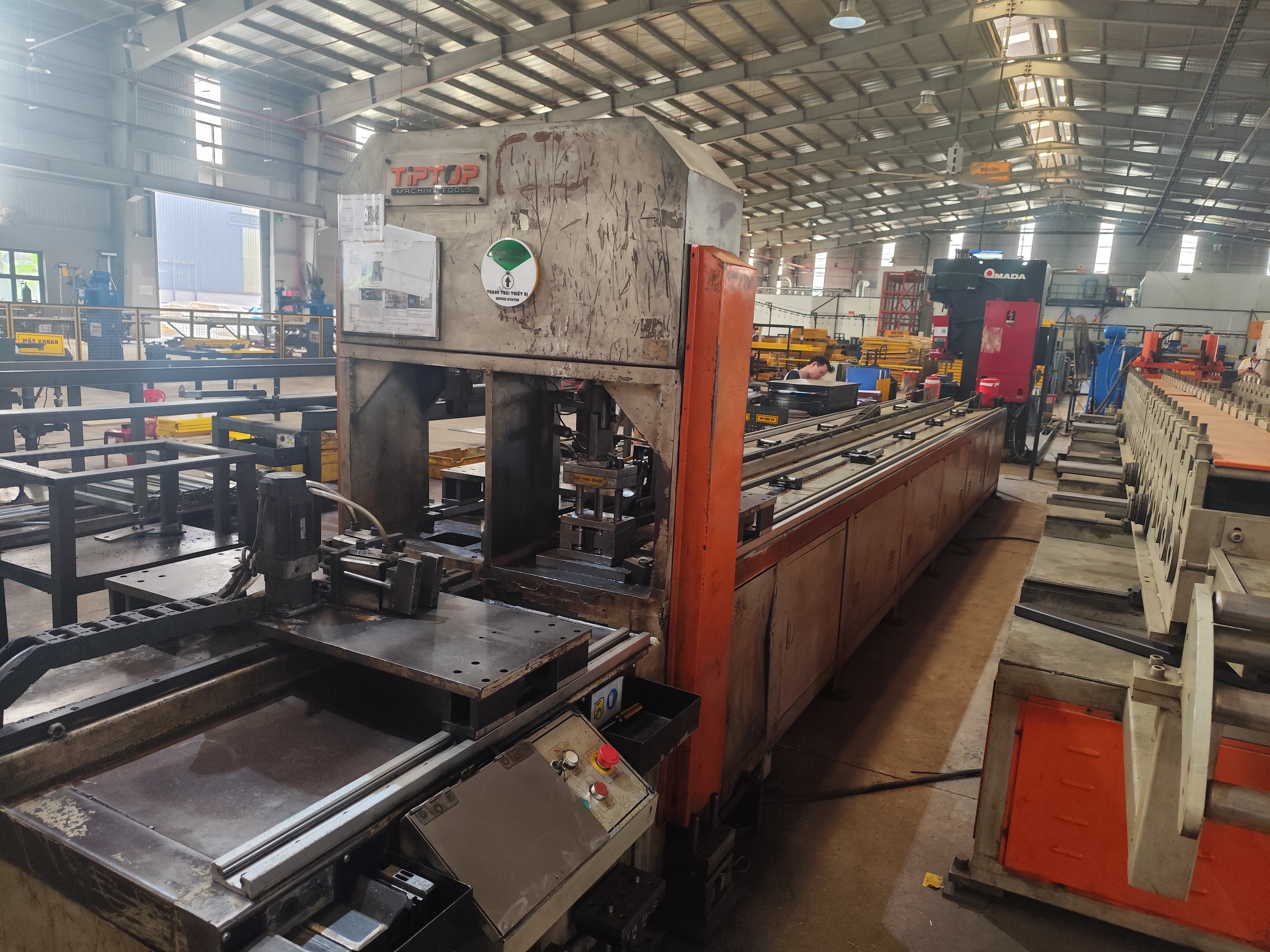
[Power stability measures for Vietnamese stamping parts suppliers](https://dewintech.com/blog/how-vietnamese-suppliers-ensure-power-stability-stamping-parts-production/) decide whether your brackets ship on time. Our Vietnam team audits stamping plants weekly, and grid resilience now makes or breaks approvals.
Vietnamese stamping parts suppliers should have backup diesel generators with automatic transfer switches, UPS units for press controls and PLCs, voltage stabilizers, surge protection, dedicated transformers, load-shifting schedules aligned with EVN demand-response programs, and documented outage-response procedures tested through regular drills.
Below, I break down how to verify these measures before you sign, what an outage really costs mid-run, which standards to require, and how power quality ties directly to part quality.
How can I verify a Vietnamese stamping supplier's backup power capabilities before signing a contract?
A supplier once showed our audit team a shiny generator that had never been fuel-tested. It looked impressive. It would not have started. That visit changed how we verify backup power in Vietnam.
Verify backup power by requesting generator specifications and maintenance logs, witnessing a live automatic transfer switch test during your audit, checking on-site fuel storage and refill contracts, confirming UPS coverage for press controls, and reviewing the factory's outage records from the industrial park.

Paper claims are cheap. Physical proof is what matters. When our Vietnam office runs supplier audits, we treat power resilience the same way we treat die maintenance or QC documentation. We ask for evidence, then we test the evidence on site.
The five-step verification process we use
- Request documents first. Ask for generator capacity ratings, installation dates, preventive maintenance records, and load-bank test reports. Gaps in the log book usually mean gaps in readiness.
- Witness a live transfer test. Ask the supplier to simulate a grid loss during your visit. Time how long the automatic transfer switch 1 takes. A healthy system switches within seconds. Excuses to avoid the test are a red flag.
- Check fuel logistics. A generator without fuel is decoration. Confirm on-site diesel storage volume, how many hours of runtime it covers, and whether a refill contract exists with a local fuel vendor.
- Map the UPS coverage. Walk the line. Confirm which loads sit on UPS. Press PLCs, servo feed controls, inspection stations, and servers should all be covered.
- Ask the industrial park. Parks in Bac Ninh, Dong Nai, and Hai Phong often have priority industrial feeds. Historical outage data from park management tells you more than the supplier's sales pitch.
What the documents should show
| Item to request | What good looks like | Warning sign |
|---|---|---|
| Generator capacity | Sized to cover the defined critical load | Vague "big enough" answers |
| Maintenance log | Monthly checks, annual load-bank test | Blank or backdated entries |
| Fuel storage | 8+ hours runtime plus refill contract | Small tank, no vendor agreement |
| Transfer switch | Automatic, tested quarterly | Manual switching only |
| UPS list | Covers PLCs, controls, IT, inspection | UPS on office computers only |
In our experience sourcing custom stamped parts for U.S. clients, suppliers who pass this verification also tend to pass PPAP 2 requirements faster. Discipline in one area predicts discipline in the other.
What happens to my production schedule if a Vietnamese supplier experiences a power outage mid-run?
One trade-off I weigh on every project is speed versus resilience. A cheaper supplier with weak power protection may quote a shorter lead time, yet a single outage can erase that advantage overnight.
A mid-run outage stops presses instantly, risks die damage and stuck strips, scraps in-process parts, and forces restart checks and re-setup. Depending on backup systems, delays range from minutes with automatic transfer to several days when tooling is damaged or shifts are lost.

The impact is never just "the lights went out." Stamping is a continuous, high-force process. When power drops mid-stroke, several bad things can happen at once. The press may stop with the die partially closed. The coil feed may lose position. In-process parts get scrapped. And after power returns, the team cannot simply hit start. They must inspect the die, re-thread the strip, verify feed pitch, and often run first-article checks again.
The real timeline of an outage
| Supplier readiness level | Typical downtime | Schedule impact on your order |
|---|---|---|
| Auto transfer + UPS on controls | Minutes | Usually none; buffer absorbs it |
| Generator, manual start only | 1–4 hours | Same-day recovery, possible overtime |
| No backup, no procedures | Half day to multiple days | Missed ship dates, air freight risk |
| Outage causes die damage | Days to weeks | Tool repair, requalification, major delay |
Die damage is the scenario that keeps me cautious. Progressive dies are expensive and slow to repair. If a strip jams during an uncontrolled stop and the operator restarts carelessly, a crushed die can push delivery out by weeks. That is why we ask suppliers not only about generators, but about written restart procedures.
There is also a hidden scheduling effect. During dry-season grid stress, Vietnamese utilities encourage large consumers to shift loads away from peak hours. Suppliers enrolled in EVN's demand-response program 3 may move heavy pressing to nights or early mornings. Managed well, this protects your schedule. Managed poorly, it quietly stretches lead times. When we manage contract manufacturing for U.S. clients on 60–90 day terms, we build these seasonal patterns into the production plan up front, so promised dates already reflect grid reality.
Ask your supplier one blunt question: "Walk me through your last outage, hour by hour." The quality of that answer tells you how your next order will survive the next one.
Which power stability certifications or standards should I require from my stamping parts supplier in Vietnam?
A purchasing manager from Texas once emailed me asking for a "power stability certificate." I had to explain that no single certificate exists — but a smart combination of standards and evidence works even better.
Require ISO 9001 with documented contingency planning, ISO 22301 or an equivalent business continuity plan for larger suppliers, electrical installation compliance with Vietnamese and IEC standards, generator and UPS maintenance records, and location in an industrial park with priority EVN industrial power feeds.

No auditor issues a stamp that says "outage-proof." So you assemble proof from several directions instead. In our supplier qualification work across Vietnam, we group the evidence into three layers: management systems, technical compliance, and situational advantages.
Layer 1: Management system standards
ISO 9001 4 is the baseline. But do not stop at the certificate. Ask how the quality system addresses interrupted processes. A serious supplier can show a documented procedure for handling parts produced around an outage — quarantine, re-inspection, and disposition. For larger suppliers serving automotive programs, IATF 16949 5 raises the bar further, because it demands contingency plans for utility interruptions by design. ISO 22301 6, the business continuity standard, is rare among small Vietnamese stamping shops, but a written and tested continuity plan achieves the same goal.
Layer 2: Technical and electrical compliance
Ask for evidence that the electrical installation meets Vietnamese electrical regulations and relevant IEC standards 7. Key items include transformer inspection reports, switchgear and breaker maintenance records, surge protection on press lines, and voltage stabilizer specifications. In Vietnam, lightning and voltage fluctuation are real threats, so surge protection devices are not optional extras.
Layer 3: Situational evidence
| Evidence type | Why it matters |
|---|---|
| Industrial park priority feed letter | Parks like Bac Ninh or Hai Phong negotiate stable EVN supply |
| Dual feed or dedicated transformer | Removes single points of failure for press lines |
| EVN demand-response enrollment | Shows proactive load management, not reactive scrambling |
| Outage drill records | Proves the continuity plan is practiced, not shelf-ware |
| DPPA or rooftop solar agreements | Signals long-term energy strategy at larger sites |
When we audit for our U.S. clients, we score all three layers. A small shop with strong Layer 2 evidence and honest drill records often beats a bigger factory waving certificates it cannot explain.
How do I assess whether unstable power in Vietnam could affect the quality of my stamped parts?
Early in one bracket project, our final inspection caught intermittent feed-pitch drift on parts from a new supplier. The root cause surprised the client: voltage sags were nudging the servo feeder, not worn tooling.
Assess quality risk by checking whether press controls, servo feeders, and sensors are protected by UPS and voltage stabilizers, reviewing scrap and rework records against local outage dates, and confirming the supplier re-inspects and quarantines all parts produced around any power disturbance.

Power quality problems rarely announce themselves. A full blackout is obvious. A 200-millisecond voltage sag is invisible — until your incoming inspection finds hole positions drifting on a stamped mounting clip. That is why I push buyers to think in terms of power quality, not just power availability.
How power disturbances become part defects
Modern stamping lines depend on electronics. Servo feeders control strip advance. Sensors detect misfeeds and slug pulls. Press controls manage stroke timing. Each of these reacts badly to dirty power:
- Voltage sags can cause a servo feeder to lose a fraction of pitch. Result: mislocated holes or short parts.
- Momentary interruptions can reset PLCs mid-cycle. Result: an uncontrolled stop, possible die strike, and scrap.
- Voltage spikes from lightning or grid switching can damage drives and sensors. Result: intermittent faults that look random.
- Frequency instability can affect motor speed on older equipment. Result: inconsistent forming on deep-drawn or multi-bend brackets.
For the kind of precision brackets and Z-fold clips we manage — parts with tight hole-position tolerances and multiple 90-degree bends — feed accuracy is everything. A supplier without stabilized power is gambling with your dimensional consistency.
A practical assessment checklist
- Ask which loads are on UPS and voltage regulation. Demand the single-line diagram, not a verbal answer.
- Cross-reference scrap logs with dates of known grid disturbances in the region. Patterns reveal exposure.
- Confirm the disturbance-response rule: all parts in process during a power event go into quarantine for re-inspection.
- Check whether inspection equipment itself — CMMs, vision systems, gauges — is power-protected. Bad power can corrupt measurement data too.
- Review whether the supplier tracks power quality with monitoring devices. IoT-based monitoring tied to production records is the gold standard.
At our final inspection stage in Vietnam, we verify critical dimensions against the drawing regardless of the supplier's story. But prevention beats detection. A supplier who controls power quality gets it right the first time — which is exactly what our clients pay us to guarantee.
Conclusion
Power stability is now a core supplier qualification criterion in Vietnam. Verify generators, demand standards, plan for outages, and protect quality — or let a partner audit it for you.
Frequently Asked Questions
How can I verify a Vietnamese stamping supplier's backup power capabilities before signing a contract?
A supplier once showed our audit team a shiny generator that had never been fuel-tested. It looked impressive. It would not have started. That visit changed how we verify backup power in Vietnam.
What happens to my production schedule if a Vietnamese supplier experiences a power outage mid-run?
One trade-off I weigh on every project is speed versus resilience. A cheaper supplier with weak power protection may quote a shorter lead time, yet a single outage can erase that advantage overnight.
Which power stability certifications or standards should I require from my stamping parts supplier in Vietnam?
A purchasing manager from Texas once emailed me asking for a "power stability certificate." I had to explain that no single certificate exists — but a smart combination of standards and evidence works even better.
Footnotes
1. Background explanation of the automatic transfer switch technology central to backup power verification. ↩︎
2. Explains the Production Part Approval Process referenced regarding supplier qualification speed. ↩︎
3. Wikipedia background on demand-response programs like the EVN scheme mentioned. ↩︎
4. Official ISO reference for the quality management standard used as baseline evidence. ↩︎
5. Explains the automotive quality standard mentioned for contingency planning requirements.