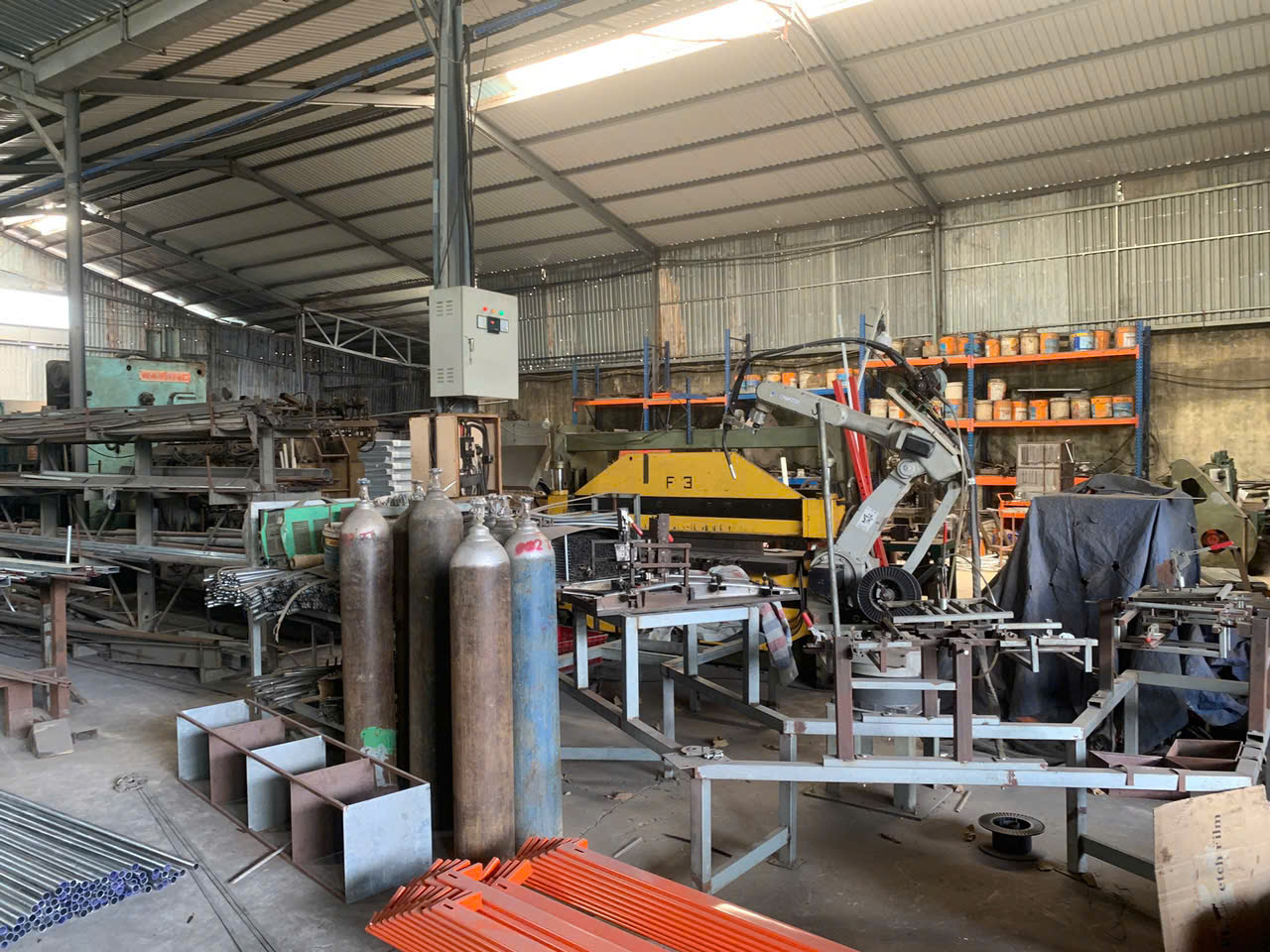

We lost an entire batch of mounting brackets last year because nobody accounted for how thermal expansion 1 would warp the joints during service — a costly lesson that reshaped our entire approach to high-temperature sheet metal weldments.
Sheet metal weldments in high-temperature environments demand careful material selection for oxidation resistance, strict heat input control during welding, strategic joint design to manage welding distortion, and rigorous quality protocols including post-weld heat treatment to ensure long-term structural integrity and fatigue life.
This article walks through the critical precautions step by step Inconel nickel-based superalloys 2. Whether you source custom brackets, housings, or mounting plates, you need to understand these factors before your next order ships.
How do I choose the best sheet metal materials to withstand high-temperature oxidation?
A buyer we work with in the U.S. once specified mild carbon steel for protective housings that would sit near a furnace exhaust — the parts rusted through within three months, and the replacement order cost twice the original pulsed TIG (GTAW) 3.
Material selection for high-temperature sheet metal weldments should prioritize alloys with proven oxidation resistance and creep resistance, such as 300-series stainless steels, Inconel nickel-based superalloys, or titanium alloys, matched to the specific operating temperature range and atmospheric conditions of your application.

The right material is the foundation. Everything else — welding process, joint design, quality control — builds on top of it. Get the material wrong, and no amount of engineering will save the part.
Key Properties to Evaluate
When our engineering team reviews a new high-temperature project, we look at five core properties before recommending a material:
- Oxidation resistance — Can the alloy form a stable oxide layer that protects the base metal?
- Creep resistance — Will the material deform slowly under sustained load at temperature? Creep resistance 4
- Thermal expansion coefficient — How much will the part grow and shrink during thermal cycling?
- Weldability — Can the alloy be welded without excessive preheating or risk of cracking?
- Cost and availability — Is the alloy commercially viable for the production volume?
Common Material Options Compared
| Material | Max Service Temp (°F) | Oxidation Resistance 5 | Creep Resistance | Relative Cost |
|---|---|---|---|---|
| Carbon Steel (A36) | ~800 | Poor | Poor | Low |
| 304 Stainless Steel | ~1,500 | Good | Moderate | Medium |
| 316 Stainless Steel | ~1,600 | Very Good | Moderate | Medium-High |
| Inconel 625 | ~1,800 | Excellent | Excellent | High |
| Titanium Grade 2 | ~1,100 | Very Good | Good | High |
| Inconel 718 | ~1,300 | Excellent | Excellent | Very High |
Why Oxidation Resistance Matters More Than You Think
At temperatures above 1,000°F, unprotected carbon steel loses material thickness rapidly. The oxide scale flakes off, exposing fresh metal to further attack. This is not just a cosmetic problem. It directly reduces the load-bearing cross-section of the part. For sheet metal, which is already thin, even 0.005 inches of material loss per year can compromise the structure within a single service cycle.
Stainless steels form a chromium-oxide layer that self-heals. Nickel-based superalloys go further by adding aluminum and chromium to create extremely stable oxide barriers. During our supplier audits in Vietnam and across Asia, we verify that the mill certificates match the specified alloy composition. A slight variation in chromium content — say 16% instead of 18% — can dramatically reduce oxidation resistance.
Microstructural Changes Under Heat
Prolonged exposure to high temperatures causes microstructural changes in many alloys. For example, 304 stainless steel can experience carbide precipitation 6 at the grain boundaries between 800°F and 1,500°F. This is called sensitization, and it makes the material vulnerable to intergranular corrosion. Choosing a stabilized grade like 321 or a low-carbon grade like 304L mitigates this risk. We always flag this during co-development reviews with our U.S. clients, because the operating environment dictates the grade — not just the price sheet. To understand how stainless steel, aluminum alloy, and carbon steel compare in sheet metal fabrication, it helps to evaluate each material's behavior under sustained thermal load.
What welding processes should I require to prevent joint failure under extreme thermal stress?
During a recent project review, our quality team in China caught a supplier using standard MIG settings on a thin Inconel bracket — the heat affected zone was three times wider than acceptable, and the part would have failed within weeks in service.
To prevent joint failure under extreme thermal stress, specify low-heat-input processes such as pulsed TIG (GTAW) or pulsed MIG welding, require low-hydrogen consumables stored in heated ovens, enforce controlled preheating and post-weld heat treatment schedules, and mandate documented weld procedure specifications (WPS) qualified to your service temperature.

The welding process is where material integrity is either preserved or destroyed. A wrong parameter, a damp electrode, or a skipped preheat step can introduce residual stresses and microscopic cracks that become catastrophic failures at temperature.
Choosing the Right Process
Not every welding process suits thin sheet metal in high-temperature applications. Here is how the common welding processes in sheet metal fabrication compare:
| Welding Process | Heat Input Level | Best For | HAZ Width | Suitability for Thin Sheet |
|---|---|---|---|---|
| TIG (GTAW) | Low | Precision joints, exotic alloys | Narrow | Excellent |
| Pulsed MIG (GMAW-P) | Low-Medium | Production runs, stainless | Moderate | Good |
| Standard MIG (GMAW) | Medium-High | Thicker sections, carbon steel | Wide | Poor for thin gauge |
| Stick (SMAW) | High | Field repairs, heavy plate | Wide | Not recommended |
| Laser Welding | Very Low | High-precision, automated | Very Narrow | Excellent |
TIG welding gives the operator maximum control over heat input. For our custom bracket and housing projects, we almost always specify TIG for material thicknesses below 3mm. The narrow heat affected zone preserves the base metal's properties.
The Role of Preheating and Post-Weld Heat Treatment
Preheating is not optional — even when the shop floor is already hot. Ambient heat does not distribute evenly through the joint. A controlled preheat ensures the entire weld zone reaches a uniform temperature, which slows the cooling rate and prevents hydrogen-induced cracking.
Post-weld heat treatment 8 (PWHT) relieves the residual stresses locked into the weldment during cooling. These stresses are invisible but dangerous. At high service temperatures, they accelerate creep and can initiate fatigue cracks. For critical components, we require our suppliers to document the PWHT cycle — temperature, hold time, and cooling rate — on every batch traveler.
Low-Hydrogen Practices
Hydrogen is the enemy of high-temperature weld joints. Moisture on the electrode, in the shielding gas line, or on the base metal surface introduces hydrogen into the weld pool. As the joint cools, trapped hydrogen migrates to stress concentration points and causes delayed cracking — sometimes hours or days after welding.
Low-hydrogen rods must be stored in heated ovens at 250–300°F. Once removed, they should be used within four hours. We audit this practice during every supplier visit. It sounds basic, but non-compliance is one of the most common root causes of weld failure we encounter.
Shielding Gas Considerations
For stainless steels and nickel alloys, pure argon or argon-helium blends provide the best shielding gas coverage. CO₂-rich blends cause excessive oxidation on these materials. In high-temperature outdoor environments, wind screens or welding tents are essential — a disrupted gas shield leads to porosity and oxide inclusions that become failure initiation sites.
How can I design my sheet metal weldments to avoid warping when exposed to heat?
One trade-off we weigh constantly is joint accessibility versus distortion control — a design that is easy to weld is not always one that stays flat after cooling.
To avoid warping in sheet metal weldments exposed to heat, design with symmetrical joint placement, use stitch or skip welding sequences to distribute heat evenly, specify tight fit-up tolerances with proper clamping fixtures, and consider adding stiffening features like flanges or ribs that resist thermal expansion and contraction forces.
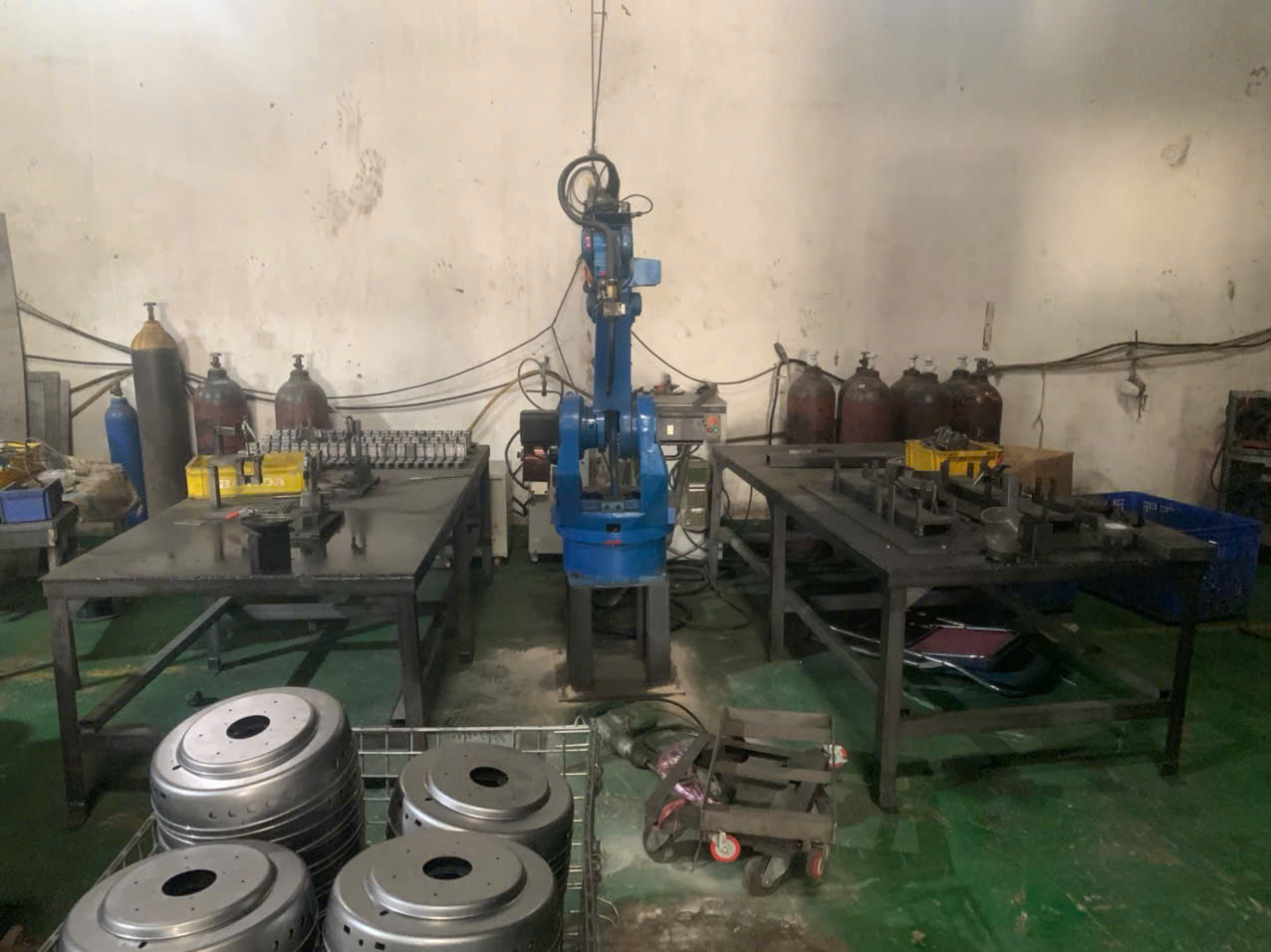
Welding distortion is the single most common quality issue we see on thin sheet metal parts. It happens because the weld zone heats and expands while the surrounding metal stays cool. When the weld cools, it contracts and pulls the part out of shape. Good design anticipates this.
Design Strategies That Work
Here is a practical breakdown of approaches our engineering team uses during co-development with clients:
Symmetrical weld placement. Place welds symmetrically about the neutral axis of the part. If you weld only on one side of a panel, it will bow toward that side. Balanced welding on both sides cancels out the distortion forces.
Stiffening features. Flanged edges, embossed ribs, and formed channels add rigidity to flat panels. A flat 16-gauge stainless panel will warp easily. The same panel with a ½-inch bent flange along each edge resists distortion dramatically.
Minimize weld volume. Every cubic millimeter of weld metal adds heat and shrinkage force. Use the smallest effective weld size. For fillet welds, a 3mm leg is often sufficient where designers reflexively call out 5mm.
Welding Sequence Matters
The order in which you lay down welds has a huge effect on final distortion. Skip welding — also called stitch welding — means placing short weld segments with gaps between them, then going back to fill the gaps after the first segments cool. This distributes heat more evenly and allows the part to dissipate energy between passes.
Alternating weld locations is another key technique. Instead of welding from left to right across a panel, jump to the opposite end, then back to the middle. This prevents heat from accumulating in one zone.
Fixturing and Clamping
No design feature replaces proper fixturing. We require our contract manufacturers to build dedicated welding fixtures for any sheet metal weldment going into high-temperature service. The fixture holds the part in its intended shape and resists the contraction forces during cooling. For complex assemblies like the custom mounting brackets we produce, the fixture design is reviewed as part of the PPAP process before production begins.
Tight fit-up is equally critical. Gaps between mating parts force the welder to add more filler metal, which means more heat, which means more distortion. Our standard calls for fit-up gaps no larger than 10% of the material thickness on butt joints.
Computational Modeling
Finite element analysis (FEA) 9 can simulate the thermal cycle of welding and predict where distortion will occur. We use this for high-value or high-volume parts to optimize the welding sequence before the first prototype is built. It reduces costly rework and shortens the development timeline.
How do I ensure my supplier's quality control process can handle high-temperature performance requirements?
A lesson we learned early in our Vietnam operations: a supplier can have modern equipment and still produce non-conforming parts if there is no systematic process connecting the drawing requirements to the shop floor actions.
To ensure your supplier's QC process handles high-temperature performance requirements, audit their weld procedure qualifications (WPQ/WPS), verify material traceability with mill certificates, require documented PWHT records, mandate dimensional inspection at elevated-temperature-simulated conditions, and confirm they follow a structured PPAP or FMEA-based quality system.

Quality control for high-temperature weldments is not the same as standard sheet metal QC. The stakes are higher, the failure modes are more complex, and the testing requirements go beyond simple dimensional checks.
What to Audit at the Supplier
When our team conducts supplier audits — whether in Vietnam, China, or elsewhere in Asia — we evaluate specific capabilities tied to high-temperature weldment production:
| QC Checkpoint | What to Verify | Why It Matters |
|---|---|---|
| Weld Procedure Specification (WPS) | Documented and qualified per AWS or ASME | Ensures repeatable, code-compliant welds |
| Welder Qualification Records (WPQ) | Current certifications for specific processes/materials | Confirms the welder is trained for the alloy and joint type |
| Material Traceability | Mill certs matched to incoming material | Prevents wrong-alloy substitution |
| Electrode Storage | Heated ovens, usage logs, exposure time limits | Prevents hydrogen-induced cracking |
| PWHT Records | Time-temperature charts for each batch | Confirms residual stresses are relieved |
| NDT Capability | Radiographic, ultrasonic, or dye penetrant testing | Detects subsurface and surface defects |
| Dimensional Inspection | CMM or laser scanning with tolerance callouts | Catches distortion before shipping |
The PPAP Framework
Our approach with U.S. clients is built around the Production Part Approval Process. Before any volume production begins, the supplier must submit sample parts, measurement reports, material certificates, process flow diagrams, and control plans. For high-temperature weldments, we add specific line items: PWHT documentation, weld cross-section macros, and hardness test results in the heat affected zone.
This front-loaded effort pays for itself. It catches problems before they become container-loads of scrap. One of the biggest pain points our clients describe is suppliers who skip critical drawing requirements — a note like "stress relieve at 1,150°F for 1 hour" gets overlooked, and the parts crack in service. Our project managers flag every special process note and build it into the control plan.
Real-Time Process Monitoring
Advanced suppliers now use thermal imaging cameras to monitor weld pool temperature in real time. Acoustic sensors can detect porosity as it forms. Robotic welding systems offer repeatable heat input that a manual welder cannot match shift after shift. We evaluate whether these technologies are appropriate for each project — they add cost, but for critical high-temperature components, the investment in consistency pays dividends in fatigue life and long-term reliability.
The Human Factor
Even with the best systems, inexperienced welders in high-temperature alloy work are a risk. We verify that the supplier's welders hold current qualifications for the specific material and process. High-temperature alloy welding is not suitable for inexperienced hands. The thermal behavior of nickel alloys, for example, is fundamentally different from carbon steel. A welder who is excellent on mild steel may produce cracked, porous joints on Inconel without proper training.
Conclusion
Sheet metal weldments in high-temperature environments demand a multi-layered approach — from choosing alloys with proven oxidation resistance, to controlling heat input, designing against distortion, and enforcing rigorous supplier quality systems that leave nothing to chance.
Frequently Asked Questions
How do I choose the best sheet metal materials to withstand high-temperature oxidation?
A buyer we work with in the U.S. once specified mild carbon steel for protective housings that would sit near a furnace exhaust — the parts rusted through within three months, and the replacement order cost twice the original pulsed TIG (GTAW) 3 .
What welding processes should I require to prevent joint failure under extreme thermal stress?
During a recent project review, our quality team in China caught a supplier using standard MIG settings on a thin Inconel bracket — the heat affected zone was three times wider than acceptable, and the part would have failed within weeks in service.
How can I design my sheet metal weldments to avoid warping when exposed to heat?
One trade-off we weigh constantly is joint accessibility versus distortion control — a design that is easy to weld is not always one that stays flat after cooling.
Footnotes
1. Explains the fundamental concept of matter increasing in size with temperature. ↩︎
2. Details a family of high-performance nickel-chromium-based alloys for extreme temperature applications. ↩︎
3. Describes an advanced TIG welding process for superior weld quality and heat input control. ↩︎
4. Explains the material property of resisting slow deformation under sustained load at high temperatures. ↩︎
5. Replaced 404 link with an authoritative Wikipedia page covering the topic. ↩︎
6. Explains the detrimental microstructural change in stainless steel when exposed to high temperatures. ↩︎
7. Provides an overview of the properties and applications of 300-series austenitic stainless steels. ↩︎
8. Clarifies the controlled process of reheating weldments to relieve residual stresses and improve properties. ↩︎
9. Explains a computational method used to predict an object’s behavior under various physical effects. ↩︎