Every rejected batch of custom sheet metal parts traces back to one root cause: unclear or missing quality standards between buyer and supplier IATF 16949 1. When our team manages fabrication projects across Vietnam and other Asian suppliers for U.S. clients, we see this gap cause costly rework, missed deadlines, and strained relationships.
The primary ISO quality standards for sheet metal fabrication include ISO 9001:2015 for quality management systems, ISO 2768 for general dimensional tolerances, ISO 9013 for thermal cutting classification, ISO 3834 and ISO 15614 for welding quality, and ISO 14001 for environmental management. Together, these standards ensure consistent part quality, dimensional accuracy, and process control across the entire fabrication workflow.
This article breaks down each of these standards ISO 9606 2. I will explain what they cover, when they matter, and how you can use them to protect your custom sheet metal orders — whether you source domestically or from offshore suppliers.
How does ISO 9001 certification protect the quality of my custom sheet metal orders?
A few years ago, one of our U.S. clients switched suppliers mid-project because the original shop had no formal quality management system in place. Parts arrived with inconsistent hole positions, mixed material lots, and zero documentation. That single decision — choosing an uncertified supplier — cost them three months and tens of thousands of dollars.
ISO 9001:2015 certification protects your custom sheet metal orders by requiring the supplier to maintain a documented quality management system with defined procedures for manufacturing process control, inspection, material traceability, corrective actions, and continuous improvement — ensuring consistent, repeatable results on every production run.
What ISO 9001 Actually Requires
ISO 9001:2015 3 is not a product standard. It does not tell a fabricator what thickness to use or what tolerance to hold. Instead, it governs how the fabricator operates. It requires documented procedures for every step — from order review and material purchasing to cutting, bending, welding, inspection, and shipping.
The standard is built on seven principles. Here is how each one applies to sheet metal fabrication:
| ISO 9001 Principle | What It Means for Sheet Metal Fabrication |
|---|---|
| Customer Focus | Supplier reviews your drawings and specifications before production starts |
| Leadership | Management commits resources to quality, not just output |
| Engagement of People | Operators are trained and competent for their assigned tasks |
| Process Approach | Each fabrication step (cutting, forming, welding) follows a defined procedure |
| Improvement | Non-conformances trigger root cause analysis and corrective action |
| Evidence-Based Decision Making | Inspection data drives process adjustments, not guesswork |
| Relationship Management | Supplier manages sub-tier vendors and raw material sources |
Risk-Based Thinking in Practice
One of the most important updates in the 2015 revision is the emphasis on risk-based thinking. This means the supplier must identify what could go wrong before it happens. For sheet metal, that includes material mix-ups, machine drift, tooling wear, and operator error. A certified supplier will have a risk register and preventive actions for each.
How ISO 9001 Connects to First Article Inspection
When we manage projects for clients, we always require a First Article Inspection (FAI) 4 on the first production run. ISO 9001 supports this by mandating that suppliers verify their process output against customer requirements. The FAI report becomes documented evidence that the process is capable. If the supplier later drifts out of spec, corrective action procedures kick in.
Beyond the Certificate: What to Actually Verify
A certificate on the wall does not guarantee quality on the shop floor. When our team evaluates sheet metal fabrication supplier capabilities, we look for evidence that the quality management system is alive — updated work instructions, calibrated gauges, completed inspection records, and closed-out corrective actions. The certificate is the starting point, not the finish line.
For industries like aerospace, ISO 9001 serves as the foundation for more demanding standards such as AS9100 5. Automotive buyers may require IATF 16949, which builds on ISO 9001 with additional requirements for supplier quality management and production part approval. Even if your parts are not aerospace or automotive, the discipline these frameworks instill is directly relevant to any precision sheet metal project.
Which ISO tolerance standards should I specify to ensure my fabricated parts fit perfectly?
Last quarter, a client sent us drawings for a set of mounting brackets with no tolerance callouts on about 80% of the dimensions. The Vietnamese fabricator interpreted "no tolerance" as "do your best." The result? Parts that looked fine individually but would not assemble together. The lesson was clear: you need a default tolerance standard on every drawing.
You should specify ISO 2768 as the general tolerance standard for your sheet metal parts. ISO 2768-1 covers linear and angular dimensions, while ISO 2768-2 covers geometrical tolerances. Choose tolerance class "m" (medium) or "f" (fine) based on your fit requirements, and call out individual tolerances only for critical features.

Understanding ISO 2768 Tolerance Classes
ISO 2768 6 exists to solve a practical problem. It is not cost-effective to tolerance every single dimension on a complex sheet metal part. Instead, you assign a general tolerance class to the entire drawing and only add specific tolerances where fit or function demands it.
Here are the four tolerance classes for linear dimensions under ISO 2768-1:
| Tolerance Class | Code | Typical Use Case | Example: Tolerance for 30 mm Dimension |
|---|---|---|---|
| Fine | f | Precision assemblies, close-fit brackets | ±0.1 mm |
| Medium | m | General industrial parts, enclosures | ±0.2 mm |
| Coarse | c | Non-critical structural components | ±0.3 mm |
| Very Coarse | v | Rough fabrication, non-functional parts | ±0.5 mm |
For angular dimensions and geometrical features like flatness and perpendicularity, ISO 2768-2 provides additional classes (H, K, L). In our experience, most custom sheet metal projects for U.S. clients fall into the "m-K" combination — medium linear tolerances and K-class geometrical tolerances.
When General Tolerances Are Not Enough
ISO 2768 works well for most features, but certain areas need individual callouts. These include:
- Hole positions that align with mating parts or fasteners
- Bend angles where accumulated error affects assembly
- Critical interface surfaces that contact seals or gaskets
- Features that must meet specific clearance or interference fits
When we review client drawings, we flag any feature where assembly fit is critical and recommend adding a specific tolerance. This prevents the "it looked good on paper but doesn't fit" problem.
The Cost Impact of Over-Tolerancing
Tighter tolerances cost more. Period. A part toleranced to ±0.05 mm across the board may require secondary machining, special fixturing, or 100% inspection — all of which drive up cost and lead time. ISO 2768 helps you avoid this by providing a sensible default. You get the precision you need where you need it, without paying for precision where you don't.
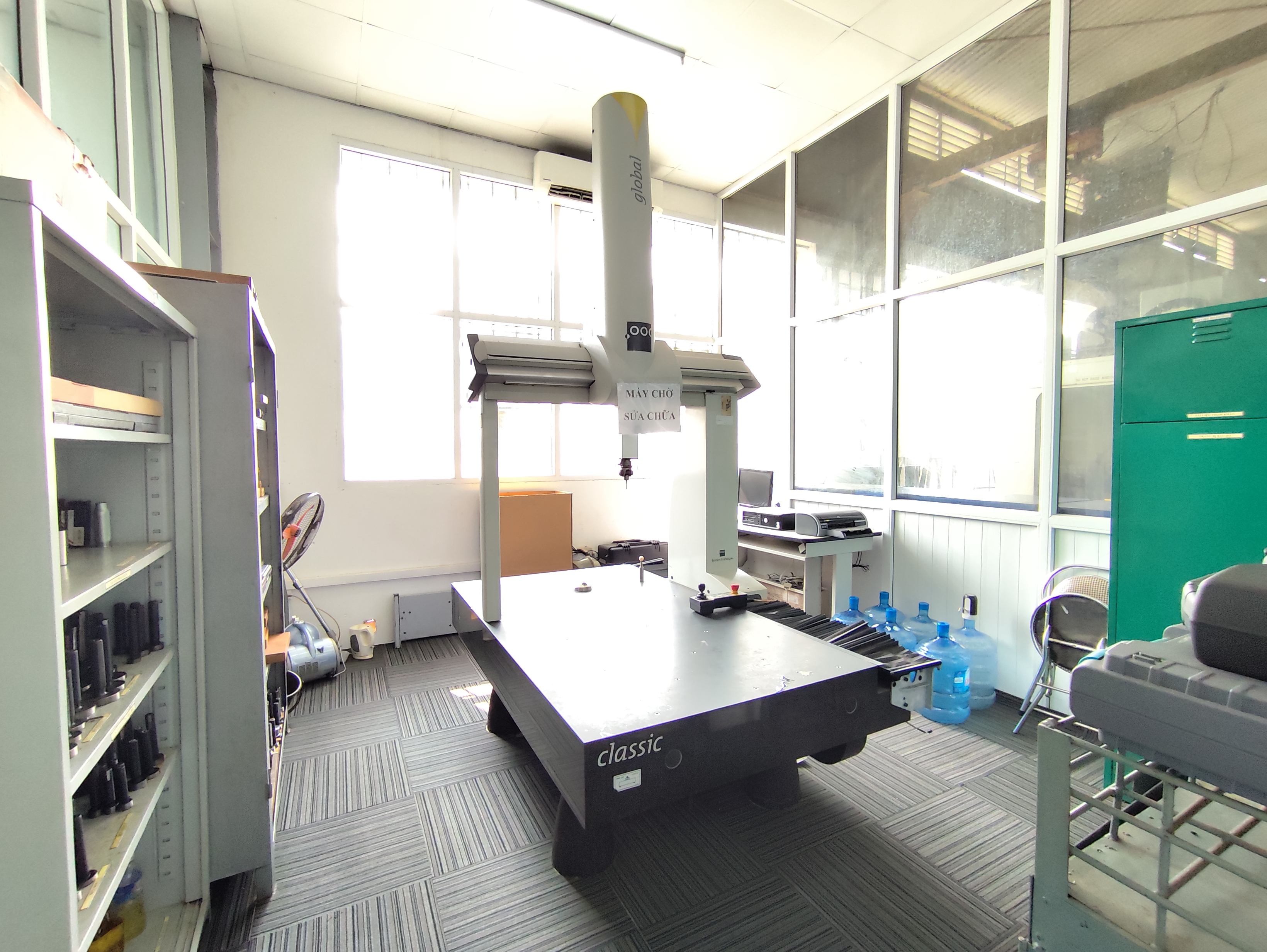
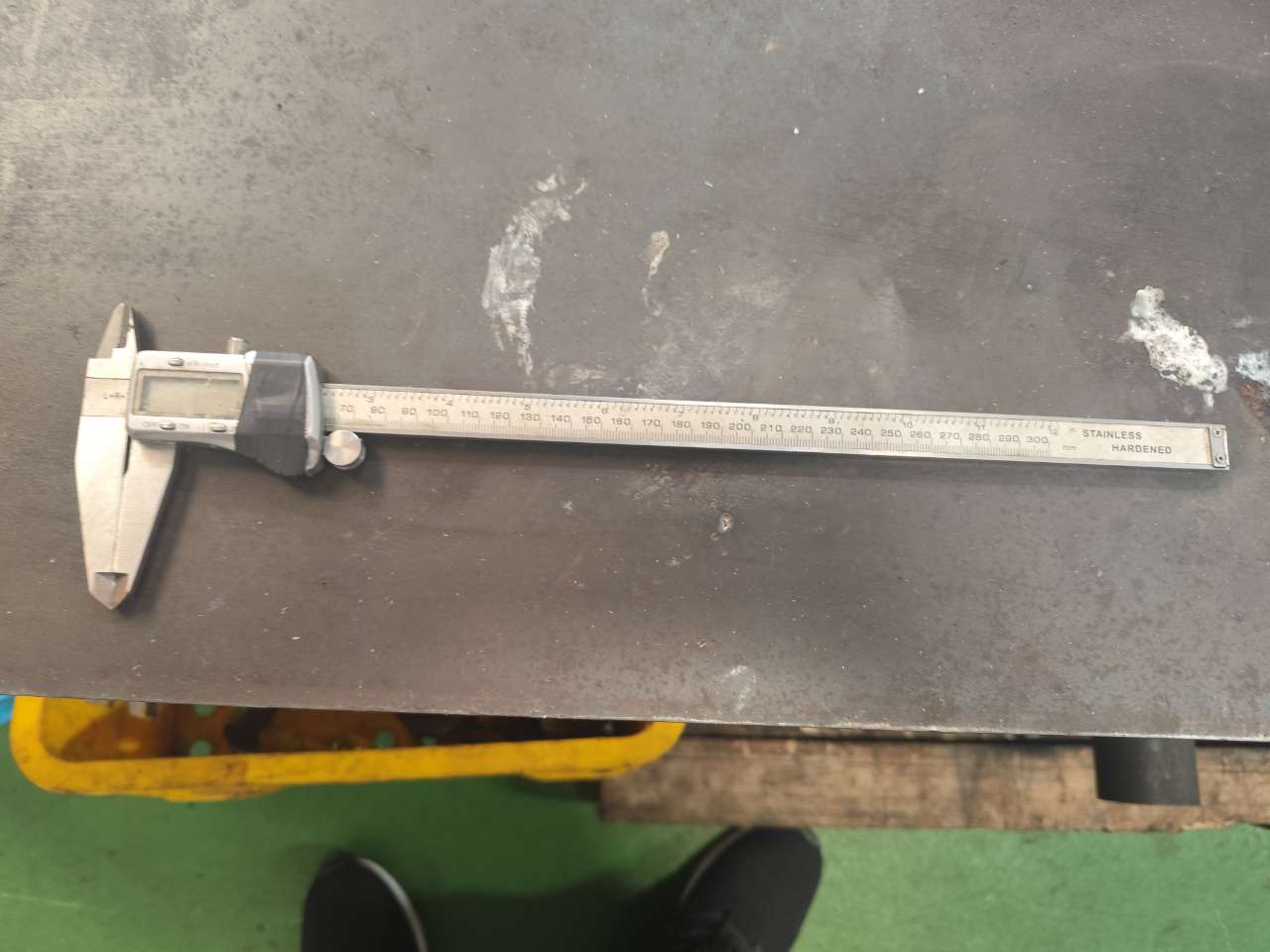
Dimensional tolerances are only meaningful if the supplier actually measures them. This ties back to manufacturing process control. When our QC team inspects parts, we check the critical dimensions called out on the drawing and verify that general tolerances conform to the specified ISO 2768 class. We use calibrated calipers, CMMs, and go/no-go gauges depending on the feature.
The key takeaway: put "General tolerances per ISO 2768-mK" (or your chosen class) in the title block of every drawing. It removes ambiguity and gives both you and your supplier a shared language for acceptable variation.
What ISO welding certifications are necessary for my heavy-duty sheet metal components?
During a supplier audit in Vietnam last year, I asked to see the welding procedure specifications and welder qualification records. The shop manager pointed to a folder with certificates from 2018 — expired and never renewed. The welds looked clean to the eye, but there was no documented evidence that the process or the welders were currently qualified. For heavy-duty components, this is a serious risk.
For heavy-duty sheet metal components, your supplier should hold ISO 3834 certification for welding quality requirements and have welding procedures qualified to ISO 15614. Individual welders must be certified per ISO 9606. These welding quality standards together ensure that every weld is performed by a qualified person, using a proven process, under controlled conditions.
The Three Pillars of Welding Quality
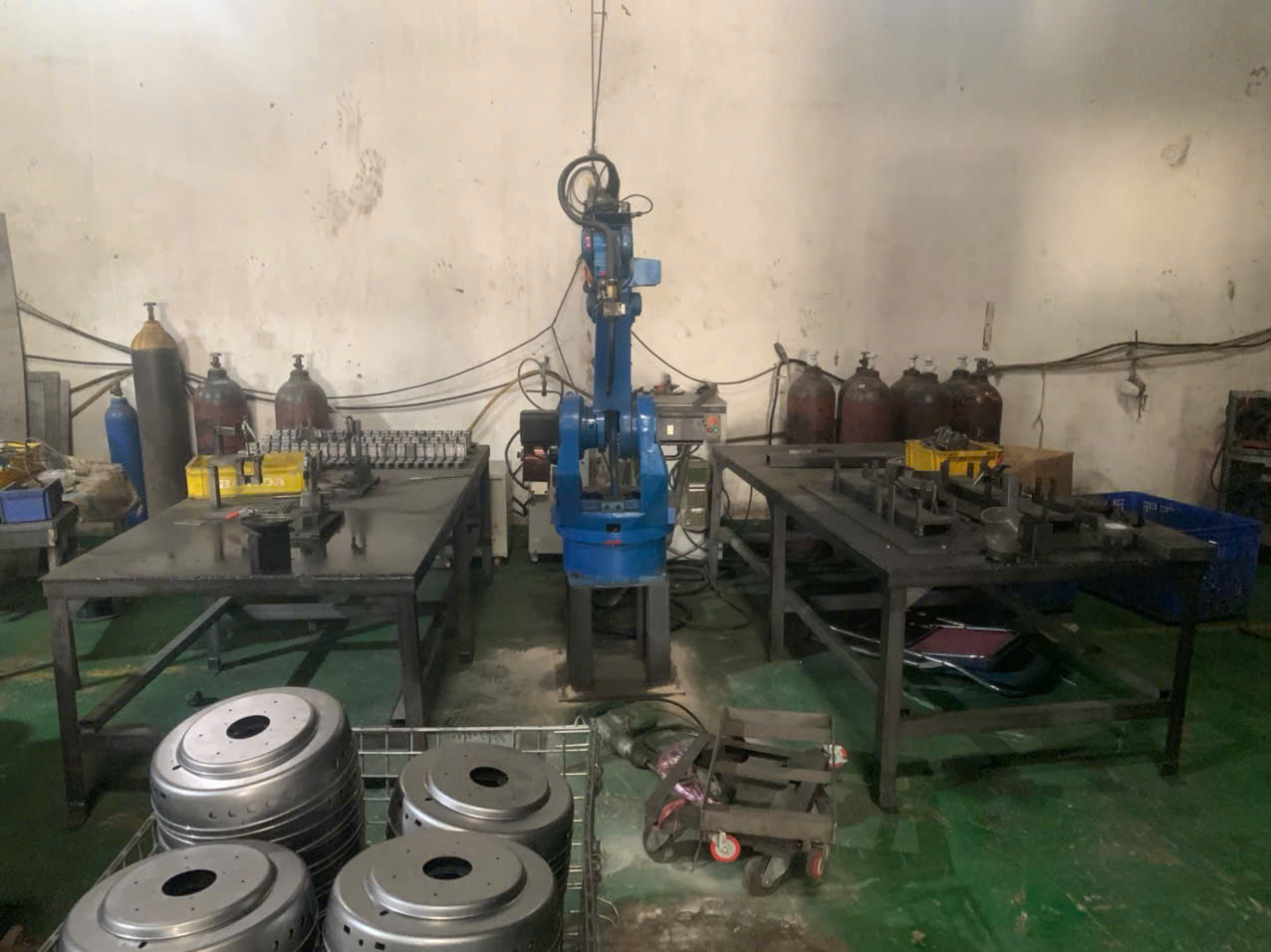
Welding on sheet metal is different from welding on heavy plate. Sheet metal is thinner, more prone to distortion, and less forgiving of excess heat input. The ISO welding framework addresses this through three interconnected standards:
- ISO 3834 — Sets the quality requirements for the welding organization. It defines what the shop must have: qualified personnel, approved procedures, proper equipment, and inspection protocols.
- ISO 15614 — Covers the qualification of welding procedure specifications (WPS). The shop must prove, through destructive and non-destructive testing of sample welds, that their procedure produces sound joints.
- ISO 9606 — Certifies individual welders. Each welder must pass a practical test to demonstrate competence for the specific material, thickness, joint type, and welding position they will work on.
Choosing the Right ISO 3834 Level
ISO 3834 comes in three quality levels. The right choice depends on the criticality of your welded components:
| ISO 3834 Level | Quality Level | Typical Applications | Key Requirements |
|---|---|---|---|
| ISO 3834-2 | Comprehensive | Structural components, pressure vessels, safety-critical parts | Full quality system, welding coordination, qualified procedures and welders, NDE |
| ISO 3834-3 7 | Standard | General industrial fabrication, brackets, enclosures | Qualified procedures and welders, basic quality documentation |
| ISO 3834-4 | Elementary | Non-critical, lightly loaded parts | Minimal documentation, basic process control |
For heavy-duty mounting brackets or structural sheet metal assemblies, I recommend requiring ISO 3834-3 at minimum. If the parts are safety-critical or will see cyclic loading, ISO 3834-2 is the right call.
Welding Consumables and Flux Standards
ISO 14174 covers the classification of welding fluxes used in submerged arc welding. While this process is less common in sheet metal than in heavy plate work, it appears in thicker gauge applications. More broadly, the principle matters: every welding consumable — wire, gas, flux — should be traceable and compliant with the applicable ISO or AWS standard. When we manage fabrication projects, we require the supplier to document consumable lot numbers and certificates of conformance.
Connecting Welding Quality to the Bigger Picture
Welding is often where quality problems hide. A visual inspection can miss porosity, lack of fusion, and incomplete penetration. This is why ISO 3834 and ISO 15614 8 matter — they force the supplier to prove the process works before production starts, and they require ongoing monitoring throughout. For the continuous improvement process to function, weld defects must be tracked, root-caused, and corrected.
If your parts require both welding and thermal cutting, the interaction between ISO 9013 (cutting quality) and the welding standards becomes important. Poor cut edge quality — excessive dross, roughness, or heat-affected zone hardness — can compromise weld integrity. Our QC team checks cut edges before welding begins to catch problems early.
How can I use ISO standards to audit my offshore supplier's quality control process?
One of our clients recently asked us to audit a potential sheet metal supplier in Southeast Asia. They had received samples that looked good, but they had no visibility into how those samples were made. Were the same procedures, machines, and operators going to be used for production? Without an audit, there was no way to know.
You can use ISO standards as a structured audit framework by verifying your offshore supplier's ISO 9001 certification validity, reviewing documented procedures against actual shop floor practices, checking calibration records and inspection data, confirming material traceability from raw stock to finished part, and assessing welding and cutting process qualifications against ISO 15614 and ISO 9013.
Building Your Audit Checklist Around ISO Standards
An effective supplier audit is not a general walk-through. It is a structured review tied to specific standards. Here is the framework we use when evaluating sheet metal fabricators for our U.S. clients:
Incoming Material Control: Verify that the supplier inspects raw materials upon receipt. Check mill certificates against purchase orders. Confirm material composition, thickness, and mechanical properties match the specification. Material traceability should flow from the raw sheet through every fabrication step to the finished part.
Process Control Documentation: Ask to see work instructions for cutting, bending, welding, and finishing. These should reference the applicable ISO standards and include acceptance criteria. For example, a laser cutting instruction should reference ISO 9013 cut quality classes 9. A welding instruction should reference the qualified WPS per ISO 15614.
Inspection and Testing: Review the supplier's inspection plan. How do they verify dimensional tolerances? What gauges and instruments do they use? Are those instruments calibrated on schedule with traceability to national standards? Ask to see recent First Article Inspection reports and in-process inspection records.
Corrective Action System: Pull a few recent non-conformance reports. Check whether root cause analysis was performed, corrective actions were implemented, and effectiveness was verified. This is where you see if the quality management system is real or just paperwork.
Environmental and Safety Considerations
If your company has sustainability requirements, check whether the supplier holds ISO 14001 environmental certification 10. This standard ensures the fabricator has an environmental management system that addresses waste, emissions, and resource usage. It is increasingly relevant as U.S. and European buyers demand ISO 14001 environmental compliance from their supply chains.
Safety standards also matter. ISO 14738 addresses safety requirements for metalworking machinery. During audits, we look for proper machine guarding, lockout/tagout procedures, and operator safety training records. A supplier that cuts corners on safety often cuts corners on quality too.
The Digital Dimension
Modern quality audits extend beyond physical processes. Digital twin technology is emerging as a way for fabricators to simulate and validate processes before cutting metal. AI and machine learning tools analyze production data to predict quality issues before they occur. And for suppliers with connected, networked equipment, cybersecurity matters — protecting your design files and production data is a real concern. While ISO 27001 is not a manufacturing standard, it is worth considering for suppliers handling sensitive IP.
Remote Audit Considerations
When in-person audits are not feasible, we conduct remote audits using video calls, shared document reviews, and photographic evidence. ISO standards provide the structure regardless of format. The key is to verify objective evidence — don't just ask "do you do this?" Ask to see the record that proves it.
Supplier quality management is not a one-time event. After the initial audit, we recommend periodic surveillance audits — typically annually — and ongoing monitoring through inspection data, delivery performance, and corrective action response time. If you're sourcing sheet metal fabrication for the first time, establishing these audit practices early will save you significant trouble down the line.
Conclusion
ISO quality standards for sheet metal fabrication give buyers and suppliers a shared framework for defining, measuring, and verifying quality. From ISO 9001 for your quality management system to ISO 2768 for dimensional tolerances, ISO 3834 and ISO 15614 for welding quality standards, and ISO 14001 environmental management — each standard addresses a specific risk. Use them together, and you build a supply chain that delivers right-first-time results consistently.
Frequently Asked Questions
How does ISO 9001 certification protect the quality of my custom sheet metal orders?
A few years ago, one of our U.S. clients switched suppliers mid-project because the original shop had no formal quality management system in place. Parts arrived with inconsistent hole positions, mixed material lots, and zero documentation. That single decision — choosing an uncertified supplier — cost them three months and tens of thousands of dollars.
Which ISO tolerance standards should I specify to ensure my fabricated parts fit perfectly?
Last quarter, a client sent us drawings for a set of mounting brackets with no tolerance callouts on about 80% of the dimensions. The Vietnamese fabricator interpreted "no tolerance" as "do your best." The result? Parts that looked fine individually but would not assemble together. The lesson was clear: you need a default tolerance standard on every drawing.
What ISO welding certifications are necessary for my heavy-duty sheet metal components?
During a supplier audit in Vietnam last year, I asked to see the welding procedure specifications and welder qualification records. The shop manager pointed to a folder with certificates from 2018 — expired and never renewed. The welds looked clean to the eye, but there was no documented evidence that the process or the welders were currently qualified. For heavy-duty components, this is a serious risk.
Footnotes
1. Official information on the IATF 16949 quality management system for the automotive sector. ↩︎
2. Replaced with the ISO committee page for ISO/DIS 9606:2024(E), which consolidates and replaces previous parts of ISO 9606, providing the most current and authoritative ISO reference. ↩︎
3. Official information on the ISO 9001:2015 quality management system standard. ↩︎
4. Explains the purpose and process of First Article Inspection in manufacturing. ↩︎
5. Replaced with the official SAE International page for AS9100D, as SAE is the developer of the standard. ↩︎
6. Replaced with a comprehensive explanation of ISO 2768 from a reputable manufacturing resource, as the official ISO page for the general standard was not readily available and Part 2 is superseded. ↩︎
7. Official information on the ISO 3834-3 standard for standard welding quality requirements. ↩︎
8. Overview of the ISO 15614 series for welding procedure qualification. ↩︎
9. Explains the ISO 9013 standard for thermal cutting quality classification. ↩︎
10. Official information on the ISO 14001 environmental management system standard. ↩︎