Choosing between sheet metal fabrication 1 and 3D printed metal parts is a decision our team helps U.S. clients navigate every week.
Sheet metal fabrication vs 3D printed metal parts presents a core trade-off: sheet metal delivers lower per-unit costs and superior strength for high-volume, simple parts, while 3D printing (additive manufacturing) excels at low-volume, complex geometries with faster lead times but higher costs and weaker fatigue properties.
The right answer depends on your order volume, part complexity, quality requirements, and delivery timeline. Below, I break down each critical factor so you can make a confident, data-driven decision.
How do I determine if sheet metal fabrication or 3D printing is more cost-effective for my specific order volume?
A conversation with one of our U.S. clients last year crystalized this issue perfectly. They needed 50 custom mounting brackets for a prototype run—and assumed sheet metal was the obvious choice because "that's what we've always done."
To determine cost-effectiveness, compare your production volume against tooling costs: sheet metal fabrication becomes cheaper per unit above roughly 500–1,000 pieces because tooling costs amortize, while 3D printing holds a flat per-unit cost that favors runs under 100–200 parts with no tooling investment.
The Tooling Cost Divide
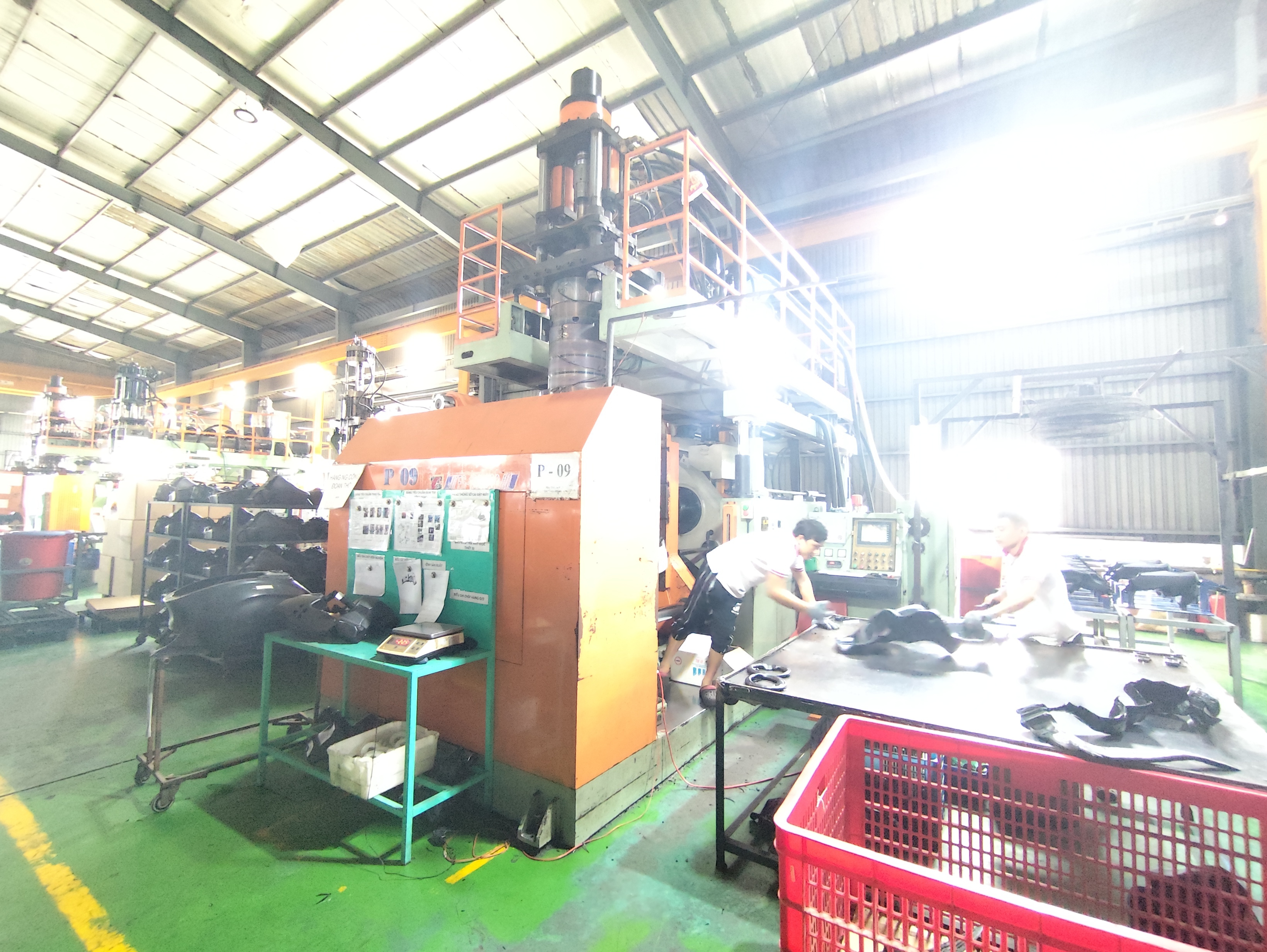
Sheet metal fabrication requires upfront investment in dies, jigs, fixtures, and sometimes molds. For a simple stamped bracket, tooling might cost $2,000–$10,000. That cost is fixed. Whether you make 10 parts or 10,000 parts, the tooling fee stays the same. So the math is straightforward: the more parts you produce, the less each part carries in tooling burden.
With 3D printed metal parts 2, there is no tooling. You upload a CAD file, and the printer builds the part layer by layer. The per-unit cost stays relatively flat whether you print 1 part or 50 parts. This makes additive manufacturing 3 ideal for rapid prototyping and short production runs.
Where the Crossover Happens
In our experience sourcing custom parts from factories in Vietnam and across Asia, we see the cost crossover point typically between 200 and 1,000 units, depending on part complexity. Here is a simplified comparison:
| Factor | Sheet Metal Fabrication | 3D Metal Printing |
|---|---|---|
| Tooling cost | $2,000–$10,000+ | $0 |
| Per-unit cost (10 parts) | High (tooling not amortized) | Moderate to high |
| Per-unit cost (1,000 parts) | Very low | Still moderate to high |
| Per-unit cost (10,000 parts) | Lowest | Impractical / expensive |
| Setup time cost | Significant | Minimal |
Hidden Costs to Watch
Manufacturing costs extend beyond the sticker price. With 3D printing, post-processing 4 is almost always required. Parts come off the printer with rough surfaces and may need CNC machining, grinding, or heat treatment. These steps add cost and time. I have seen post-processing add 30–50% to the base print cost on precision parts.
Sheet metal, on the other hand, can waste up to 90% of raw material in cutting and machining operations. Material waste is a real cost driver, especially with expensive alloys. Metal 3D printing wastes less than 5% of material on average, which matters when you are working with titanium or Inconel. Understanding the material to processing cost ratio in sheet metal fabrication can help you evaluate these hidden expenses more accurately.
Volume Decision Guide
Here is a quick decision guide we share with clients:
- Under 100 units, complex geometry: 3D printing is almost always more cost-effective.
- 100–500 units, moderate complexity: Evaluate both. Get quotes from each.
- 500+ units, simple geometry: Sheet metal fabrication wins on cost every time.
- Any volume, standard shapes (brackets, enclosures): Sheet metal.
The bottom line: do not assume one method is cheaper without running the numbers for your specific order. Volume changes everything.
Will 3D printed metal parts meet my company's strict quality and durability standards compared to traditional sheet metal?
Last quarter, a purchasing manager we work with asked us to evaluate a set of load-bearing brackets. His engineering team wanted to switch from sheet metal to 3D printing to simplify the design—but durability was non-negotiable.
3D printed metal parts can meet many quality standards, but they often exhibit 10–20% lower fatigue strength than machined or formed sheet metal equivalents due to porosity, anisotropy, and layer adhesion issues, making traditional sheet metal the safer choice for high-stress, safety-critical applications.
Material Properties: Sheet Metal vs. 3D Printed
Sheet metal parts are cut and formed from rolled metal stock. The grain structure is continuous and well-understood. Engineers can rely on published material property data that has been tested over decades. The result: predictable, repeatable performance.
3D printed metal parts are built from metal powder, fused layer by layer using technologies like DMLS (Direct Metal Laser Sintering). This process can introduce micro-porosity 6, residual stresses, and anisotropic behavior—meaning the part may be stronger in one direction than another. For non-critical applications, this is often acceptable. For flight-critical aerospace parts or high-cycle fatigue components, it is a serious concern.
| Property | Sheet Metal Parts | 3D Printed Metal Parts |
|---|---|---|
| Fatigue strength 7 | Excellent; full material integrity | 10–20% weaker on average |
| Porosity | None | Possible micro-porosity |
| Anisotropy | Minimal | Significant (direction-dependent) |
| Surface finish | Smooth; often mirror-quality | Rough; requires post-processing |
| Tolerance (as-produced) | ±0.1 mm typical | ±0.2–0.5 mm typical |
| Tolerance (after CNC post-processing) | ±0.005 mm achievable | ±0.005 mm achievable |
| Material data maturity | Decades of testing | Rapidly growing but less mature |
The Surface Finish Question
One area where sheet metal fabrication clearly leads is surface finish. Parts come off the press or laser cutter with clean, consistent surfaces. 3D printed parts have visible layer lines and surface roughness that require grinding, bead blasting, or CNC machining to bring up to standard.
When our quality control team inspects parts, we look for surface defects that could become stress risers under load. 3D printed surfaces, if not properly post-processed, can harbor these defects. This is why many of our clients who adopt additive manufacturing still budget for finish machining on critical surfaces.
The Weight-Strength Trade-Off
Here is an important nuance that experienced engineers understand: a 3D printed part may be 20% weaker per unit of material, but topology optimization 8 can remove 50% or more of the weight. The resulting lightweight component can actually outperform a heavier sheet metal part in its specific application. This is why aerospace companies use 3D printing for turbine blades and structural brackets—the net performance gain justifies the material property trade-off.
Quality Certification Challenges
Our team has found that getting 3D printed parts through PPAP (Production Part Approval Process) and other quality certifications can be more complex. The process parameters—laser power, scan speed, layer thickness, powder batch—all affect the final material properties. Repeating identical results across multiple builds requires tight process control. Sheet metal, by contrast, uses well-established processes with decades of quality documentation behind them.
For clients with strict quality and durability standards, I recommend this approach: use sheet metal for high-stress, high-volume parts where proven material properties matter. Use 3D printing where geometric complexity or weight reduction creates a net performance advantage, and always budget for post-processing and testing.
How does the choice between these two methods impact my overall lead times and supply chain reliability?
Delivery delays are the number one pain point our U.S. clients report when sourcing custom parts from Asia. So lead time is not an abstract concept—it directly affects production schedules, customer commitments, and revenue.
3D printing typically delivers parts in under 30 days with no tooling lead time, while sheet metal fabrication requires weeks or months for tooling setup but achieves faster per-part production speeds once running, making 3D printing better for urgent prototypes and sheet metal better for sustained, high-volume supply.
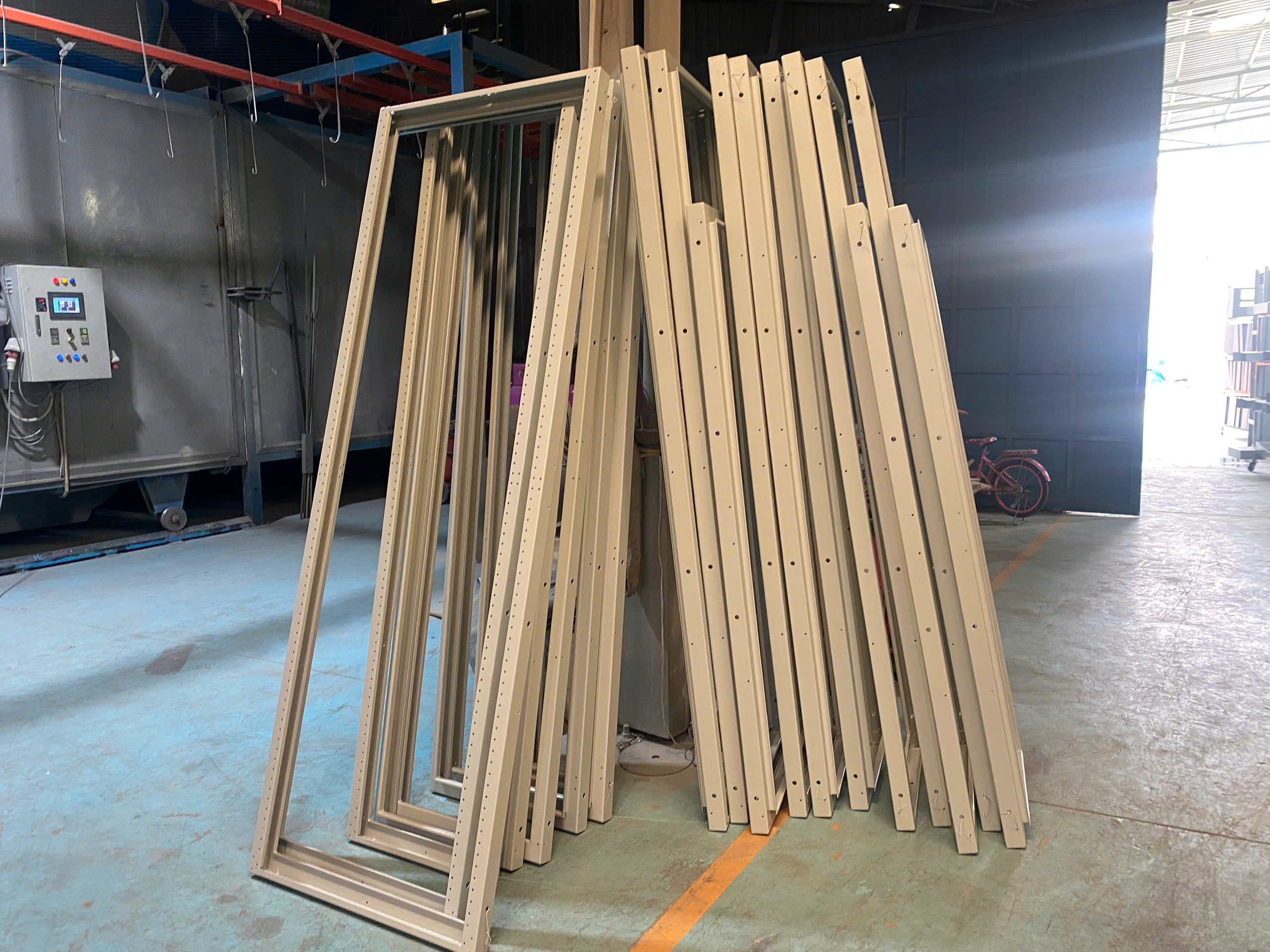
Breaking Down the Timeline
Let me walk through the typical timeline for each method, based on what we see managing supply chains across Vietnam and other Asian manufacturing hubs.
Sheet Metal Fabrication Timeline:
- Design review and DFM feedback: 3–5 days
- Tooling design and fabrication: 2–6 weeks
- First article / sample production: 1–2 weeks
- Quality approval (PPAP, FAI): 1–2 weeks
- Mass production: depends on volume, but throughput is fast
- Shipping to the U.S.: 3–5 weeks (sea freight)
Total for first order: 8–16 weeks. Reorders skip steps 2 and 4, dropping to 4–7 weeks.
3D Printing Timeline:
- Design upload and print preparation: 1–2 days
- Printing: 1–7 days (depends on size and quantity)
- Post-processing (heat treatment, CNC, finishing): 3–10 days
- Quality inspection: 2–3 days
- Shipping: 1–5 days (often air freight for small batches)
Total: 1–4 weeks.
Supply Chain Reliability
The difference in supply chain reliability 9 is significant. Sheet metal fabrication depends on tooling availability, raw material stock, foundry scheduling, and factory capacity. Any disruption—a delayed steel shipment, a broken die, a holiday shutdown—cascades through the timeline. Knowing how to determine if a sheet metal fabrication lead time is reasonable can help you set realistic expectations and identify red flags early.
3D printing offers something our clients increasingly value: digital inventory. You store the design file, not physical stock. When you need parts, you print them. This eliminates warehousing costs and reduces the risk of obsolete inventory. For companies managing hundreds of SKUs, this is a game changer.
When Lead Time Matters Most
Rapid prototyping is where 3D printing shines brightest. When an engineering team needs five iterations of a complex bracket in two weeks, no sheet metal shop can match that speed. But for steady-state production of 5,000 brackets per month, sheet metal fabrication delivers consistent, on-time supply—especially when the tooling is already built and the process is dialed in.
The Hybrid Approach to Lead Time
Several of our clients now use a two-phase approach: they 3D print the first batch for validation and early production, then transition to sheet metal once the design is locked and volume ramps up. This eliminates weeks of waiting for tooling before any parts ship. It also reduces the risk of investing in tooling for a design that may still change.
Can I achieve the same level of design complexity with sheet metal fabrication that I get from 3D metal printing?
One of the most eye-opening moments in my career came when a client sent us a topology-optimized bracket design. It looked organic—almost like a bone. There was no way to bend, cut, or weld sheet metal into that shape. That part could only exist through additive manufacturing.
No, sheet metal fabrication cannot match the geometric complexity of 3D metal printing. Additive manufacturing enables intricate internal channels, organic shapes, undercuts, and part consolidation that are physically impossible to achieve through bending, cutting, and welding sheet metal.
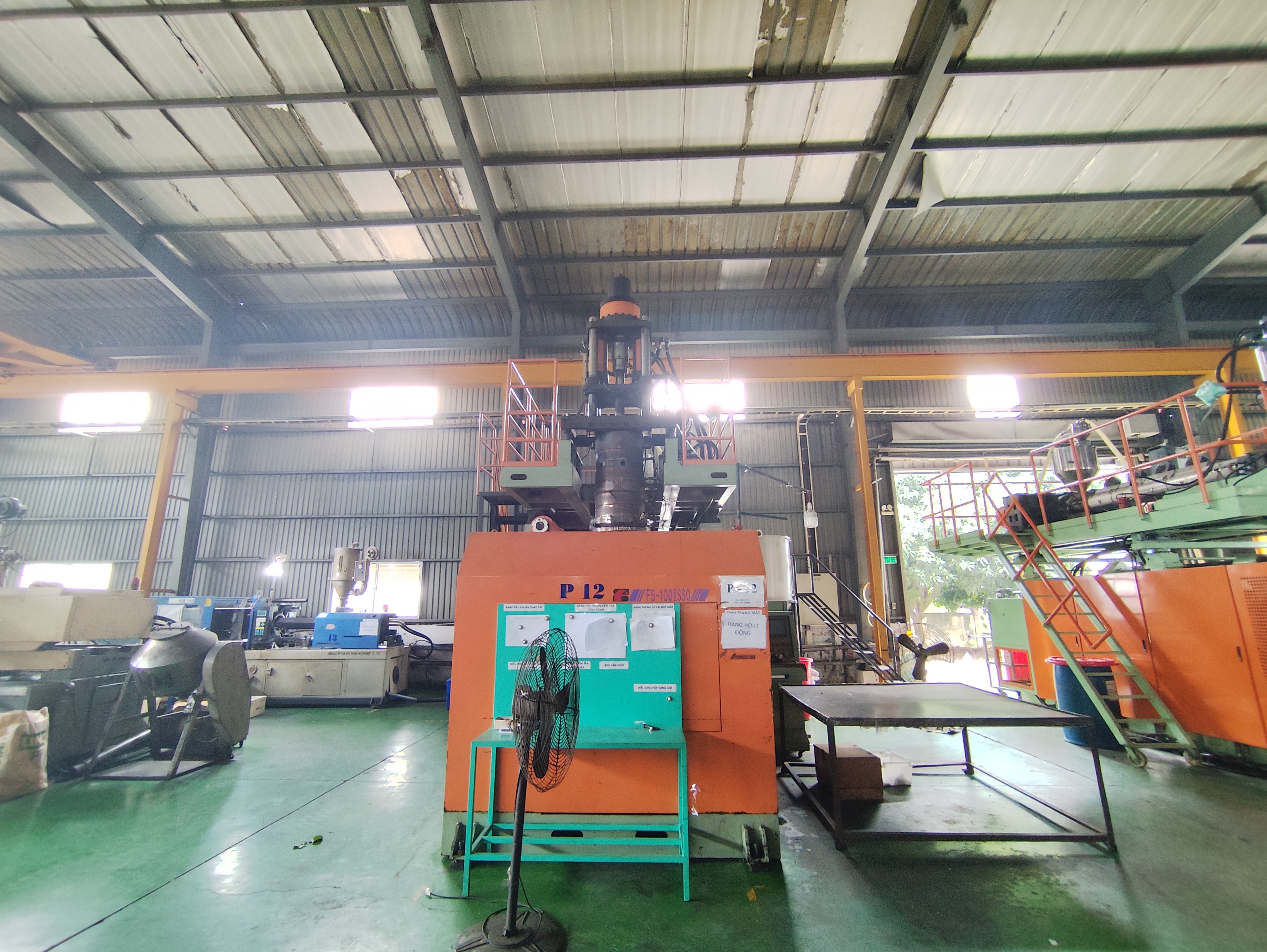
What Sheet Metal Can and Cannot Do
Sheet metal fabrication is excellent for parts defined by flat surfaces, bends, holes, and simple curves. Think enclosures, mounting brackets, chassis panels, and structural frames. These are workhorses of industrial design—and sheet metal produces them efficiently.
But sheet metal has hard limits. You cannot create:
- Internal cooling channels or conformal passages
- Lattice structures for weight reduction
- Complex organic curves optimized by software algorithms
- Features that require assembly of multiple pieces into a single unit
The Part Consolidation Advantage
Part consolidation is one of the most powerful benefits of 3D printing. Where a sheet metal assembly might require 10 individual parts, fasteners, and welds, a 3D printer can produce the same functional unit as a single piece. Fewer parts means fewer failure points, less assembly labor, and lower inventory complexity.
We have seen clients reduce a 12-part sheet metal assembly down to a single 3D printed component. The result: lighter weight, fewer potential quality issues at joints, and simpler supply chain management.
| Design Feature | Sheet Metal Feasibility | 3D Printing Feasibility |
|---|---|---|
| Flat panels and enclosures | Excellent | Possible but inefficient |
| Simple bends and flanges | Excellent | Not ideal |
| Internal cooling channels | Impossible | Excellent |
| Lattice / honeycomb structures | Impossible | Excellent |
| Topology-optimized organic shapes | Impossible | Excellent |
| Part consolidation (multi-part → one) | Very limited | Excellent |
| Undercuts and overhangs | Very limited | Good (with supports) |
| Thin-wall structures (<0.5 mm) | Possible | Challenging |
| Large flat parts (>1 m) | Excellent | Limited by build volume |
When Complexity Is Not the Goal
Here is the counterpoint that I think matters: not every part needs to be complex. The vast majority of custom parts we source for clients—brackets, panels, housings, frames—are well within the capabilities of sheet metal. Choosing 3D printing for a simple L-bracket is like using a fighter jet to deliver mail. It works, but it is wildly inefficient.
The right question is not "which method is more capable?" It is "does my part actually need that capability?" If your design can be made from flat stock with bends and holes, sheet metal will give you a better part at a fraction of the cost with superior material properties.
The Hybrid Manufacturing Path
The most sophisticated manufacturers we work with are combining both methods. They 3D print the complex core of a part—say, a manifold with internal channels—and then use CNC machining to achieve tight tolerances (down to ±0.005 mm) on mating surfaces. This hybrid approach captures the design freedom of additive manufacturing and the precision of traditional methods.
For companies considering this path, our team can coordinate both processes through a single supply chain, managing the handoff between additive and subtractive manufacturing steps so that the client receives a finished, inspected part ready for assembly.
Conclusion
Choosing between sheet metal fabrication and 3D printed metal parts comes down to volume, complexity, strength requirements, and lead time. Neither method is universally superior—each serves distinct manufacturing needs. Match the method to the project, and you will get the best outcome in cost, quality, and delivery.
Frequently Asked Questions
How do I determine if sheet metal fabrication or 3D printing is more cost-effective for my specific order volume?
A conversation with one of our U.S. clients last year crystalized this issue perfectly. They needed 50 custom mounting brackets for a prototype run—and assumed sheet metal was the obvious choice because "that's what we've always done."
Will 3D printed metal parts meet my company's strict quality and durability standards compared to traditional sheet metal?
Last quarter, a purchasing manager we work with asked us to evaluate a set of load-bearing brackets. His engineering team wanted to switch from sheet metal to 3D printing to simplify the design—but durability was non-negotiable.
How does the choice between these two methods impact my overall lead times and supply chain reliability?
Delivery delays are the number one pain point our U.S. clients report when sourcing custom parts from Asia. So lead time is not an abstract concept—it directly affects production schedules, customer commitments, and revenue.
Footnotes
1. Replaced HTTP unknown link with a comprehensive overview from an authoritative manufacturing resource. ↩︎
2. Defines the process and principles of metal 3D printing. ↩︎
3. Provides a definition and overview of additive manufacturing. ↩︎
4. Explains the necessary post-processing steps for 3D printed metal parts. ↩︎
5. Clarifies what tooling costs entail in manufacturing processes. ↩︎
6. Discusses porosity in metal additive manufacturing and its impact. ↩︎
7. Defines fatigue strength and its importance in material science. ↩︎
8. Defines the mathematical method for optimizing material layout in design. ↩︎
9. Explains the concept of consistent and timely delivery in supply chains. ↩︎