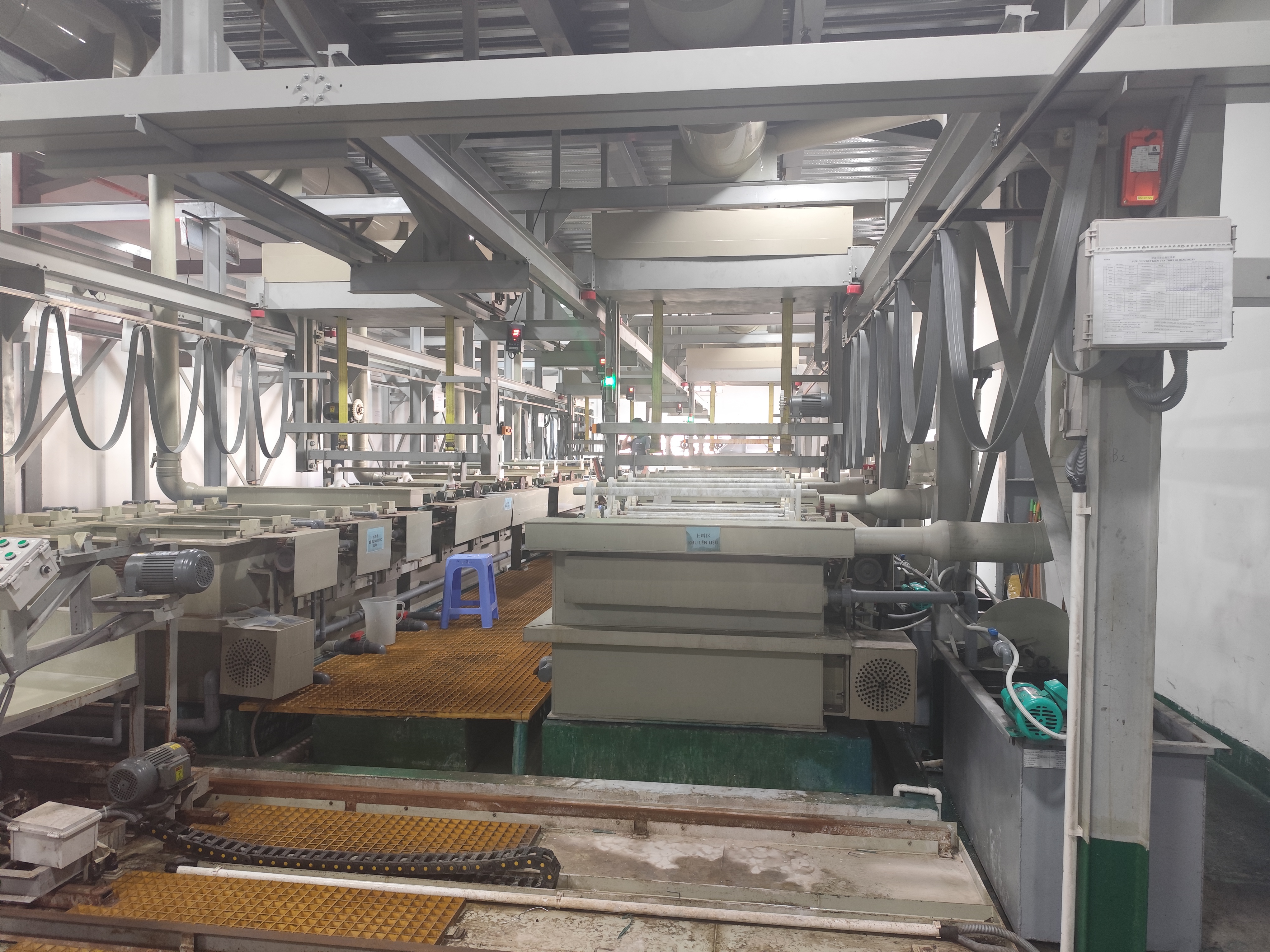

RoHS compliance for stamping parts looks simple on paper. Our sourcing team learned otherwise when a plating layer—not the steel—nearly derailed a client’s entire shipment to Europe.
When buying stamping parts, check RoHS compliance at the homogeneous material level: verify the base metal, plating, passivation, and cleaning residues separately. Demand mill certificates, supplier declarations, third-party test reports, and a Declaration of Conformity covering all ten restricted substances.
That failed shipment taught us a hard lesson. A single “RoHS OK” stamp on a quote means very little. Let me walk you through exactly what to verify, step by step, before you place your next order.
How Can I Verify a Supplier's RoHS Test Reports Before Placing an Order?
A purchasing manager in Ohio once forwarded me a supplier's "test report" that turned out to be three years old and covered a different part number entirely. That happens more often than you would think.
Verify RoHS test reports by checking the report date, the exact part or material tested, the accredited lab's name, the test method used, and the measured values against thresholds. Reports older than one year or covering different materials should be rejected and retested.

When our Vietnam office audits a new stamping supplier, we treat test reports as evidence, not decoration. A report is only as good as the details inside it. So here is what we actually read, line by line.
The Five Checkpoints on Every Report
First, look at the sample description. It must match your material, your plating, and ideally your part number. A report for bare cold-rolled steel does not cover your zinc-plated bracket. Second, check the lab. Accredited third-party labs such as those holding SGS lab certification 1 carry real weight. An in-house report from the supplier's own bench is a screening tool, not proof. Third, check the method. XRF screening analysis is fast and common, but it cannot legally certify hexavalent chromium content. Wet chemistry (chemical digestion) is needed for final certification. Fourth, check the date. We ask for reports issued within the last twelve months. Fifth, compare the measured values against the legal limits.
| Checkpoint | What to Look For | Red Flag |
|---|---|---|
| Sample identity | Matches your material and coating | Generic or different part tested |
| Lab | Accredited third party (e.g., SGS, TÜV, Intertek) | In-house lab only |
| Method | Wet chemistry for certification | XRF used as final proof |
| Date | Within 12 months | Report older than 1–2 years |
| Values | Below 1000 ppm (100 ppm for cadmium) | "Pass" with no numbers shown |
If any checkpoint fails, we ask for a fresh test before the purchase order goes out. It costs a little time up front. It saves a rejected container later.
What RoHS Documentation Should I Request for Custom Stamping Parts?
There is a trade-off we weigh on every custom project: how much paperwork to demand without slowing the quote. Too little, and you carry legal risk. Too much, and small suppliers walk away.
Request four core documents for custom stamping parts: a Material Test Report (MTR) showing base metal chemistry, a plating and passivation declaration, a signed Supplier Declaration of Conformity referencing RoHS 3, and a third-party lab test report when risk justifies it.

Our project managers build this documentation request directly into every RFQ. Putting it in writing before quoting does two things. It filters out suppliers who cannot comply. And it locks the cost of compliance into the quoted price, so there are no surprises later.
The RFQ Documentation Checklist
Here is the package we require, in order of importance:
- Material Test Reports (MTR) — also called mill certificates. They must show the alloy grade, heat number, and full chemistry of the base metal.
- Plating/coating declaration — states the coating chemistry, passivation type, and confirms hexavalent chromium-free coatings such as trivalent passivation.
- Declaration of Conformity (DoC) — the formal legal statement, signed and dated, referencing Directive 2011/65/EU 2 and the 2015/863 amendment. It should follow the IEC 63000 documentation standard.
- Third-party test report — required for new materials, custom electroplating surface finishes, or regulated end markets.
- Full Material Disclosure (FMD) — increasingly requested by automotive and electronics buyers, listing every substance in the part, not just the restricted ones.
Matching Documents to Risk Level
| Application Risk | Minimum Documentation | Add-On Requirement |
|---|---|---|
| Low (general hardware) | MTR + signed DoC | None |
| Medium (consumer electronics) | MTR + DoC + plating declaration | Annual third-party test |
| High (automotive, medical) | Full package + FMD | Lot-level lab testing, PPAP records |
One more point buyers often miss. If your stamped bracket ships with assembled hardware—screws, rivets, inserts—each purchased component needs its own compliance evidence. A mill cert for the steel does not cover the zinc-plated screw 3 pressed into it. We also cross-check REACH SVHC compliance at the same time, since most European customers ask for both declarations together and the data overlaps heavily.
Which Materials and Coatings Do I Need to Check for RoHS Restricted Substances?
Early in one of our co-development projects, an engineer asked me why we tested the yellow passivation on a bracket that had already "passed" as steel. That question is exactly where most compliance failures hide.
Check the base metal alloy for lead and cadmium, the plating layer for lead in tin coatings, the passivation for hexavalent chromium, and lubricant or cleaning residues for phthalates. Each homogeneous layer must independently meet the 1000 ppm limit, or 100 ppm for cadmium.
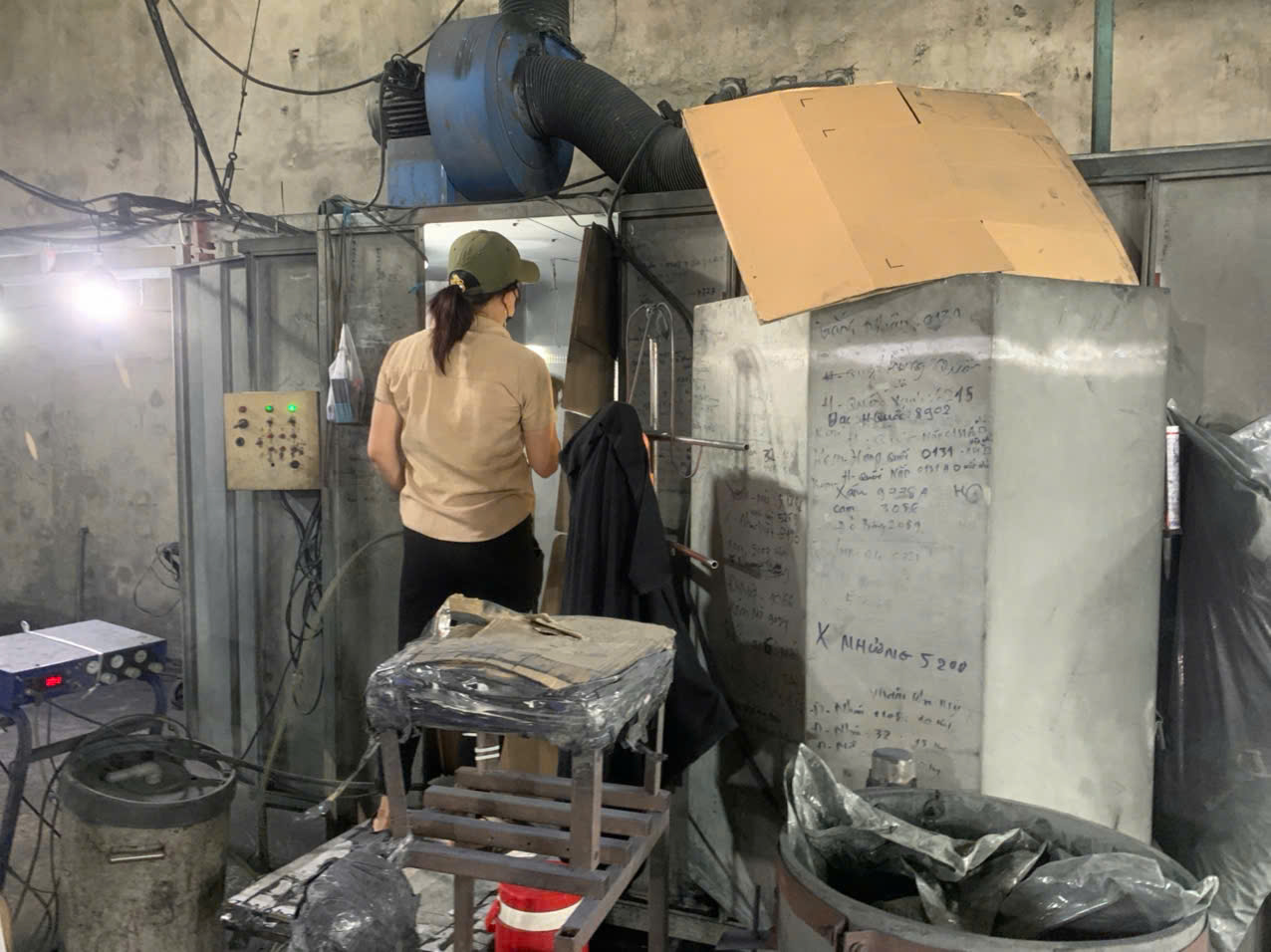
Think of a stamped part like a layered cake. The regulation does not test the whole cake. It tests each layer on its own. A part can be 99.9% compliant steel by weight and still fail because a few microns of chromate passivation contain hexavalent chromium.
The Four Layers of Risk
Layer 1: Base metal. Free-machining brass and some steels historically contain lead as an additive. Recycled feedstock adds another risk: tramp elements in scrap metal 4 can push cadmium or lead over the limit unexpectedly. We always request the actual heat chemistry, not the nominal spec.
Layer 2: Plating. Traditional tin-lead plating is an obvious failure. But even "bright tin" baths can carry lead contamination. Nickel and zinc electroplating surface finishes are generally safer, but bath chemistry still needs a declaration.
Layer 3: Passivation. This is the classic hidden failure. Yellow, olive, and black chromates 5 traditionally use hexavalent chromium (Cr6+). Modern trivalent passivation looks similar but complies. Always confirm in writing which one your supplier uses.
Layer 4: Process residues. Stamping lubricants, anti-rust oils, and degreasers can leave residues containing phthalates. The RoHS 3 phthalate limits cover DEHP, BBP, DBP, and DIBP at 0.1% each. Deburring media matters too—some vibratory finishing chips contain heavy-metal pigments that can embed in the surface.
| Substance | Limit | Where It Hides in Stamping |
|---|---|---|
| Lead (Pb) | 1000 ppm | Brass alloys, tin plating, free-machining steel |
| Cadmium (Cd) | 100 ppm | Recycled zinc, older plating baths |
| Hexavalent Chromium (Cr6+) | 1000 ppm | Yellow/olive chromate passivation |
| Mercury (Hg) | 1000 ppm | Rare; some pigments |
| PBB / PBDE | 1000 ppm | Plastic inserts, coatings |
| DEHP, BBP, DBP, DIBP | 1000 ppm each | Lubricant residues, plastic components |
One more warning about RoHS Annex III exemptions. Lead in copper alloys up to 4% and lead in steel up to 0.35% are currently exempt. A supplier may declare a leaded brass part "RoHS compliant" by relying on that exemption. If your customer's Restricted Substance List does not accept the exemption, you have a problem. Always ask which exemptions, if any, the declaration relies on.
How Do I Ensure My Stamping Parts Stay RoHS Compliant Across Multiple Production Batches?
The hardest conversation I ever had with a client was explaining why batch five failed after batches one through four passed cleanly. The supplier had switched plating subcontractors without telling anyone.
Maintain batch-to-batch RoHS compliance through lot-level traceability linking heat numbers and plating batches to shipments, written change-control agreements requiring supplier notification, periodic re-testing on a defined schedule, and document retention of at least ten years for audit defense.

Compliance is not an event. It is a system. On our contract manufacturing projects, we build that system into the process control plan before the first production run, because chasing documents after a failure is far more expensive.
Build an Auditable Trail
Every shipment should trace backward through three links: the shipment lot on the packing list, the plating batch record, and the material heat number 6 on the MTR. If any link breaks, you cannot prove which certificate covers which box of parts. We require suppliers to print lot codes on cartons and inner packaging, alongside the green RoHS or LF markings that many electronics customers expect on trays and outer boxes.
Lock Down Change Control
Most batch failures come from silent changes. A new steel mill. A cheaper plating subcontractor. A different anti-rust oil. Your supply agreement should state, in plain terms, that any change to material source, coating process, or process chemicals requires written notice and re-qualification. On projects run under PPAP, this is formalized—any process change triggers a new submission. We also flag shared tooling risk: dies that previously ran non-compliant material can transfer residues or particles, so first-off parts after a changeover deserve extra scrutiny.
Set a Re-Testing Rhythm
Do not test once and forget. A practical schedule looks like this: full third-party testing at initial qualification, XRF screening on incoming lots as a spot check, and full re-testing annually or whenever anything changes. Keep every record—declarations, test reports, the DoC—for at least ten years. If a market surveillance authority questions a shipment, that file is your legal defense. Looking ahead, the EU's move toward Digital Product Passports 7 means machine-readable compliance data will gradually replace static PDF certificates, so ask suppliers now whether they can provide structured data, not just scans.
Conclusion
RoHS compliance for stamping parts is a verification chain, not a checkbox. Check every layer, demand real documents, trace every lot—and put it all in your RFQ.
Frequently Asked Questions
How Can I Verify a Supplier's RoHS Test Reports Before Placing an Order?
A purchasing manager in Ohio once forwarded me a supplier's "test report" that turned out to be three years old and covered a different part number entirely. That happens more often than you would think.
What RoHS Documentation Should I Request for Custom Stamping Parts?
There is a trade-off we weigh on every custom project: how much paperwork to demand without slowing the quote. Too little, and you carry legal risk. Too much, and small suppliers walk away.
Which Materials and Coatings Do I Need to Check for RoHS Restricted Substances?
Early in one of our co-development projects, an engineer asked me why we tested the yellow passivation on a bracket that had already "passed" as steel. That question is exactly where most compliance failures hide.
Footnotes
1. SGS is a globally recognized provider of RoHS testing and certification services for manufacturing. ↩︎
2. Official EU legislation establishing the restriction of hazardous substances in electrical and electronic equipment. ↩︎
3. Wikipedia entry explaining the process and applications of zinc plating for corrosion protection on steel parts. ↩︎
4. Wikipedia overview of scrap metal recycling and the potential for elemental contamination in secondary metals. ↩︎
5. Authoritative technical overview of chromate conversion coatings and their chemical variations. ↩︎
6. Wikipedia page defining heat numbers used to trace the chemical composition of specific batches of metal. ↩︎
7. European Commission initiative to improve product traceability and sustainability through standardized digital documentation. ↩︎