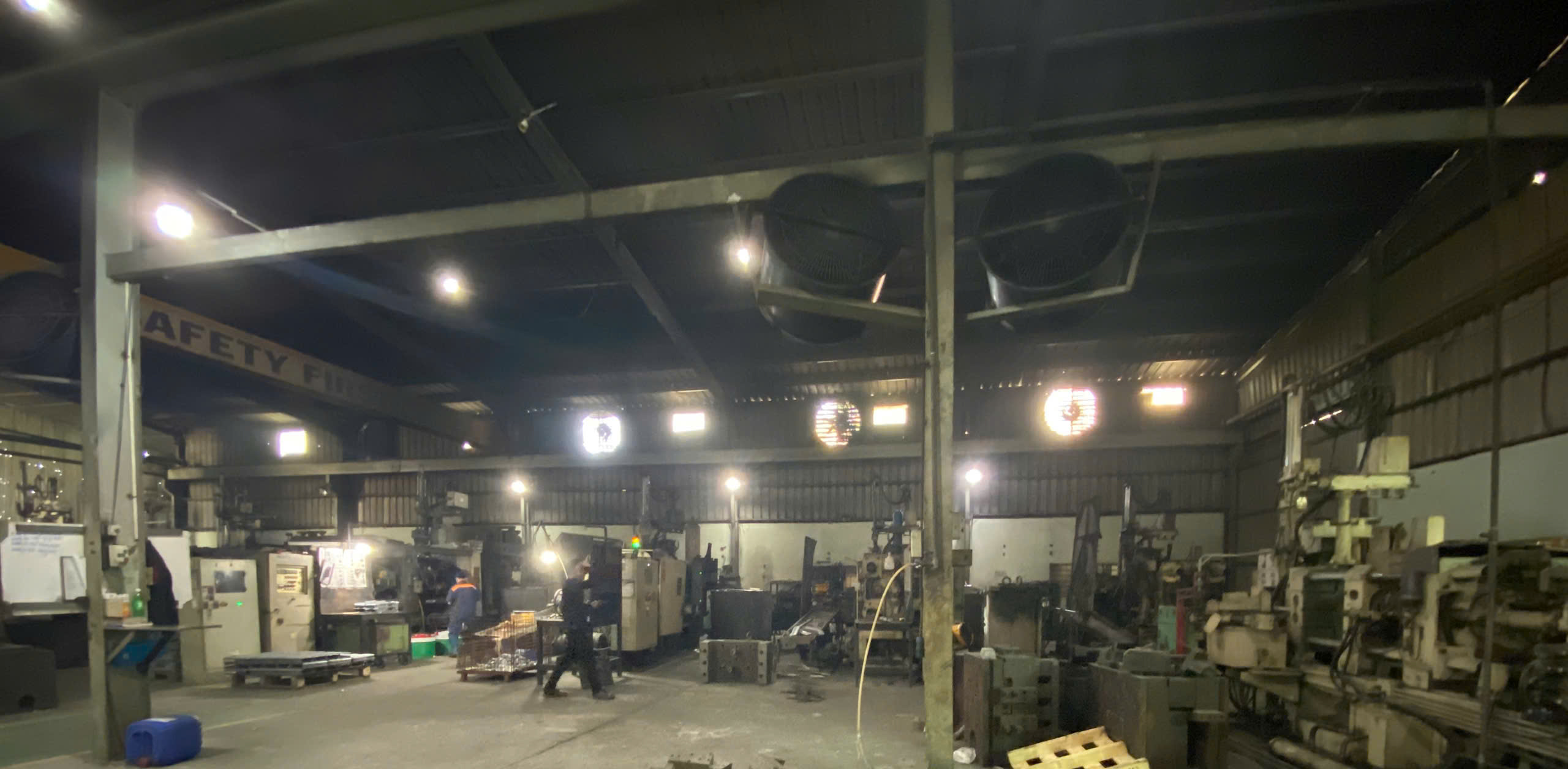

When our Vietnam office first helped a U.S. client move stamping parts production out of China, the rules of origin criteria caught everyone off guard—and nearly triggered a tariff penalty.
Rules of origin criteria for stamping parts imported from Vietnam depend on the destination market: the U.S. applies a “substantial transformation” test, the EU uses EVFTA compliance with Product Specific Rules and value-added thresholds, and CPTPP members require a Change in Tariff Classification or Regional Value Content calculation.
This article breaks down each criterion, the documentation you need, and how to avoid costly mistakes. Whether you import into the United States, Europe, or another market, the details below will help you stay compliant.
How Do I Determine If My Stamping Parts Qualify for Vietnam's Rules of Origin?
A buyer in Ohio once asked me a simple question: "If my brackets are stamped in Vietnam from Chinese steel coil, is that Vietnamese origin?" The answer was not as straightforward as either of us expected.
To determine if your stamping parts qualify, you must first identify your destination market, then check whether the metal forming process in Vietnam meets that market's threshold—either substantial transformation for the U.S. or a specific tariff shift and value-added percentage under FTAs like EVFTA or CPTPP.

Why the Destination Market Matters Most
The rules of origin for stamping parts are not universal. They change based on where you ship the finished goods. The United States does not have a Free Trade Agreement with Vietnam. So U.S. imports rely on a non-preferential standard called "substantial transformation." The EU, on the other hand, grants preferential tariffs under the EU-Vietnam Free Trade Agreement 1 (EVFTA). And countries like Canada, the UK, and Japan use the CPTPP 2 framework with its own set of rules.
Here is a quick comparison:
| Destination Market | Applicable Framework | Primary Criteria | Key Document |
|---|---|---|---|
| United States | Non-preferential ROO | Substantial transformation (change in name 3, character, or use) | Importer self-declaration |
| European Union | EVFTA | Product Specific Rules (PSR): CTC or RVC ≥ 35% | EUR.1 certificate or origin declaration |
| UK / Canada / Japan | CPTPP | Change in Tariff Classification (first 2 digits) or RVC threshold | CPTPP Certificate of Origin |
| ASEAN nations | ATIGA | 40% Regional Value Content or tariff shift | Certificate of Origin Form D |
The Substantial Transformation Test for U.S. Imports
For our U.S. clients, the critical question is whether the stamping process 4 itself happened in Vietnam. U.S. Customs and Border Protection (CBP) looks at whether the article underwent a change in name, character, or use. If you import flat steel coil into Vietnam and your supplier stamps, bends, and forms it into a precision mounting bracket, that metal has changed from a raw material into a functional part. That generally qualifies as substantial transformation.
But if pre-stamped parts arrive from China and the Vietnamese factory only punches a hole or adds a surface finish, CBP will likely say the origin remains China. Simple operations—cleaning, painting, drilling a single hole—do not change the character of the product.
FTA-Based Criteria: Tariff Shifts and Value Content
Under EVFTA and CPTPP, the rules get more specific. You need to look up the HS Code 5 for your stamping part. Most metal stamping brackets fall under HS Code Chapter 73 (articles of iron or steel). Each chapter has Product Specific Rules listed in the agreement's annex.
For CPTPP, the typical requirement is a Change in Tariff Classification at the 2-digit level. That means the non-originating materials 6 must start in a different HS chapter than the finished part. If your raw steel coil is classified under Chapter 72 and your finished bracket is under Chapter 73, you meet the tariff shift.
For EVFTA compliance, the value-added threshold is usually 35% of the total export value. This includes labor, energy, tooling amortization, and overhead incurred in Vietnam.
What About the De Minimis Rule?
Most trade agreements include a de minimis rule. This allows a small percentage of non-originating materials to be present without disqualifying the product. Under CPTPP, non-originating materials must not exceed 10% of the total product weight. This is a safety valve—if a tiny component like a rivet comes from a non-member country, your part can still qualify.
What Documentation Do I Need to Prove Origin Compliance for Vietnamese Stamping Parts?
Last year, one of our clients received a customs audit notice three months after importing stamping brackets. The parts were legitimately made in Vietnam, but the paperwork was incomplete. That single gap cost weeks of delay and legal fees.
To prove origin compliance, you need the correct Certificate of Origin for your destination market—EUR.1 for the EU, a CPTPP Certificate of Origin for member nations, or a self-declaration for the U.S.—plus supporting production records such as Steel Mill Test Reports, costing breakdowns, and factory process documentation.

Documents by Destination Market
The type of certificate you need depends entirely on where the parts are going. Here is a breakdown:
| Document | When Required | Issued By | Notes |
|---|---|---|---|
| EUR.1 Movement Certificate | EU imports under EVFTA | Vietnamese Chamber of Commerce or authorized body | Required for consignments over €6,000 |
| Origin Declaration (invoice) | EU imports under EVFTA, small shipments | Exporter (self-certification if under €6,000) | Must include specific wording per EVFTA annex |
| CPTPP Certificate of Origin | Imports into UK, Canada, Japan, etc. | Exporter or producer (self-certification allowed) | Must reference specific HS code and PSR met |
| Certificate of Origin Form D | Imports into ASEAN nations under ATIGA | Vietnamese trade authority | Used for intra-ASEAN preferential tariffs |
| Importer Self-Declaration | U.S. imports (no FTA) | U.S. importer of record | Importer bears the burden of proof |
Supporting Evidence Beyond the Certificate
A Certificate of Origin alone is not enough anymore. Customs authorities in the U.S. and EU increasingly request supporting evidence. In our experience coordinating shipments from Vietnamese stamping suppliers, we always prepare the following:
- Steel Mill Test Reports (MTRs): These prove where the raw steel substrate was melted and rolled. Customs officers use MTRs to verify that the base metal was not transshipped from a high-tariff region like China.
- Costing breakdown: A detailed sheet showing the cost of raw materials, labor, energy, tooling amortization, and overhead. This is essential for Regional Value Content calculations.
- Production process flow: A document showing each manufacturing step performed in Vietnam—blanking, stamping, bending, deburring, plating, inspection.
- Factory audit reports: If available, third-party audit reports or PPAP documentation strengthen your case.
Vietnam's National Single Window System
Vietnam has implemented a National Single Window 7 (NSW) for electronic Certificate of Origin issuance. This system creates a real-time data link between factory production logs 8 and customs records. "Paper-only" origin claims—where no actual production data backs up the certificate—are now highly susceptible to audit. Our Vietnam office works directly with suppliers to ensure their production records align with what appears on the electronic C/O submission. For more details on what these certificates entail, see our guide on certificate of origin requirements for sourcing from Vietnam.
The Direct Consignment Requirement
Many importers overlook the direct consignment requirement. Under EVFTA and CPTPP, goods must be shipped directly from Vietnam to the destination country. If the stamping parts transit through a third country and undergo any processing there—even repackaging in some interpretations—the preferential tariff status can be lost. Transshipment through a hub port like Singapore is acceptable only if the goods remain under customs control and are not altered.
How Can I Avoid Tariff Penalties When Importing Stamping Parts from Vietnam Instead of China?
The trade-off we weigh with every new project is cost versus compliance risk. Moving production from China to Vietnam can save significant tariff dollars, but only if the origin claim holds up under audit. When it does not, the penalties can exceed what the tariff savings would have been.
To avoid tariff penalties, ensure the stamping process—not just assembly—occurs in Vietnam, maintain complete production and material traceability records, verify that your supplier meets the applicable value-added or tariff shift threshold, and never rely on a Certificate of Origin without supporting factory-level evidence.

The "Assembly Trap" and Why It Matters
The most common compliance failure we see is what I call the "assembly trap." A company moves its stamping supply chain from China to Vietnam on paper. But in reality, Chinese factories still stamp the parts. The Vietnamese facility only performs secondary operations—drilling, tapping, or surface treatment. Under both the U.S. substantial transformation test and FTA-based Product Specific Rules, this does not change the origin.
U.S. CBP has been explicit: simply packaging or assembling parts does not change the country of origin. If your Vietnamese supplier imports pre-formed brackets and only adds plating, that is a minor operation. The origin stays with the country where the stamping occurred.
Common Penalty Triggers
Here are the most frequent reasons importers face tariff penalties on Vietnamese stamping parts:
- Pre-stamped parts imported from China and only finished in Vietnam. The metal forming did not happen in Vietnam.
- Incomplete or fabricated documentation. The C/O says Vietnam, but there are no MTRs, no production logs, and no costing data to back it up.
- Transshipment without customs control. Parts pass through a third country and are repackaged or relabeled, breaking the direct consignment requirement.
- Incorrect HS Code classification. The wrong HS code leads to the wrong Product Specific Rule, and the part fails the applicable test. Understanding how to handle HS code classification when sourcing stamping parts from Vietnam is critical to avoiding this error.
- Value-added calculation errors. The supplier inflates local content or includes costs that do not qualify under the RVC formula.
How We Mitigate These Risks
At our Vietnam office, we conduct supplier audits that specifically examine the production process for origin compliance. We verify that the stamping dies and presses are physically present on the factory floor. We review raw material purchase orders to confirm the steel coil is procured and received at the Vietnamese facility. And we cross-check the costing data against the Regional Value Content threshold before the first shipment leaves the port.
For U.S.-bound shipments, we also verify that the stamping operation genuinely transforms the metal—changing it from flat coil stock into a three-dimensional functional bracket. This is the kind of change in character that CBP looks for.
What Happens If You Get It Wrong?
Penalties for origin misstatement can include retroactive duty assessment on all past shipments, fines, and even exclusion from customs duty exemptions on future imports. In severe cases involving intentional fraud, criminal referrals are possible. The cost of compliance is far lower than the cost of correction.
Which Value-Added or Transformation Thresholds Should I Verify with My Vietnamese Stamping Supplier?
A lesson we learned early in our Vietnam operations: not every supplier understands the value-added math the same way. Two factories can quote the same part at the same price, but one meets the 35% threshold and the other does not—because of how they source materials and where they invest in tooling.
Verify that your Vietnamese stamping supplier meets a minimum 35% value-added threshold for EVFTA exports, a 40% Regional Value Content for ATIGA, or a clear Change in Tariff Classification under CPTPP—and confirm that tooling, labor, and energy costs incurred in Vietnam are properly documented and included in the calculation.

Understanding the RVC Formula
Regional Value Content is typically calculated using one of two methods:
Build-Up Method:
RVC = (Cost of originating materials + Direct labor + Direct overhead + Profit) ÷ FOB price × 100
Build-Down Method:
RVC = (FOB price − Value of non-originating materials) ÷ FOB price × 100
The build-down method is simpler and more commonly used. If a stamped bracket has an FOB price of $2.00 and the imported steel coil costs $1.00, then the value added in Vietnam is $1.00 ÷ $2.00 = 50%. That exceeds the 35% EVFTA threshold and the 40% ATIGA threshold.
The Tooling Advantage
Here is a strategic insight many importers miss: the cost of specialized tooling and dies manufactured in Vietnam can be amortized into the RVC calculation. If your supplier builds the stamping die in-house or sources it from a Vietnamese toolmaker, that capital investment counts toward the originating content. For low-margin, high-volume stamping parts where material cost dominates, this tooling inclusion can be the difference between meeting and missing the value-added threshold.
| RVC Component | Typically Included? | Notes |
|---|---|---|
| Raw steel coil (imported) | No — non-originating | Deducted in build-down method |
| Stamping labor | Yes | Direct labor in Vietnam |
| Tooling/dies (made in Vietnam) | Yes | Amortized over production run |
| Electricity and utilities | Yes | Direct overhead |
| Surface treatment (in Vietnam) | Yes | Plating, coating, etc. |
| Packaging materials (local) | Yes | If sourced in Vietnam |
| Profit margin | Yes (build-up only) | Included in build-up method |
CTC as an Alternative Path
As stamping becomes more automated, labor costs 9 shrink as a share of total value. This makes hitting the 40% RVC threshold harder. Many manufacturers are shifting to a Change in Tariff Classification strategy instead. If the raw material enters Vietnam under HS Chapter 72 (iron and steel in primary forms) and the finished bracket exits under HS Chapter 73 (articles of iron or steel), the 2-digit chapter change satisfies CPTPP requirements without needing a percentage calculation.
This approach is cleaner and less vulnerable to price fluctuations. When steel prices spike, the non-originating material share goes up and can push a part below the RVC threshold—even if nothing else changed in the production process.
Cumulation Rules: An Overlooked Opportunity
Under EVFTA, cumulation rules 10 allow manufacturers to count materials from certain partner countries—like South Korea or the EU itself—toward the originating content. If your Vietnamese supplier uses steel from a Korean mill, that material may be treated as originating under the EU-Korea FTA linkage within EVFTA. This is a powerful but underutilized strategy for stamping projects where the steel source matters.
Questions to Ask Your Supplier
Before committing to a Vietnamese stamping supplier, ask these questions:
- Where is the steel coil sourced, and can you provide Mill Test Reports?
- Is the stamping die manufactured in Vietnam or imported?
- What is the estimated RVC of this part using the build-down method?
- Which HS Code do you classify the finished part under?
- Can you provide a process flow showing every operation performed in Vietnam?
- Do you have experience issuing EUR.1 certificates or CPTPP Certificates of Origin?
Our team in Vietnam asks these questions during every supplier audit. The answers tell us quickly whether a factory can support a compliant supply chain or not.
Conclusion
Rules of origin for stamping parts imported from Vietnam are complex but manageable. Know your destination market, verify transformation thresholds, secure proper documentation, and audit your supplier's actual processes to stay compliant and avoid penalties.
Frequently Asked Questions
What About the De Minimis Rule?
Most trade agreements include a de minimis rule. This allows a small percentage of non-originating materials to be present without disqualifying the product. Under CPTPP, non-originating materials must not exceed 10% of the total product weight. This is a safety valve—if a tiny component like a rivet comes from a non-member country, your part can still qualify.
What Happens If You Get It Wrong?
Penalties for origin misstatement can include retroactive duty assessment on all past shipments, fines, and even exclusion from customs duty exemptions on future imports. In severe cases involving intentional fraud, criminal referrals are possible. The cost of compliance is far lower than the cost of correction.
How Do I Determine If My Stamping Parts Qualify for Vietnam's Rules of Origin?
A buyer in Ohio once asked me a simple question: "If my brackets are stamped in Vietnam from Chinese steel coil, is that Vietnamese origin?" The answer was not as straightforward as either of us expected.
Footnotes
1. Official European Commission page detailing the trade agreement with Vietnam. ↩︎
2. Comprehensive guide to the CPTPP trade agreement from a member nation. ↩︎
3. Official U.S. Customs guidance on the substantial transformation test for imports. ↩︎
4. WTO overview of international rules of origin standards and applications. ↩︎
5. WCO explanation of the Harmonized System used for product classification. ↩︎
6. Wikipedia entry explaining the de minimis rule in trade agreements. ↩︎
7. Official WTO Trade Facilitation Database entry for Vietnam’s Single Window, providing a stable and accessible alternative to the .gov.vn portal. ↩︎
8. ICC guide on the purpose and issuance of Certificates of Origin. ↩︎
9. Wikipedia explanation of Regional Value Content and labor cost factors. ↩︎
10. EU explanation of how cumulation rules function within trade agreements. ↩︎