
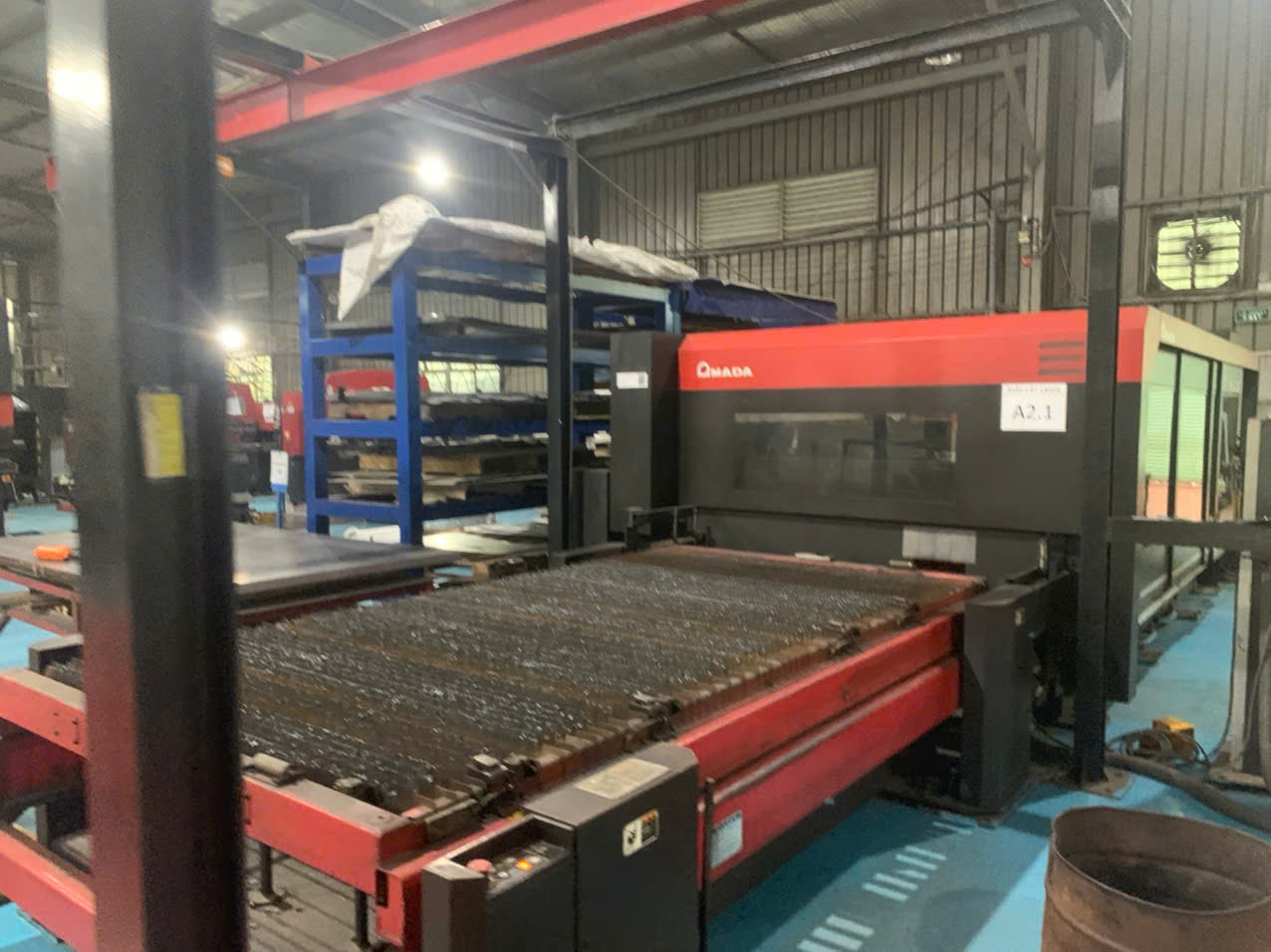
Safety hazards of sharp edges and burrs in sheet metal fabrication cost us a near-miss incident on our Vietnam production floor that changed how we approach every custom part order.
Sharp edges and burrs in sheet metal fabrication pose serious safety hazards including deep cuts and lacerations to workers, product performance failures from loose burr fragments, coating defects leading to corrosion, structural fatigue from stress concentration, and significant legal liability for manufacturers and importers alike.
These risks affect every stage of the supply chain 1 — from the fabrication shop floor to the end user’s assembly line. Below, I break down the specific dangers, their real-world consequences, and the quality control steps that prevent them.
How do sharp edges on sheet metal parts impact the safety of my assembly team?
A buyer from Ohio once sent us photos of his team's cut-resistant gloves — shredded after just two weeks of handling brackets from a previous supplier Hierarchy of Controls 2. That single image told us everything about the upstream edge finishing failures his workers were living with daily.
Sharp edges on sheet metal parts cause cuts, lacerations, and puncture wounds to assembly workers. Even edges that appear flat can harbor hidden burrs from worn cutting dies, making them more dangerous than obvious blades because the hazard is non-intuitive and workers handle parts without adequate caution.
Why Cut Edges Are More Dangerous Than They Look
Practically every metal cutting process leaves a burr. These are not just sharp edges — they are tiny, jagged teeth of metal protruding from cut surfaces due to plastic deformation 3 during shearing. The real danger is that a stamped or laser-cut part may look smooth to the eye, yet still carry micro-burrs that can slice through skin on contact. Softer metals like aluminum form especially large burrs because they deform more during cutting.
In our experience shipping custom mounting plates and brackets to the U.S., we have learned that the condition of the cutting tool matters enormously. A worn punch or die creates far worse burrs than a sharp one. This is why our quality team in China inspects tooling condition as part of our process control routine.
The Hierarchy of Controls for Metal Fabrication Safety
The Health and Safety Executive (HSE) is clear: wearing Personal Protective Equipment 4 (PPE) such as gloves should be the last line of defense, not the first. The priority should be to design out or cover sharp edges before parts ever reach the assembly floor. Here is how that hierarchy works in practice:
| Control Level | Method | Effectiveness |
|---|---|---|
| Elimination | Design parts with no exposed sharp edges | Highest |
| Substitution | Use edge-rounded profiles or rolled hems | High |
| Engineering Controls | Automated deburring, edge rounding machines | High |
| Administrative Controls | Safety training programs, warning labels | Moderate |
| PPE | Cut-resistant gloves, arm guards | Lowest |
Cumulative and Hidden Risks
Beyond immediate cuts and lacerations, repeated handling of sharp-edged parts creates cumulative ergonomic strain 5. Workers unconsciously grip parts differently to avoid edges, leading to fatigue and repetitive stress. Over time, this affects productivity and morale. In industrial environments, even minor open wounds carry infection risk from metal particles, coolant residues, and shop floor debris.
Material handling safety depends on getting edge finishing right at the source. When we conduct final inspections on sheet metal orders, we physically handle every sample part with bare hands. If it feels sharp, it fails. That simple, human check has prevented more complaints than any measuring tool.
What are the risks to my product's performance if burrs are not properly removed during fabrication?
During a recent project co-development session with a client building electrical enclosures, we discovered that burrs left on internal cutouts were slowly shredding the wire harness sheathing. The product had passed initial assembly checks, but would have failed within months in the field.
Burrs left on sheet metal parts degrade product performance by breaking loose and damaging pumps, fans, or electronics; by acting as tiny saw teeth that cut through cables and hoses over time; by interfering with proper fit and tolerances during assembly; and by initiating stress cracks that lead to structural fatigue failure.

Mechanical Damage From Loose Burrs
Burrs can break off spontaneously during operation. When they do, these tiny metal fragments travel through systems and damage sensitive components — blocking valves, shorting circuit boards, or scoring bearing surfaces. In safety-critical applications, a single loose burr can impair a function that protects people.
Assembly and Fit Problems
Burrs complicate assembly in ways that are not always obvious at first. A burr on a hole edge can prevent a fastener from seating properly. A burr on a mating surface can create a gap that throws off tolerances. Here is a breakdown of common product quality issues caused by burrs at different stages:
| Stage | Problem Caused by Burrs | Consequence |
|---|---|---|
| Assembly | Parts jam during insertion or fitting | Increased labor time, rework |
| Operation | Cables/hoses rubbing against burrs | Sheathing cut, electrical shorts, leaks |
| Maintenance | Burrs break loose during service | Damage to downstream components |
| Structural Loading | Stress concentration 6 at burr roots | Fatigue cracks, premature failure |
| Coating/Painting | Poor paint adhesion on sharp edges | Corrosion, cosmetic defects |
Fatigue and Structural Integrity
This is where burrs become genuinely dangerous in critical applications. Burrs on outer contours experience high stress during bending operations. They act as crack initiators — tiny notches where stress concentrates and micro-fractures begin. Under cyclic loading 7, these cracks propagate, leading to dynamic fatigue and eventual part failure.
Our engineering team pays special attention to this during risk assessment for structural brackets and load-bearing components. Brittle and hard materials — like certain high-strength alloys — are especially sensitive. Burrs can also cause strain hardening and localized embrittlement at low temperatures, further increasing the chance of fatigue cracks.
The Coating Catastrophe
Sharp burrs concentrate electrostatic field lines during powder coating or liquid spray applications. The result is uncontrolled paint separation — the coating pulls away from the sharp edge, leaving the substrate exposed. Even galvanized zinc layers form a faulty structure at sharp edges. This means the very spots most prone to mechanical damage are also the least protected against corrosion.
I have seen parts that looked perfectly coated on flat surfaces but showed rust blooming at every cut edge within six months of outdoor use. The deburring process is not just about safety — it is about long-term product durability.
How can I avoid the hidden costs and liability issues associated with poor edge finishing in my supply chain?
A lesson we learned the hard way several years ago: a batch of custom housings shipped to a U.S. distributor came back with a complaint — not about dimensions, not about material, but about a worker who cut his hand during unpacking. The resulting workers' compensation claim cost our client far more than the parts themselves.
To avoid hidden costs and liability from poor edge finishing, specify deburring requirements on your drawings, require suppliers to follow standards like UL 1439 or SME deburring levels, conduct incoming inspections for sharpness, and work with supply chain partners who integrate deburring as a standard fabrication step rather than an optional add-on.
The True Cost of Skipping Deburring
Many buyers focus on piece price when evaluating overseas suppliers. But poor edge finishing creates costs that do not show up on the invoice. These include:
- Worker injury claims and lost time at the assembly site
- Product returns and warranty claims from end users
- Damage to automated handling and assembly systems
- Rework labor to deburr parts that should have arrived finished
- Product recalls if burrs cause safety failures in the field
Machine guarding and automated assembly systems are particularly vulnerable. Robots and pick-and-place machines are designed for consistent part geometry. A burr that catches on a gripper can damage equipment or halt a production line.
Standards That Protect You
Two key standards help buyers define and enforce edge quality:
| Standard | What It Covers | How It Works |
|---|---|---|
| UL 1439 8 | Sheet metal edge sharpness | Presses edge against adhesive tape under 1.5 pounds of force; if tape cuts, edge fails |
| SME Deburring Levels | Seven levels of burr removal | Ranges from "not required" to "remove all burrs visible at specified magnification" |
The challenge is that few modern standards define edge sharpness clearly. Many manufacturers rely on proprietary standards, which makes it hard to compare suppliers or enforce consistent quality. When we manage supply chain projects for our clients, we specify deburring levels directly on the engineering drawings. This removes ambiguity and gives inspectors a clear pass/fail criterion.
How to Protect Your Supply Chain
Here is what I recommend based on our experience managing custom part sourcing across Asia:
- Add deburring callouts to every drawing. Use SME deburring levels or specify "break all sharp edges" with a measurable radius.
- Require edge inspection in the supplier's quality plan. This should be part of the PPAP documentation 9.
- Conduct incoming inspection. Use the UL 1439 tape test or a simple bare-hand check on sample parts.
- Audit your supplier's deburring process. Confirm they use dedicated deburring equipment — whether manual tools, tumbling, or automated deburring machines — not just a quick file pass.
- Document everything. If a liability claim arises, your defense depends on proving you specified and verified edge quality requirements.
Working with a supply chain partner who understands these requirements — and has feet on the ground at the factory — reduces your risk dramatically. Our teams in Vietnam and China conduct these checks as part of every final inspection before shipment.
What quality control steps should my overseas supplier take to guarantee my parts are free of dangerous burrs?
When we onboard a new sheet metal supplier in Vietnam or China, the first thing we evaluate is not their laser cutter or press brake — it is their deburring station. A factory that treats deburring as an afterthought will produce parts that create problems downstream.
Your overseas supplier should implement incoming material checks, maintain sharp tooling to minimize burr formation, perform systematic deburring using appropriate methods for each material, conduct edge sharpness testing per UL 1439 or equivalent standards, and document every step in a traceable quality control process aligned with your PPAP requirements.

A Process-Based Approach to Burr-Free Parts
The best approach to eliminating burrs is not to rely on a single inspection gate. It is to build burr prevention and removal into every step of the fabrication workflow. Here is what that looks like in practice:
Tooling and Process Control
Burr formation starts at the cutting step. Worn punches, dull laser focus, incorrect shearing clearances — all of these produce worse burrs. A supplier with good process control monitors tooling wear and replaces tools on a schedule, not just when parts start looking bad. During our supplier audits, we check tool maintenance logs and compare them against production volumes.
Choosing the Right Deburring Method
Different parts and materials require different approaches. There is no single deburring method that works for everything. For a deeper look at practical techniques, see our guide on how to manage sharp edges and burrs in sheet metal fabrication safely.
| Deburring Method | Best For | Limitations |
|---|---|---|
| Manual filing/scraping | Low-volume, complex geometries | Inconsistent, slow, operator-dependent |
| Tumbling/vibratory finishing | Small parts, high volume | Cannot target specific edges, may damage features |
| Abrasive belt machines | Flat sheet parts, edge rounding | Not suitable for 3D formed parts |
| Automated deburring machines | High volume, consistent quality | Higher equipment investment |
| Thermal energy method (TEM) | Internal burrs, complex cavities | Expensive, specialized |
For most custom sheet metal brackets and housings we manage, a combination of machine deburring for flat blanks and manual touch-up after forming gives the best results. The key is consistency — every part must go through the same deburring process, every time.
Inspection and Documentation
After deburring, parts need to be inspected. The UL 1439 tape test is a practical, repeatable method. For critical applications, visual inspection under magnification adds another layer of assurance. Our final inspection reports include edge condition as a specific checklist item, with photos of representative edges.
Traceability matters. If a problem surfaces after delivery, you need to trace it back to a specific production lot, operator, and deburring step. This is standard in our process control documentation and is something we require from every supplier we work with.
Training the Workforce
Safety training programs for factory workers should cover not just how to handle sharp parts safely, but why deburring matters for the end product. Workers who understand the downstream consequences — product recalls, customer injuries, coating failures — take the deburring step more seriously. We have seen measurable improvement in edge quality at factories that invest in this kind of training. Understanding the essential safety protocols for a sheet metal fabrication shop is a critical foundation for any facility producing custom parts.
Conclusion
Sharp edges and burrs in sheet metal fabrication threaten worker safety, product performance, and your bottom line. Specify deburring requirements, audit your supplier's process, and partner with a team that treats edge quality as non-negotiable. End users should also be aware of the safety precautions needed when installing custom sheet metal parts to minimize risk at every stage.
Frequently Asked Questions
How do sharp edges on sheet metal parts impact the safety of my assembly team?
A buyer from Ohio once sent us photos of his team's cut-resistant gloves — shredded after just two weeks of handling brackets from a previous supplier Hierarchy of Controls 2 . That single image told us everything about the upstream edge finishing failures his workers were living with daily.
What are the risks to my product's performance if burrs are not properly removed during fabrication?
During a recent project co-development session with a client building electrical enclosures, we discovered that burrs left on internal cutouts were slowly shredding the wire harness sheathing. The product had passed initial assembly checks, but would have failed within months in the field.
How can I avoid the hidden costs and liability issues associated with poor edge finishing in my supply chain?
A lesson we learned the hard way several years ago: a batch of custom housings shipped to a U.S. distributor came back with a complaint — not about dimensions, not about material, but about a worker who cut his hand during unpacking. The resulting workers' compensation claim cost our client far more than the parts themselves.
Footnotes
1. Provides a general overview of supply chain concepts. ↩︎
2. Explains the fundamental safety management framework from a leading health institute. ↩︎
3. HTTP 403 ↩︎
4. Defines PPE and its importance in workplace safety from a federal authority. ↩︎
5. Details workplace ergonomic risks and prevention from a federal safety agency. ↩︎
6. Explains a critical mechanical engineering concept related to material failure. ↩︎
7. Defines the phenomenon of material fatigue caused by repeated stress cycles. ↩︎
8. Describes an industry standard for testing and ensuring product edge sharpness. ↩︎
9. Explains a key quality assurance process in manufacturing for part approval. ↩︎