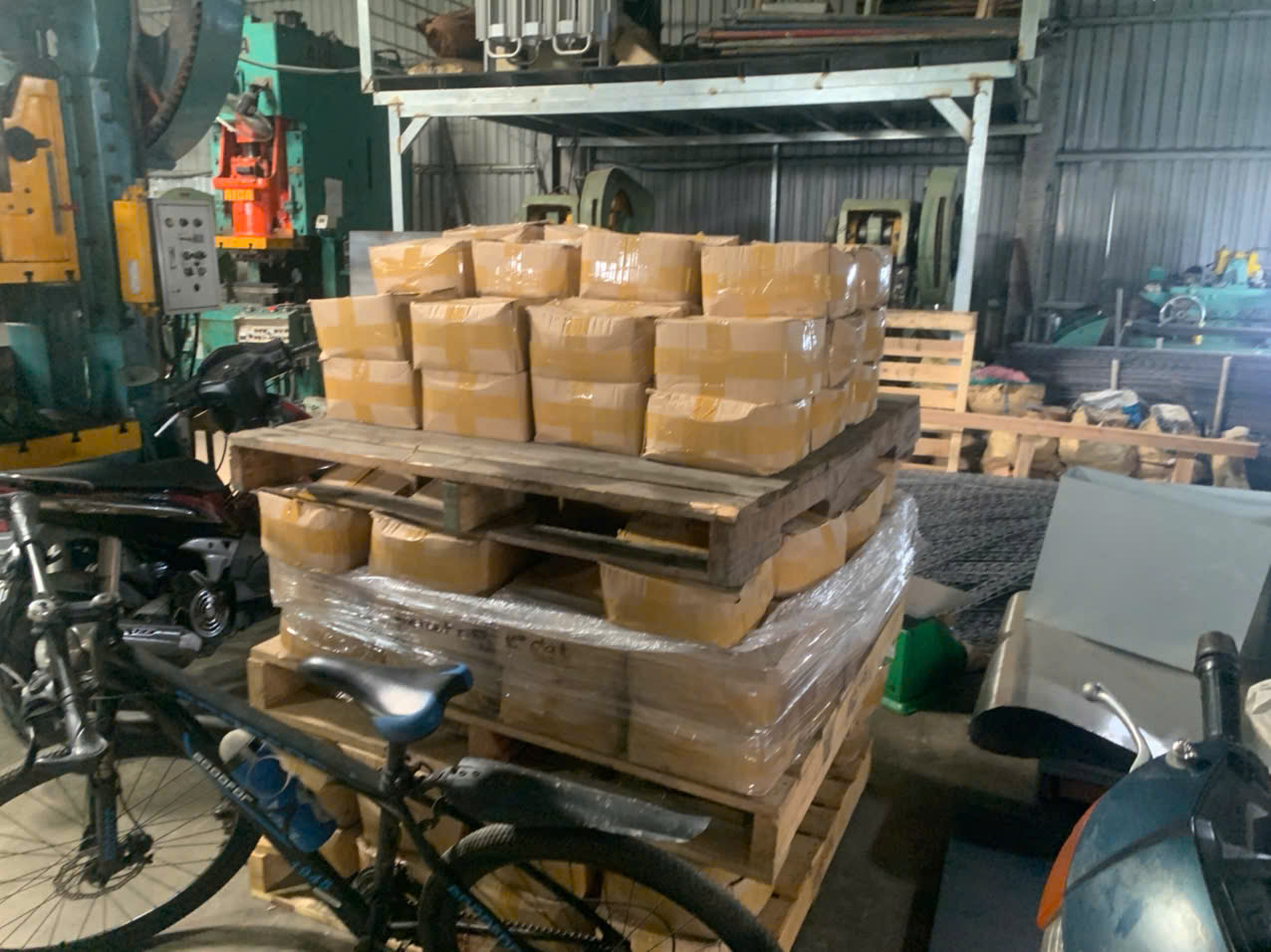

Last quarter, a client lost $18,000 in custom stamping brackets to moisture corrosion mid-ocean — and their carrier offered just $200 in compensation.
When sourcing stamping parts from Vietnam, you need Marine Cargo Insurance with All-Risk coverage (Institute Cargo Clauses A), not basic carrier liability. Standard carrier limits often cap at $100–$200, far below the actual value of precision metal components, leaving buyers financially exposed to transit damage, corrosion, and loss.
This gap between what carriers cover and what your stamping parts are actually worth is the central risk in Vietnam sourcing. Below, I break down exactly how to determine coverage amounts, choose the right policy type, file claims effectively, and understand which Incoterms shift the insurance burden onto you.
How Do I Determine the Right Coverage Amount for My Stamping Parts Shipments?
One lesson our logistics team in Vietnam learned early: buyers who undervalue their shipments on insurance declarations always regret it when a claim gets denied. Getting the coverage amount right is not guesswork — it follows a clear formula.
To determine the right coverage amount, insure your stamping parts at 110% of the commercial invoice value (known as Ad Valorem valuation). This 110% figure accounts for the cost of goods, freight charges, and the administrative burden of re-ordering custom parts from your Vietnam supplier.

Why 110% Is the Industry Standard
The extra 10% above invoice value exists for a reason. When a shipment of custom stamping brackets is lost or damaged, you do not just lose the parts. You lose the freight you already paid. You lose time. You may lose a production schedule. The 110% cushion covers those ancillary costs that pure invoice value misses.
Our team handles export documentation 1 for stamping orders ranging from $5,000 to $150,000. For every shipment, the declared value on the insurance policy must match the commercial invoice exactly — then add that 10% buffer. If you declare $20,000 for a $30,000 order, your claim will be proportionally reduced or outright denied.
The Real Cost of Underinsuring
Consider this scenario. You order 10,000 custom mounting brackets from our Vietnam facility. The invoice reads $25,000. Freight costs another $3,000. Under carrier default liability, your maximum recovery might look like this:
| Scenario | Covered Amount | Your Loss |
|---|---|---|
| Carrier default liability (sea freight) | ~$200 | $27,800 |
| Declared value with carrier | Up to $1,000–$2,000 | $26,000–$27,000 |
| Marine cargo insurance at 110% | $30,800 (110% of $28,000) | $0 |
The math is simple. A marine cargo insurance premium at 1–2% of declared value costs you $280–$560 on a $28,000 shipment. That is the price of a single bracket order versus the price of losing everything.
How to Calculate Your Coverage Step by Step
- Start with the total invoice value of the stamping parts.
- Add the freight cost (ocean or air).
- Multiply the combined total by 1.10 (110%).
- This final number is your insured value.
For example:
| Line Item | Amount |
|---|---|
| Invoice value (5,000 zinc-plated brackets) | $35,000 |
| Ocean freight (Ho Chi Minh City 2 to Los Angeles) | $4,200 |
| Subtotal | $39,200 |
| Insured value (110%) | $43,120 |
| Estimated premium (1.5%) | $646.80 |
When we prepare shipments at our Vietnam office, we always flag the coverage calculation to our U.S. clients before booking. It takes five minutes to get right and can save tens of thousands.
Do Not Forget Custom Tooling
Here is something many buyers overlook. If your stamping parts require custom dies — and most precision brackets do — those dies may ship separately or alongside the parts. Standard cargo insurance often undervalues or excludes tooling. You need a specific rider to cover the replacement value of custom dies, which can run $5,000–$20,000 depending on complexity. Ask your insurer about a tooling rider before the Bill of Lading 3 is issued.
What Types of Shipping Insurance Should I Choose for Vietnam-Sourced Parts?
A buyer in Ohio once told me he assumed his freight forwarder's "standard coverage" was enough for a $40,000 order of stamped stainless steel clips. It was Total Loss Only. When half the shipment arrived with micro-deformation from container vibration, he recovered nothing.
For Vietnam-sourced stamping parts, choose All-Risk coverage under Institute Cargo Clauses A (ICC A). This is the broadest marine cargo insurance available, covering theft, handling damage, moisture corrosion, and partial loss — risks that Total Loss Only and Named Perils policies specifically exclude for metal components.

All-Risk vs. Total Loss Only vs. Named Perils
Not all policies are equal. Here is how the three main coverage types compare for stamping parts:
| Coverage Type | What It Covers | What It Excludes | Suitable for Stamping Parts? |
|---|---|---|---|
| All-Risk (ICC A) | Physical loss or damage from any external cause, including handling, moisture, theft, and partial damage | Inherent vice, delay, willful misconduct | Yes — strongly recommended |
| Named Perils (ICC B/C) | Only specific listed events: fire, sinking, collision, stranding | Moisture damage, theft, handling errors, vibration damage | No — too many gaps for metal parts |
| Total Loss Only (TLO) | Complete loss of the entire shipment | Any partial damage, bending, corrosion, shortage | No — stamping parts commonly suffer partial damage |
For precision stamping brackets with tight engineering tolerances 4, partial damage is far more common than total loss. A container might shift during rough seas. Humidity in Ho Chi Minh City's port can hit 85%. Zinc-plated surfaces oxidize. Bent flanges lose dimensional accuracy. All-risk coverage under ICC A addresses these realities.
Critical Endorsements for Metal Parts
Even with ICC A, there are specific endorsements you should request from your insurer.
Tropical humidity and oxidation endorsement. Standard policies frequently exclude damage from "atmospheric moisture." Vietnam's ports are hot and humid. Raw steel stampings and even galvanized brackets can develop surface rust 5 during the 18–25 day ocean transit to the U.S. West Coast. Without this endorsement, your insurer may deny a corrosion claim.
Precision tolerance and deformation coverage. Standard insurance covers visible damage. But precision stamping parts — the kind we produce with tolerances of ±0.05mm — can suffer micro-deformation or warping from container vibration and pressure changes. This invisible damage makes the parts unusable. You need a clause that covers functional impairment, not just cosmetic damage.
General Average protection. This is a concept many buyers have never heard of. Under maritime law 6, if a vessel is in danger and cargo must be jettisoned to save the ship, all cargo owners share the cost — even if your stamping parts are untouched. Without proper insurance, you could owe tens of thousands for someone else's cargo being thrown overboard.
Carrier Insurance vs. Third-Party Marine Cargo Insurance
When we coordinate logistics for clients, we often get asked: "Can I just check the insurance box on the DHL or UPS form?" The answer depends on the shipment.
For small express parcels under $2,000, carrier-provided coverage is convenient. DHL charges about 1.50% of shipment value. FedEx offers up to $1,000 in additional coverage. But for sea freight orders of stamping parts — which routinely exceed $10,000 — third-party marine cargo insurers 7 offer broader, customizable policies. They cover consolidated shipments, multi-modal transport, and complex industrial damage scenarios that carrier insurance simply does not address.
Our recommendation: use carrier insurance for sample shipments and prototypes. Use a specialized marine cargo policy from a third-party insurer or through your reliable freight forwarder for production orders.
How Can I File a Claim If My Stamping Parts Are Damaged in Transit?
The phone call nobody wants: "The brackets arrived bent." I have been on both sides of that conversation, and the difference between recovering your money and absorbing the loss comes down to what you do in the first 48 hours.
To file a successful transit damage claim, immediately photograph all damage and packaging before moving the goods, obtain a surveyor's report at the port of entry, and submit your claim with the original commercial invoice, Bill of Lading, packing list, and damage evidence within the insurer's filing deadline — typically 30 to 60 days.

The 48-Hour Protocol
When damaged stamping parts arrive at your warehouse or port, time is critical. Here is the step-by-step process I walk our clients through:
Step 1: Do not move or unpack beyond what is necessary for inspection. Photograph the container exterior, the packaging condition, and each layer of damage as you open it. Use a ruler or caliper next to deformed brackets to show dimensional deviation. Timestamp every photo.
Step 2: Check the Bill of Lading. A "clean" Bill of Lading — one with no noted damage at origin — strengthens your claim enormously. It proves the goods were in good condition when the carrier accepted them. If the Bill of Lading already notes damage, the claim becomes more complex because the damage may have occurred before transit.
Step 3: Request a surveyor. For high-value shipments, call your insurer and request a marine surveyor 8 to inspect the goods at the port of entry or your receiving warehouse. The surveyor's report is the single most powerful piece of evidence in a cargo insurance claim.
Step 4: Compile and submit your documentation. Most insurers require:
- Completed claim form
- Original commercial invoice
- Packing list
- Bill of Lading (copy)
- Photographs of damage (timestamped)
- Surveyor's report (if applicable)
- Tracking number and shipping records
- Proof of insurance policy and premium payment
Common Reasons Claims Get Denied
Understanding why claims fail helps you avoid those pitfalls. Based on what our supply chain team has seen:
- Late filing. Most policies require notification within 3–5 days and formal submission within 30–60 days. Miss the window, and the claim is void.
- Inadequate photos. A single blurry image of a dented box is not enough. Insurers want clear, detailed photos showing the extent of damage to the actual parts, not just the packaging.
- Mismatched declared value. If your insurance declaration says $15,000 but your invoice says $22,000, the insurer will reduce or deny the payout.
- Excluded peril. If you have Named Perils coverage and the damage was caused by humidity (not a named peril under ICC C), you get nothing. This is why All-Risk (ICC A) matters.
Electronic Documentation Acceptance
A growing number of insurers now accept electronic documentation for customs and claims. This is particularly important for Vietnam exports, where original paper documents can take weeks to arrive by mail. Confirm with your insurer upfront that they accept digital submissions — scanned invoices, emailed surveyor reports, and electronic Bills of Lading. This can cut your claim processing time from months to weeks.
Which Incoterms Affect My Shipping Insurance Responsibilities When Sourcing From Vietnam?
During a recent project review with our Vietnam office, we discovered a client had been operating under CIF for two years without ever verifying what insurance the supplier actually carried. It turned out to be ICC C — the bare minimum, covering only fire and sinking. The brackets were fine, but the risk exposure was enormous.
Under Incoterms 2020, CIF and CIP require the seller to provide insurance, but CIF only mandates the minimum ICC C coverage. FOB, EXW, and FCA place full insurance responsibility on the buyer. For stamping parts, buyers should either negotiate CIP (which requires ICC A) or purchase their own All-Risk policy under FOB terms.

The Incoterm Insurance Matrix
Incoterms 2020 9 directly dictate who pays for and arranges shipping insurance. This is not optional knowledge — it is supply chain risk management fundamentals.
| Incoterm | Who Arranges Insurance? | Minimum Coverage Required | Recommended Action for Stamping Parts |
|---|---|---|---|
| EXW (Ex Works) | Buyer | None — buyer must arrange everything | Purchase your own ICC A policy |
| FOB (Free on Board) | Buyer (after goods pass ship's rail) | None — buyer must arrange | Purchase your own ICC A policy |
| FCA (Free Carrier) | Buyer | None — buyer must arrange | Purchase your own ICC A policy |
| CFR (Cost and Freight) | Buyer | None — seller pays freight only | Purchase your own ICC A policy |
| CIF (Cost, Insurance, Freight) | Seller | ICC C (minimum — Named Perils only) | Verify seller's policy; upgrade to ICC A or buy top-up |
| CIP (Carriage and Insurance Paid) | Seller | ICC A (All-Risk) — per Incoterms 2020 10 | Verify policy; this is the best seller-insured option |
The CIF Trap
Many U.S. buyers assume CIF means "fully insured." It does not. Under Incoterms 2020, CIF only requires the seller to provide ICC C coverage — the most basic Named Perils policy. ICC C covers fire, explosion, sinking, and stranding. It does not cover theft, handling damage, moisture, or the kinds of partial damage that stamping parts commonly suffer.
When our team negotiates with Vietnamese stamping suppliers on behalf of clients, we always ask for a copy of the actual insurance certificate under CIF terms. In about half the cases, the coverage is inadequate for precision metal components.
Contingent Interest Insurance
Here is a concept that protects you even when you think you are already covered. Contingent interest insurance protects your financial interest in FOB or EXW shipments if the goods are damaged before the risk officially transfers to you — or if the seller's primary insurance fails to pay. It is a safety net behind your safety net.
For example, under FOB, risk transfers when the goods cross the ship's rail in Ho Chi Minh City. But what if damage occurs during the truck ride from the stamping factory to the port? Technically, that is still the seller's risk. But if the seller has no insurance or refuses to pay, contingent interest insurance covers your financial exposure.
Our Recommendation for Vietnam Sourcing
For most of our U.S. clients sourcing stamping parts from Vietnam, we recommend FOB Ho Chi Minh City with the buyer purchasing their own ICC A marine cargo insurance through a trusted freight forwarder or third-party broker. This gives you full control over coverage terms, declared values, and the claims process. You are not relying on a supplier's minimum-coverage CIF policy. You are managing your own supply chain risk management from port to door.
If you prefer CIF for simplicity, insist on seeing the insurance certificate. Confirm it is ICC A or purchase a top-up policy to bridge the gap between ICC C and full All-Risk coverage. The premium difference is small — often less than 0.5% of shipment value — but the protection difference is enormous. For a deeper look at how Incoterms influence risk allocation for similar metal components, see our guide on which Incoterms best mitigate risk when sourcing welding parts from Vietnam.
Conclusion
Shipping insurance for stamping parts from Vietnam is not optional — it is a strategic necessity. Secure All-Risk marine cargo insurance, verify your Incoterms obligations, and document everything. Contact us at sa***@*******ch.com to discuss your next sourcing project.
Frequently Asked Questions
How Do I Determine the Right Coverage Amount for My Stamping Parts Shipments?
One lesson our logistics team in Vietnam learned early: buyers who undervalue their shipments on insurance declarations always regret it when a claim gets denied. Getting the coverage amount right is not guesswork — it follows a clear formula.
What Types of Shipping Insurance Should I Choose for Vietnam-Sourced Parts?
A buyer in Ohio once told me he assumed his freight forwarder's "standard coverage" was enough for a $40,000 order of stamped stainless steel clips. It was Total Loss Only. When half the shipment arrived with micro-deformation from container vibration, he recovered nothing.
How Can I File a Claim If My Stamping Parts Are Damaged in Transit?
The phone call nobody wants: "The brackets arrived bent." I have been on both sides of that conversation, and the difference between recovering your money and absorbing the loss comes down to what you do in the first 48 hours.
Footnotes
1. U.S. Department of Commerce trade agency guides exporters on required shipping documentation. ↩︎
2. Background reference on the Vietnamese port city referenced for shipping origin. ↩︎
3. U.S. Customs authority on trade documentation requirements including bills of lading. ↩︎
4. ISO sets global standards for manufacturing tolerances relevant to precision stamped parts. ↩︎
5. Background reference explaining the corrosion process affecting metal parts during transit. ↩︎
6. IMO governs international maritime law including general average principles for cargo. ↩︎
7. Lloyd’s is the leading global marine insurance market underwriting cargo risk policies. ↩︎
8. Background reference explaining the role of marine surveyors in cargo damage assessment. ↩︎
9. ICC is the official publisher and authority on Incoterms 2020 rules. ↩︎
10. Official ICC source clarifying trade term insurance obligations discussed in this section. ↩︎