

Stamping parts for medical devices sit in a different world from ordinary brackets process capability studies 1. I learned this the hard way when our team first audited a stamping supplier in Vietnam for a surgical instrument project. The parts looked perfect. The paperwork did not exist. One missing heat-lot record can stall an entire FDA submission, delay a product launch, and burn months of engineering work. That is why our project managers now treat medical stamping as a compliance discipline first, and a metal-forming process second.
Stamping parts for medical devices must meet biocompatibility standards such as ISO 10993, tight tolerances often within ±0.0005 inches, burr-free surface finishes, sterilization and corrosion resistance, full lot-level traceability, validated processes, and production under ISO 13485 and FDA 21 CFR Part 820 quality systems.
Each of those requirements deserves a closer look. Below, I break down the four questions buyers ask us most often, based on real sourcing projects across Asia.
How do I ensure the materials used in medical stamping parts meet biocompatibility and FDA requirements?
A buyer in Texas once sent us a drawing that simply said "stainless steel." For a patient-contacting clip, that note is dangerous. Our engineers pushed back and asked one question: what grade, and what proof?
To ensure biocompatibility, specify a recognized medical-grade alloy such as 316L stainless steel, 17-7 PH, titanium, or Nitinol on the drawing, require mill certificates traceable to each heat lot, and confirm the material passes applicable ISO 10993 biological evaluation for its intended body contact.

Material selection is the foundation of every medical stamping project. The alloy determines corrosion behavior, sterilization tolerance, and how the body reacts to the part. In our sourcing work, we never accept a generic material call-out for medical components. We ask the design firm to define the exact grade, the condition (annealed, quarter-hard, full-hard), and the specification standard, such as ASTM F138 for implant-quality 316L.
Common Medical Stamping Alloys
| Material | Key Properties | Typical Medical Use |
|---|---|---|
| 316L stainless steel 2 | Excellent corrosion resistance, low carbon | Surgical instruments, implant-adjacent parts |
| 17-7 PH stainless | High strength, good spring properties | Springs, clips, retainers |
| Titanium alloys | Lightweight, highly biocompatible | Implant-related components |
| Nitinol 3 | Superelastic, shape memory | Minimally invasive device elements |
Documentation matters as much as the metal itself. FDA reviewers expect a clear chain of evidence. That chain starts at the mill. We require our stamping partners to keep the mill test report for every coil, matched to the heat number. If the part is passivated or electropolished after stamping, we require process certificates for those steps too, because surface treatment changes the chemistry the patient actually touches.
Finally, remember that biocompatibility is proven at the device level under ISO 10993 4, but the component supplier must supply the material evidence that makes that testing valid. A part made from an unverified substitute alloy invalidates everything downstream.
What quality certifications should I look for when sourcing a stamping supplier for medical device components?
During supplier audits in Vietnam and across Asia, our team has walked into plenty of shops with excellent presses and zero quality system. Equipment impresses. Certificates protect.
Look for ISO 13485 certification as the core requirement, supported by ISO 9001 as a baseline, alignment with FDA 21 CFR Part 820 for U.S. markets, MDR 2017/745 awareness for Europe, and ideally MDSAP participation for multi-market coverage.

A certificate on the wall is only the beginning. When we audit a stamping supplier for a medical project, we verify that the quality system actually runs on the shop floor, not just in a binder. Here is how the main frameworks compare, and what each one really tells you.
Certification Comparison for Medical Stamping Suppliers
| Standard / Regulation | Scope | What It Signals to Buyers |
|---|---|---|
| ISO 9001 | General quality management | Baseline discipline; not sufficient alone for medical |
| ISO 13485 5 | Medical device quality systems | Risk-based controls, traceability, validated processes |
| FDA 21 CFR Part 820 6 | U.S. Quality System Regulation | Readiness for FDA-regulated supply chains |
| MDR 2017/745 7 | EU medical device regulation | Suitability for European device programs |
| MDSAP | Multi-country audit program | One audit covering several major markets |
What to Verify Beyond the Certificate
First, check the certification scope. Some suppliers hold ISO 13485 for one facility but produce your parts in another. Second, review recent audit findings and how nonconformities were closed. Third, ask about change control. A medical stamping supplier must notify you before changing tooling, material sources, or process parameters. Fourth, examine complaint handling and CAPA records. A supplier with zero recorded issues usually has a recording problem, not a quality miracle.
In our experience exporting custom parts to the U.S., buyers like Greg, a purchasing manager we work with, care less about the framed certificate and more about whether the supplier gets it right the first time. The certification is the filter. The audit is the proof. We perform both before any medical RFQ moves to quotation.
How can I verify tight tolerances and precision are consistently met in medical-grade stamped parts?
One trade-off comes up in nearly every medical quotation we prepare: tighter tolerances raise tooling cost, but loose tolerances raise patient risk. A first article that measures perfectly proves very little about part number ten thousand.
Verify precision through Production Part Approval Process documentation, first-article inspection reports, process capability studies with Cpk values typically above 1.33, validated IQ/OQ/PQ processes, in-process SPC monitoring, and calibrated measurement systems such as vision systems or CMMs.
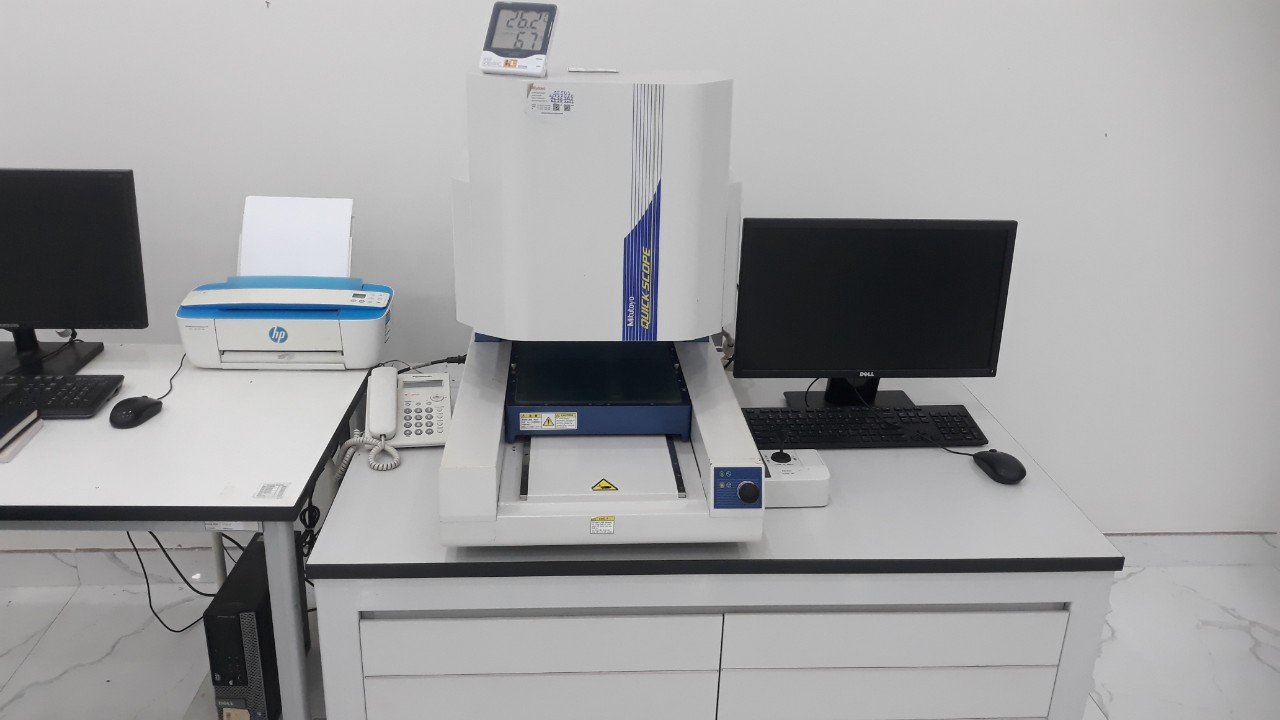
Medical stamping tolerances are often quoted at ±0.0005 inches for critical features, and some specialized applications demand even tighter limits. But a single number on a capability sheet is marketing. Consistency is engineering. Here is the verification sequence we run on every medical stamping program before mass production sign-off.
A Five-Step Verification Process
- Design review and tolerance clarification. We confirm which dimensions are truly critical, because over-tolerancing every feature inflates cost without improving safety.
- Tooling qualification. Progressive dies are inspected and trialed. Installation Qualification confirms the press and die are set up correctly.
- Process validation. Operational Qualification tests the process at its parameter limits. Performance Qualification proves stability over sustained production runs.
- First-article inspection and PPAP. A full dimensional layout against the drawing, plus material certs, capability studies, and control plans, submitted before approval.
- Ongoing statistical process control. Operators track key dimensions during production. Trend data catches die wear before parts drift out of specification.
Measurement systems deserve their own scrutiny. A gauge that cannot resolve a micron-level tolerance produces meaningless data. We check calibration records and gauge R&R studies during audits. For miniaturized parts driven by minimally invasive device trends, with features below 0.1 mm, optical and vision-based inspection often replaces contact measurement entirely.
One more point from our project files: revalidation matters. Whenever tooling is repaired, material lots change significantly, or press parameters shift, the supplier should revalidate. We write this into our process control agreements so buyers are never surprised by silent changes.
What documentation and traceability practices should I require from my stamping parts supplier for medical device projects?
Years ago, a client asked us to trace a suspect batch of stamped clips back through production. Because we had enforced lot-level records from day one, the answer took hours, not weeks. That single event convinced me that documentation is part of the product.
Require full lot traceability linking each finished part to its raw material heat number, plus material certifications, inspection and test records, process validation files, change control notifications, cleanliness and packaging documentation, and retained records covering the device's regulatory lifetime.

Traceability is the clearest dividing line between industrial stamping and medical stamping. For a shelf bracket, nobody asks where the steel came from. For a component inside a surgical device, everyone will ask, and the answer must be immediate and complete. When our team qualifies a stamping supplier for medical work, we audit the documentation system as rigorously as the presses.
Documentation Checklist for Medical Stamping RFQs
| Document | Purpose | When Required |
|---|---|---|
| Mill test reports | Prove material grade and heat lot | Every raw material lot |
| Certificate of conformance | Confirm parts meet drawing revision | Every shipment |
| First-article inspection report | Full dimensional verification | Before production approval |
| Process validation records (IQ/OQ/PQ) | Prove process stability | Program launch and after changes |
| In-process inspection data | Show ongoing control | Every production run |
| Passivation/finishing certificates | Verify surface treatment | Each treated lot |
| Change control notices | Prevent silent process changes | Before any change |
| Packaging and cleanliness records | Prevent contamination | Sterile or cleanroom parts |
Practical Traceability in Action
Good traceability works in both directions. Given a finished-part lot number, the supplier should retrieve the coil heat number, press settings, operator, inspection results, and shipping date. Given a raw material lot, they should identify every shipment that contains it. This bidirectional capability is what makes a targeted recall possible instead of a catastrophic one.
Cleanliness documentation matters more than many buyers expect. Parts destined for sterilization or implant-adjacent use may need cleanroom handling, controlled packaging, and residue limits for stamping oils. We specify these in the purchase agreement, because contamination discovered at the OEM's assembly line is far more expensive than prevention at the press.
Conclusion
Stamping parts for medical devices demand biocompatible materials, micron-level precision, validated processes, and airtight traceability. Choose partners who treat documentation and quality systems as seriously as the stamping itself.
Frequently Asked Questions
How do I ensure the materials used in medical stamping parts meet biocompatibility and FDA requirements?
A buyer in Texas once sent us a drawing that simply said "stainless steel." For a patient-contacting clip, that note is dangerous. Our engineers pushed back and asked one question: what grade, and what proof?
What quality certifications should I look for when sourcing a stamping supplier for medical device components?
During supplier audits in Vietnam and across Asia, our team has walked into plenty of shops with excellent presses and zero quality system. Equipment impresses. Certificates protect.
How can I verify tight tolerances and precision are consistently met in medical-grade stamped parts?
One trade-off comes up in nearly every medical quotation we prepare: tighter tolerances raise tooling cost, but loose tolerances raise patient risk. A first article that measures perfectly proves very little about part number ten thousand.
Footnotes
1. Background concept explaining Cpk and capability studies mentioned for precision verification. ↩︎
2. Background reference explaining properties of this widely cited medical-grade alloy. ↩︎
3. Explains the shape-memory alloy referenced as a medical stamping material option. ↩︎
4. Official ISO standard page for biological evaluation of medical devices referenced in article. ↩︎
5. Official ISO standard page for medical device quality management systems discussed extensively. ↩︎
6. FDA’s official page on the Quality System Regulation cited as a key compliance requirement. ↩︎
7. Official EU source describing the Medical Device Regulation referenced for European compliance. ↩︎