

Bare stamped brackets rust fast. I have seen shipments rejected for this alone. On our production line, [choosing the right surface treatments for stamping parts](https://dewintech.com/blog/how-choose-right-surface-treatment-custom-stamping-parts/) prevents that costly failure.
Surface treatments for stamping parts include electroplating, anodizing, powder coating, e-coating, passivation, phosphating, polishing, sandblasting, deburring, and PVD coating. The right choice depends on base metal, corrosion environment, appearance needs, part geometry, tolerances, and budget.
Each treatment solves a different problem. Some protect against rust. Some improve looks. Some do both. Let me walk you through how to pick the right one for your project.
How Do I Choose the Right Surface Treatment for My Stamped Parts?
A few years back, our engineers caught a drawing that specified chrome plating on an aluminum clip ASTM B633 1. The client actually needed anodizing. That catch saved the whole order.
Choose a surface treatment by matching four factors: base metal (aluminum favors anodizing, steel favors plating or powder coating), operating environment, required appearance, and functional needs like conductivity or wear resistance. Always confirm coating thickness against your part tolerances before finalizing.

The selection process starts with the base metal. This is the single biggest filter. Aluminum and steel behave very differently under the same treatment. Zinc plating works well on carbon steel. It does not make sense on aluminum. Anodizing is excellent on aluminum. It does not work on steel at all.
Start With the Base Metal
Here is a simple matching guide we use when reviewing customer drawings:
| Base Metal | Best-Fit Treatments | Avoid |
|---|---|---|
| Carbon steel | Zinc plating, powder coating, e-coating, phosphating | Anodizing |
| Stainless steel | Passivation, electropolishing 2, brushing | Zinc plating (usually unnecessary) |
| Aluminum | Anodizing, micro-arc oxidation, powder coating | Standard phosphating |
| Copper/brass | Nickel plating, tin plating, lacquer | Heavy blasting |
Then Ask Four Questions
After the metal is confirmed, we ask four questions. First, where will the part live? Outdoor and marine settings demand stronger protection. Second, does the part need to look good? Decorative parts push you toward polishing, brushing, or colored anodizing. Third, does the part carry current or face wear? Conductivity favors tin or nickel plating. Wear favors hard anodizing or PVD. Fourth, how tight are the tolerances? Coatings add thickness. A powder coat can add 60 to 120 microns. On a tight-tolerance stamped bracket, that thickness can ruin the fit. In those cases, thin plating or electropolishing is safer.
One more point. Think about downstream processes. If your stamped part will be welded after coating, zinc layers can release toxic fumes and weaken the weld. We always flag this during design review. Sequence matters as much as selection.
What Surface Finishes Best Protect My Custom Parts from Corrosion?
During a supplier audit in Vietnam last year, I pulled a salt-spray 3 test report on zinc-plated brackets. The results told us more than any brochure ever could.
Zinc electroplating, e-coating, powder coating, hot-dip galvanizing, and anodizing offer the strongest corrosion protection for stamped parts. E-coating gives the most uniform coverage on complex shapes, while powder coating provides the thickest barrier for harsh outdoor environments.
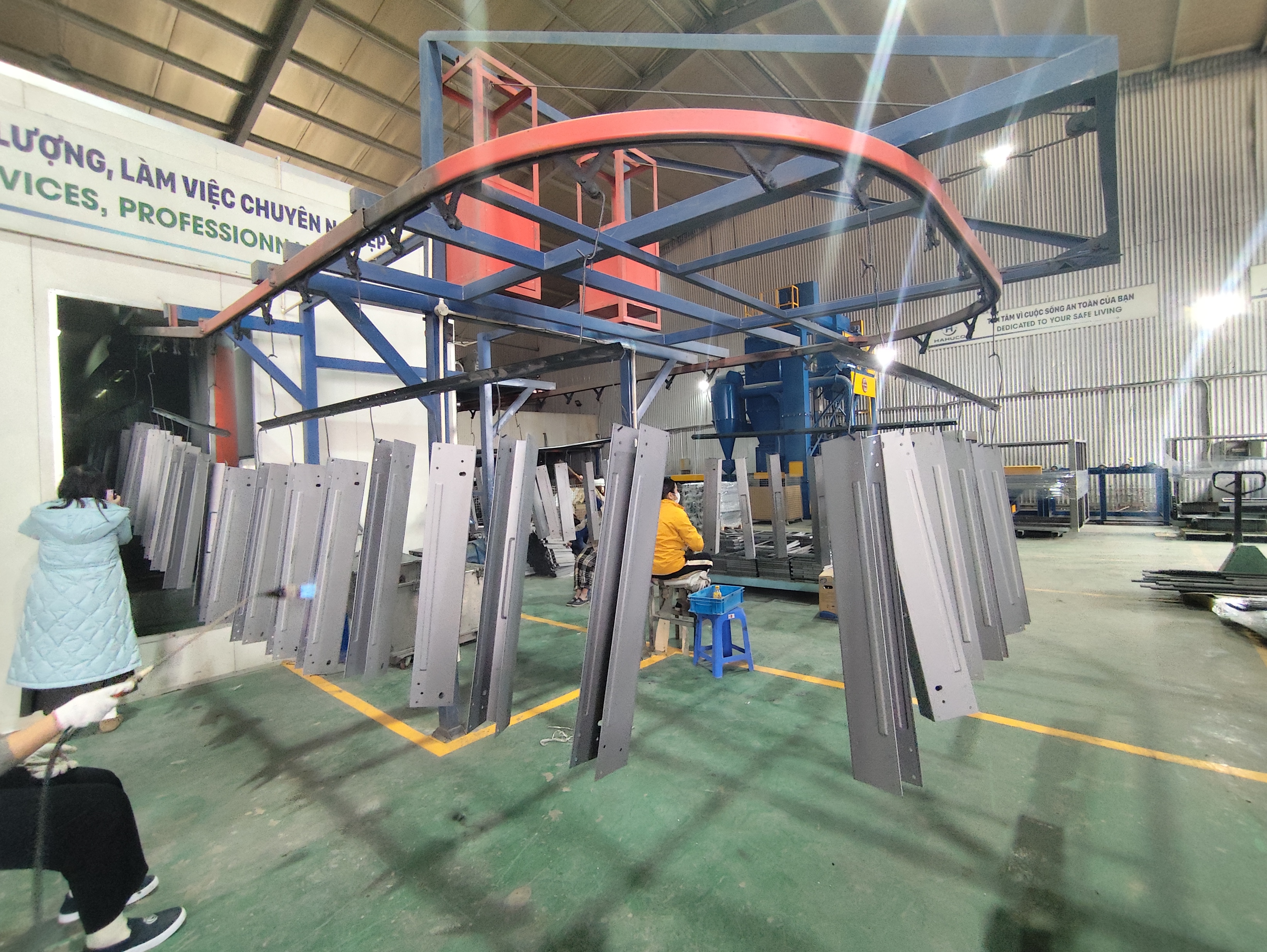
Corrosion is the number one reason our clients specify a finish. A bare steel bracket can show red rust within days in a humid warehouse. The protection you choose should match the severity of the environment, not just the lowest price.
Ranking Protection by Environment
Here is how the main options compare in practice:
| Treatment | Protection Level | Typical Use | Notes |
|---|---|---|---|
| Zinc plating (clear/yellow) | Moderate | Indoor hardware, fasteners | Low cost, thin layer |
| Zinc-nickel plating | High | Automotive underbody | Better than plain zinc |
| E-coating | High | Complex brackets, chassis parts | Very uniform coverage |
| Powder coating | High | Outdoor enclosures, frames | Thick, chip-resistant |
| Anodizing (aluminum) | High | Aluminum clips, housings | Hard oxide layer |
| Passivation (stainless) | Enhances natural resistance | Medical, food equipment | Removes free iron |
| Phosphating | Low alone, good as primer | Paint pre-treatment | Improves adhesion |
Why Geometry Changes the Answer
Stamped parts often have folds, flanges, and punched holes. Spray-applied coatings struggle to reach inside bends. E-coating solves this. The part is submerged, and the electric current pulls the coating into every recess. That is why we recommend e-coating for the zigzag clips and multi-bend brackets we produce. Coverage is even, including edges.
Passivation deserves a special note. It is not a coating. It is a chemical bath that strips free iron from stainless steel and strengthens the natural chromium oxide layer. For stainless stamped parts, it is often all you need. Also watch regulations. RoHS 4 and REACH have pushed the industry away from hexavalent chromium toward trivalent and chrome-free passivates. We specify compliant chemistry on every U.S.-bound order because customs and end customers both check.
Which Surface Treatment Options Balance Cost and Performance for My Project?
A purchasing manager in the U.S. once asked me to quote PVD coating 5 on simple mounting clips. We ran the numbers and steered him to zinc plating instead. He saved a lot without losing anything his application needed.
Zinc electroplating and phosphating offer the lowest cost for basic protection. Powder coating and e-coating sit in the middle with strong durability per dollar. Anodizing is cost-effective for aluminum. Reserve PVD, CVD, and micro-arc oxidation for demanding medical, aerospace, or high-wear applications.

Overspending on finishing is one of the most common mistakes I see in RFQs. The reverse is also true. Underspecifying leads to field failures and warranty claims. The goal is matching performance to the real requirement.
A Practical Cost-Performance Ladder
Think of surface treatments as a ladder. Each step up adds cost and capability:
- Deburring and cleaning — The baseline. Cheap, and required before almost any coating.
- Phosphating — Very low cost. Good primer layer, weak protection alone.
- Zinc electroplating — Low cost. Solid indoor corrosion protection. The workhorse of stamped steel parts.
- Anodizing — Moderate cost on aluminum. Adds hardness, insulation, and color options.
- E-coating — Moderate cost. Best value when geometry is complex.
- Powder coating — Moderate cost. Best value for thick, attractive outdoor protection.
- Electropolishing — Higher cost. Mirror finish with almost no dimensional change.
- PVD/CVD, micro-arc oxidation — Highest cost. Justified only by extreme wear, precision, or regulatory demands.
Where the Hidden Costs Live
Unit price is not the whole story. Batch size matters. Powder coating has setup costs that shrink at volume. Rack plating costs more than barrel plating, but small clips can often be barrel-plated cheaply. Rejects matter too. A cheap plating shop with poor pre-cleaning will give you blistered coatings and rework. In our project management work, we cost out the total landed price, including inspection and rework risk, not just the quoted price per piece. Multi-step systems also add up. A part needing sandblasting, phosphating, and powder coating carries three process costs. Sometimes one well-chosen treatment replaces two mediocre ones.
How Can I Ensure Consistent Surface Treatment Quality from My Overseas Supplier?
Delivery delays hurt. Non-conforming finishes hurt more. Our Vietnam team once rejected an entire plating lot at final inspection because the thickness readings drifted below spec. The client never saw the problem. That is exactly how it should work.
Ensure consistent quality by defining the treatment fully on the drawing (standard, thickness, color, test method), requiring PPAP or first-article approval, auditing the plating subcontractor, mandating in-process thickness and adhesion checks, and using third-party or on-site final inspection before shipment.

Most finish failures trace back to vague specifications. A drawing that says only "zinc plated" leaves the supplier to guess thickness, chromate type, and salt-spray requirement. Guessing produces inconsistency. Precision on paper produces consistency in the box.
Specify Before You Inspect
We push clients to lock down five items on every drawing. Reference a standard, such as ASTM B633 6 for zinc plating. State the minimum coating thickness in microns. Define the color and gloss, ideally with a sample or code. Name the test method, such as salt-spray hours or cross-hatch adhesion. Flag any masked areas, threads, or weld zones that must stay bare.
Build Verification Into the Process
Here is the control framework we apply on custom parts programs:
| Stage | Control Activity | What It Catches |
|---|---|---|
| Supplier audit | Review plating line, bath maintenance, records | Weak process discipline |
| PPAP 7 / first article | Measure thickness, adhesion, color vs. spec | Wrong interpretation of drawing |
| In-process control | Bath chemistry logs, periodic thickness checks | Process drift mid-run |
| Final inspection | Sampling per AQL, visual and salt-spray verification | Escaped defects before shipping |
| Retained samples | Keep golden samples from approved lot | Disputes on color or texture |
Distance makes trust harder, so verification must be structural, not personal. In our experience exporting to the U.S., having local staff walk the finishing line matters more than any certificate. Chemistry drifts. Baths get contaminated. Racks wear out. A supplier that logs bath analysis daily and keeps calibration records on its thickness gauges will give you repeatable results. One that cannot show those records will eventually ship you a bad lot. Ask for the records before you ask for the price.
Conclusion
Bare stamped parts fail early. The wrong finish wastes money. Match treatment to metal, environment, and tolerance, then enforce quality with clear specs and inspection. Contact us to get it right first time.
Frequently Asked Questions
How Do I Choose the Right Surface Treatment for My Stamped Parts?
A few years back, our engineers caught a drawing that specified chrome plating on an aluminum clip ASTM B633 1 . The client actually needed anodizing. That catch saved the whole order.
What Surface Finishes Best Protect My Custom Parts from Corrosion?
During a supplier audit in Vietnam last year, I pulled a salt-spray 3 test report on zinc-plated brackets. The results told us more than any brochure ever could.
Which Surface Treatment Options Balance Cost and Performance for My Project?
A purchasing manager in the U.S. once asked me to quote PVD coating 5 on simple mounting clips. We ran the numbers and steered him to zinc plating instead. He saved a lot without losing anything his application needed.
Footnotes
1. Official ASTM standard for zinc electroplating referenced as a specification example. ↩︎
2. Background reference explaining the mirror-finish electrochemical process mentioned in cost ladder. ↩︎
3. ISO standard for salt spray corrosion testing referenced as a verification test method. ↩︎
4. Official source on the RoHS directive restricting hazardous substances mentioned in compliance discussion. ↩︎
5. Explains the physical vapor deposition process referenced for demanding applications. ↩︎
6. Cites the official standard referenced for zinc plating thickness specifications. ↩︎
7. Background on the Production Part Approval Process used for supplier qualification. ↩︎