

One question keeps coming up when our team handles new custom parts inquiries from U.S. buyers: how many pieces do I actually need to order? It’s a real pain point — you need just 10 brackets or 5 prototype housings, but suppliers quote you for 500. That frustration stalls product launches and burns through budgets before you even validate your design.
Sheet metal fabrication MOQ varies widely by supplier and process, but there is no universal minimum. Many modern fabricators accept orders as low as 1–25 units for prototypes, while traditional suppliers may set MOQs by weight or unit count. Small batches are absolutely possible through on-demand manufacturing platforms and flexible job shops.
This guide breaks down exactly what drives MOQ, how to find suppliers who welcome low volume production, what costs to expect, and how to keep quality tight — even on small runs sourced from Asia.
How can I find a sheet metal supplier that accepts my low-volume custom orders?
A few months ago, a purchasing manager in Ohio reached out to us with a problem: his existing supplier in Asia refused to run anything below 200 units, but he only needed 30 custom sheet metal parts for a bridge production run before committing to full-scale manufacturing.
To find a sheet metal supplier for low-volume custom orders, search for fabricators that explicitly advertise "no MOQ" or flexible batch policies, prioritize those offering rapid prototyping and on-demand manufacturing services, and verify their capabilities through supplier audits and sample orders before committing.

Finding the right supplier for small batches is not just about Googling "low MOQ sheet metal." You need to understand the landscape of supplier types and match your project's complexity to the right partner.
Traditional Suppliers vs. On-Demand Platforms
Traditional metal distributors and large-scale fabricators typically set MOQs to cover their fixed setup costs. These suppliers optimize for high throughput. Their machines, labor, and scheduling all favor long runs. When you ask for 10 pieces, you disrupt their workflow. That is why they push MOQs of 100, 200, or even 500 units.
On-demand manufacturing platforms 1 work differently. They use digital quoting, automated nesting software 2, and flexible scheduling to handle small orders efficiently. Many explicitly state "no MOQ." They make money by aggregating many small orders rather than running one massive batch.
Where to Look
Here is a practical comparison of sourcing channels for small batch custom sheet metal parts:
| Sourcing Channel | Typical MOQ | Best For | Lead Time |
|---|---|---|---|
| Large traditional fabricators | 100–500 units | Mass production 3 | 4–8 weeks |
| Regional job shops | 10–50 units | Mid-volume, local projects | 2–4 weeks |
| On-demand platforms | 1–25 units | Prototypes, bridge production | 3 days – 3 weeks |
| Asia-based suppliers (with sourcing agent) | 1–50 units | Cost-effective low volume production | 2–5 weeks |
From our experience sourcing custom parts from Vietnam and other Asian countries for U.S. clients, the sweet spot for small batches is working with a sourcing partner who has direct relationships with flexible fabricators. Our Vietnam office, for instance, works with shops that handle prototype fabrication runs of as few as 5 pieces — because we manage the coordination, quality checks, and logistics that would otherwise make such small runs impractical for a buyer operating remotely.
Key Questions to Ask Potential Suppliers
Before you commit, ask these questions:
- What is your minimum order for prototype and low-volume runs?
- Do you charge a separate setup fee, and if so, how much?
- Can you provide DFM feedback 4 before quoting?
- What finishing services do you offer (powder coating, anodizing, plating)?
- Will you run a first-article inspection 5 for small batches?
Suppliers who answer these confidently and transparently are usually the ones worth partnering with.
What factors will influence the MOQ and pricing for my specific sheet metal project?
When we quote a new sheet metal project, the first thing our engineers review is not the quantity — it is the drawing. The complexity of your part drives everything: the MOQ a supplier will accept, the cost per unit, and even whether a small batch makes financial sense.
MOQ and pricing for sheet metal projects are influenced by material type and thickness, part complexity (number of bends, holes, and welds), tooling costs, required tolerances, finishing services, and the raw material supplier's own minimum purchase requirements. Simpler parts with standard materials typically have lower MOQs and faster turnaround.

Let me walk through the main cost drivers one by one so you can anticipate what your supplier will consider.
Material Selection
Different metals carry different minimum purchase requirements from raw material suppliers. A fabricator may need to buy a full sheet or coil even for your small order. For example, brass often has a MOQ of 5–7 pounds from the material distributor. If your parts only use 2 pounds, you still pay for 5. Stainless steel and aluminum are more readily available in smaller quantities.
| Material | Typical Raw Material MOQ | Common Thickness Range | Relative Cost |
|---|---|---|---|
| Mild steel | 1 sheet (varies) | 0.5–20 mm | Low |
| Stainless steel | 1 sheet (varies) | 0.5–10 mm | Medium–High |
| Aluminum | 1 sheet (varies) | 0.5–6 mm | Medium |
| Brass | 5–7 lbs minimum | 0.5–6 mm | High |
| Copper | 5–10 lbs minimum | 0.5–3 mm | High |
Part Complexity and Tooling
Every bend, hole, and weld adds time and potentially requires specialized tooling. Laser cutting 6 is relatively flexible — most shops can cut your geometry from a flat sheet with no custom tooling at all. But if your part requires custom press brake tooling or a dedicated fixture for welding, those tooling costs can run into a few thousand dollars. That cost gets amortized over your batch. Order 10 parts and you pay a lot per unit. Order 1,000 and the tooling cost per unit becomes negligible.
This is where design for manufacturability 7 makes a real difference. Our engineering team regularly reviews drawings before we send them to the shop floor. Simple changes — like adjusting a hole diameter to match the material thickness or moving a feature away from a bend line — can eliminate the need for custom tooling entirely.
Tolerances and Finishing
Standard tolerances for sheet metal are around ±0.25 mm on dimensions and ±1° on bend angles. These are achievable even in small batches without premium pricing. But if your drawing calls for ±0.1 mm on linear dimensions or ±0.2 mm on bend-to-hole distances, expect tighter quality control requirements and higher costs.
Finishing services — powder coating, anodizing, plating, or painting — also add cost and sometimes their own MOQ. A powder coating line, for instance, may have a minimum charge regardless of how many parts you send through.
How Volume Affects Cost Per Unit
Here is a simplified example of how cost per unit changes with volume for a moderately complex stainless steel bracket:
| Order Quantity | Setup/Tooling Cost (Amortized) | Material Cost Per Unit | Processing Cost Per Unit | Total Cost Per Unit |
|---|---|---|---|---|
| 1 (prototype) | $500.00 | $8.00 | $25.00 | $533.00 |
| 10 | $50.00 | $7.50 | $20.00 | $77.50 |
| 50 | $10.00 | $6.50 | $15.00 | $31.50 |
| 200 | $2.50 | $5.50 | $12.00 | $20.00 |
| 1,000 | $0.50 | $5.00 | $10.00 | $15.50 |
The numbers above are illustrative, but the pattern is universal. Setup costs and tooling costs dominate at low quantities. As volume grows, those fixed costs spread thin and your unit prices drop significantly. This is why rapid prototyping 8 runs are expensive per piece — but they serve a different purpose: validating your design before you commit to large-volume spending.
Can I get high-quality prototypes and small batches without paying excessive setup fees?
Last year, we helped a U.S. engineering design firm source 15 custom mounting brackets — the kind with a matte charcoal gray finish and multiple precision bends. Their previous supplier quoted $4,800 just for setup. They asked us if there was a better way.
Yes, you can get high-quality prototypes and small batches without excessive setup fees by choosing suppliers that use flexible, low-tooling processes like laser cutting and CNC bending, applying DFM principles to simplify your design, and working with on-demand manufacturing partners who spread setup costs across multiple customers.
The key to keeping setup fees manageable is understanding which processes generate those fees — and which ones don't.
Processes With Low Setup Costs
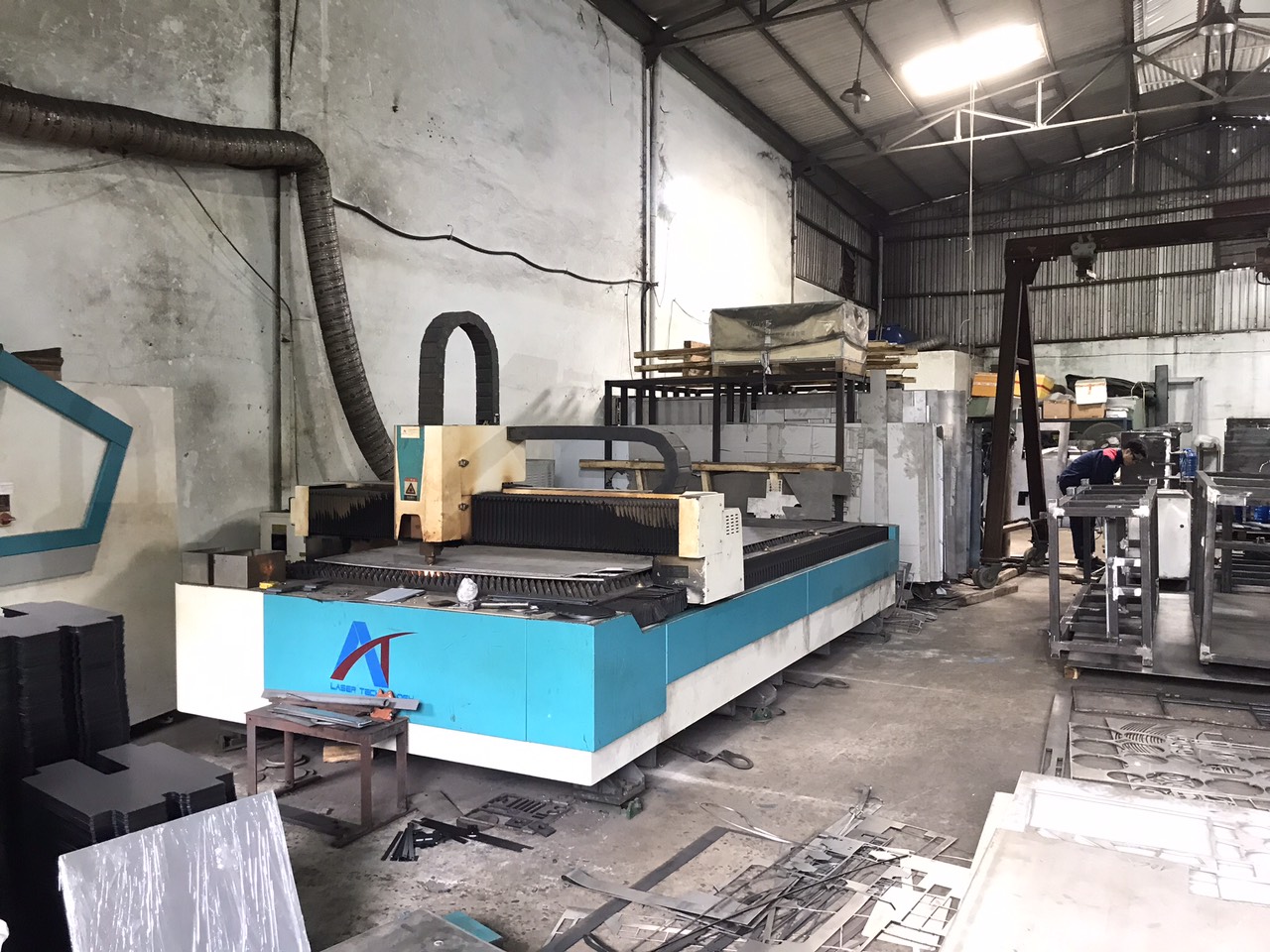
Laser cutting is your best friend for small batches. There is no physical tooling required. The machine reads your CAD file and cuts directly. Changing from one part to another takes minutes, not hours. Similarly, CNC press brakes with standard tooling can handle most metal bending operations without custom dies.
Contrast that with stamping or deep drawing, where custom dies can cost thousands of dollars. Those processes only make economic sense at volumes of several thousand units or more.
DFM Rules That Reduce Cost
Good design for manufacturability directly reduces setup fees and processing time. Here are the critical rules for sheet metal:
- Uniform wall thickness: Your part must maintain consistent thickness. Sheet metal is inherently uniform, so design around that.
- Hole diameter ≥ material thickness: A hole smaller than the sheet thickness requires special tooling or secondary operations.
- Hole spacing ≥ 2× sheet thickness: Holes placed too close together risk deformation during punching or laser cutting.
- Bend height ≥ 2× thickness + bend radius: Short flanges are difficult to form and may require custom tooling.
- Avoid tight tolerances unless necessary: Standard ±0.25 mm tolerances are achievable with standard processes. Going to ±0.1 mm adds inspection steps and cost.
When we review a customer's drawing, we often suggest small modifications that eliminate one or two operations. Removing an unnecessary countersink or adjusting a bend radius to match standard tooling can cut the quoted price by 15–25%.
The Hybrid Production Model
Many fabricators now offer a staged approach: start with 1–25 prototype parts, validate the design, then move to a batch of 25–200 units for bridge production, and finally scale to thousands for mass production. This model lets you spread risk and cost across phases. Understanding how prototyping and mass production differ is key to planning this transition effectively.
At our operation, we encourage this approach. We run the first prototype batch through a full PPAP process 9 — dimensional inspection, material certification, process documentation. Once approved, the batch production phase runs faster and cheaper because the process is already validated.
Lead Times You Can Expect
- Simple prototypes (flat laser-cut parts, 1–2 bends): 3–7 days
- Complex prototypes (multiple bends, welding, finishing): 1–2 weeks
- Small production runs (25–200 units): 1–3 weeks
- Full production (500+ units): 3–6 weeks
These timelines assume materials are in stock. Exotic alloys or special surface finishes can add time.
How do I manage quality control for my small batch sheet metal parts when sourcing from Asia?
Here is a trade-off we discuss with nearly every new client: sourcing from Asia delivers significant cost savings, but quality control becomes your responsibility — or your sourcing partner's. Skip this step, and you risk receiving parts that do not match the drawing. That means rework, delays, and lost trust with your own customers.
To manage quality control for small batch sheet metal parts sourced from Asia, implement a structured process including first-article inspection, in-process checks, final dimensional inspection against drawings, and clear acceptance criteria communicated before production starts. Working with a local QC team or sourcing agent dramatically reduces defect risk.

Quality control for small batches is actually more critical than for large runs. With 10,000 parts, statistical sampling works well. With 20 parts, every single one matters. Here is how we approach it.
Define Acceptance Criteria Before Production
The most common quality failure we see is not a bad part — it is a misunderstood requirement. A drawing note that says "deburr all edges" means different things to different shops. We work with our clients to create a clear inspection checklist that defines:
- Critical dimensions and their tolerances
- Surface finish requirements (Ra value, visual standards)
- Acceptable cosmetic defects (scratches, marks, discoloration)
- Functional requirements (fit with mating parts, load-bearing needs)
This checklist becomes the contract between buyer and supplier.
First-Article Inspection
For every new part — even on small batches — we run a first-article inspection. This means the shop produces 1–3 pieces first. Our QC team measures every dimension on the drawing, checks material certificates, and photographs the parts from multiple angles. The report goes to the client for approval before the remaining pieces are produced.
This single step prevents the most expensive mistake in contract manufacturing: producing an entire batch of wrong parts.
In-Process and Final Inspection
Our China and Vietnam teams conduct in-process checks at key stages — after laser cutting, after bending, after welding, and after finishing. For final inspection, we use calibrated instruments: calipers, micrometers, height gauges, and CMM when tolerances demand it.
For small batches, we typically inspect 100% of parts rather than sampling. The cost of inspecting 20 or 50 pieces is minimal. The cost of shipping a defective batch across the Pacific is not.
Common Quality Issues in Small Batch Sheet Metal
| Quality Issue | Root Cause | Prevention |
|---|---|---|
| Dimensional deviation on bends | Incorrect springback compensation | First-article inspection; DFM review of bend radius |
| Inconsistent hole placement | Programming error or datum shift | Verify CNC program against drawing; check fixtures |
| Surface finish defects | Handling damage, contamination in finishing | Specify finish standards; inspect after coating |
| Weld distortion | Excessive heat input on thin material | Control weld parameters; use fixtures; inspect post-weld |
| Wrong material | Supplier substitution without approval | Require material certificates; verify with PMI if critical |
Working With a Local QC Team
If you are sourcing from Asia without a team on the ground, you are essentially trusting the supplier to inspect their own work. That is a conflict of interest. Our offices in Vietnam and China exist specifically to solve this problem. We sit between the supplier and the buyer, verifying quality at every stage.
For U.S. purchasing managers who need to justify sourcing decisions to their leadership, having a documented QC process — with inspection reports, photos, and material certificates — provides the traceability and confidence that remote sourcing otherwise lacks.
Conclusion
Small batch sheet metal fabrication 10 is not only possible — it is increasingly the norm for prototyping, bridge production, and niche manufacturing. There is no universal MOQ. The right supplier, smart DFM, and solid quality control make low volume production practical and cost-effective. Start small, validate your design, and scale with confidence.
Frequently Asked Questions
How can I find a sheet metal supplier that accepts my low-volume custom orders?
A few months ago, a purchasing manager in Ohio reached out to us with a problem: his existing supplier in Asia refused to run anything below 200 units, but he only needed 30 custom sheet metal parts for a bridge production run before committing to full-scale manufacturing.
What factors will influence the MOQ and pricing for my specific sheet metal project?
When we quote a new sheet metal project, the first thing our engineers review is not the quantity — it is the drawing. The complexity of your part drives everything: the MOQ a supplier will accept, the cost per unit, and even whether a small batch makes financial sense.
Can I get high-quality prototypes and small batches without paying excessive setup fees?
Last year, we helped a U.S. engineering design firm source 15 custom mounting brackets — the kind with a matte charcoal gray finish and multiple precision bends. Their previous supplier quoted $4,800 just for setup. They asked us if there was a better way.
Footnotes
1. Provides context for modern, flexible manufacturing solutions. ↩︎
2. Replaced with an authoritative source explaining nesting software, including automated features. ↩︎
3. Replaced with a Wikipedia article, which is an authoritative source for general definitions. ↩︎
4. Explains the importance of design for manufacturability feedback. ↩︎
5. Details a critical quality control step. ↩︎
6. Describes a key low-setup-cost manufacturing process. ↩︎
7. Provides a deeper understanding of cost-saving design principles. ↩︎
8. Defines a key service for low-volume production. ↩︎
9. Explains a crucial process for validating production. ↩︎
10. Explains the fundamental manufacturing process discussed in the article. ↩︎