
When our Vietnam office first handled a sheet metal fabrication order destined for the US consumer market, the buyer assumed CPSC rules 1 applied to the raw metal itself — a costly misunderstanding that nearly delayed the entire shipment.
US CPSC requirements for sourcing sheet metal fabrication from Vietnam apply only when the metal components become part of a regulated consumer product. The US importer must issue a General Certificate of Conformity or Children’s Product Certificate, ensure proper testing, and prepare for mandatory electronic filing by July 2026.
This article breaks down every step: which products trigger CPSC oversight, what documentation you need, how to verify your Vietnamese supplier, and what the new eFiling rules mean for your supply chain Children’s Product Certificate 2. Let’s get into it.
How do I verify that my sheet metal fabrication partner in Vietnam complies with CPSC safety standards?
A lesson we learned early on — one of our US clients sent us a drawing for a children's furniture bracket and asked if the Vietnamese factory "had CPSC certification." The factory looked confused. So did we, at first.
To verify CPSC compliance, confirm your Vietnamese sheet metal supplier holds ISO 9001 or equivalent quality certifications, can provide component-level test reports from CPSC-accepted laboratories, and has a documented quality management system that supports your General Certificate of Conformity or Children's Product Certificate.

Why the Factory Itself Is Not "CPSC Certified"
Here is the first thing to understand: CPSC does not certify factories. It does not certify raw materials. It does not certify sheet metal as a standalone product category. CPSC regulates finished consumer products. So when you source a custom sheet metal bracket, enclosure, or housing from Vietnam, the metal part itself does not need a CPSC certificate. But the moment that part goes into a children's toy, a piece of furniture, or an electrical device sold to consumers, CPSC product safety standards 3 kick in.
The legal responsibility sits with the US importer. You — not the Vietnamese factory — must issue the General Certificate of Conformity 4 for general-use products or the Children's Product Certificate for items designed for children 12 and under.
What to Look for During Factory Audits Vietnam
Our team in Vietnam conducts supplier audits regularly. Here is a practical checklist we use when evaluating a sheet metal fabrication partner for CPSC-relevant projects:
| Verification Area | What to Check | Why It Matters |
|---|---|---|
| Quality Management System | ISO 9001 certification, documented QMS procedures | Ensures repeatable, controlled processes |
| Material Traceability | Mill certificates, raw material test reports | Confirms absence of restricted substances like lead |
| Welding Certifications | AWS D1.1 or equivalent welding qualifications | Critical for structural integrity of brackets and housings |
| Surface Coating Controls | RoHS compliance documentation, paint/coating specs | Lead-in-paint rules apply to coated metal surfaces |
| Testing Capability | Access to or relationship with CPSC-accepted laboratories | Supports third-party testing for children's products |
| Past Project References | Portfolio of consumer product components | Shows experience with product safety standards |
Supply Chain Due Diligence Steps
We recommend visiting the factory at least once before placing a production order. If you cannot travel, our Vietnam office can conduct the audit on your behalf. During the visit, verify that the factory keeps records of material sourcing, has calibrated measuring equipment, and runs in-process quality checks. Ask for sample test reports. If the factory cannot produce any, that is a red flag.
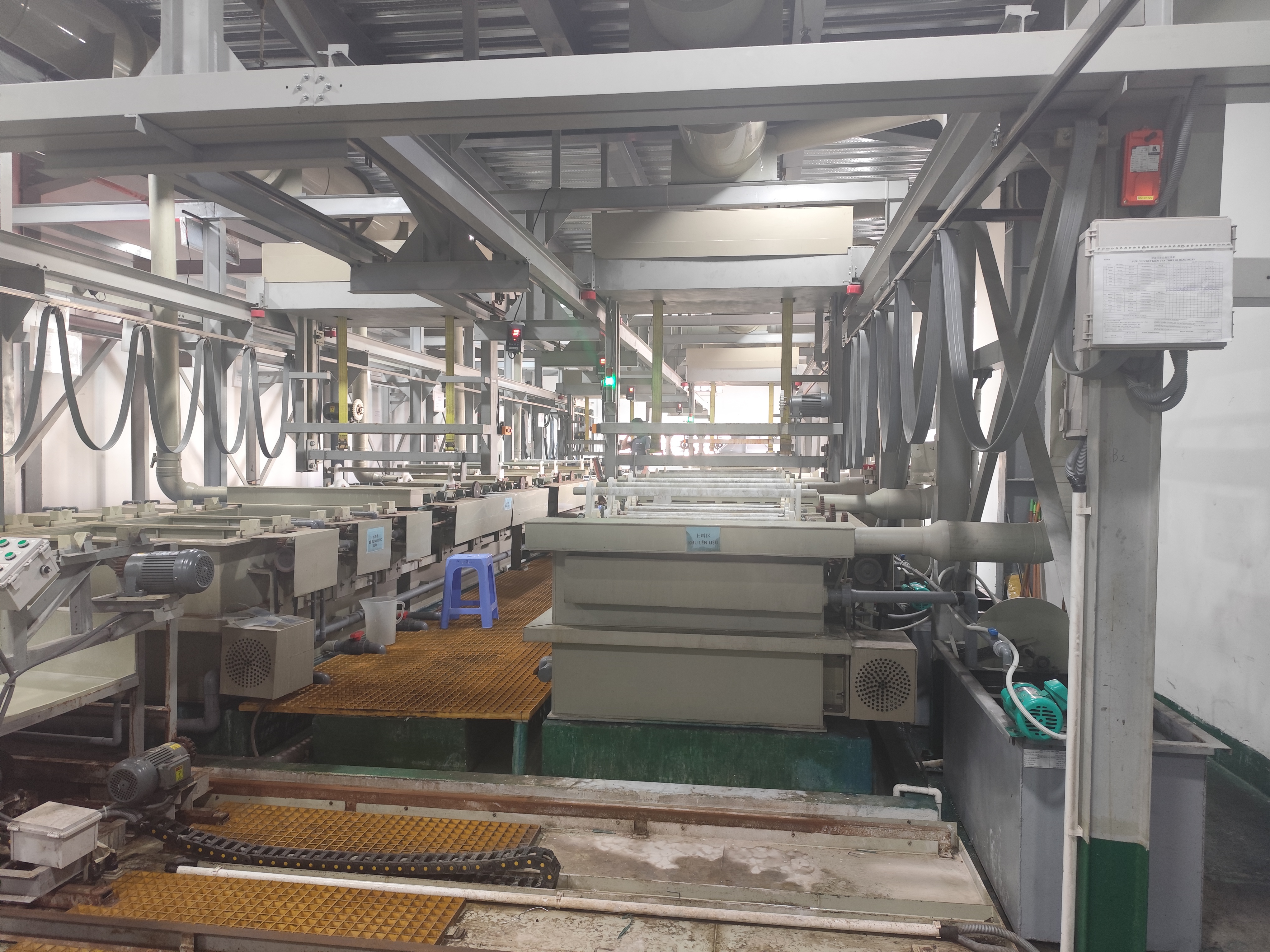
Also confirm whether the factory uses subcontractors for processes like laser cutting, powder coating, or plating. Each subcontractor in the chain must meet the same material and process standards. A single untested subcontractor can compromise your entire compliance effort. For a deeper look at how to verify a sheet metal fabrication supplier’s export team when sourcing, we recommend a structured approach that covers documentation capabilities and export readiness.
What specific documentation and testing reports should I request for my custom sheet metal parts?
One of our US buyers recently asked us to source custom mounting brackets for a children's bed frame. The drawings were clean. The tolerances were tight. But the buyer had not thought about what testing documentation the parts would need before clearing US Customs.
For custom sheet metal parts in regulated consumer products, request material mill certificates, component-level test reports for lead and restricted substances, third-party lab results from CPSC-accepted laboratories if the product is children's-related, and a written reasonable testing program to support your GCC or Children's Product Certificate.
Documents You Need From Your Vietnamese Supplier
The specific documents depend on whether your final product is a general-use consumer item or a children's product. Here is how they differ:
| Document | General-Use Product (GCC) | Children's Product (CPC) |
|---|---|---|
| Material Mill Certificates | Required for due diligence | Required for traceability |
| Component Test Reports (Lead, etc.) | Recommended, supports reasonable testing | Mandatory from CPSC-accepted laboratories |
| Written Reasonable Testing Program | Required to demonstrate due care 5 | Required and must be on file |
| Third-Party Lab Test Results | Optional (any qualified lab) | Mandatory (CPSC-accepted lab only) |
| Tracking Labels | Not required | Required on product and packaging |
| Certificate of Conformity | GCC issued by importer | CPC issued by importer |
Understanding the "Due Care" Standard
For general-use products, CPSC does not mandate third-party testing. But you still must exercise "due care." This means you cannot simply trust that the metal is safe. You need documented evidence. At minimum, get the mill certificate showing the alloy composition. If the metal has a surface coating — powder coat, paint, plating — get a test report confirming lead-in-surface-coating compliance.
We always recommend that our clients request component-level testing even when CPSC does not strictly require it. Why? Because if CPSC or Customs challenges your shipment, you need to show a paper trail. A General Certificate of Conformity without supporting test data is a liability.
Children's Products Demand More
CPSIA compliance 6 for children's products is strict. Every component that a child under 12 might contact must be tested by a CPSC-accepted laboratory. For sheet metal parts — think brackets on a crib, metal fasteners on a toy, or decorative metal elements on children's furniture — this means:
- Lead content in substrate must be below 100 ppm.
- Lead in surface coatings must be below 90 ppm.
- Phthalate limits apply if the metal part has flexible plastic elements (gaskets, grips) for children under age 3.
- Sharp edge and sharp point testing may be required depending on the component's accessible surfaces.
Periodic and Material Change Testing
Compliance is not a one-time event. CPSC requires a comprehensive testing regimen. Initial certification testing covers your first production run. If you change the metal alloy, the coating process, or the supplier of raw material, you need material change testing. Periodic testing ensures ongoing conformity over time. Keep all records for at least five years.
How can I manage the CPSC compliance process for sheet metal projects without being on the ground in Vietnam?
A trade-off we often discuss with clients: they want cost savings from Vietnam sourcing, but they worry about losing control over quality and compliance when they are 9,000 miles away. It is a valid concern, and it is exactly why we built a local team there.
You can manage CPSC compliance remotely by partnering with a sourcing agent that has on-the-ground presence in Vietnam, establishing clear inspection protocols, using CPSC-accepted third-party labs for testing, and preparing for electronic filing of your General Certificate of Conformity through the ACE system before the July 2026 deadline.

The eFiling Requirement: What Changes in 2026
Starting July 8, 2026, every importer of regulated consumer products must electronically file their GCC or CPC data with US Customs and Border Protection through the Automated Commercial Environment (ACE) system 7. This replaces the old paper-based process. Here is what that means for your supply chain:
- You must submit certificate data via a Partner Government Agency (PGA) Message Set with each customs entry.
- The certificate must accompany every shipment — not just the first one.
- Failure to file, or filing a false certificate, can result in civil penalties, criminal penalties, and asset forfeiture under the Consumer Product Safety Act 8.
- Even low-value shipments are included. There is no exemption based on shipment value.
This shift from paper to electronic filing has real operational impact. If your customs broker is not set up for CPSC eFiling, start that conversation now. If your Vietnamese supplier cannot provide test reports quickly enough for your filing timeline, you risk delays at the port.
A Practical Remote Management Framework
Here is how we help clients manage Vietnam import regulations and CPSC compliance without traveling:
- Pre-production: We verify the supplier's certifications, audit their facility, and confirm raw material traceability. Our Vietnam team conducts this in person.
- During production: We implement PPAP (Production Part Approval Process) and in-process inspections. Critical dimensions and material specs are verified against the drawing.
- Pre-shipment: Final inspection is conducted at the factory. We pull samples for third-party testing if the product is children's-related.
- Documentation: We compile all test reports, mill certificates, and inspection records into a compliance package. This package supports your GCC or CPC issuance.
- Customs entry: We coordinate with your customs broker to ensure all customs entry requirements are met, including the upcoming eFiling mandate.
Choosing the Right Third-Party Lab
Not every lab qualifies for CPSC testing. For children's products, testing must be done at a CPSC-accepted laboratory. CPSC maintains a public list of accepted labs on their website. Some of these labs have facilities in Vietnam or Southeast Asia, which can reduce testing turnaround time. For general-use products, you can use any qualified lab — including the supplier's in-house lab — but we recommend independent testing for credibility. Beyond CPSC, you should also consider how to ensure US UL certification when sourcing sheet metal fabrication from Vietnam if your components are destined for electrical or electronic applications.
| Compliance Task | Who Handles It | Where It Happens |
|---|---|---|
| Factory Audit | Sourcing agent (e.g., DEWIN) | Vietnam, on-site |
| Raw Material Verification | Supplier + sourcing agent | Vietnam factory |
| Component Testing (Children's) | CPSC-accepted laboratory | Lab facility (Vietnam or US) |
| Component Testing (General Use) | Any qualified lab | Lab facility or in-house |
| GCC / CPC Issuance | US importer | United States |
| eFiling with CBP | US importer or customs broker | ACE system |
| Post-market Surveillance | US importer | United States |
Post-Market Responsibilities
CPSC compliance does not end when the product clears customs. You must maintain post-market surveillance. Monitor consumer complaints. If a safety defect emerges, you are required to report it to CPSC within 24 hours and may need to initiate a product recall. Having a recall plan before you ship your first container is not optional — it is prudent risk management.
Will my custom sheet metal components require lead-in-substrate or sharp edge testing under CPSC regulations?
During a recent project review, our engineering team flagged a potential issue: a set of precision-bent mounting brackets with exposed edges that would be accessible to a child once installed in the final product. The buyer had not considered sharp edge testing. That single oversight would have stalled the entire shipment at customs.
Your custom sheet metal components will require lead-in-substrate testing if they are part of a children's product, and sharp edge testing if accessible surfaces or edges could contact a child under 12. Lead content restrictions limit substrate lead to 100 ppm and surface coating lead to 90 ppm under CPSIA compliance rules.
When Lead Testing Applies
Lead content restrictions are among the most critical CPSC rules for metal components. Here is the breakdown:
- Lead in substrate (base metal): Must be below 100 ppm for children's products. Most common sheet metal alloys — carbon steel, stainless steel, aluminum — are naturally well below this threshold. But some alloys, brass, or specialty metals may exceed it. Always verify with a test report.
- Lead in surface coatings: Must be below 90 ppm. This is where problems often arise. Powder coatings, paints, plating, and even screen-printed markings on metal surfaces can contain lead. If your sheet metal part has any coating, test it.
- General-use products: Lead limits are less strict, but if the product is reasonably foreseeable to be used by children, CPSC may still enforce children's product standards.
When Sharp Edge and Sharp Point Testing Applies
CPSC regulation 16 CFR 1500.48 9 and 1500.49 cover sharp edges and sharp points. These apply to products intended for children under 8 years old. Custom sheet metal parts — especially those with laser-cut edges, sheared edges, or punched holes — can easily fail this test if edges are not deburred, rolled, or otherwise treated.
In our fabrication projects, we specify edge treatment requirements on every drawing. Common treatments include:
- Deburring: Removes small metal fragments from cut edges.
- Edge rolling or hemming: Folds the edge over to eliminate exposure.
- Radius specification: Calls out a minimum bend radius to prevent sharp corners.
- Powder coating: Can soften edges slightly, but is not a substitute for mechanical deburring.
Phthalate Testing for Mixed-Material Assemblies
If your sheet metal component includes flexible plastic elements — grips, gaskets, bumpers, or decorative inserts — and the product is for children under 3, phthalate testing 10 is required. The limit is 0.1% for each of eight specified phthalates. This applies to the plastic portion, not the metal itself, but since the parts are often sourced together, you need to ensure the entire assembly is tested. You may also want to evaluate environmental and social compliance for Vietnam sheet metal fabrication to cover broader regulatory requirements beyond CPSC.
A Quick Reference for Testing Requirements
| Test Type | Applies To | Limit / Standard | Required For |
|---|---|---|---|
| Lead in Substrate | Base metal material | ≤ 100 ppm | Children's products |
| Lead in Surface Coating | Paint, powder coat, plating | ≤ 90 ppm | Children's products + general consumer products |
| Sharp Edge (16 CFR 1500.48) | Accessible edges on metal parts | No sharp edges per test protocol | Products for children under 8 |
| Sharp Point (16 CFR 1500.49) | Accessible points on metal parts | No sharp points per test protocol | Products for children under 8 |
| Phthalates | Flexible plastic elements on metal parts | ≤ 0.1% per phthalate | Children's products for under 3 |
| Small Parts (16 CFR 1501) | Detachable metal components | Must not fit in small parts cylinder | Products for children under 3 |
Gauge Range and Material Selection Considerations
Sheet metal for consumer products typically ranges from 30 gauge (very thin, around 0.012 inches) to 7 gauge (thick, around 0.179 inches). Thinner gauges are more prone to sharp edges after cutting. Thicker gauges can create sharp burrs at shear points. Either way, edge treatment is not optional for children's products.
When we help clients select materials, we consider not just mechanical properties — strength, corrosion resistance, impact resistance — but also compliance implications. A simple alloy swap can push lead content over the limit. A coating change can introduce lead into the surface. Every material decision has a compliance consequence.
Conclusion
Sourcing sheet metal fabrication from Vietnam for US consumer products demands clear understanding of CPSC scope, proper testing, robust documentation, and preparation for eFiling. Partner with a team that has local presence and compliance expertise to get it right the first time.
Frequently Asked Questions
How do I verify that my sheet metal fabrication partner in Vietnam complies with CPSC safety standards?
A lesson we learned early on — one of our US clients sent us a drawing for a children's furniture bracket and asked if the Vietnamese factory "had CPSC certification." The factory looked confused. So did we, at first.
What specific documentation and testing reports should I request for my custom sheet metal parts?
One of our US buyers recently asked us to source custom mounting brackets for a children's bed frame. The drawings were clean. The tolerances were tight. But the buyer had not thought about what testing documentation the parts would need before clearing US Customs.
How can I manage the CPSC compliance process for sheet metal projects without being on the ground in Vietnam?
A trade-off we often discuss with clients: they want cost savings from Vietnam sourcing, but they worry about losing control over quality and compliance when they are 9,000 miles away. It is a valid concern, and it is exactly why we built a local team there.
Footnotes
1. Provides an overview of CPSC regulations and laws. ↩︎
2. Details the specific certificate needed for children’s products. ↩︎
3. Outlines the safety requirements for regulated items. ↩︎
4. Explains the requirements for issuing a GCC. ↩︎
5. eCFR definition of ‘due care’ in the context of CPSC regulations. ↩︎
6. Provides context for the Consumer Product Safety Improvement Act. ↩︎
7. Describes the electronic platform for customs data submission. ↩︎
8. Provides context for the primary legislation governing product safety. ↩︎
9. Refers to the specific regulation for sharp points in children’s articles. ↩︎
10. Describes the testing for restricted chemicals in plastic components. ↩︎