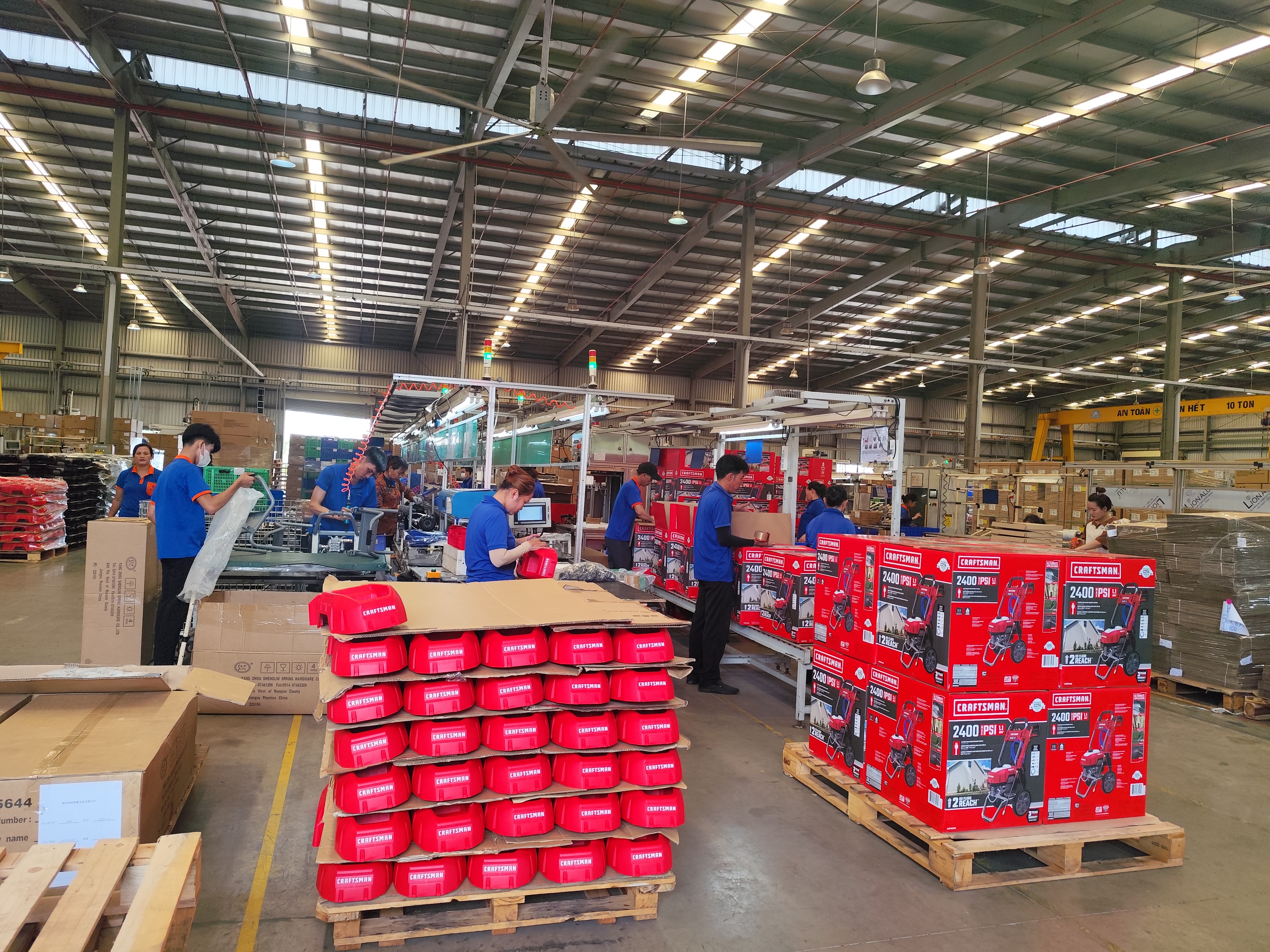

When our Vietnam office ships custom sheet metal brackets to US buyers, customs clearance questions come up on nearly every project call.
US customs clearance for sheet metal fabrication from Vietnam requires a VCCI Certificate of Origin, a commercial invoice with correct HTS codes, a packing list, a bill of lading, an ISF 10+2 filing at least 24 hours before vessel departure, and a customs bond for shipments over $2,500.
Below, I break down the duties, the documents, the origin rules, and the logistics workflow so you can import with confidence Section 301 duties 1. Each section draws on what we see every week managing door-to-door shipments from Vietnamese factories to US ports.
What import duties and tariffs will I face when shipping sheet metal parts from Vietnam to the US?
A buyer in the Midwest recently asked me to quote a set of powder-coated steel mounting brackets and then immediately followed up: "What will I actually pay at the port?" It is the right question to ask before you commit to any purchase order.
Sheet metal parts from Vietnam typically fall under HTS Chapter 73, with standard customs duties ranging from 0% to 6.5% depending on the specific 10-digit HTS code. Section 232 steel tariffs of 25% may also apply, but Section 301 duties targeting China generally do not apply to genuine Vietnamese-origin goods.
Understanding HTS Classification for Sheet Metal Parts
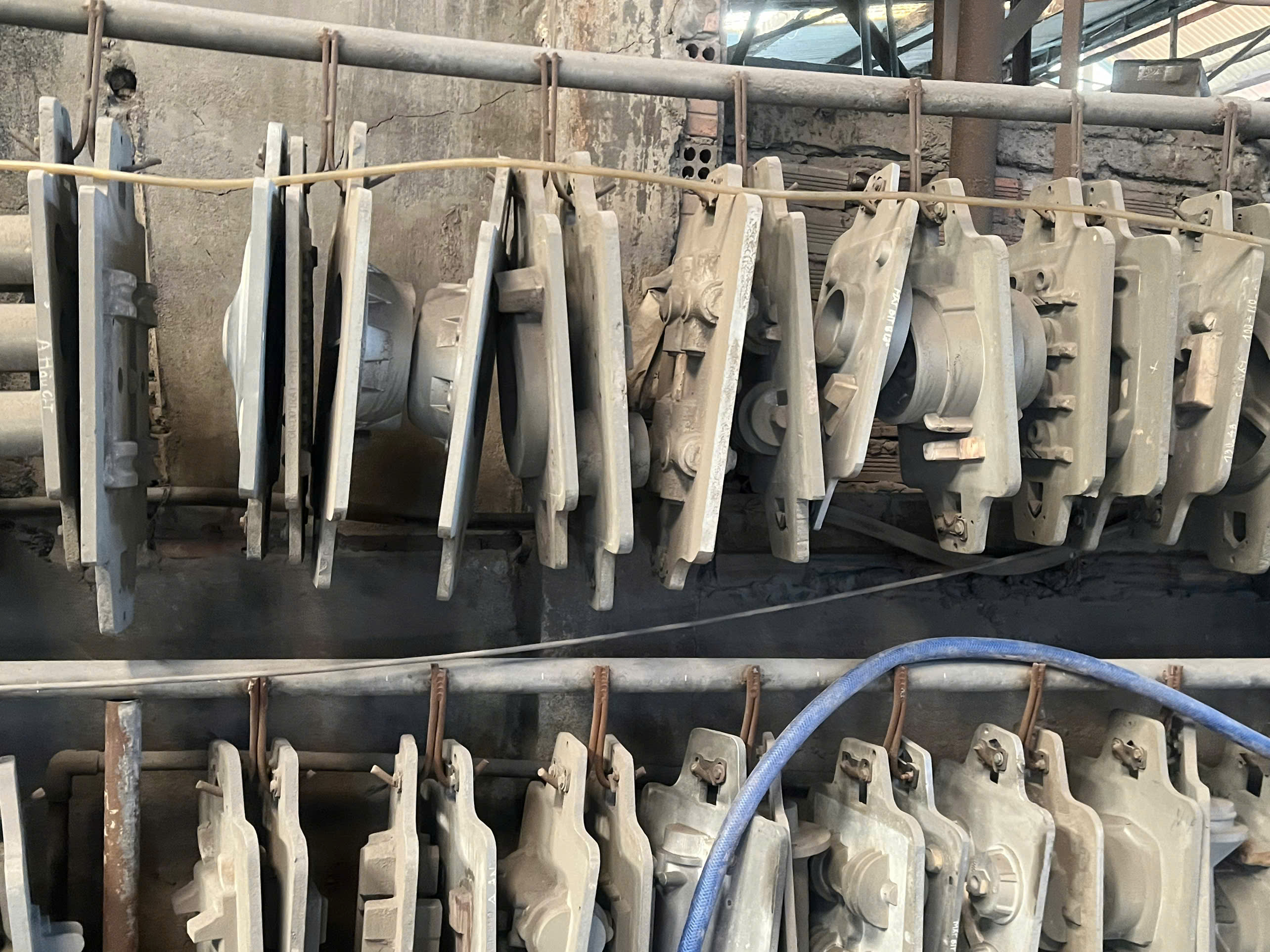
The Harmonized Tariff Schedule 2 is the backbone of duty calculation. Every fabricated metal component needs a precise 10-digit HTS code. Misclassification can trigger overpayment, underpayment, or even CBP penalties. Sheet metal structures and their parts usually sit in HTS heading 7308. Simpler stampings may fall under 7326. The exact sub-heading depends on the material grade, the function, and the degree of fabrication.
I always recommend that buyers verify their HTS code with a licensed customs broker before the first shipment. A single wrong digit can change the duty rate by several percentage points.
Key Duty Layers Explained
There are multiple layers of duties that can stack on top of each other. Here is how they break down for Vietnamese-origin sheet metal:
| Duty Layer | Rate Range | Applies to Vietnam? | Notes |
|---|---|---|---|
| Standard MFN Duty (Column 1) | 0%–6.5% | Yes | Based on HTS code |
| Section 232 Steel/Aluminum Tariff | 25% | Yes, if raw steel input | Applies regardless of country of origin |
| Section 301 Tariff (Lists 1–4) | 7.5%–25% | No, if genuine Vietnam origin | Targets China-origin goods only |
| Anti-dumping / Countervailing Duties | Varies | Possible | Applies if CBP suspects transshipment of Chinese steel |
Section 232: The Tariff That Catches People Off Guard
Many importers assume that because they moved sourcing away from China, they avoid all extra tariffs. That is not how Section 232 works. These tariffs apply to steel and aluminum articles based on the material itself, not the country where fabrication happens. If your sheet metal bracket is made from steel, the 25% Section 232 tariff may apply unless the finished product has been "substantially transformed" beyond the scope of the tariff.
The determination hinges on the HTS code of the finished part. If CBP classifies your product as a "steel article" under the Section 232 proclamation, the 25% hits. If the product is classified as a finished machine part or a structural component that falls outside the steel tariff's product scope, it may be exempt. This is why correct HTS classification is not just a paperwork exercise — it directly affects your landed cost.
In our experience, we work with our customs broker early in the quoting phase to confirm the HTS code. This way, the buyer gets an accurate total landed cost before placing the order, not an unpleasant surprise after the container arrives.
Anti-Dumping Duties and Transshipment Risks
US Customs and Border Protection 3 actively monitors for transshipment — the practice of routing Chinese steel through Vietnam to dodge Section 301 or anti-dumping duties. If CBP suspects your Vietnamese supplier is simply re-labeling Chinese-origin steel, they can reclassify the origin and apply the full China tariff rate plus penalties.
This is a real risk, not a theoretical one. We mitigate it by requiring mill test certificates 4 that trace raw material to non-Chinese mills and by auditing supplier facilities to confirm that metal manufacturing in Vietnam is genuine, not a pass-through operation.
Which specific documents do I need to prepare for a smooth US Customs clearance of my Vietnamese fabrication order?
Last quarter, a shipment of custom brackets sat at the port of Long Beach for nine extra days because the importer's Certificate of Origin was the wrong type — a Form E instead of the Ordinary C/O. VCCI Certificate of Origin 6 That delay cost more in warehousing fees than the parts themselves.
You need six core documents: a VCCI Ordinary Certificate of Origin (not Form E), a commercial invoice with HS codes and declared value, a detailed packing list, a bill of lading, an ISF 10+2 filing submitted 24+ hours before vessel departure, and a customs bond if the shipment value exceeds $2,500.
The Complete Document Checklist
Here is the full list, organized by who is responsible for each item:
| Document | Prepared By | Key Details |
|---|---|---|
| Ordinary Certificate of Origin (C/O) | Vietnam supplier via VCCI | Must state "Vietnam" as origin; must carry VCCI stamp and signature |
| Commercial Invoice | Vietnam supplier | Product description, HS code, unit price, total value, Incoterms |
| Packing List | Vietnam supplier | Carton count, net/gross weight, dimensions; must match Bill of Lading |
| Bill of Lading (B/L) or Air Waybill | Freight carrier | Consignee must match ISF filing |
| ISF 10+2 Filing 7 | US customs broker | Filed 24+ hours before vessel departure; 10 data elements from importer, 2 from carrier |
| Customs Bond 8 | US importer or broker | Required for commercial shipments over $2,500 |
Why the Ordinary C/O Matters So Much
The most common mistake I see is requesting the wrong type of Certificate of Origin. Form E is designed for trade between ASEAN countries and China under the ASEAN-China Free Trade Agreement. It is irrelevant for US imports. The document you need is the Ordinary C/O, issued by the Vietnam Chamber of Commerce and Industry.
Verify three things on every C/O: the VCCI stamp is authentic, the authorized signature is present, and the country-of-origin statement explicitly reads "Vietnam." If any of these elements are missing or unclear, CBP can reject the document and hold your shipment.
ISF 10+2: The Filing Most Importers Underestimate
The Importer Security Filing is mandatory for all ocean freight shipments entering the US. Your customs broker must submit it at least 24 hours before the vessel departs the foreign port — not 24 hours before it arrives in the US.
Late or inaccurate ISF filings can trigger fines of $5,000 per violation. The filing requires 10 data elements from the importer (including the manufacturer's name and address, seller, buyer, country of origin, and HTS code) and 2 data elements from the carrier.
We coordinate ISF filings as part of our logistics management process. Once the booking is confirmed, our freight forwarding team sends the draft ISF data to the US broker to ensure it is filed on time. This is one area where having a single point of contact for the entire supply chain makes a measurable difference.
Technical and Quality Certifications
Beyond the customs documents, many US buyers — especially those in aerospace, medical, or defense — require additional quality certifications. These are not legally required by CBP for entry, but they are required by the buyer's own quality system and can prevent disputes or returns.
| Certification | When Required | Purpose |
|---|---|---|
| Mill Test Certificate (MTC) | Always recommended | Traces raw material to a specific heat/lot; proves non-Chinese origin |
| First Article Inspection (FAI) Report | First production run, after drawing changes | Verifies part matches DXF drawings and tolerances |
| CMM Dimensional Report | Tight-tolerance, aerospace, or medical parts | Confirms dimensional accuracy with default tolerance of ±0.15mm |
| Certificate of Conformance (CoC) | Per PO requirements | Signed statement that parts meet all specified requirements |
We request the MTC at the purchase order stage, not after production. This gives us time to verify the mill source and flag any material that originates from a country that might trigger anti-dumping duties.
How do I verify that my sheet metal components meet the Rules of Origin to avoid Section 301 duties?
During a supplier audit at a factory outside Ho Chi Minh City, I noticed the raw steel coils in the warehouse had markings from a Chinese mill. The fabrication was 100% Vietnamese — laser cutting, bending, welding, powder coating — but the steel itself came from China. That detail matters enormously for US customs compliance.
To satisfy CBP's Rules of Origin, your Vietnamese supplier must demonstrate "substantial transformation" — meaning the sheet metal undergoes a fundamental change in form, function, or character in Vietnam. You must collect mill test certificates proving material sourcing, ISO production records, and the supplier's verified facility address.
What "Substantial Transformation" Actually Means
CBP uses the "substantial transformation 9" test to determine origin. The question is simple: was the product fundamentally changed in Vietnam, or was it merely assembled, packaged, or relabeled?
For sheet metal fabrication, substantial transformation typically occurs when flat steel coils or sheets are laser-cut, punched, bent, welded, and finished into a new and distinct product. A flat sheet of steel becomes a mounting bracket with precise folds, mounting holes, and a powder-coated finish. That is a clear change in name, character, and use.
However — and this is the critical nuance — if CBP suspects the steel itself is Chinese and the fabrication in Vietnam is minimal (for example, just drilling a few holes), they may argue that no substantial transformation occurred. The bar is higher when the raw material originates from a country subject to trade remedies.
Evidence You Must Collect
To protect yourself from a CBP audit or a post-entry review, gather the following evidence before the first shipment:
-
Mill Test Certificates (MTCs): These trace the raw steel to a specific mill. Request them at PO issuance. If the steel comes from a Japanese, Korean, Taiwanese, or Indian mill, the transshipment risk drops significantly.
-
Production Records: Ask for ISO 9001:2015-compliant records showing each fabrication step — cutting, bending (with K-factor documentation, typically around 0.44), welding, and finishing — performed at the Vietnamese facility.
-
Facility Address Verification: Confirm that the supplier's address on the C/O matches a real manufacturing facility, not a trading company office. We conduct on-site audits through our Vietnam office to verify this.
-
Country of Origin Marking: All imported products must be clearly and permanently marked "Made in Vietnam." This is not optional. CBP can detain goods that lack proper marking or bear misleading origin labels.
When Chinese Steel Does Not Disqualify Vietnam Origin
Here is a point that surprises many importers: using Chinese-origin steel does not automatically make the finished part Chinese-origin. If the fabrication process in Vietnam constitutes substantial transformation, the finished bracket is still Vietnamese-origin for customs purposes.
The risk arises when CBP believes the fabrication is minimal or when there are active anti-dumping or countervailing duty orders on the specific steel product. In those cases, CBP may look through the transformation and assess duties on the underlying steel input.
Our approach is straightforward. We prefer suppliers who source steel from non-Chinese mills — typically from Japan, Korea, or Taiwan. It costs slightly more per kilogram, but it eliminates the transshipment risk entirely and simplifies import documentation for our US clients.
Record Keeping for Post-Entry Audits
CBP frequently conducts post-entry audits, sometimes years after the original import. Maintain comprehensive records — C/Os, MTCs, invoices, production records, and ISF filings — for at least five years. If CBP audits your entries and you cannot produce origin documentation, they can reclassify the goods and assess back duties plus penalties.
Can my supply chain partner handle the entire door-to-door logistics and customs process for my custom parts?
One of our US clients once told me, "I just want to send you a DXF file and receive finished parts at my warehouse. I don't want to think about customs brokers, ISF filings, or HTS codes 10." That is exactly the model we built our business around.
Yes — a full-service supply chain partner can manage the entire process from DXF file to delivered parts, including supplier qualification, production oversight, quality inspection, freight forwarding, ISF filing, customs brokerage, and final-mile delivery to your US facility.
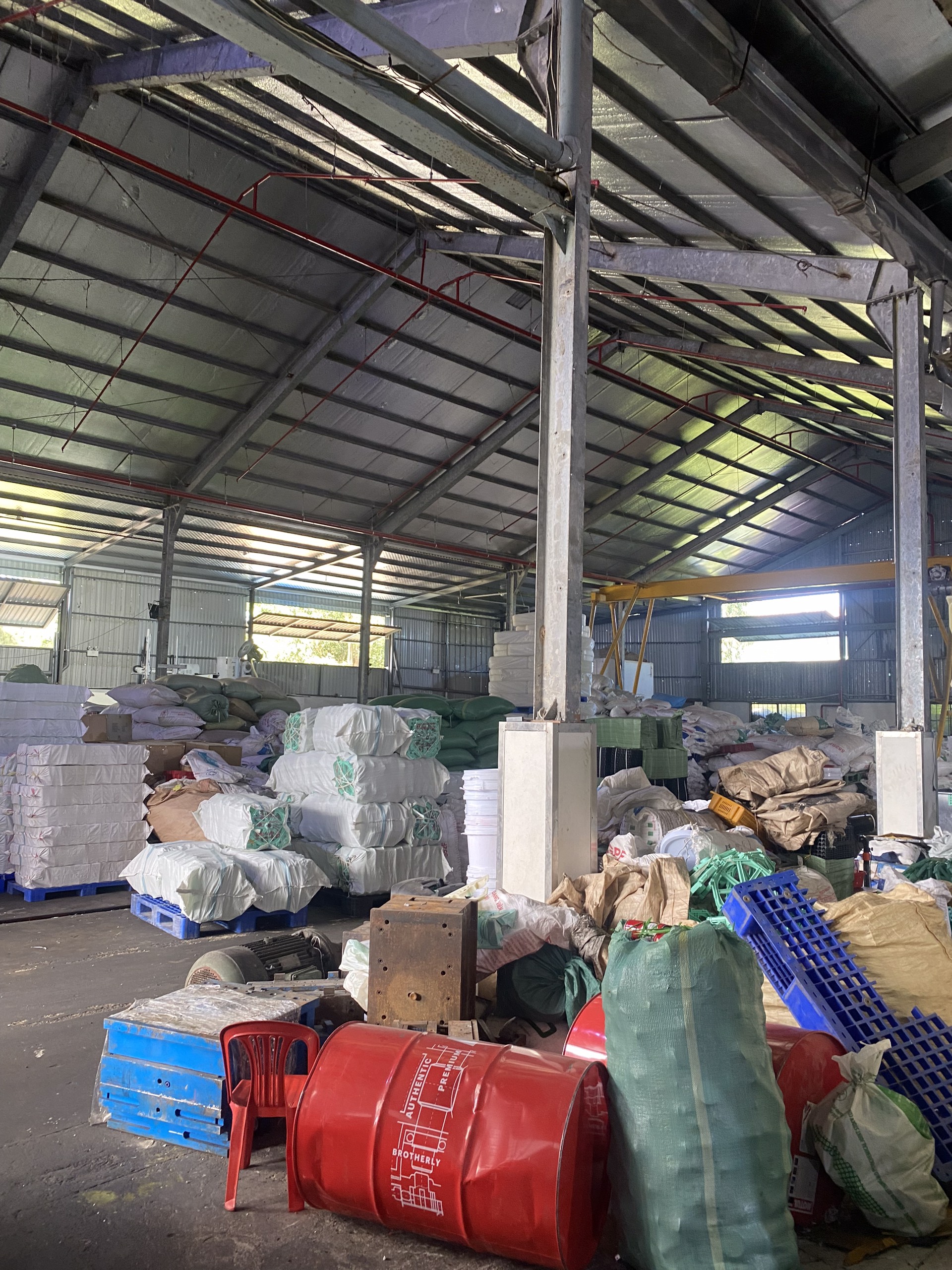
What Door-to-Door Really Covers
The phrase "door-to-door" gets used loosely in international trade. Here is what it should include when you are sourcing custom sheet metal fabrication from Vietnam:
Pre-Production Phase:
- Review of 2D DXF drawings for manufacturability
- Supplier selection and facility audit (our Vietnam team handles this locally)
- PO issuance with clear specifications for material, tolerances (default ±0.15mm for non-critical features), and required certifications
- Request for MTCs and material sourcing documentation
Production Phase:
- First Article Inspection to verify the initial run
- In-process quality checks following PPAP methodology
- Final inspection before shipment release
- Collection of all quality certifications (CoC, CMM reports, FAI reports)
Logistics Phase:
- Export customs declaration in Vietnam
- Booking ocean freight (FOB or CIF Incoterms)
- ISF 10+2 filing coordinated with the US customs broker
- Customs clearance at the US port of entry
- Final-mile trucking to the buyer's warehouse
The Advantage of a Single Point of Contact
When you split responsibilities — one company for sourcing, another for quality, a third for freight forwarding, and a fourth for customs brokerage — gaps appear. The ISF data does not match the commercial invoice. The C/O has the wrong form type. The HTS code on the invoice differs from what the customs broker filed. Each gap causes delays.
We consolidated all of these functions under one team. Our Singapore headquarters manages the commercial relationship and project coordination. Our Vietnam office — seven people on the ground — handles supplier audits, production monitoring, and export documentation. Our logistics coordinators manage freight booking, ISF filing, and customs broker coordination in the US.
Typical Timeline: PO to Delivery
| Phase | Duration | Key Activities |
|---|---|---|
| PO to Production Start | 3–5 days | Material procurement, MTC collection |
| Production | 10–20 days | Cutting, bending, welding, finishing, inspection |
| Export Clearance & Loading | 2–3 days | Vietnam customs declaration, container loading |
| Ocean Transit (Vietnam to US West Coast) | 18–22 days | ISF filing, carrier tracking |
| US Customs Clearance | 1–3 days | CBP review, duty payment, release |
| Final-Mile Delivery | 2–5 days | Trucking to buyer's facility |
| Total | 35–50 days |
This 35-to-50-day timeline is consistent across most custom sheet metal orders we manage. Prototypes and small runs can ship via air freight, cutting the transit portion down to 3–5 days, though at a higher cost.
Payment Terms That Ease Cash Flow
Beyond logistics, one practical concern for US purchasing managers is cash flow. Many Vietnam factories demand 50% upfront and 50% before shipment. We offer open account terms — typically 60 to 90 days — to qualified US buyers. This means you do not pay until the parts are in your hands and inspected. It is a tangible benefit of working with a supply chain partner rather than directly with a factory that has no credit relationship with you.
Trade agreements between Vietnam and the US do not currently include a free trade agreement, but Vietnam's MFN status ensures standard duty rates apply. Combined with proper documentation and a partner who manages the entire customs process, sourcing sheet metal fabrication from Vietnam becomes operationally straightforward.
Conclusion
Importing sheet metal fabrication from Vietnam requires correct HTS classification, a VCCI Ordinary C/O, ISF filing, and verified origin documentation. A capable supply chain partner simplifies every step from drawing to delivery.
Frequently Asked Questions
What import duties and tariffs will I face when shipping sheet metal parts from Vietnam to the US?
A buyer in the Midwest recently asked me to quote a set of powder-coated steel mounting brackets and then immediately followed up: "What will I actually pay at the port?" It is the right question to ask before you commit to any purchase order.
Which specific documents do I need to prepare for a smooth US Customs clearance of my Vietnamese fabrication order?
Last quarter, a shipment of custom brackets sat at the port of Long Beach for nine extra days because the importer's Certificate of Origin was the wrong type — a Form E instead of the Ordinary C/O. VCCI Certificate of Origin 6 That delay cost more in warehousing fees than the parts themselves.
How do I verify that my sheet metal components meet the Rules of Origin to avoid Section 301 duties?
During a supplier audit at a factory outside Ho Chi Minh City, I noticed the raw steel coils in the warehouse had markings from a Chinese mill. The fabrication was 100% Vietnamese — laser cutting, bending, welding, powder coating — but the steel itself came from China. That detail matters enormously for US customs compliance.
Footnotes
1. Provides a comprehensive overview of Section 301 of the Trade Act of 1974. ↩︎
2. Official United States International Trade Commission (USITC) website for the Harmonized Tariff Schedule (HTS). ↩︎
3. Official website of the US agency responsible for customs and border security. ↩︎
4. Explains Mill Test Reports (Certificates) and their role in material quality assurance. ↩︎
5. Official information from the Bureau of Industry and Security on Section 232 tariffs. ↩︎
6. Explains the purpose and issuance of Certificates of Origin for Vietnamese goods to US importers. ↩︎
7. CBP’s official explanation of Importer Security Filing requirements for ocean shipments. ↩︎
8. CBP guidance on obtaining customs bonds, required for commercial imports into the US. ↩︎
9. CBP’s explanation of the ‘substantial transformation’ test for country of origin determination. ↩︎
10. Official source for the Harmonized Tariff Schedule of the United States, used for import classification. ↩︎