
Vietnam’s labor law and social audit requirements for sourcing stamping parts trip up many buyers IATF 16949 1. One failed audit can freeze your shipments, and I have watched it happen from our Vietnam office.
Vietnam’s labor law and social audit requirements for stamping parts sourcing include written labor contracts, a 48-hour work week, 200-hour annual overtime caps, regional minimum wages, mandatory social insurance, and OHS controls for press operations, verified through SMETA, BSCI, or WRAP social audits.
Below, I break down how these rules apply to stamping suppliers specifically CPTPP 2. I will cover compliance checks, audit standards, pre-contract verification, and the red flags that matter most.
How do I ensure my Vietnamese stamping supplier complies with local labor laws?
A few years back, our Vietnam team walked into a stamping plant near Hai Phong that quoted us a great price ILO core conventions 3. The payroll records told us exactly where that price came from.
Ensure compliance by verifying written labor contracts for all workers, checking that hours stay within the 48-hour week and 200-hour overtime cap, confirming regional minimum wage payment, reviewing social insurance contribution receipts, and confirming registered internal labor rules for factories with 10 or more employees.

Vietnam's Labor Code 2019, effective since January 2021, sets the legal baseline for every manufacturing site, including metal stamping plants. There is no special "stamping law." The same rules apply as in any factory. But stamping plants run presses, shifts, and tight delivery schedules. That makes hours and wages the two areas where suppliers most often drift out of compliance.
The core legal requirements
Every worker needs a written labor contract. The contract must state the scope of work, working hours, rest breaks, wages, job location, occupational safety conditions, and social insurance terms. When our team reviews a supplier, we sample contracts across job types, including press operators, material handlers, and temporary staff. Gaps usually show up in the temporary group first.
Working time is the next check. Here is the general framework:
| Requirement | Legal Standard |
|---|---|
| Normal working hours | Max 8 hours/day, 48 hours/week |
| Overtime per day | Max 12 total hours including normal time |
| Overtime per month | Max 40 hours |
| Overtime per year | 200 hours (up to 300 for approved sectors) |
| Weekday overtime premium | 150% of normal wage |
| Weekend overtime premium | 200% of normal wage |
| Public holiday overtime premium | 300% of normal wage |
Wages must meet the regional minimum wage. Vietnam uses four wage zones, and most stamping factories sit in industrial zones covered by Region I or II, which carry the highest floors. The National Wage Council reviews these annually, so I always ask suppliers to show current wage tables, not last year's.
Finally, factories with 10 or more employees must register their internal labor rules with the local labor authority. Many buyers treat the employee handbook as an HR formality. In Vietnam, it is a legal compliance document. If it is unregistered, that is a finding.
What social audit standards should I require when sourcing stamping parts from Vietnam?
Buyers often ask me which audit scheme to demand, and my answer depends on where the parts end up. A bracket going into a US retail product faces different scrutiny than one going into an automotive chassis.
Require SMETA (Sedex), BSCI, or WRAP social audits, which cover child labor, forced labor, working hours, wages, health and safety, and freedom of association. For stamping parts, add machine-safety scrutiny and pair the social audit with ISO 9001 or IATF 16949 quality expectations.

The three most common frameworks in Vietnamese export manufacturing are SMETA, BSCI (amfori) 4, and WRAP. They overlap heavily, but the choice matters for your customers downstream. When we manage supplier audits for US clients, we match the scheme to the client's end market and their own customers' codes of conduct.
Comparing the main audit frameworks
| Framework | Best For | Core Focus | Typical Validity |
|---|---|---|---|
| SMETA (Sedex) | UK/EU retail and general industrial buyers | Labor, health & safety, environment, business ethics | Buyer-defined, often 1–2 years |
| BSCI (amfori) | European supply chains | 13 performance areas incl. fair remuneration, no bonded labor | Follow-up cycle based on rating |
| WRAP | US-facing production | 12 principles, certification-based | 6 months to 2 years by level |
For stamping parts specifically, I push for two additions beyond the standard scheme. First, an expanded health-and-safety module. Standard social audits check fire exits and PPE, but press shops need deeper review of machine guarding, interlocks, and lockout procedures. Second, an environmental check. Stamping generates waste lubricants, coolants, and metal scrap. Wastewater permits and hazardous waste manifests are often skipped in pure labor audits, yet more buyers now demand EHS-integrated assessments.
Trade agreements add another layer. Vietnam's commitments under the EVFTA 5 and CPTPP include ILO core conventions. If your parts target EU markets with tariff preferences, your audit scope should reflect those labor-rights commitments, not just domestic law. Since 2021, Vietnam's Labor Code also allows independent worker representative organizations beyond the state-affiliated VGCL, which affects how freedom of association gets scored.
Quality certifications tell a related story. Stamping plants holding ISO 9001 6, or IATF 16949 for automotive work, usually show better documentation discipline. In our experience, a factory that keeps clean process records tends to keep clean payroll records too.
How can I verify a Vietnamese supplier's labor practices before signing a contract?
The hardest lesson I learned running our Vietnam sourcing operation was this: documents shown in a meeting room and reality on the shop floor can be two different factories. Verification has to test both.
Verify labor practices by requesting recent third-party audit reports, cross-checking payroll against time records and bank transfers, reviewing social insurance enrollment lists, sampling labor contracts, conducting worker interviews off-site, and performing an unannounced or short-notice pre-contract site visit.

Our team in Vietnam runs supplier audits before we onboard any stamping plant for our US clients. Over time, we have settled on a sequence that catches most problems before a contract is signed, not after a shipment is at risk.
A practical pre-contract verification sequence
- Request existing audit reports. Ask for the full SMETA, BSCI, or WRAP report, not just the certificate. Read the nonconformities and the corrective action status. A factory with documented findings and closed corrective actions is often safer than one with a suspiciously clean report.
- Cross-check the money trail. Compare time records, payroll registers, overtime calculations, and actual bank transfers for the same sample month. Discrepancies here reveal more than any policy document.
- Verify insurance contributions. Employers contribute roughly 21.5% and employees 10.5% of gross salary toward social, health, and unemployment insurance. Ask for enrollment lists and payment receipts. Missing contributions for probationary or temporary workers is a classic gap.
- Sample labor contracts by category. Include permanent operators, workers on short contracts, and any dispatched agency labor. Post-COVID labor shortages pushed many plants toward temporary agencies, and those workers often fall outside standard audit scope. Request the labor dispatch contracts explicitly.
- Interview workers away from management. Off-site or private interviews check whether stated hours, pay, and grievance channels match reality.
- Walk the floor unannounced or on short notice. Check age documentation, press guarding, PPE use, and posted working schedules against what you were told.
I also verify age records early. Press operation is hazardous work, and Vietnamese law restricts workers under 18 from heavy or dangerous jobs. Age verification files should exist for every worker, and they should be one of your first document requests.
What compliance risks should I watch for when auditing stamping factories in Vietnam?
There is a trade-off I weigh on every stamping project: the lowest quote often carries the highest hidden compliance cost. Cheap pricing has to come from somewhere, and audits usually find where.
Watch for overtime beyond the 200-hour cap, payslips that do not match time records, missing insurance enrollment, unregistered internal labor rules, weak press guarding and safety training, undisclosed subcontracting for plating or welding, dispatched workers without proper contracts, and incomplete age documentation.

Stamping carries a higher audit risk profile than many product categories. The law is general labor law, but the environment combines presses, dies, noise, repetitive motion, forklift traffic, and delivery pressure. That mix concentrates risk in predictable places.
The highest-frequency findings and their impact
| Risk Area | What Auditors Find | Business Impact for Buyers |
|---|---|---|
| Excessive overtime | Hours above 40/month or 200/year caps, double books | Failed customer audits, shipment holds |
| Wage discrepancies | Payslips not matching time records or bank transfers | Remediation costs, contract disputes |
| Insurance gaps | Temporary workers not enrolled, underreported wages | Legal exposure, audit failure |
| Machine safety | Missing guards, no interlocks, weak lockout practice | Injuries, production stoppage, reputational risk |
| Hidden subcontracting | Plating, welding, or assembly sent to unaudited tier-2 sites | Invisible labor violations in your chain |
| Dispatched labor | Agency workers outside the audit scope, no dispatch contracts | Compliance gray zone, inconsistent findings |
| Age documentation | Incomplete files, young workers near hazardous processes | Zero-tolerance findings, order cancellation |
Two of these deserve extra attention for stamping specifically. First, subcontracting. Stamped parts often need secondary processes like plating, welding, or sub-assembly. Smaller tier-2 and tier-3 shops handle much of this work in Vietnam, and a clean audit at the primary factory tells you nothing about them. Supply chain mapping and occasional unannounced visits are the only reliable countermeasures.
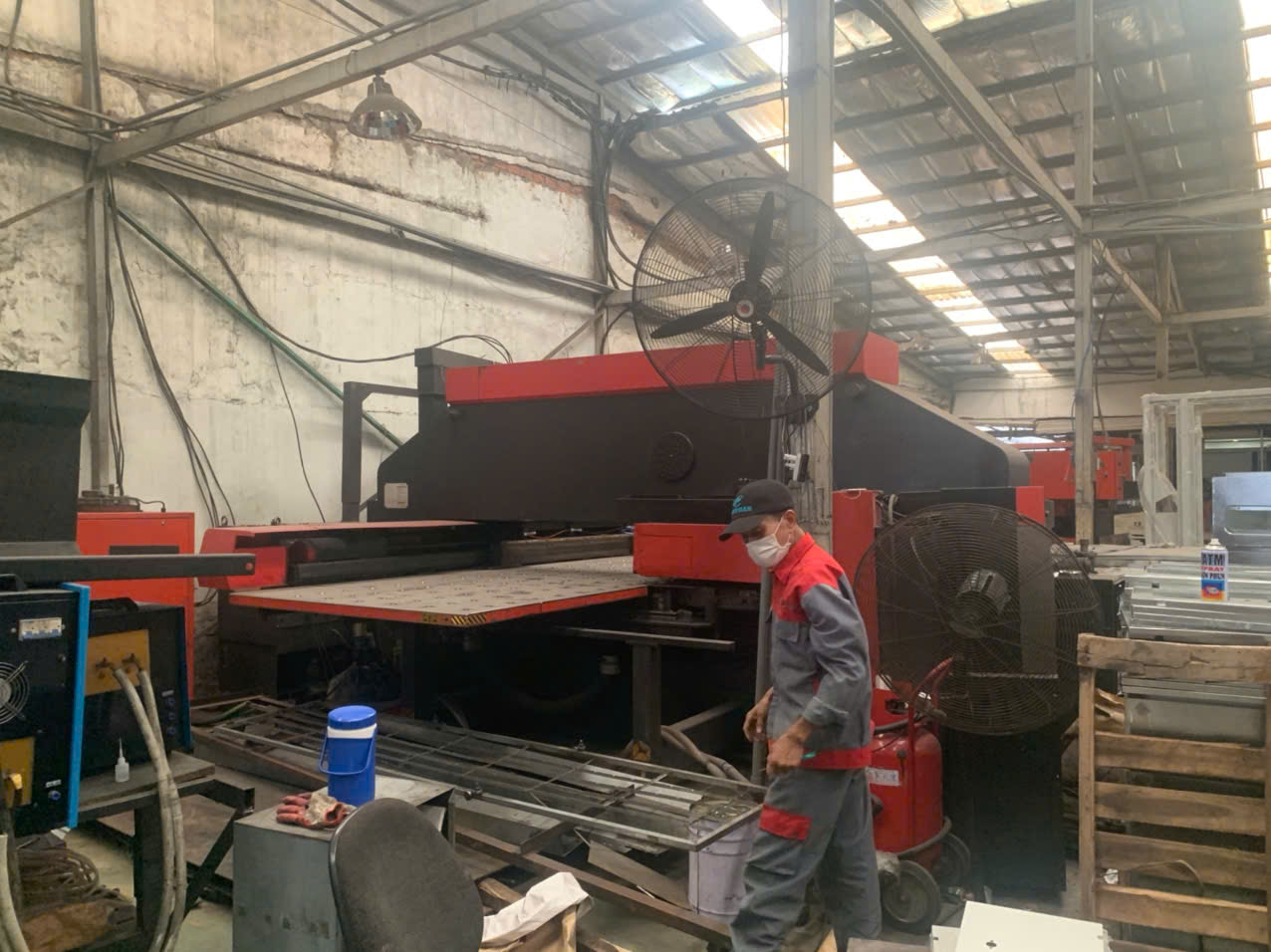
Second, safety around press lines. On our shop-floor walks, we check emergency stops, two-hand controls or light curtains, guarding condition, operator training records, injury logs, and noise controls. Vietnam's Law on Occupational Safety and Hygiene 7 requires protective equipment, machine guarding, and regular safety training. A plant that skimps here is usually cutting corners elsewhere too. We treat safety discipline as a leading indicator of overall management quality, and it has rarely misled us.
Conclusion
Vietnam's labor rules for stamping suppliers are standard, but the audit stakes are high. Verify contracts, hours, wages, insurance, and press safety before you commit, and our team can help.
Frequently Asked Questions
How do I ensure my Vietnamese stamping supplier complies with local labor laws?
A few years back, our Vietnam team walked into a stamping plant near Hai Phong that quoted us a great price ILO core conventions 3 . The payroll records told us exactly where that price came from.
What social audit standards should I require when sourcing stamping parts from Vietnam?
Buyers often ask me which audit scheme to demand, and my answer depends on where the parts end up. A bracket going into a US retail product faces different scrutiny than one going into an automotive chassis.
How can I verify a Vietnamese supplier's labor practices before signing a contract?
The hardest lesson I learned running our Vietnam sourcing operation was this: documents shown in a meeting room and reality on the shop floor can be two different factories. Verification has to test both.
Footnotes
1. Background on the automotive quality standard mentioned alongside ISO 9001 for stamping suppliers. ↩︎
2. Background on the trade agreement referenced alongside EVFTA for labor commitments. ↩︎
3. Official ILO source explaining the core labor conventions tied to trade agreement commitments. ↩︎
4. Official site of amfori, the organization behind the BSCI social audit framework discussed. ↩︎
5. Explains the EU-Vietnam trade pact tied to labor-rights commitments discussed in the article. ↩︎
6. Official ISO reference for the quality management standard referenced in supplier vetting. ↩︎
7. ILO resource on occupational safety standards relevant to Vietnam’s press-shop safety requirements. ↩︎