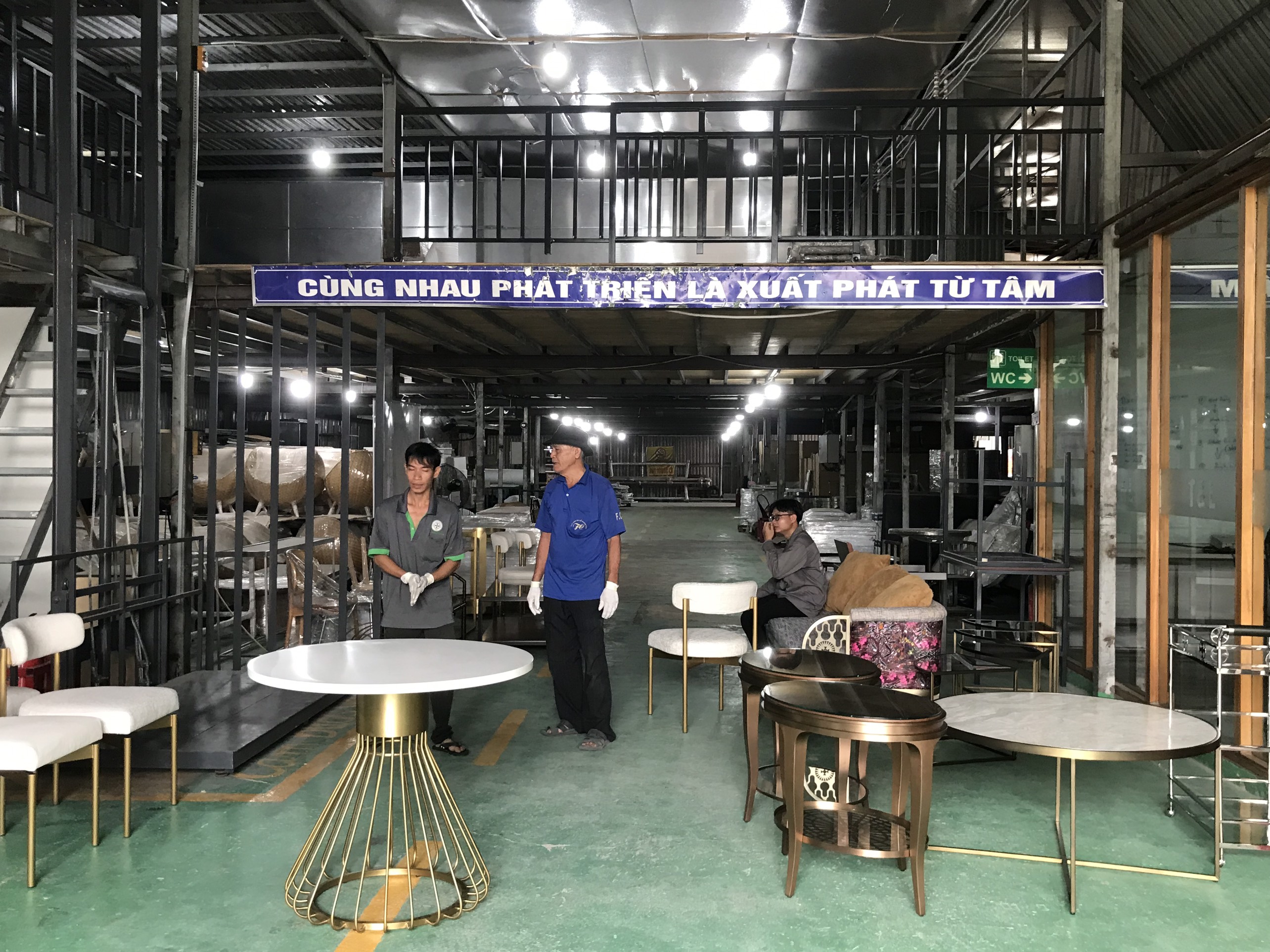

Every week, our team in Vietnam walks factory floors evaluating stamping suppliers—and the gap between perception and reality surprises most U.S. buyers.
Vietnam’s stamping industry has reached a mature, mid-to-high technical level capable of producing complex precision metal components through progressive die stamping, deep drawing, and transfer die operations, with in-house tool and die design now standard among export-oriented suppliers serving automotive and electronics OEM supply chains.
The details matter, though. Not every shop hits these marks. Below, I break down exactly what you can expect—tolerances, quality systems, cost benchmarks, and honest limitations—based on what our Vietnam office sees during supplier audits every month.
How does Vietnam's stamping technology compare to China's manufacturing standards?
A purchasing manager we work with in Ohio once told me he assumed Vietnam was "ten years behind China" in stamping. After we arranged his first factory visit near Ho Chi Minh City, he revised that estimate to "about even—and cheaper."
Vietnam's stamping technology now matches China's mid-to-high tier for most sheet metal fabrication work, offering comparable equipment (Aida and Komatsu servo presses), identical ISO 9001 and IATF 16949 certification standards, and 40–60% lower tooling costs, while eliminating Section 301 tariff exposure for U.S. importers.

Equipment Parity Is Real
One of the first things our auditors check is the press inventory. In Vietnam, established stamping shops run the same Japanese servo presses 1 you find in Tier-1 Chinese factories. Aida, Komatsu, and Amada machines are common. Press tonnage typically ranges from 10-ton mechanical to 500-ton hydraulic. Many mid-tier shops have upgraded to 12kW fiber lasers 2, 300T CNC press brakes, and robotic welding cells. This equipment parity means the physical capability to form, blank, and pierce parts is nearly identical between the two countries.
Where Vietnam Pulls Ahead: Cost and Tariff Structure
The real differentiator is not capability—it is total cost of ownership. Our sourcing data consistently shows a 42% cost advantage over China for comparable stamped parts. The reasons are structural, not quality-related.
| Cost Factor | Vietnam | China | United States |
|---|---|---|---|
| Die-making labor rate | $8–15/hr | $20–35/hr | $35–65/hr |
| Wire EDM rate | $20–35/hr | $50–80/hr | $80–120/hr |
| 6-station progressive die | $12,000–18,000 | $25,000+ | $40,000+ |
| Section 301 tariffs (US import) | 0% | Up to 25% | N/A |
| Trade agreement access | EVFTA, RCEP, CPTPP | Limited | N/A |
These numbers come from real quotes our team has collected across dozens of projects. The zero Section 301 tariff alone shifts the math for many buyers. Add EVFTA and CPTPP trade agreement benefits, and Vietnam becomes hard to ignore.
The Japanese and Korean Training Legacy
Vietnam's technical maturity did not appear overnight. It was built over 20+ years by Japanese and Korean manufacturers—Toyota, Honda, Samsung—who established Tier-1 supply chains in the country. Workers trained in these facilities absorbed kaizen-level discipline. Many shops now employ retired Japanese and Korean master engineers (called "Takumi") in their R&D departments 3 to lead tool and die design and internal training programs. This transfer of knowledge is the single biggest factor behind Vietnam's rapid capability growth.
Where China Still Leads
I want to be honest about the gaps. China has a deeper bench of ultra-high-precision shops capable of tolerances below ±0.02 mm without secondary operations. China also has a more complete domestic raw material supply chain—Vietnam still imports most high-grade steels and specialty alloys. For very large press tonnage requirements (above 500 tons) or exotic material grades, China offers more options. But for the vast majority of stamped brackets, clips, housings, and structural components our clients need, Vietnam delivers equivalent quality at meaningfully lower cost.
Can Vietnamese stampers meet my tight tolerance and precision requirements?
Last quarter, we managed a project for a U.S. client who needed a progressive-die-stamped mounting bracket in 1.2 mm stainless steel with ±0.05 mm on critical hole positions. Our Vietnam supplier hit first-article approval on the second sample submission—no rework needed on the die.
Yes, established Vietnamese stampers routinely achieve ±0.05 mm tolerances on precision work, with standard tolerances of ±0.1 mm for blanked features and ±0.15 mm for formed features. Some specialized facilities even reach ±0.01 mm for electronics components, supported by servo press technology, in-house CNC machining capabilities, and rigorous PPAP documentation.

Standard vs. Precision Tolerance Ranges
Understanding which tolerances are "routine" and which require extra effort helps you set realistic expectations. Here is what our audit data shows across Vietnamese stamping suppliers:
| Operation Type | Standard Tolerance | Precision Tolerance | Notes |
|---|---|---|---|
| Blanking / Piercing | ±0.1 mm | ±0.05 mm | Hole position and diameter |
| Bending / Forming | ±0.15 mm | ±0.08 mm | Angular and dimensional |
| Deep Drawing | ±0.15 mm | ±0.10 mm | Wall thickness variation |
| Progressive Die (in-die features) | ±0.1 mm | ±0.05 mm | Tapping, coining, piercing |
| Ultra-precision (specialized) | — | ±0.01 mm | Limited to top-tier shops |
Most buyer requirements we handle fall in the standard range. When drawings call for ±0.05 mm, we specifically qualify suppliers who have demonstrated this capability on similar part geometries and material grades. Knowing how to tell if a supplier can handle high-precision stamping parts is essential before committing to a production order.
The Role of Servo Press Technology
Servo presses give operators programmable control over slide motion—speed, dwell time, and force at every point in the stroke. This matters for precision. A conventional mechanical press delivers a fixed stroke profile. A servo press lets the tool designer optimize the forming sequence for each specific part. Our Vietnam suppliers running Aida servo presses consistently produce tighter, more repeatable dimensions than shops using older mechanical equipment.
When Secondary Operations Are Needed
I want to be transparent about the limits. If your drawing requires tolerances below ±0.05 mm on formed features—say ±0.02 mm on a bent flange—most Vietnamese shops will need secondary operations. Grinding, coining, or CNC machining after stamping can achieve these numbers, but they add cost and cycle time. We always flag this early in the quoting process so buyers can make informed decisions about whether to hold that tolerance or adjust the design.
FEA and Virtual Simulation
Leading Vietnamese stampers have adopted Finite Element Analysis 4 and virtual simulation software to validate complex die designs before cutting steel. This is a meaningful technical upgrade. It reduces trial-and-error iterations during die tryout, shortens the prototyping phase, and catches springback or thinning issues before they become production problems. When we evaluate a supplier's engineering capability, access to simulation tools is one of our checkpoints.
Material Range and Its Impact on Precision
Material grade availability directly affects achievable tolerances. Vietnamese shops work comfortably with mild steel, high-strength steel 5 (HSLA up to 980 MPa), stainless steel, aluminum, copper, and brass. The typical thickness range is 0.3 mm to 6.0 mm. Thinner materials and softer alloys are easier to hold tight tolerances on. High-strength steels above 590 MPa introduce more springback, which requires compensated tooling design. Some shops are now stamping Advanced High-Strength Steels (AHSS) for the emerging Electric Vehicle supply chain, though this capability is still developing.
What quality control processes should I expect from Vietnam stamping suppliers?
During a supplier audit near Hanoi last year, I watched a quality technician pull every fifth part from a progressive die line and run it through a CMM check in real time. That level of in-process control was not common in Vietnam five years ago. Today, it is becoming standard at export-focused shops.
You should expect ISO 9001 certification as a baseline, IATF 16949 for automotive parts manufacturing, PPAP Level 3 documentation including dimensional reports, material certificates, and process capability studies (Cpk ≥ 1.33), plus in-process SPC monitoring and final inspection with CMM verification before shipment.

Certification Landscape
Certifications tell you the system is in place. They do not guarantee every part is good—that requires active process control. But here is the certification landscape we see across Vietnamese stamping suppliers:
- ISO 9001: Universal among export-oriented shops. This is table stakes.
- IATF 16949: Required for automotive supply chain work. A growing number of Vietnamese stampers hold this certification, driven by Toyota, Honda, and Hyundai programs.
- AS9100: Rare but present at shops serving aerospace customers.
- OEM-specific SQE approvals: Samsung, LG, and Japanese automotive OEMs maintain their own supplier qualification programs, which often exceed ISO requirements.
PPAP: The Documentation You Should Demand
When we manage a new stamped part project, PPAP Level 3 is our standard requirement before mass production begins. Here is what that package includes and why each element matters:
| PPAP Element | What It Contains | Why It Matters |
|---|---|---|
| Design records | Customer drawing, 3D model | Confirms supplier is working from correct revision |
| Material certifications | Mill certs, material test reports | Verifies correct material grade and properties |
| Dimensional results | Full layout inspection report | Proves first articles meet all drawing dimensions |
| Process flow diagram | Step-by-step manufacturing sequence | Shows supplier understands the process chain |
| Control plan | Critical characteristics, inspection frequency | Defines how quality will be maintained in production |
| Process capability study | Cpk/Ppk data on critical dimensions | Demonstrates statistical process control 6 capability |
| Measurement system analysis | Gage R&R results | Validates inspection equipment reliability |
Many U.S. buyers we work with have been burned by suppliers who skip PPAP or deliver incomplete documentation. We review every element before approving production release. This is where "right first time" either happens or fails.
In-Process Controls That Matter
Beyond documentation, look for active quality control standards on the shop floor. Good Vietnamese stampers use Statistical Process Control (SPC) charts at each press station. Operators measure critical dimensions at defined intervals and plot the results. When a measurement trends toward a control limit, the operator stops and adjusts. This prevents drift before it produces scrap.
Surface treatment processes also require quality attention. Many stamped parts go through zinc plating 7, passivation, or powder coating. Vietnam's high humidity environment creates a specific risk: oxidation between stamping and surface treatment. Advanced facilities have implemented climate-controlled storage zones and in-line anti-oxidation treatments to protect parts during this critical window. When we audit a supplier, we check not just the press room but also the material handling and storage areas.
What Our Vietnam Office Checks During Audits
Our seven-person team in Vietnam conducts on-site audits before we qualify any stamping supplier. We verify press tonnage matches the calculated requirement with margin for material variation. We inspect the die shop for wire EDM and CNC grinding equipment. We review calibration records for all inspection instruments. We interview the quality manager about corrective action procedures. And we check past PPAP records for evidence of consistent documentation quality. This process takes one to two days per supplier and eliminates most quality risks before a single part is produced. For a deeper look at the criteria we use, see our guide on how to evaluate a supplier’s competitiveness when sourcing stamping parts from Vietnam.
Which industries and part types are best suited for Vietnam's current stamping capabilities?
The clearest signal of where Vietnam excels comes from who is already buying there. When Samsung sources billions of stamped connector housings and Toyota procures structural brackets from Vietnamese suppliers, those decisions validate the technical capability for specific part categories.
Vietnam's stamping capabilities are best suited for high-volume production of automotive brackets, electronics enclosures, appliance components, and industrial mounting hardware in progressive die stamping and deep drawing operations, particularly parts in 0.3–6.0 mm thickness using mild steel, stainless steel, or aluminum requiring ±0.05–0.15 mm tolerances.

Industry-by-Industry Breakdown
Not all industries place the same demands on a stamping supplier. Here is how Vietnam's current capabilities map against major sectors:
Automotive: This is where the deepest capability exists. Toyota, Honda, and Hyundai supply chains have trained a generation of Vietnamese stampers in IATF 16949 discipline, tight tolerances, and zero-defect expectations. Parts include structural brackets, seat frame components, exhaust system shields, and body reinforcement panels. The emerging EV supply chain is pushing demand for AHSS stamping, and Vietnamese suppliers are investing to meet this need.
Consumer Electronics: Samsung's massive manufacturing presence in Vietnam created an ecosystem of precision stamping suppliers for connector housings, shielding cans, battery contacts, and chassis components. These parts demand thin materials (often 0.3–0.8 mm), high-speed progressive die stamping, and very tight dimensional control—sometimes ±0.01 mm at the best facilities.
Industrial Hardware: Mounting brackets, clips, spring clamps, and structural supports—the kind of parts shown in our product images—are a sweet spot for Vietnamese stampers. These parts require solid sheet metal fabrication fundamentals: clean blanking, precise bending, consistent hole placement. Volumes range from 10,000 to millions of pieces. This is bread-and-butter work.
Appliance and HVAC: Larger formed panels, motor housings, and structural frames fall within Vietnam's capability range, though the press tonnage ceiling (typically 500 tons maximum) limits the largest deep-drawn parts.
Part Types and Process Fit
| Part Type | Best Process | Vietnam Readiness | Typical Tolerance |
|---|---|---|---|
| Flat blanked parts (washers, shims) | Blanking / progressive die | Fully ready | ±0.1 mm |
| Bent brackets and clips | Progressive die stamping | Fully ready | ±0.1–0.15 mm |
| Deep-drawn cups and housings | Deep drawing | Ready (mid-complexity) | ±0.15 mm |
| Multi-operation formed parts | Transfer die | Ready | ±0.1 mm |
| Wire forms and spring clips | Four-slide | Available at select shops | ±0.1 mm |
| Micro-precision electronics parts | High-speed progressive | Top-tier shops only | ±0.01–0.05 mm |
The In-House Die Making Advantage
A critical factor for buyers to understand: Vietnam's shift from importing dies to building them domestically has changed the sourcing equation. Export-oriented shops now design and manufacture their own progressive tooling 8 using wire EDM and CNC-machined die components. This means faster tooling lead times (4–8 weeks versus 6–10 weeks from China), lower tooling cost (simple blanking dies from $1,500–5,000, mid-complexity progressive dies from $8,000–25,000), and more direct technical control over the stamping process.
However, I always tell buyers to compare on die life—not just sticker price. A Vietnamese-built die at $15,000 that lasts 500,000 shots may or may not be a better value than a Chinese die at $25,000 that lasts 1,000,000 shots. We request die life guarantees and maintenance terms in every tooling contract.
Parts That Push Vietnam's Limits
Where should you be cautious? Very thick materials above 6 mm, ultra-tight tolerances below ±0.02 mm without secondary operations, parts requiring press tonnage above 500 tons, and components needing exotic material grades that are not stocked locally. For these scenarios, we recommend either qualifying a top-tier specialized facility (they exist but are few) or considering a hybrid approach—stamping in Vietnam with precision finishing in a more specialized market. Understanding a supplier’s capacity to scale for OEM growth is also critical when planning long-term volume commitments.
Government Support and Ecosystem Growth
Vietnam's government has strategically prioritized precision metalworking, electronics, and tool-and-die fabrication. STEM education programs are producing mechanical design engineers 9, CNC technicians, and tool-and-die makers at increasing rates. The local ecosystem now includes raw material distributors, heat-treatment centers 10, and specialized surface treatment providers. English proficiency in technical roles is growing, which reduces communication friction—a pain point many of our U.S. clients have experienced with other Asian sourcing markets.
Conclusion
Vietnam's stamping industry delivers mid-to-high precision at significantly lower cost than China, with proven quality systems and a Japanese-trained workforce—but smart sourcing requires auditing suppliers on die life, tolerance capability, and PPAP discipline, not just price.
Frequently Asked Questions
How does Vietnam's stamping technology compare to China's manufacturing standards?
A purchasing manager we work with in Ohio once told me he assumed Vietnam was "ten years behind China" in stamping. After we arranged his first factory visit near Ho Chi Minh City, he revised that estimate to "about even—and cheaper."
Can Vietnamese stampers meet my tight tolerance and precision requirements?
Last quarter, we managed a project for a U.S. client who needed a progressive-die-stamped mounting bracket in 1.2 mm stainless steel with ±0.05 mm on critical hole positions. Our Vietnam supplier hit first-article approval on the second sample submission—no rework needed on the die.
What quality control processes should I expect from Vietnam stamping suppliers?
During a supplier audit near Hanoi last year, I watched a quality technician pull every fifth part from a progressive die line and run it through a CMM check in real time. That level of in-process control was not common in Vietnam five years ago. Today, it is becoming standard at export-focused shops.
Footnotes
1. Authoritative Wikipedia entry explaining servo-press technology and its industrial applications. ↩︎
2. Authoritative Wikipedia overview of fiber laser technology and its manufacturing uses. ↩︎
3. Overview of research and development functions within manufacturing organizations. ↩︎
4. Technical explanation of the simulation method used to validate complex die designs. ↩︎
5. Industry resource for automotive steel grades and high-strength material applications. ↩︎
6. Highly authoritative NIST handbook providing a comprehensive guide to Statistical Process Control. ↩︎
7. Technical overview of the electroplating process used for corrosion resistance in stamped parts. ↩︎
8. Industry association representing precision metalforming and progressive die manufacturing. ↩︎
9. Professional organization for mechanical engineers involved in tool and die design. ↩︎
10. Authoritative Wikipedia resource detailing various industrial heat treatment processes and techniques. ↩︎