Vietnam to US ocean freight transit times matter deeply when sourcing sheet metal fabrication 1 — and getting them wrong can wreck your production schedule.
Ocean freight transit times for sheet metal fabrication from Vietnam to the US typically range from 14 to 45 days port-to-port. Door-to-door delivery extends to 28–50 days depending on destination coast, shipping mode (FCL vs. LCL), customs clearance, and production lead times at the factory.
I have spent years helping US buyers navigate these timelines supply chain diversification 2. Below, I break down the real numbers, the hidden delays, and how to plan smarter.
How long should I expect ocean freight transit to take for my sheet metal orders from Vietnam?
A buyer in the Midwest once asked me for a "simple number" for shipping time. I had to explain that there is no single answer — it depends on your port, your container type, and how fast your parts clear customs.
Expect 20–25 days port-to-port for Full Container Load shipments from Ho Chi Minh City port to Los Angeles port. East Coast destinations like New York take 32–45 days. Add 10–15 days for door-to-door logistics including customs clearance US procedures, inland trucking, and drayage.

West Coast vs. East Coast: The Core Difference
The destination coast is the single biggest variable. West Coast ports like Los Angeles and Long Beach are closer. East Coast ports require ships to pass through the Panama Canal 3 or take longer routes. Here is a breakdown based on real shipping data.
| Route | Mode | Port-to-Port | Door-to-Door |
|---|---|---|---|
| HCMC to Los Angeles | FCL | 20–25 days | 37–41 days |
| HCMC to Los Angeles | LCL | 18–22 days | 28–33 days |
| HCMC to New York | FCL | 32–45 days | 42–55 days |
| Hai Phong to New York | FCL | 30–35 days | 40–50 days |
| HCMC to Houston | FCL | 35–40 days | 45–52 days |
These ranges reflect standard conditions. Peak season pushes everything higher.
Direct vs. Transshipment Services
Not all ocean freight routes are direct. Many vessels from Ho Chi Minh City port stop in Singapore, Busan, or Hong Kong before heading to the US. Each transshipment adds 3–7 days. When our logistics team books freight for clients, we always confirm whether the service is direct. A direct sailing from HCMC to LA can take as little as 14–18 days. An indirect route on the same lane might take 25–29 days.
FCL vs. LCL: Speed and Predictability
Full Container Load shipments 4 are faster and more predictable. The container goes straight from the factory to the vessel. Less than Container Load shipments 5 must be consolidated at a warehouse with cargo from other shippers. This adds time at both ends. For sheet metal parts — which can be heavy and oddly shaped — FCL also reduces the risk of damage during handling.
That said, LCL makes sense for smaller orders under 10 CBM. Our team in Vietnam often helps clients decide based on order volume and urgency. The ocean freight costs per unit may be higher for LCL, but the total spend is lower for small batches.
Total Lead Time: Production Plus Transit
Many buyers forget to add production time. Sheet metal fabrication — laser cutting, bending, welding, powder coating — takes 10–20 days depending on complexity. When I plan a project timeline, I always start from the production kickoff date.
| Phase | Duration |
|---|---|
| Production (sheet metal fabrication) | 10–20 days |
| Inland trucking to Vietnam port | 1–3 days |
| Port handling and customs at origin | 2–4 days |
| Ocean transit (West Coast FCL) | 20–25 days |
| US customs clearance 6 | 2–5 days |
| US drayage 7 to inland destination | 5–10 days |
| Total door-to-door | 40–67 days |
This is the real number you should plan around. Not just the sailing time.
What factors could potentially delay my custom metal parts shipment from Vietnam to the US?
One lesson we learned the hard way: a shipment of precision brackets sat at Cat Lai terminal for four extra days because a single line on the packing list did not match the commercial invoice. Small errors create big delays.
Key delay factors include peak season congestion (Q3–Q4), incomplete shipping documentation, port backlogs at both Vietnam and US ports, typhoon season weather disruptions, customs holds due to tariff classification disputes, and transshipment connection misses at intermediate ports like Singapore or Busan.
Seasonal Congestion and Peak Periods
Q3 and Q4 are the worst. US retailers stock up for the holiday season, and container space gets tight. Transit times can increase by 5–10 days during this window. Rates spike too — ocean freight costs can double. Chinese New Year (January–February) also affects Vietnam, as many suppliers share sub-tier vendors with China.
Documentation Errors
Sheet metal fabrication exports require precise shipping documentation. This includes the commercial invoice, packing list, bill of lading, certificate of origin, and sometimes material test reports. If any document has an inconsistency — wrong HS code, mismatched quantities, missing descriptions — customs will flag it. Our quality and logistics teams in Vietnam review every document set before submission. This step alone has saved clients weeks of delay.
Weather and Natural Events
Typhoon season in the South China Sea runs from May to November. Vessels may reroute or wait in port. This can add 3–7 days. There is no way to prevent it, but you can plan for it by building buffer time into your schedule. You can learn more about how to manage port congestion and shipping delays for Vietnam sheet metal fabrication to protect your timelines.
US Customs and Import Tariffs
US customs clearance is another bottleneck. Sheet metal parts are classified under specific HS codes 8, and import tariffs vary. If Customs and Border Protection questions the declared value or country of origin, your shipment can sit in a bonded warehouse for days. Working with a knowledgeable freight forwarder Vietnam-side and a licensed customs broker US-side reduces this risk significantly.
Specialized Handling for Sheet Metal
Sheet metal components — especially large brackets with precise bends and weld joints — need proper dunnage inside the container. If parts shift during transit, they arrive warped or scratched. Preparing proper packaging and securing methods takes time at the origin, but it prevents rejection and rework at the destination. Our team uses custom wooden crates and foam padding for complex geometries, and we always photograph the loading process for quality records.
How do Vietnam's shipping lead times compare to my current sourcing operations in China?
A trade-off I discuss with nearly every new client: "Is Vietnam really faster or slower than China?" The honest answer depends on which Chinese port you compare against and what you are making.
Vietnam's ocean freight transit times to the US are comparable to China's for West Coast destinations — roughly 20–25 days from Ho Chi Minh City versus 15–20 days from Shanghai. The real advantage of manufacturing in Vietnam lies in tariff savings, supply chain diversification, and competitive labor costs, not necessarily faster shipping.
Transit Time Comparison Table
| Origin Port | Destination | FCL Port-to-Port | Notes |
|---|---|---|---|
| Ho Chi Minh City, Vietnam | Los Angeles | 20–25 days | Direct services as fast as 14–18 days |
| Shanghai, China | Los Angeles | 15–20 days | Slightly shorter sailing distance |
| Ho Chi Minh City, Vietnam | New York | 32–45 days | Panama Canal route |
| Shanghai, China | New York | 28–35 days | Panama Canal or Suez Canal route |
| Hai Phong, Vietnam | Los Angeles | 22–28 days | Fewer direct services |
| Shenzhen, China | Los Angeles | 14–18 days | High frequency of direct sailings |
China has a slight edge on raw transit time. Shanghai and Shenzhen are major hubs with more frequent direct sailings. Vietnam is catching up, but Ho Chi Minh City port still has fewer weekly departures to the US compared to Shanghai.
Where Vietnam Wins
The "China+1" strategy is not about faster shipping. It is about risk management and cost. Import tariffs on sheet metal parts from China can be significantly higher than from Vietnam. Many of our clients have saved 10–25% on landed cost by shifting production to Vietnam, even after accounting for slightly longer transit.
Vietnam also offers competitive labor rates for sheet metal fabrication. Welding, bending, and assembly work costs less. For mid-to-high quality requirements — the kind our team specializes in — Vietnam delivers strong value.
Where China Still Leads
China's supply chain is more mature. For highly complex sheet metal assemblies that require specialized sub-components, China has deeper supplier networks. Production lead times for complex parts can be 5–10 days shorter in China because tooling and material availability are better.
Our offices in both countries give us a clear view of these trade-offs. When a client needs a multi-component assembly with tight tolerances, we sometimes split the sourcing — simpler brackets from Vietnam, complex machined parts from China. This kind of supply chain optimization keeps costs down and quality up.
The Real Decision Framework
Ask yourself three questions:
- Is my order volume large enough for FCL? If yes, Vietnam's transit time is competitive.
- Am I paying high tariffs on Chinese imports? If yes, Vietnam likely saves money.
- Does my part require a deep sub-supplier ecosystem? If yes, China may still be the better fit.
How can I better plan my inventory cycles around Vietnam to US ocean freight schedules?
During a recent project review, a purchasing manager told me he had been ordering "just in time" from a domestic supplier for years. Switching to Vietnam meant rethinking his entire reorder cycle. We walked through the math together.
To plan inventory around Vietnam-to-US ocean freight, build a total lead time buffer of 50–70 days (production plus transit plus logistics). Set reorder points 8–10 weeks before stock depletion, use rolling forecasts, and consider splitting orders between ocean freight for bulk and air freight from Vietnam for urgent fills.
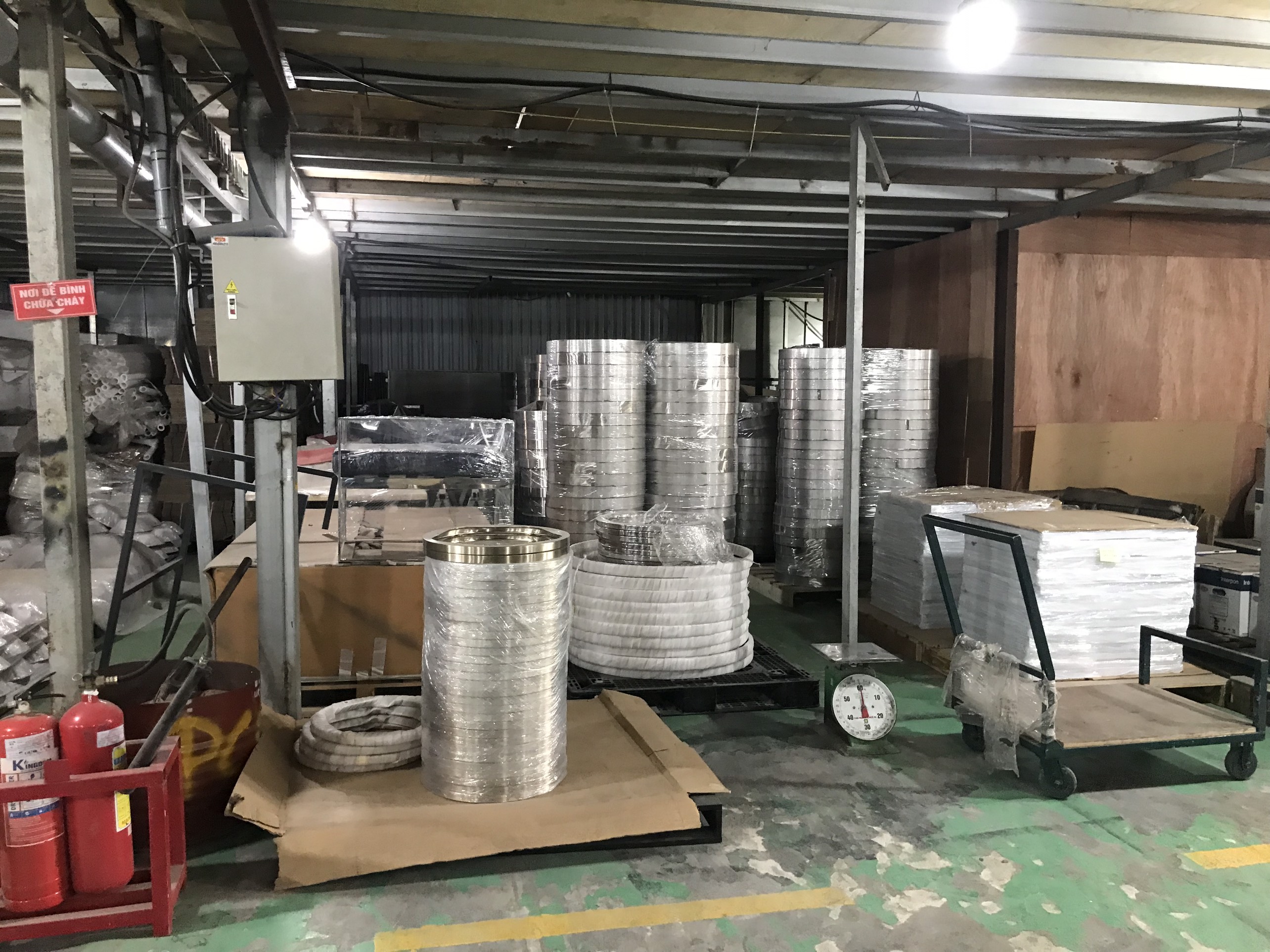
Step 1: Map Your Total Lead Time
Start with the full timeline, not just the sailing days. Include production, inland transport, port handling, ocean transit, customs clearance US procedures, and final delivery. For a West Coast buyer ordering FCL, this is roughly 40–50 days. For an East Coast buyer, it is 50–67 days. These are your baseline numbers.
Step 2: Set Your Reorder Point
Your reorder point is the inventory level at which you place a new order. Calculate it as:
Reorder Point = Daily Usage × Total Lead Time (in days) + Safety Stock
If you use 100 brackets per day and your total lead time is 55 days, with 10 days of safety stock 9, your reorder point is 6,500 units.
Step 3: Use Rolling Forecasts
Static annual forecasts do not work well with 50+ day lead times. Update your demand forecast monthly. Share it with your supplier so they can pre-order raw materials. Our project managers in Vietnam work with clients on rolling 90-day forecasts. This reduces surprise stockouts and gives the factory time to plan capacity.
Step 4: Consider a Dual-Mode Shipping Strategy
For most orders, ocean freight is the right choice. Ocean freight costs are a fraction of air freight. But for urgent fills — prototype runs, replacement parts, or demand spikes — air freight from Vietnam is worth the premium. Air freight takes 3–8 days port-to-port, or 8–16 days door-to-door. It costs 5–10x more, but it can save a production line from shutting down. Understanding how to choose sea vs air freight when sourcing sheet metal fabrication parts is essential for building this dual-mode strategy.
| Shipping Mode | Port-to-Port | Door-to-Door | Relative Cost |
|---|---|---|---|
| Ocean FCL | 20–25 days (West Coast) | 37–41 days | Baseline |
| Ocean LCL | 18–22 days (West Coast) | 28–33 days | 1.2–1.5x per CBM |
| Air Freight | 3–8 days | 8–16 days | 5–10x |
| Express Courier | 1–4 days | 1–4 days | 10–20x |
Step 5: Build Relationships With Your Freight Forwarder
A good freight forwarder Vietnam-side will alert you to port congestion, vessel schedule changes, and rate fluctuations before they hit your supply chain. Digital freight platforms now offer real-time tracking and predictive ETAs. We integrate these tools into our logistics workflow so clients can see where their container is at any moment.
Step 6: Plan Around Peak Seasons
Book container space 2–3 weeks earlier than usual during Q3 and Q4. Consider placing larger orders in Q2 to build buffer stock before the holiday rush. This is basic supply chain optimization, but it is the single most effective way to avoid delays during peak congestion.
Conclusion
Vietnam to US ocean freight transit times for sheet metal fabrication range from 14–45 days port-to-port. Plan for 50–70 days total lead time, choose the right shipping mode, and build safety stock to keep your supply chain running smoothly.
Frequently Asked Questions
How long should I expect ocean freight transit to take for my sheet metal orders from Vietnam?
A buyer in the Midwest once asked me for a "simple number" for shipping time. I had to explain that there is no single answer — it depends on your port, your container type, and how fast your parts clear customs.
What factors could potentially delay my custom metal parts shipment from Vietnam to the US?
One lesson we learned the hard way: a shipment of precision brackets sat at Cat Lai terminal for four extra days because a single line on the packing list did not match the commercial invoice. Small errors create big delays.
How do Vietnam's shipping lead times compare to my current sourcing operations in China?
A trade-off I discuss with nearly every new client: "Is Vietnam really faster or slower than China?" The honest answer depends on which Chinese port you compare against and what you are making.
Footnotes
1. Provides a comprehensive overview of sheet metal. ↩︎
2. Discusses strategies for building a resilient supply chain. ↩︎
3. Official source for Panama Canal trade routes and importance. ↩︎
4. Replaced HTTP 404 link with an authoritative guide on FCL shipping from Uber Freight. ↩︎
5. Defines LCL shipping, another common ocean freight mode. ↩︎
6. Provides a step-by-step guide to US customs clearance. ↩︎
7. Explains drayage, a critical short-haul logistics service. ↩︎
8. Explains the Harmonized System codes for product classification. ↩︎
9. Defines safety stock and its importance in inventory management. ↩︎