

Stamping parts sit inside almost everything I ship from our facilities, yet many buyers still source them blind—and one bad bracket batch can stall an entire assembly line for weeks.
Stamping parts are mainly used in the automotive, electronics, appliance, aerospace, construction, medical, and renewable energy industries. Automotive is the largest consumer, followed by electronics and electrical manufacturing, because these sectors need high-volume, low-cost, precision metal components with repeatable quality.
Let me walk you through each major industry, why stamping fits it, and how to source these parts without the delays and rework that plague so many supply chains.
How Do I Know If Stamping Parts Fit My Industry's Manufacturing Needs?
A purchasing manager once sent me a machined bracket drawing and asked why his costs were so high. We converted it to a stamping design, and his per-part price dropped by more than half.
Stamping parts fit your industry if you need high volumes of identical metal components, consistent tolerances, moderate part complexity, and low per-unit cost. If your annual volume justifies tooling investment—typically thousands of pieces or more—stamping usually beats machining, casting, or fabrication.
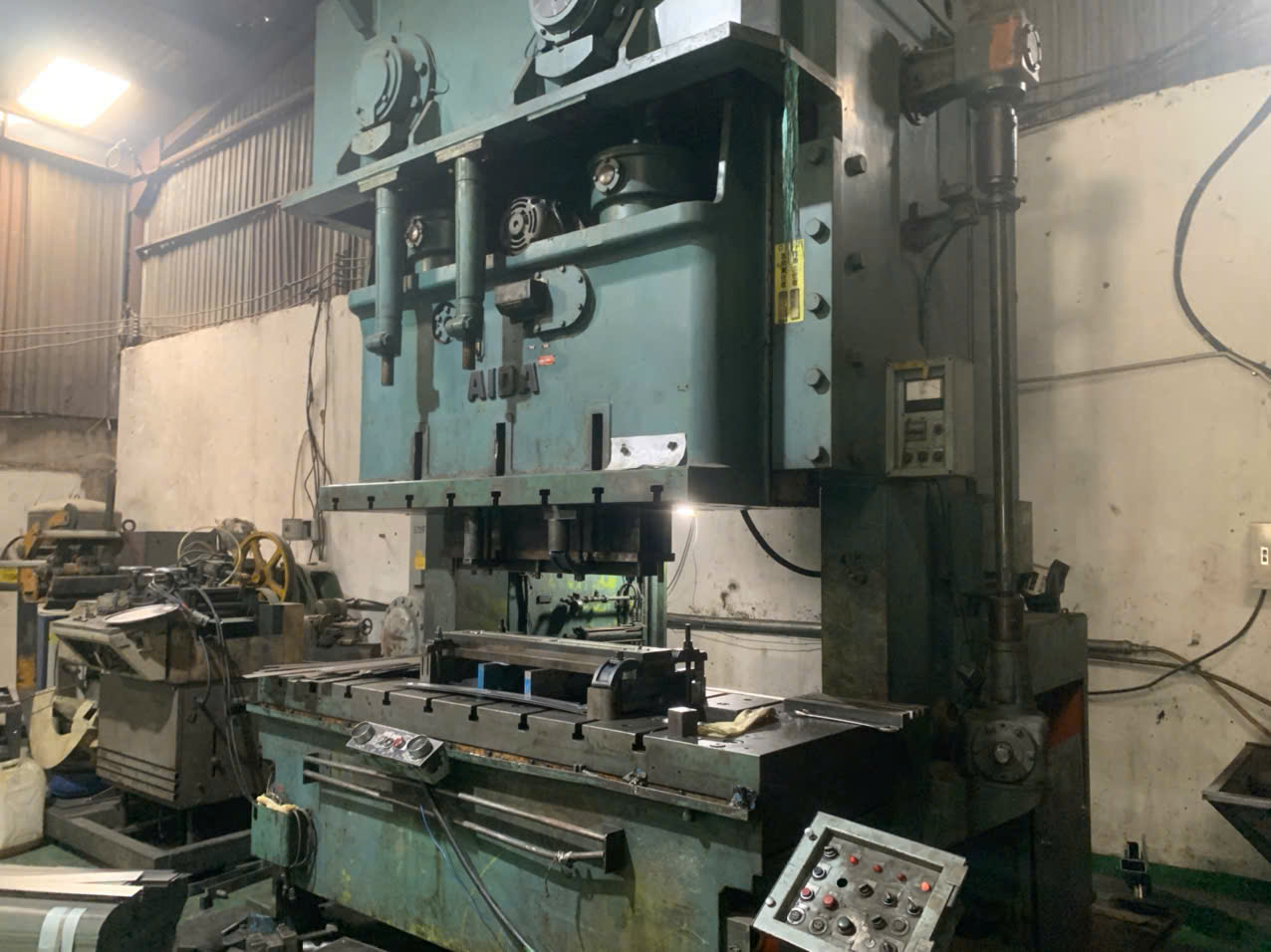
Stamping is not the right answer for every part. But when it fits, nothing else comes close on cost and speed. In my experience helping U.S. clients source custom parts from Vietnam and other Asian countries, the decision usually comes down to four factors: volume, geometry, tolerance, and material.
Volume Is the First Filter
Stamping requires a die. That die costs money upfront. So the economics only work when you spread the tooling cost across many parts. If you need fifty pieces a year, machining or laser cutting with bending is cheaper. If you need fifty thousand, stamping wins almost every time.
Compare Stamping Against the Alternatives
Here is how I explain the trade-offs to buyers who are new to the process:
| Factor | Stamping | CNC Machining 1 | Casting | Welded Fabrication |
|---|---|---|---|---|
| Tooling cost | High upfront | Low | Medium–high | Low |
| Per-part cost at volume | Very low | High | Medium | High |
| Speed at scale | Very fast | Slow | Medium | Slow |
| Tolerance capability | Tight and repeatable | Tightest | Moderate | Loose |
| Best for | Sheet metal 2 parts, high volume | Complex 3D parts, low volume | Thick solid shapes | Large one-off structures |
Geometry and Material Matter Too
Stamping works with sheet metal—steel, stainless, aluminum, brass, copper. It handles bends, punched holes, flanges, embossing, and drawn shapes. Think of the zigzag brackets and mounting clips we produce daily: flat flanges, raised walls, slotted holes. That is classic stamping territory. If your part is a thick solid block or has deep internal cavities, look elsewhere.
One more point from our project work: stamping rewards good design collaboration. When we co-develop a part with a client's engineers early, we often simplify bends and hole placements, which cuts tooling cost and eliminates quality risks before the first sample ships.
Which Automotive and Electronics Applications Rely Most on Stamping Parts?
During a supplier audit in Vietnam last year, I watched a single progressive die produce automotive brackets at over forty strokes per minute. That throughput is exactly why these two industries dominate stamping demand.
Automotive relies on stamping parts for body panels, chassis components, brackets, hinges, and engine parts. Electronics depends on stamped connectors, terminals, contact springs, EMI shields, heat sinks, and enclosures. Together, these two sectors consume the largest share of global metal stamping output.

Automotive and transportation form the single biggest market for stamping parts. Industry data shows the automotive segment held more than a third of global metal stamping market revenue in recent years. Electronics is the second pillar, driven by miniaturization and the explosion of connected devices. Let me break down where the parts actually go.
Automotive: From Body Panels to Hidden Brackets
Most people picture stamped car doors and hoods. Those are real, but the hidden parts matter just as much. A typical vehicle contains hundreds of stamped components:
| Application Area | Typical Stamped Parts | Why Stamping Fits |
|---|---|---|
| Body and exterior | Panels, fenders, roof sections | Large drawn shapes, consistent surfaces |
| Chassis and structure | Cross members, reinforcements, mounts | Strength-to-weight balance |
| Powertrain | Engine brackets, heat shields, covers | Heat resistance, tight fit |
| Interior and trim | Seat frames, hinges, clips | High volume, low cost |
| EV-specific | Battery enclosures, busbar brackets | Lightweighting, precision |
The lightweighting trend keeps pushing demand. Automakers replace heavier cast parts with high-strength stamped steel and aluminum to improve fuel economy and EV range.
Electronics: Small Parts, Massive Volumes
Electronics stamping is a different world. Parts are tiny, tolerances are tight, and volumes are enormous. Common applications include connector pins and terminals, spring contacts for batteries, EMI shielding 3 cans, lead frames, heat sinks, and mounting brackets for PCBs and displays. When we run PPAP for electronic clients, dimensional checks often go down to hundredths of a millimeter. A connector terminal that is slightly off will fail in the field, so process control is non-negotiable.
Telecommunications hardware follows the same pattern. Base stations, network enclosures, and data center racks all use stamped brackets and shields in serious quantities.
What Quality Standards Should I Expect When Sourcing Stamping Parts for My Industry?
Early in my career, a client returned an entire shipment because a supplier ignored a flatness callout on the drawing. That expensive lesson shaped how our team now reviews every drawing requirement before quoting.
Expect ISO 9001 as the baseline for all industries. Automotive requires IATF 16949 and PPAP documentation. Medical demands ISO 13485. Aerospace needs AS9100. Beyond certificates, insist on documented process control, first-article inspection, dimensional reports, and material traceability for every production lot.

Certificates alone do not guarantee good parts. I have audited factories with framed ISO certificates on the wall and chaos on the shop floor. Quality lives in the daily process, not the paperwork. Still, standards give you a common language and a legal baseline, so start there.
Match the Standard to Your Industry
| Industry | Key Standard | Critical Quality Focus |
|---|---|---|
| Automotive | IATF 16949 4, PPAP | Dimensional stability, traceability, zero-defect targets |
| Electronics | ISO 9001 5, IPC guidelines | Micro-tolerances, plating quality, burr control |
| Medical | ISO 13485 6 | Biocompatible materials, cleanliness, validation |
| Aerospace | AS9100 7 | Material certs, strength-to-weight, full traceability |
| Construction | ISO 9001, ASTM specs | Corrosion protection, load ratings |
| Appliances | ISO 9001 | Surface finish, consistency at volume |
What a Real Quality Process Looks Like
From our contract manufacturing projects, a proper stamping quality flow includes these steps:
- Drawing review and requirement confirmation before tooling starts.
- First-article inspection with a full dimensional report against every drawing callout.
- In-process checks at set intervals—critical dimensions, burr height, flatness.
- Material certification and lot traceability for every coil of steel or aluminum.
- Final inspection with AQL sampling before packing.
- Documented corrective action if anything drifts out of spec.
Ask any potential supplier to show you these records from a past project. If they hesitate, walk away. The goal is right-first-time production. Rework and returns cost far more than the part price ever saves, especially when your assembly line in the U.S. is waiting on a container from Asia.
How Can I Find a Reliable Stamping Parts Supplier That Understands My Industry's Requirements?
A U.S. purchasing manager recently told me his biggest frustration was not price—it was suppliers who missed drawing details and delivered late. That conversation mirrors what we hear from buyers across the board.
Find a reliable stamping parts supplier by verifying industry-specific certifications, auditing their process control on-site or through a sourcing partner, requesting sample runs with full dimensional reports, checking references in your sector, and confirming realistic lead times and communication practices before committing to tooling.

Finding a supplier is easy. Finding one that gets your parts right the first time, every time, is hard. Our team in Singapore and Vietnam spends much of its time auditing stamping factories across Asia outside of China, and the gap between the best and the average is enormous. Here is the practical approach I recommend.
Start With a Structured Evaluation
Do not rely on a website or a trade-show handshake. Score candidates against concrete criteria: relevant industry experience, tooling capability in-house versus outsourced, press tonnage range, secondary processes like plating and heat treatment, quality certifications, English-speaking engineering support, and financial stability. A supplier who has made automotive brackets for ten years may still struggle with medical parts. Industry fit matters.
Test Before You Commit
Order samples and treat them as an exam. Send a drawing with a few demanding callouts—a tight slot tolerance, a flatness spec, a specific burr direction. Then check whether the supplier asks smart clarifying questions before quoting. Silence is a red flag. Good suppliers challenge ambiguous drawings; weak ones ignore them and ship whatever comes off the press.
Watch the Communication and Logistics Details
Delivery delays usually trace back to poor planning, not bad luck. Ask how the supplier schedules capacity, buffers raw material, and handles engineering changes mid-production. Confirm who manages export documentation and door-to-door logistics. If you lack the time or local presence to audit factories yourself, a sourcing partner with boots on the ground can run supplier audits, PPAP, in-process control, and final inspection on your behalf. We have found that catching a problem at the press—before parts are packed—saves clients months of dispute resolution later. Also discuss payment terms early. Suppliers or partners offering open account terms of 60 to 90 days ease your cash flow and signal financial confidence in their own quality.
Conclusion
Stamping parts power automotive, electronics, appliances, aerospace, construction, medical, and energy sectors. Match your volume and tolerances to the process, demand real quality control, and choose suppliers who prove it before production.
Frequently Asked Questions
How Do I Know If Stamping Parts Fit My Industry's Manufacturing Needs?
A purchasing manager once sent me a machined bracket drawing and asked why his costs were so high. We converted it to a stamping design, and his per-part price dropped by more than half.
Which Automotive and Electronics Applications Rely Most on Stamping Parts?
During a supplier audit in Vietnam last year, I watched a single progressive die produce automotive brackets at over forty strokes per minute. That throughput is exactly why these two industries dominate stamping demand.
What Quality Standards Should I Expect When Sourcing Stamping Parts for My Industry?
Early in my career, a client returned an entire shipment because a supplier ignored a flatness callout on the drawing. That expensive lesson shaped how our team now reviews every drawing requirement before quoting.
Footnotes
1. Wikipedia background on the manufacturing alternative compared against stamping in the article. ↩︎
2. Background on the raw material form that stamping processes primarily work with. ↩︎
3. Explains the electromagnetic interference shielding concept relevant to electronics stamping applications. ↩︎
4. Explains the automotive quality management standard referenced as mandatory for automotive suppliers. ↩︎
5. Official ISO resource explaining the baseline quality management standard discussed throughout. ↩︎
6. Official ISO page defining the medical device quality standard mentioned in the article. ↩︎
7. Background on the aerospace quality standard cited as a requirement for aerospace parts. ↩︎