Finding the right sheet metal fabrication service providers can feel overwhelming when your project demands precision, reliability, and on-time delivery every single time.
The top global sheet metal fabrication service providers include digital platforms like Xometry and Protolabs, precision specialists like Star Rapid and RapidDirect, heavy fabricators like ArtisanMetal and ThyssenKrupp, and supply chain partners like DEWIN that manage sourcing, quality control, and logistics end-to-end across Asia.
The landscape of custom metal parts manufacturing is shifting fast ISO 13485 1. Digital platforms, specialized fabricators, and full-service supply chain partners each solve different problems. The key is matching your project requirements — volume, tolerances, materials, and payment terms — with the right type of partner. Below, I break down the categories, compare leading providers, and share what we have learned from years of managing sheet metal projects across Vietnam and China for U.S. and European buyers.
How do I find the most reliable sheet metal fabrication partners for my custom engineering requirements?
A purchasing manager once told me his biggest frustration was not price — it was that suppliers kept missing critical drawing requirements and delivering non-conforming parts.
To find reliable sheet metal fabrication partners, define your project requirements first — tolerances, materials, volumes, and certifications — then evaluate providers based on their DFM support, quality certifications like ISO 9001, communication responsiveness, and proven track record with similar custom engineering projects.
Start With Your Project Requirements
Before you search for a partner, get clarity on what you need. Are you prototyping a single stainless steel fabrication bracket, or do you need 5,000 aluminum fabrication enclosures per month? The answer determines which type of provider fits best.
Here is a breakdown of provider types by project need:
| Project Type | Best Provider Type | Examples | Typical Lead Time |
|---|---|---|---|
| Rapid prototyping (1–50 pcs) | Digital platforms / Precision specialists | RapidDirect, Protolabs, JLC CNC | 3–10 business days |
| Low-to-medium volume (50–5,000 pcs) | On-demand marketplaces / Direct fabricators | Xometry, Hubs, Fictiv | 2–4 weeks |
| Medium-to-high volume (5,000+ pcs) | Contract manufacturers / Supply chain partners | MEC, DEWIN, Matcor | 4–8 weeks |
| Heavy / oversized components | Large-scale heavy fabricators | ArtisanMetal, XCMG, ThyssenKrupp | Project-dependent |
Evaluate Technical Capabilities
Not every fabricator can handle every process. Some excel at laser cutting services but lack welding services or complex metal bending. Others offer CNC fabrication and precision manufacturing but cannot do surface finishing in-house.
When our team evaluates a potential supplier for a client, we look at the full process chain. Can they cut, bend, weld, and finish in one facility? Or do they subcontract steps? Subcontracting is not inherently bad, but it adds risk. Every handoff is a chance for miscommunication.
Check Certifications and Industry Expertise
For aerospace manufacturing or medical device components, you need providers with certifications like AS9100 2 or ISO 13485. For automotive industry components, IATF 16949 3 matters. At a minimum, look for ISO 9001 4.
We have found that many fabricators in Asia claim certifications they do not actually hold. When our China-based team audits suppliers, we verify certificates directly with the issuing bodies. This step alone has saved clients from costly quality failures.
Communication and DFM Support
The most reliable partners proactively flag issues before production starts. They review your drawings and provide Design for Manufacturability 5 feedback. They ask questions. A fabricator that silently accepts every drawing without comment is often the one that delivers non-conforming parts.
In our experience exporting to the U.S., the gap between what a drawing says and what a shop floor worker understands is where most defects originate. That is why we station bilingual engineers at the factory during critical production runs. They catch problems in real time.
Why should I look for sheet metal service providers in Vietnam to mitigate my supply chain risks?
Last year, a long-time client asked us to shift part of their stainless steel bracket production out of China. Their concern was not quality — it was tariff exposure and single-country concentration risk.
Vietnam is emerging as a strategic alternative for sheet metal fabrication because it offers competitive labor costs, growing manufacturing infrastructure, favorable trade agreements, and geographic diversification that reduces tariff exposure and supply chain disruption risks for U.S. and European buyers.
The China-Plus-One Strategy
For years, China dominated custom metal parts production. The ecosystem is mature. Tooling is fast. Costs are competitive. But the tariff landscape has changed dramatically. Many U.S. purchasing managers now face 25% or higher duties on Chinese-origin metal components.
Vietnam offers a practical alternative. It is not about replacing China entirely. It is about having a second source. This is the "China-plus-one" approach, and it is now standard practice among sophisticated sourcing teams.
What Vietnam Offers Today
Vietnam's manufacturing sector has grown rapidly. The country has invested heavily in industrial zones, worker training, and infrastructure. For sheet metal work — laser cutting services, metal bending, welding services, and basic CNC fabrication — Vietnam's capabilities are solid and improving every year.
Our Vietnam office has seven team members dedicated to supplier development and quality oversight. We have spent years building relationships with vetted fabricators in the Hanoi and Ho Chi Minh City industrial corridors. Here is how Vietnam compares to China for typical sheet metal projects:
| Factor | China | Vietnam |
|---|---|---|
| Labor cost | Low (but rising) | Lower than China |
| Tariff exposure (U.S.) | High (25%+) | Minimal to none |
| Manufacturing maturity | Very high | Growing rapidly |
| Tooling availability | Excellent | Moderate |
| Lead times | Fast | Slightly longer |
| English communication | Variable | Variable |
| Trade agreements (U.S./EU) | Limited | CPTPP 6, EVFTA, bilateral |
| Supply chain risk diversification | Concentrated | Diversified |
Real-World Transition Challenges
Moving production to Vietnam is not plug-and-play. The supply base is smaller. Some specialized processes — like tight-tolerance aluminum fabrication for aerospace — are still better sourced from mature Chinese or Taiwanese facilities. Raw material sourcing can require longer lead times because Vietnam imports much of its specialty steel and aluminum.
This is exactly where having a local team matters. When we help a client transition a product line to Vietnam, we handle the supplier audit, process validation, PPAP documentation, and first-article inspection. We do not just find a factory and hand over a purchase order. We manage the entire development cycle until the supply chain is stable.
When Vietnam Makes Sense — and When It Does Not
Vietnam works well for medium-complexity sheet metal parts, prototyping services for new product development, and components where tariff savings justify slightly longer lead times. It is less ideal for extremely high-volume stamping or heavy-duty fabrication requiring massive press capacity.
The smart approach is to use both countries strategically. Keep complex, high-tolerance work in China or Taiwan. Move standard brackets, enclosures, and housings to Vietnam. Spread risk without sacrificing quality.
How can I ensure my sheet metal fabricator has the strict QC processes needed to get my parts right the first time?
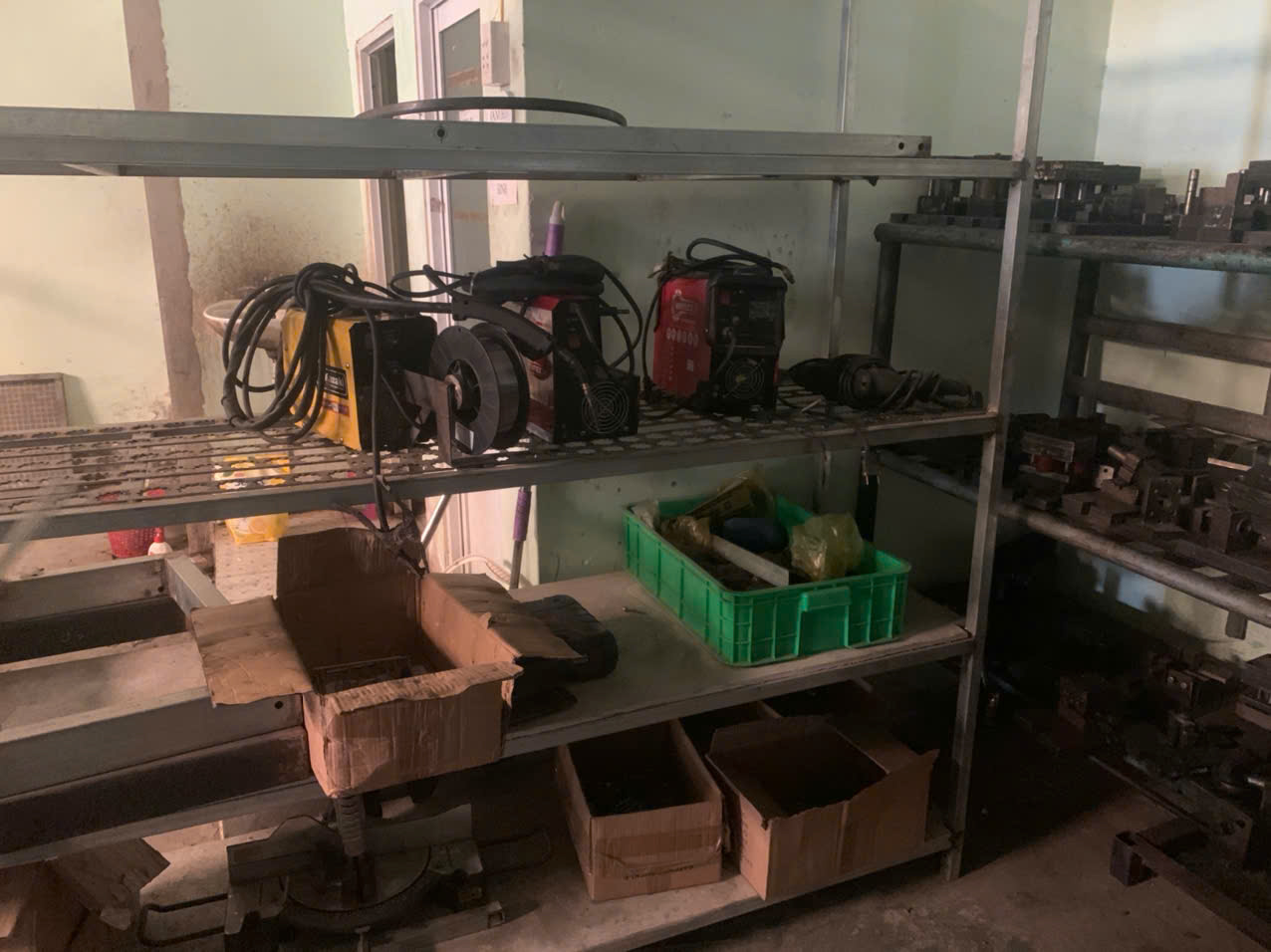
One lesson we learned early on: a factory can have the newest laser cutter and the best welding equipment, and still ship defective parts. The difference between a good fabricator and a great one is not machinery — it is process discipline.
To ensure your sheet metal fabricator delivers right-first-time quality, require documented QC processes at every production stage — incoming material inspection, in-process dimensional checks, weld quality verification, surface finish inspection, and final inspection with detailed reports tied to your drawing specifications.
Why "Right First Time" Matters More Than You Think
Every rejected shipment costs more than the parts themselves. There is the air freight for replacements. The production line downtime at your customer's plant. The expediting fees. The damaged relationship. For purchasing managers, a single quality escape can erode months of cost savings.
When we manage a sheet metal project, we build a quality plan before production starts. This plan maps every critical dimension and specification to a specific inspection step. Nothing is left to chance or to a floor supervisor's judgment.
The Five-Stage QC Framework
Here is the framework we use across our projects. It applies whether the fabricator is in China, Vietnam, or anywhere else.
| QC Stage | What Gets Checked | Method | Documentation |
|---|---|---|---|
| Incoming material | Material grade, thickness, surface condition | Mill certs, caliper measurement, visual | Material test report |
| First article inspection | All critical dimensions, tolerances | CMM, calipers, gauges | FAI report (AS9102 or equivalent) |
| In-process inspection | Bend angles, hole positions, weld quality | Go/no-go gauges, visual, weld inspection | In-process checklist |
| Surface treatment | Coating thickness, adhesion, color match | Thickness gauge, cross-cut test | Surface treatment report |
| Final inspection | Full dimensional check, cosmetic review, packaging | AQL sampling, full inspection for critical parts | Final inspection report with photos |
First Article Inspection — The Most Critical Step
The first article inspection (FAI) 8 is where you catch design-to-production gaps. Every dimension on your drawing gets measured. Every tolerance gets verified. Every material specification gets confirmed against mill certificates.
We treat the FAI as a gate. Production does not proceed until the FAI is approved by our engineer and the client. This single step prevents the majority of batch-level quality failures. It is also where precision manufacturing standards get established for the production run.
In-Process Controls for Consistency
A good FAI means nothing if the process drifts during production. Metal bending angles shift as tooling wears. Laser cutting services produce slightly different edge quality as the lens degrades. Welding services vary with operator fatigue.
Our approach is to embed in-process checkpoints at defined intervals — typically every 50 to 100 pieces for medium runs, or every 2 hours of continuous production. The operator checks a defined set of dimensions and logs the results. If anything trends out of spec, production stops for adjustment.
PPAP and Process Documentation
For clients in the automotive industry components space, we follow the Production Part Approval Process (PPAP) 9. This includes control plans, process flow diagrams, measurement system analysis, and capability studies. Even for non-automotive projects, we borrow elements of PPAP because the discipline it imposes prevents quality failures.
The bottom line: you should never accept a fabricator's verbal promise of quality. Demand the documentation. Review the inspection reports. And if possible, have someone on the ground verifying that the reports match reality.
Where can I find a global sheet metal supplier that offers open account terms to help me manage my cash flow?
A trade-off that every purchasing manager faces: you want the best fabrication quality and the shortest lead time, but you also need payment terms that do not strangle your cash flow.
Global sheet metal suppliers offering open account terms (net 30 to net 90 days) are rare, especially from Asian sources. DEWIN provides 60–90 day open account payment terms for qualified clients, removing the cash flow burden of prepayment while managing the full supply chain from fabrication through door-to-door delivery.
The Payment Terms Problem in International Sourcing
Most Asian sheet metal fabricators require 30% to 50% deposit before production, with the balance due before shipment. Some demand full payment upfront for new customers. This is standard practice, and it protects the factory from non-payment risk.
But for the buyer, this creates a cash flow squeeze. You pay for parts weeks or months before you receive them. Add ocean freight transit time, customs clearance, and inland delivery, and your cash can be tied up for 90 to 120 days before you can invoice your own customer.
How Open Account Terms Work
Open account means the supplier ships the goods, and the buyer pays later — typically net 30, net 60, or net 90 days from the invoice date or the date of shipment. This is the standard payment model in domestic U.S. trade, but it is uncommon in cross-border transactions with Asian suppliers.
We offer open account terms 10 because we understand the business model of our U.S. and European clients. Many of them are sourcing companies or engineering design firms that do not get paid by their own end-customers until the parts are delivered and accepted. Asking them to prepay a Chinese or Vietnamese factory months in advance creates unnecessary financial stress.
What It Takes to Qualify
Open account terms are not offered blindly. We have a qualification process that considers the client's business history, order volume, payment track record, and creditworthiness. Once qualified, clients receive terms of 60 to 90 days, which aligns with how they typically get paid by their own customers.
This arrangement works because we manage the supply chain solutions end-to-end. We are not a factory hoping to get paid. We are a supply chain partner with offices in Singapore, Vietnam, and China. We manage the risk across the entire chain — from OEM co-development and supplier audits to contract manufacturing, process control, final inspection, and logistics.
Comparing Payment Models
| Payment Model | Cash Flow Impact (Buyer) | Risk to Buyer | Typical Availability |
|---|---|---|---|
| 100% prepayment | Severe — cash out months early | High — no leverage if quality fails | Common with small factories |
| 30/70 (deposit/balance) | Moderate — partial prepayment | Moderate — some leverage on balance | Standard with most Asian fabricators |
| Letter of Credit (L/C) | Moderate — bank guarantees | Low — bank intermediary | Available but complex and costly |
| Open account (net 60–90) | Minimal — pay after receipt | Low — full inspection before payment | Rare from Asian suppliers; offered by DEWIN |
Why This Matters for Your Business
When you source custom metal parts on open account terms, you can receive goods, inspect them, deliver to your customer, and collect payment — all before your supplier invoice is due. This improves your working capital cycle dramatically. It also gives you leverage: if parts arrive with quality issues, you have not already paid for them.
For prototyping services and small initial orders, prepayment may be acceptable. But for ongoing production of stainless steel fabrication components, aluminum fabrication housings, or precision-manufactured brackets, open account terms from a trusted supply chain partner change the economics of your business.
Conclusion
Choosing the right sheet metal fabrication service provider depends on your project size, quality requirements, supply chain strategy, and cash flow needs. Whether you need rapid prototyping, precision manufacturing, Vietnam-based diversification, or open account terms, the right partner makes all the difference. Reach out to our team at sa***@*******ch.com to discuss your next project.
Frequently Asked Questions
How do I find the most reliable sheet metal fabrication partners for my custom engineering requirements?
A purchasing manager once told me his biggest frustration was not price — it was that suppliers kept missing critical drawing requirements and delivering non-conforming parts.
Why should I look for sheet metal service providers in Vietnam to mitigate my supply chain risks?
Last year, a long-time client asked us to shift part of their stainless steel bracket production out of China. Their concern was not quality — it was tariff exposure and single-country concentration risk.
How can I ensure my sheet metal fabricator has the strict QC processes needed to get my parts right the first time?
One lesson we learned early on: a factory can have the newest laser cutter and the best welding equipment, and still ship defective parts. The difference between a good fabricator and a great one is not machinery — it is process discipline.
Footnotes
1. Describes the quality management system standard for medical devices. ↩︎
2. Details the quality management system standard for the aerospace industry. ↩︎
3. Provides information on the quality management standard for the automotive sector. ↩︎
4. Explains the international standard for quality management systems. ↩︎
5. Defines the engineering practice of designing products for ease of manufacturing. ↩︎
6. Explains the Comprehensive and Progressive Agreement for Trans-Pacific Partnership. ↩︎
7. Official European Commission page detailing the EU-Vietnam Free Trade Agreement. ↩︎
8. Explains the process of verifying that a product meets specifications before mass production. ↩︎
9. Describes the process for formally approving production parts in the automotive industry. ↩︎
10. Defines a payment method where goods are shipped before payment is due. ↩︎