

Every week, our project team reviews incoming sheet metal fabrication 1 supplier quotes for clients, and the price gaps between vendors still surprise us — sometimes 40% or more for the exact same drawing.
Sheet metal fabrication supplier quotes vary so much because of differences in material sourcing costs, tooling assumptions, tolerance interpretation, scope inclusion, quality control rigor, estimator skill levels, and how each supplier prices risk — not because of random or arbitrary markup decisions.
Understanding what drives these gaps can save you thousands of dollars — and weeks of headaches. Let’s break down the real reasons behind the variation, section by section.
How do differences in material selection and tooling quality affect my sheet metal fabrication costs?
A buyer we work with in Ohio once received three quotes for the same mounting bracket — and the material line item alone differed by 28% across suppliers, even though all three claimed to use the same grade of stainless steel 2.
Material type and thickness are among the largest cost drivers in sheet metal fabrication because raw metal prices fluctuate 30% to 51% month over month, and suppliers lock in pricing at different times, from different mills, with different markup strategies.

Why Raw Material Prices Swing So Much
Metal is a commodity 3. Steel, aluminum, and stainless steel prices change based on global supply, tariffs, and demand cycles. When our sourcing team in Vietnam and China requests quotes from mills, the price we receive on Monday might differ from Thursday's offer. Some fabricators buy material in bulk at locked-in prices. Others buy per-project. This alone creates a gap in your quote.
If a shop quoted you in January using December steel prices, and another shop quotes in February after a price spike, the difference can be significant — even if both shops are equally efficient.
How Tooling Assumptions Drive Cost
Tooling is where quotes really diverge. Standard press brake tooling 4 is relatively cheap. But when your part geometry requires a custom die or punch, costs jump fast. Custom die sets can cost $500 to $2,000, and the forming labor per part increases by a factor of 1.3× to 1.5×.
Here is a comparison of how tooling assumptions affect per-part costs:
| Tooling Type | Typical Cost | Impact on Per-Part Labor | Best For |
|---|---|---|---|
| Standard press brake tooling | $0 – $200 setup | 1.0× (baseline) | Simple bends, common angles |
| Modified standard tooling | $200 – $500 | 1.1× – 1.2× | Slightly non-standard profiles |
| Custom die set | $500 – $2,000 | 1.3× – 1.5× | Unique part geometry, tight radii |
| Progressive stamping die 5 | $5,000 – $50,000+ | 0.3× – 0.5× at high volume | High production volume runs |
The lesson here: if one supplier assumes your part needs custom tooling and another assumes standard tooling will work, the quotes will look completely different. Neither is necessarily wrong — they are pricing risk differently.
Material Utilization Matters Too
A skilled estimator considers material utilization — how efficiently parts nest on a sheet. A shop with better nesting software can reduce waste and lower material costs. A less experienced estimator may not optimize this, leading to higher quoted material costs. When we review supplier proposals for our clients, we always ask: what is the assumed sheet size and nesting layout?
Machine time also varies by material type and thickness. Cutting 3mm mild steel is faster and cheaper than cutting 3mm stainless. Bending thicker material takes more tonnage and more time. These factors compound across every operation.
Am I paying a premium for the "right first time" quality control and PPAP documentation I need?
One of the hardest lessons our team learned early on was this: the cheapest supplier on a precision bracket project delivered parts that looked fine — until they failed dimensional inspection at the customer's incoming QC dock in Texas.
Yes, you are paying a premium for rigorous quality control and PPAP documentation, but this premium protects you from costly rework, returns, and production line shutdowns — making it the most valuable line item in any serious fabrication quote.
What PPAP and Quality Control Actually Cost
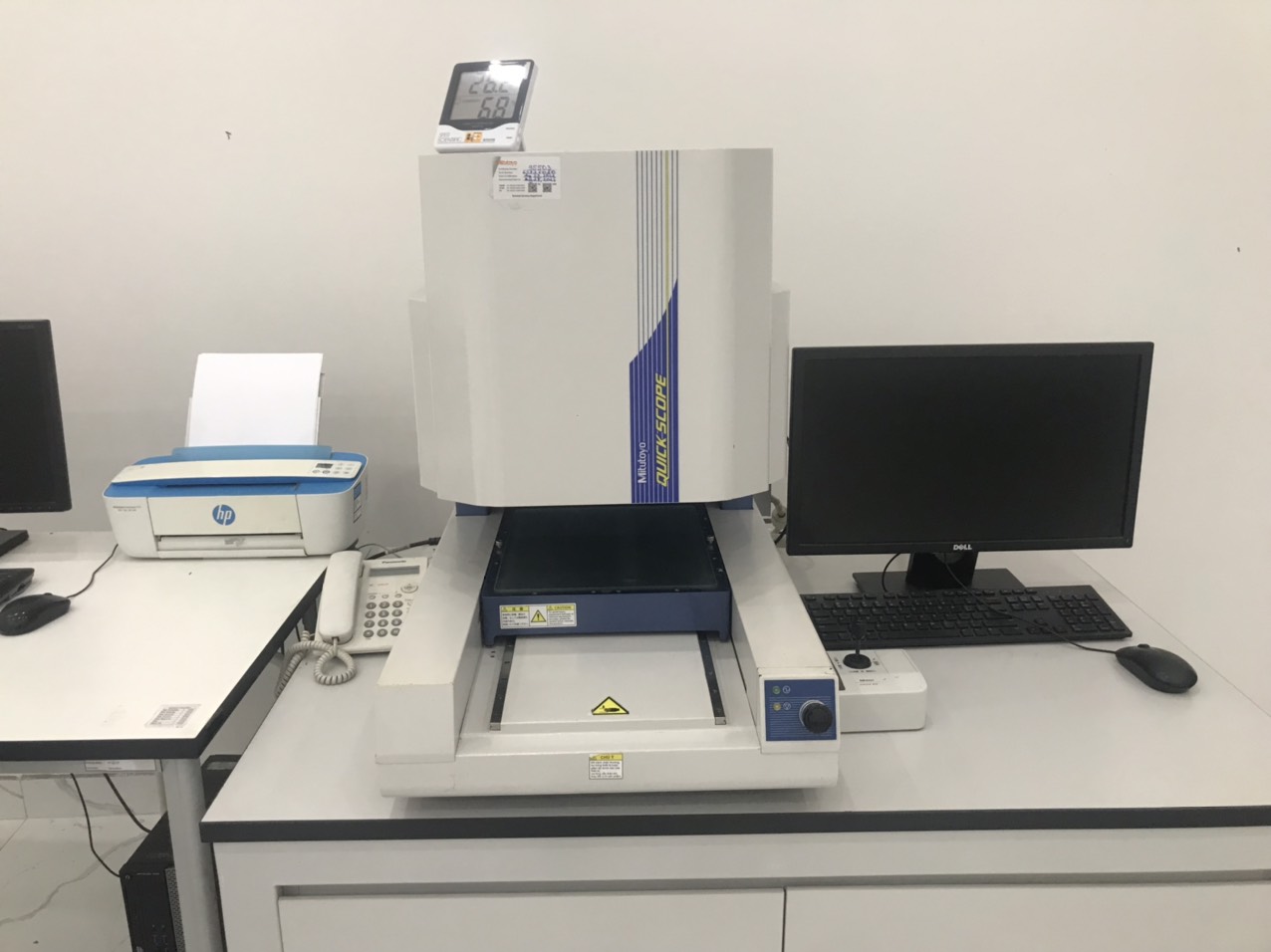
PPAP — Production Part Approval Process 6 — is not just a piece of paper. It involves dimensional reports, material certifications, process flow diagrams, control plans, capability studies, and sometimes gauge R&R. Generating this documentation requires trained quality engineers, calibrated inspection equipment (including CMM machines), and dedicated time.
Here is a breakdown of typical quality-related cost additions:
| Quality Activity | Estimated Cost Addition | Why It Matters |
|---|---|---|
| First Article Inspection (FAI) 7 | $150 – $500 per part number | Verifies the process produces conforming parts before production |
| Full PPAP Level 3 package | $500 – $2,000 per part number | Required by many OEMs; proves process capability |
| CMM inspection per lot | $50 – $200 per lot | Confirms tight tolerance requirements are held consistently |
| Material certification (mill cert) | $20 – $100 per material lot | Traces material to source; required for aerospace, medical, automotive |
| In-process SPC monitoring | Built into overhead | Catches drift before parts go out of spec |
A supplier who skips these steps can quote 15% to 25% lower. But the risk transfers to you. If parts arrive out of spec, you face rework costs, air freight charges, production delays, and damaged relationships with your end customer.
Tolerance Requirements and Inspection Intensity
Tolerance requirements directly drive inspection costs. A part with ±0.5mm general tolerances can be verified with basic tools. A part with ±0.05mm on critical features needs CMM measurement, possibly fixture-based inspection, and potentially higher scrap rates during production.
Some fabricators price this risk honestly. Others ignore it in the quote and deal with it (or don't) during production. When we manage projects for our clients, we insist on clear inspection plans before production starts. This adds cost up front — but it is the definition of "right first time."
The Hidden Cost of Skipping QC
I have seen projects where a low-bid supplier delivered parts that passed visual inspection but failed under load. The buyer had no PPAP documentation, no FAI report, and no recourse. The cost to re-source, re-manufacture, and air-freight replacement parts was three times the original order value. The cheapest quote became the most expensive decision.
How does the supplier's level of engineering support and project management impact my final quote?
Last quarter, we helped a client in Michigan redesign a sheet metal enclosure that had been quoted at $38 per unit by two suppliers. Our engineering team in China reviewed the drawing and suggested three design changes — eliminating a secondary operation, relaxing a non-critical tolerance, and consolidating two welded pieces into a single formed part. The revised quote came back at $24 per unit.
Engineering support and project management directly impact your final quote because skilled teams identify cost-saving design changes, prevent manufacturing errors, and manage timelines — reducing rework, scrap, and expedite fees that inflate total project cost.
The Estimator Skill Gap
Not all estimators are equal. An experienced estimator understands material behavior, machine capabilities, and process selection. They know when a part can be laser-cut and formed on a standard press brake versus when it needs a custom fixture. They calculate machine time accurately. They know the real cost of surface finishing and secondary operations.
An inexperienced estimator may default to conservative assumptions — quoting CMM inspection when calipers would suffice, or quoting manual welding when robotic welding is feasible. These assumptions stack up.
Here is how estimator decisions affect common cost categories:
| Decision Point | Conservative Estimate | Optimized Estimate | Potential Savings |
|---|---|---|---|
| Inspection method | Full CMM every part | CMM first article + sampling | 30% – 60% on inspection costs |
| Forming approach | Custom tooling assumed | Standard tooling confirmed | $500 – $2,000 saved on tooling |
| Welding method | Manual TIG welding | Robotic MIG welding | 20% – 40% on labor costs |
| Post-form machining | Assumed required | Eliminated via DFM review | Entire secondary operation removed |
| Tolerance interpretation | Tightest reading of drawing | Clarified with buyer | Risk premium reduced or eliminated |
Why DFM Reviews Pay for Themselves
Design for Manufacturability (DFM) reviews 8 are where engineering support shows its value. When our team reviews a drawing before quoting, we look for features that trigger cost premiums. Tight bend radii near holes. Features that require post-form drilling. Tolerances that demand fixture-based setups.
Often, two or three features account for most of the quote delta between suppliers. Eliminating even one premium operation — such as replacing post-form drilling with pre-form punching — can recover substantial cost.
Project Management as a Cost Control Tool
Strong project management keeps projects on schedule. Delays cause cascading costs: expedited shipping, overtime labor, and missed delivery windows. Our teams in Vietnam and Singapore track every milestone — from material procurement to final inspection — because a single missed checkpoint can turn an on-time delivery into an air freight emergency.
Suppliers who invest in project management charge for it. But suppliers who don't invest in it pass the cost of chaos on to you — in the form of late shipments, quality escapes, and frantic emails.
Lead time management is a direct function of project management quality. A well-managed project delivers on the quoted lead time. A poorly managed one delivers late — and late delivery often costs more than the fabrication itself.
Are hidden logistics costs and credit payment terms causing the price gap in my sourcing options?
When we first started offering open account payment terms to our U.S. clients, the reaction was immediate: buyers told us that competing suppliers in Asia almost universally required 30% to 50% upfront deposits with the balance before shipment.
Hidden logistics costs and payment terms absolutely cause price gaps because freight, packaging, duties, insurance, warehousing, and the cost of financing credit terms are handled differently by every supplier — and low quotes often exclude some of these line items entirely.
Where Logistics Costs Hide in Quotes
A quote that says "FOB factory 9" looks cheaper than one that says "DDP delivered to your warehouse." But the FOB quote does not include inland freight to port, export customs clearance, ocean freight, import duties, drayage, or final delivery. These costs are real. They just aren't in the quote.
Here is a simplified view of logistics cost components that may or may not appear in a supplier's quote:
| Cost Component | Often Included in Quote? | Typical Range (U.S.-bound, per CBM) |
|---|---|---|
| Inland transport to port | Sometimes | $50 – $200 |
| Export customs clearance | Sometimes | $30 – $100 |
| Ocean freight (Asia to U.S.) | Rarely in FOB quotes | $150 – $800+ depending on market |
| Import duties and tariffs | Rarely | 0% – 25% of declared value |
| Drayage and last-mile delivery | Rarely | $200 – $600 |
| Packaging (export-grade crating) | Sometimes | $50 – $300 per pallet |
| Cargo insurance | Rarely | 0.3% – 0.5% of cargo value |
When we provide door-to-door logistics management for our clients, every one of these costs is visible and accounted for. There are no surprises at the port.
The Real Cost of Payment Terms
Payment terms are a hidden cost driver that most buyers overlook when comparing quotes. If Supplier A requires 50% deposit and Supplier B offers 60-day open account terms, the cash flow impact is significant.
Consider a $50,000 order. With Supplier A, you tie up $25,000 immediately. With Supplier B, you receive and potentially sell the goods before payment is due. The cost of capital for that $25,000 over 60 to 90 days is real money — especially for sourcing companies managing multiple projects simultaneously.
Suppliers who offer credit terms absorb financing risk. They price it into their overhead expenses. This may make their quote slightly higher on paper — but the total cost of doing business is often lower.
Scope Gaps in Low Bids
The most dangerous hidden cost is scope exclusion. Low bids frequently miss items like:
- Surface finishing (powder coating, anodizing, plating)
- Deburring and edge treatment
- Packaging suitable for export
- Inspection and documentation
- Rework or replacement for non-conforming parts
When these items surface after production starts, they become change orders — and change orders always cost more than line items quoted upfront.
Our approach is to define the full scope before quoting. We review drawings, specifications, packaging requirements, and delivery terms with the client. Then we present a quote that covers everything. It may not be the lowest number on the page — but it is the most honest one. If you're new to this process, understanding what to consider when sourcing sheet metal fabrication for the first time can help you ask the right questions before comparing bids.
Conclusion
Comparing sheet metal fabrication supplier quotes requires looking beyond the bottom-line number at material assumptions, quality rigor, engineering depth, and total landed cost — because the cheapest quote is rarely the best value. Learning how to evaluate sheet metal fabrication supplier capabilities and qualifications can further help you make informed sourcing decisions.
Frequently Asked Questions
How do differences in material selection and tooling quality affect my sheet metal fabrication costs?
A buyer we work with in Ohio once received three quotes for the same mounting bracket — and the material line item alone differed by 28% across suppliers, even though all three claimed to use the same grade of stainless steel 2 .
Am I paying a premium for the "right first time" quality control and PPAP documentation I need?
One of the hardest lessons our team learned early on was this: the cheapest supplier on a precision bracket project delivered parts that looked fine — until they failed dimensional inspection at the customer's incoming QC dock in Texas.
How does the supplier's level of engineering support and project management impact my final quote?
Last quarter, we helped a client in Michigan redesign a sheet metal enclosure that had been quoted at $38 per unit by two suppliers. Our engineering team in China reviewed the drawing and suggested three design changes — eliminating a secondary operation, relaxing a non-critical tolerance, and consolidating two welded pieces into a single formed part. The revised quote came back at $24 per unit.
Footnotes
1. Replaced 404 Wikipedia link with an authoritative guide on sheet metal fabrication basics. ↩︎
2. Replaced unknown HTTP status link with the Wikipedia page for stainless steel, a preferred authoritative source. ↩︎
3. Offers insights into global metal markets and commodity pricing. ↩︎
4. Replaced 404 link with a comprehensive guide on press brake tooling. ↩︎
5. Replaced 404 link with the Wikipedia page for progressive stamping, a preferred authoritative source. ↩︎
6. Defines PPAP and its role in ensuring consistent part quality in manufacturing. ↩︎
7. Replaced 404 link with the Wikipedia page for First Article Inspection, a preferred authoritative source. ↩︎
8. Replaced unknown HTTP status link with the Wikipedia page for Design for Manufacturability, a preferred authoritative source. ↩︎
9. Clarifies the responsibilities and cost implications of the FOB Incoterm. ↩︎