Wire EDM Machining in Vietnam: Capabilities, Costs & Tolerances Guide (2026)
February 28, 2026 · 15 min read
Wire EDM (Electrical Discharge Machining) is one of the most misunderstood processes in custom parts manufacturing. Many US procurement managers default to CNC milling or laser cutting when wire EDM would deliver tighter tolerances, better surface finishes, and lower per-part costs — especially for hardened materials, thin slots, and complex 2D profiles that conventional cutting tools can't handle.
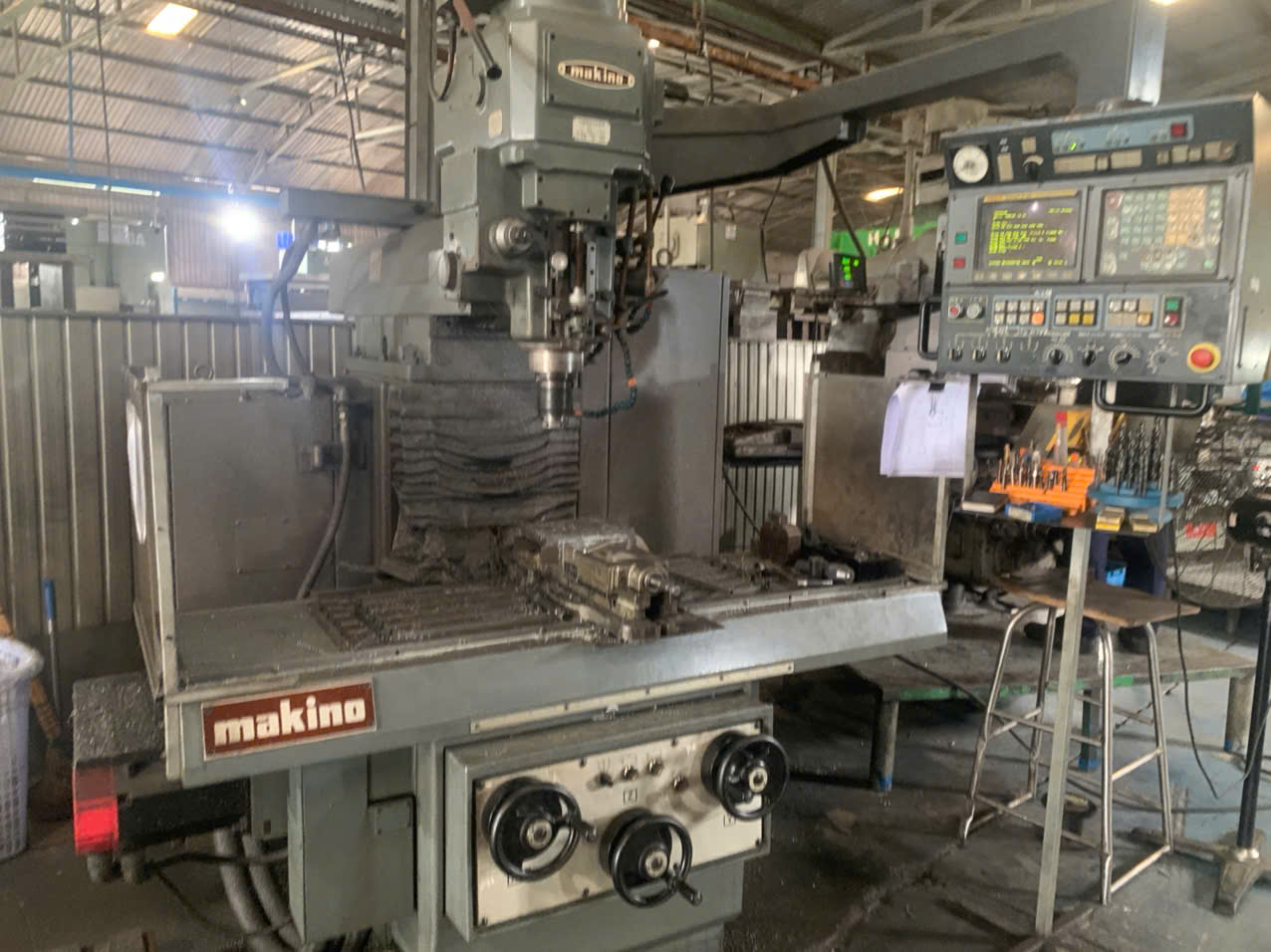
Vietnam's wire EDM capabilities have expanded significantly since 2023, with top shops now running Mitsubishi MV series, Sodick ALC/ALN lines, Makino U-series, and Fanuc Robocut machines — the same equipment you'd find in any Tier 1 tool & die shop in the US or Japan. This guide covers exactly what you can source, what it costs, and when wire EDM is the right call for your parts.
Wire EDM cuts any electrically conductive material with a fine electrode wire and electrical sparks, delivering tolerances to ±0.002 mm and burr-free edges that CNC milling and laser cutting can't match on hardened steel. Vietnam's top shops run Mitsubishi, Sodick, Makino, and Fanuc wire EDM machines.

Inside a Vietnam Technology Manufacturing Plant — CNC & Automation
Watch on YouTube
Real footage from an audited DEWIN partner factory in Vietnam.
What Is Wire EDM and How Does It Work?
Wire EDM uses a thin brass or coated wire (typically 0.10–0.30mm diameter) as an electrode, running continuously through the workpiece while submerged in deionized water. Electrical sparks between the wire and workpiece erode material with zero mechanical contact — meaning zero cutting forces, no tool deflection, and the ability to machine any electrically conductive material regardless of hardness.
Wire EDM runs a 0.10–0.30 mm brass wire through a submerged, conductive workpiece while electrical sparks erode material with zero mechanical contact. Because there is no cutting force or tool deflection, it machines any conductive metal — however hard — into precise 2D profiles.
The process works like a bandsaw made of electricity: the wire traces a programmed 2D path through the material, and the CNC controller adjusts spark parameters in real-time to maintain the desired gap (typically 0.01–0.05mm per side). Modern machines can taper the wire up to ±30° for angled cuts or gear profiles.
Wire EDM vs Sinker EDM
Don't confuse wire EDM with sinker (ram/plunge) EDM. Sinker EDM uses a shaped electrode to erode a cavity — it's for mold cavities, blind holes, and 3D shapes. Wire EDM cuts through the full thickness of the workpiece, producing 2D profiles with extrusion-like geometry. Both are available in Vietnam, but wire EDM is far more commonly outsourced for custom parts.
Achievable Tolerances & Surface Finish
This is where wire EDM shines — and where it often beats CNC milling on precision parts:
| Parameter | Standard (1 cut) | Fine (2-3 skim cuts) | Ultra-precision (4+ cuts) |
|---|---|---|---|
| Dimensional tolerance | ±0.025mm | ±0.005mm | ±0.002mm |
| Surface finish (Ra) | Ra 2.5–3.2 µm | Ra 0.8–1.6 µm | Ra 0.1–0.4 µm |
| Corner radius (internal) | R0.15mm | R0.10mm | R0.05mm |
| Cutting speed | 200–300 mm²/min | 80–150 mm²/min | 30–60 mm²/min |
Key insight for buyers: Each additional skim pass improves surface finish and accuracy but roughly halves the cutting speed. For functional surfaces (bearing fits, seal grooves), specify 2-3 skim cuts. For cosmetic or ultra-precision work (optical mounts, gauge components), specify 4+ cuts and expect 3-4× longer cycle times.
Materials: What Can Be Wire EDM'd?
Any electrically conductive material. That's the only requirement. Unlike CNC milling where hardened steel destroys endmills, wire EDM machines pre-hardened tool steel at the same speed as aluminum. Here's what Vietnam shops commonly wire-cut:
| Material | Common Grades | Relative Cut Speed | Notes |
|---|---|---|---|
| Tool steel | D2, A2, S7, H13, P20 | 1.0× (baseline) | Most common application — cut after hardening to HRC 58-62 |
| Stainless steel | SS304, SS316, 17-4 PH | 0.9× | Excellent results; no work-hardening issues unlike milling |
| Aluminum | 6061-T6, 7075-T6, 2024 | 1.3× | Faster cut, but CNC milling usually cheaper for aluminum |
| Titanium | Ti-6Al-4V (Grade 5) | 0.7× | Wire EDM avoids the heat issues of conventional titanium machining |
| Carbide | Tungsten carbide (WC) | 0.4× | One of the only ways to machine carbide to tight tolerances |
| Copper & brass | C110, C360 | 1.4× | Very fast; used for electrodes and connectors |
| Inconel / Hastelloy | IN718, IN625 | 0.5× | Wire EDM is often the only economical option for superalloys |
Critical note: Wire EDM does not work on non-conductive materials — no plastics, ceramics (unless conductive), or glass. For those, you need laser cutting or waterjet.
Wire EDM Costs in Vietnam (2026 Pricing)
Wire EDM pricing in Vietnam is driven by machine-hour rate, wire consumption, and cycle time. Here's what you should expect in 2026:
- Machine hour rate: $12–$20/hour in Vietnam vs $45–$80/hour in the US. This is the single biggest cost advantage.
- Wire cost: Brass wire ≈ $4–6/kg, coated wire (for fine finishes) ≈ $8–15/kg. A typical job uses 3–8 kg of wire.
- Programming/setup: $30–$80 per setup in Vietnam (vs $100–$250 in the US).
- Deionized water & filtration: Built into the hourly rate.
Cost Examples: Real Parts
| Part | Material | Thickness | Vietnam Price | US Price |
|---|---|---|---|---|
| Stamping die punch (D2, HRC 60) | D2 tool steel | 25mm | $8–$15/piece | $30–$55/piece |
| Injection mold insert (P20) | P20 pre-hardened | 40mm | $20–$40/piece | $65–$120/piece |
| Spline/keyway profile (shaft) | 4140 steel | 50mm length | $12–$25/piece | $40–$80/piece |
| Carbide wear block | Tungsten carbide | 15mm | $25–$50/piece | $80–$150/piece |
Volume pricing: At 100+ identical pieces, Vietnam wire EDM shops can stack-cut (multiple blanks clamped together), reducing per-part cost by 30–50%. This is especially effective for thin parts under 10mm thickness.
When to Choose Wire EDM Over CNC Milling or Laser Cutting
Choosing between wire EDM, CNC milling, and laser cutting isn't always obvious. Here's a decision framework based on what we see from hundreds of RFQs:
Choose Wire EDM When:
- Material is hardened (>HRC 45): CNC milling destroys tools on hardened steel. Wire EDM doesn't care about hardness — it machines HRC 62 tool steel as easily as mild steel.
- You need internal sharp corners: CNC milling always leaves a radius equal to the cutter diameter. Wire EDM can produce internal corners down to R0.05mm with fine wire.
- Tight tolerances on thin walls: No cutting forces means zero deflection on thin sections. Wire EDM holds ±0.005mm on walls as thin as 0.1mm.
- Complex 2D profiles through full material thickness: Gears, splines, custom die profiles, keyways, and slotted features.
- Zero burr requirement: Wire EDM produces essentially burr-free edges — a significant advantage for medical and hydraulic components.
- Tight-slot features: Need a 0.3mm wide slot? Wire EDM can cut it. CNC milling requires an endmill that small (fragile, expensive, slow).
Choose CNC Milling Instead When:
- Material is soft (aluminum, mild steel, plastic): CNC milling is 10–50× faster on soft materials and much cheaper per part.
- 3D surfaces are needed: Wire EDM produces 2D profiles (with optional taper). For sculptured 3D surfaces, you need CNC milling or sinker EDM.
- Large material removal: If you're hogging out a block to make a pocket, milling is dramatically faster.
- Part thickness exceeds 300mm: Wire EDM slows exponentially with thickness. Most Vietnam shops max out at 400–500mm.
Choose Laser Cutting Instead When:
- Sheet metal under 20mm: Fiber laser cutting is 20–100× faster than wire EDM on thin sheet. Use wire EDM only when laser tolerances (±0.1mm) aren't tight enough.
- Non-conductive materials: Laser cuts plastic, wood, ceramics — wire EDM cannot.
- High volume with relaxed tolerances: Laser cutting at $0.30–$1.00/meter of cut vs wire EDM at $3–$8/meter makes laser the clear winner when ±0.05mm tolerance is sufficient.
How to Specify Wire EDM Parts in Your RFQ
Most RFQ problems with wire EDM come from missing information. Include these in every wire EDM request:
- Material & hardness: "D2 tool steel, heat treated to HRC 58-60" — not just "D2 steel." Wire EDM is often done after heat treatment, so hardness matters.
- Tolerance per feature: General tolerance ±0.025mm, critical features ±0.005mm. Mark which surfaces need skim cuts.
- Surface finish requirement: "Ra 1.6 µm on die clearance faces, Ra 3.2 µm elsewhere." Over-specifying finish drives up cost via extra skim passes.
- Threading holes: Wire EDM needs a start hole — either pre-drilled (you provide) or the shop drills them. Specify if the shop should add start holes.
- Taper angle (if any): "3° taper on clearance profile" — wire EDM can taper but it must be called out.
- Part thickness: Always noted on the drawing but double-check it's clear — this directly determines cycle time and cost.
- Quantity & batch schedule: Stack-cutting options change dramatically at 50+ pieces.
Wire EDM Equipment in Vietnam
The quality of your wire EDM parts depends heavily on the machine. Here's what to look for when evaluating Vietnam suppliers:
- Tier 1 machines (best accuracy): Mitsubishi MV2400R/S, Sodick ALN600G/ALC600G, Makino U6 H.E.A.T., Fanuc Robocut α-CiC series. These machines hold ±0.002mm and achieve Ra 0.1 µm. Expect to find these at dedicated tool & die shops and export-focused manufacturers.
- Tier 2 machines (good accuracy): Sodick AQ series, Mitsubishi FA-V series, Seibu M500S. Reliable ±0.005mm tolerance. Common in mid-tier Vietnamese shops.
- Budget machines (adequate): Chinese-made DK77 series, Topscnc, Suzhou Sanguang. ±0.01–0.015mm accuracy. Fine for less critical work but not for precision tooling.
Ask your supplier which wire EDM machines they run. A shop with Sodick or Mitsubishi machines and a temperature-controlled room (±1°C) signals serious precision capability.
Common Wire EDM Applications We Source from Vietnam
- Stamping die components: Punches, die inserts, strippers, and guide plates in hardened D2/SKD11. This is the #1 application — Vietnam's mold & die industry is heavily wire EDM dependent.
- Injection mold inserts: Core pins, shut-off inserts, and vent slots where tolerances under ±0.01mm are standard.
- Gear profiles: Small-batch custom gears where hobbing tooling isn't justified. Wire EDM produces involute profiles to AGMA 10-11 quality at quantities of 1–500 pieces.
- Splines & keyways: Internal splines and keyways in hardened shafts that can't be broached after heat treatment.
- Medical instrument components: Surgical tool profiles, implant fixtures, and bone plate cutting guides requiring burr-free edges and biocompatible materials (Ti-6Al-4V, 17-4 PH).
- Aerospace brackets & fittings: Titanium and Inconel components where conventional machining causes excessive tool wear.
- Extrusion dies: Complex profile dies in H13 tool steel — wire EDM is the standard method worldwide.
- Carbide tooling: Custom carbide inserts, wear plates, and nozzles that can't be ground to complex shapes.
Vietnam Wire EDM: Tariff & Trade Advantages
Wire EDM parts sourced from Vietnam benefit from the same trade advantages as other manufactured components:
- No Section 301 tariffs: Chinese-made wire EDM parts face 25% tariffs. Vietnam-made parts do not — an immediate 25% landed cost advantage on top of lower base pricing.
- Most-Favored-Nation (MFN) rates: Vietnam wire EDM parts under HTS 8207 (tool parts) or 8466 (machine parts) typically face 0–3.9% US import duty vs 25% from China.
- CPTPP benefits: If your company operates in a CPTPP member country (Canada, Japan, Australia, etc.), Vietnam-made parts may qualify for zero-duty access.
- Lead time: 5–10 business days for wire EDM parts + 3–5 days air freight or 25–30 days sea freight to US West Coast.
Quality Control for Wire EDM Parts
Wire EDM parts often have tight tolerances — which means inspection must be equally rigorous. What to require from your Vietnam supplier:
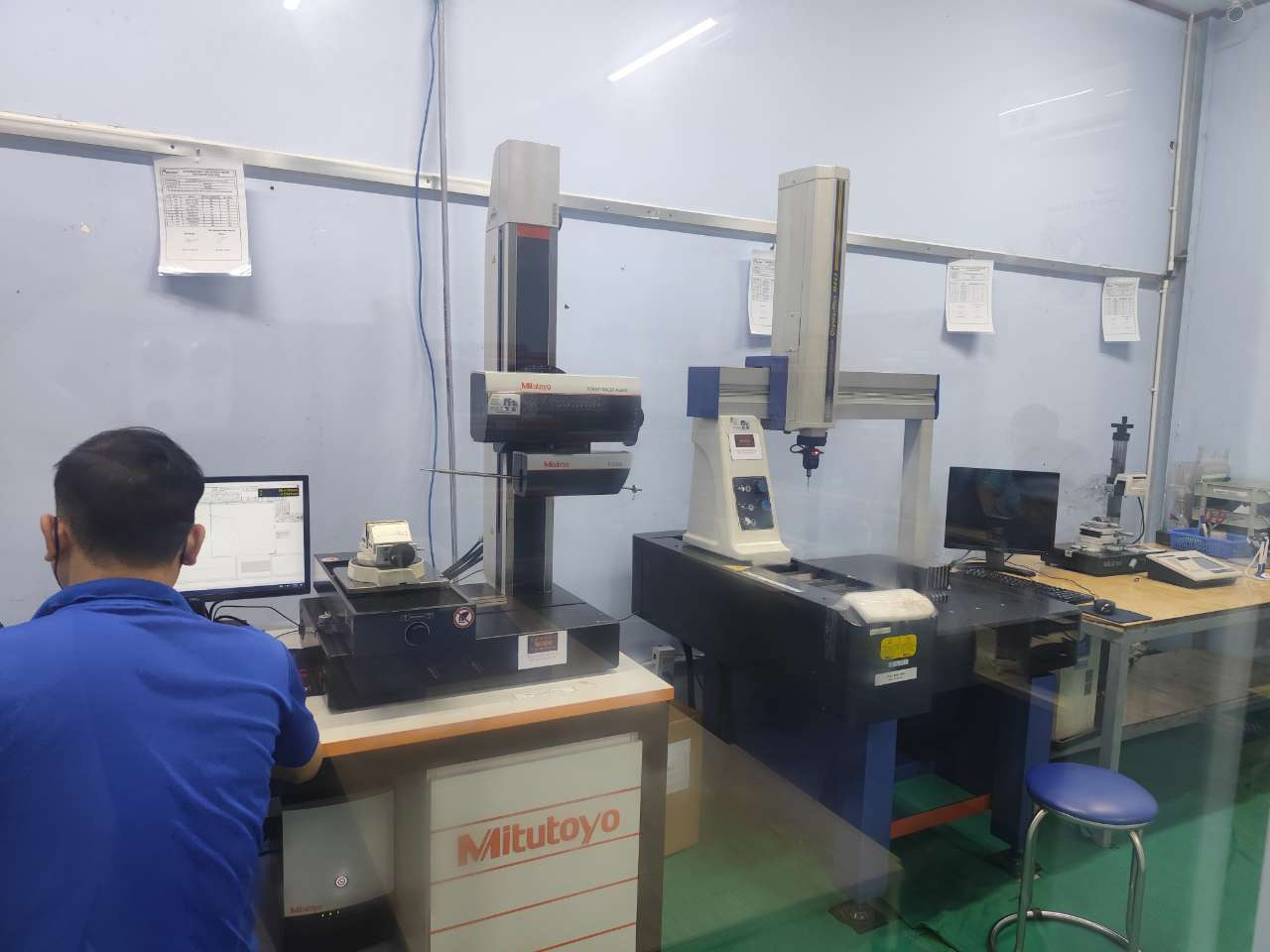
- CMM inspection report: For critical dimensions ±0.01mm or tighter, require a CMM (Coordinate Measuring Machine) report — not just calipers. Most export-focused Vietnam shops have Mitutoyo, Hexagon, or Zeiss CMMs.
- Profile projector / optical comparator: For 2D profile verification against the DXF or STEP file. This catches subtle profile errors that CMM point measurement can miss.
- Surface roughness tester: If you specify Ra values, require a Mitutoyo SJ or equivalent profilometer reading on the inspection report.
- First article inspection (FAI): Always require an FAI for new wire EDM parts. The $50–$100 cost is negligible compared to a bad batch of hardened tool steel.
Get a Wire EDM Quote from Vietnam
DEWIN works with vetted wire EDM shops across Ho Chi Minh City and Binh Duong Province — the heart of Vietnam's mold & die manufacturing cluster. Whether you need 10 stamping die inserts or 1,000 custom spline profiles, we can source it with full inspection documentation.
Request a Wire EDM Quote
Upload your 2D DXF/DWG or 3D STEP file. Include material, hardness, tolerances, and quantity. We'll respond within 24–48 hours with pricing from qualified Vietnam wire EDM shops.
Get Your Quote →Last updated: February 28, 2026. All pricing reflects current Vietnam market rates and is subject to material costs and order volume. Contact us for a project-specific quote.
Frequently Asked Questions
Does specifying ±0.002mm instead of ±0.025mm cost much more?
Tightening tolerance to ±0.002mm raises cost mainly through cycle time: ultra-precision work needs 4+ skim cuts, and each additional skim pass roughly halves the cutting speed, giving 3–4× longer cycles than a single ±0.025mm cut. Cutting speed falls from 200–300 mm²/min at one cut to 30–60 mm²/min at four or more, so reserve tight tolerances for features that need them.
How do I lower per-piece wire EDM cost on a repeat 100-piece order?
Stack cutting is the main lever — at 100+ identical pieces, Vietnam wire EDM shops clamp multiple blanks together and cut them as one, reducing per-part cost by 30–50%. The saving is largest on thin parts under 10mm thickness, and stack-cutting options already start changing the quote at 50+ pieces.
Do I need to pre-drill start holes for internal wire EDM cutouts?
Wire EDM needs a start hole, and your RFQ should state whether you supply it pre-drilled or the shop adds it. Most wire EDM quoting problems come from missing information of exactly this kind — material hardness, per-feature tolerance, surface finish by area, taper angle, part thickness, and quantity all belong in the request.
How thick a part can Vietnamese wire EDM shops cut?
Most Vietnam wire EDM shops max out at 400–500mm of part thickness, but cutting slows exponentially as thickness rises, so CNC milling usually becomes the better choice beyond about 300mm. Within that range, thickness directly determines cycle time and cost, which is why it must be unambiguous on the drawing.