Custom Electronics Enclosure Manufacturing in Vietnam: CNC, Sheet Metal & Die Cast
March 1, 2026 · 13 min read
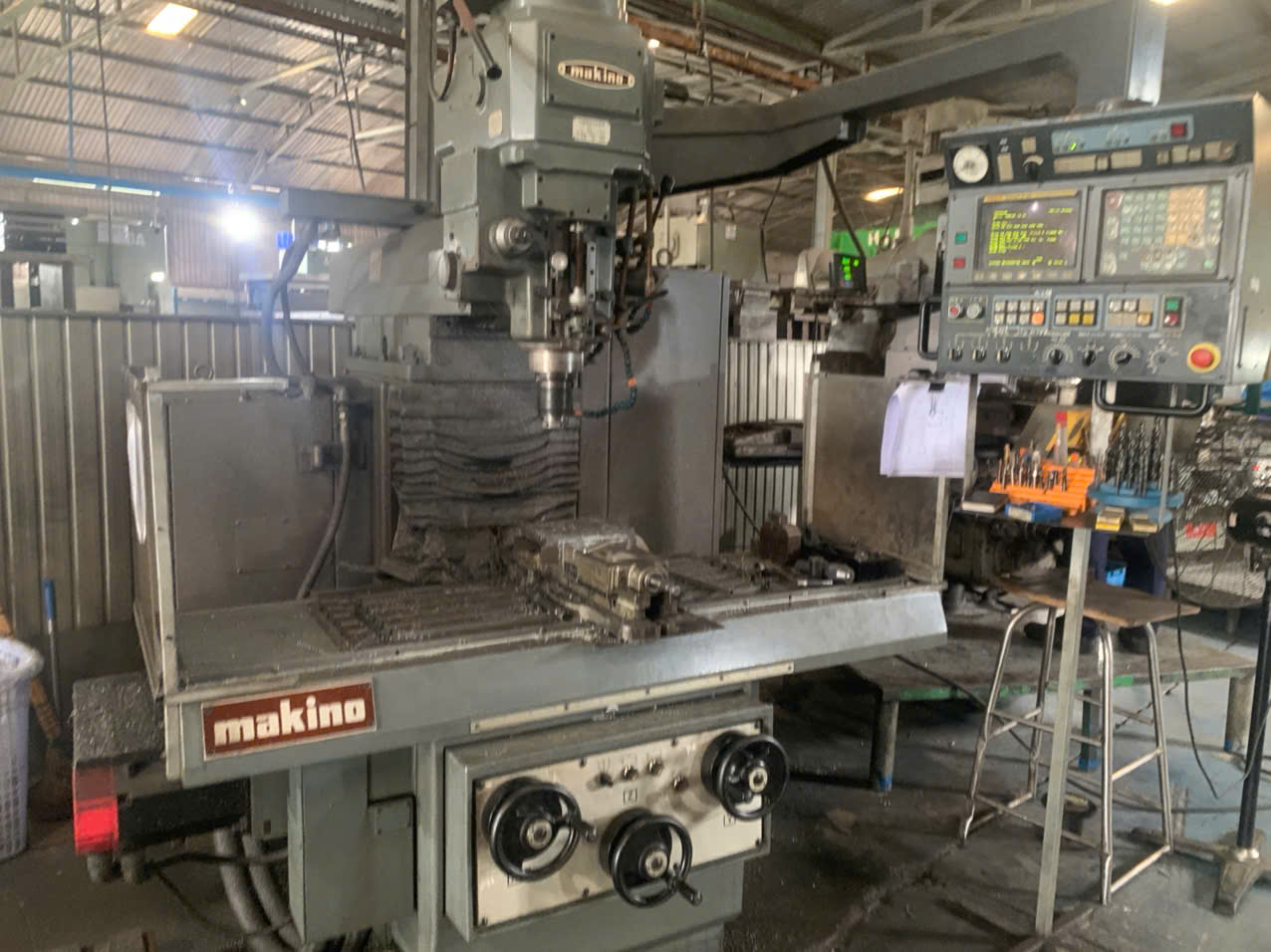
Every hardware startup and electronics OEM needs enclosures — the aluminum box, plastic housing, or sheet metal chassis that protects the PCB and defines the product's look and feel. It's one of the most common custom parts sourced from Asia, and Vietnam has emerged as a top alternative to China for US companies building IoT devices, industrial controllers, networking equipment, and consumer electronics.
This guide covers which manufacturing process to use at what volume, real 2026 pricing from Vietnam factories, DFM rules that prevent costly redesigns, and how to spec enclosures for reliable offshore production.
The right enclosure process depends on annual volume: CNC machining for 1–5,000 units, sheet metal for 100–50,000, and die casting above 5,000. Vietnam produces all three at 40–60% below US pricing, with no Section 301 tariff on Vietnam-origin housings.

Inside a Vietnam Technology Manufacturing Plant — CNC & Automation
Watch on YouTube
Real footage from an audited DEWIN partner factory in Vietnam.
Choosing the Right Process for Your Volume
The manufacturing process depends entirely on your annual volume. Getting this wrong is the most expensive mistake in enclosure sourcing:
Match process to volume to avoid the costliest enclosure mistake: CNC machining wins for prototypes and low volume, sheet metal for mid-volume chassis, and die casting for high-volume consumer parts once tooling amortizes. The crossover points hinge on your annual quantity.
CNC Machined Enclosures (1–5,000 units/year)
Best for: Prototypes, low-volume production, premium devices, heatsink enclosures, ruggedized equipment.
- Materials: AL6061-T6 (most common), AL6063-T5 (better anodizing), AL7075-T6 (high strength), AL5052 (marine/corrosion)
- Vietnam pricing (2026):
- Simple box (150×100×50mm, pocketed): $18–35/unit at 100 qty, $10–20 at 500 qty
- Complex housing (multiple pockets, threaded inserts, tight fits): $40–90/unit at 100 qty, $25–50 at 500 qty
- Heatsink enclosure (finned exterior, internal pockets): $50–120/unit at 100 qty
- Tolerances: ±0.05 mm standard, ±0.025 mm achievable for mating features
- Lead time: 10–15 days for first articles, 7–12 days for repeat orders
- Typical finish: Bead blast + Type II anodize (black or clear) — add $1.50–4.00/unit
Sheet Metal Enclosures (100–50,000 units/year)
Best for: Server chassis, rack-mount equipment, industrial control panels, cost-sensitive housings.
- Materials: SGCC galvanized steel (1.0–2.0mm), AL5052 (1.0–3.0mm), SUS304 stainless (0.8–2.0mm)
- Vietnam pricing:
- Simple U-shaped chassis (300×200×100mm, steel): $5–12/unit at 1,000 qty
- 4-piece enclosure with hardware (steel + powder coat): $8–20/unit at 1,000 qty
- Aluminum sheet enclosure with silk-screen printing: $10–25/unit at 1,000 qty
- Tooling cost: $300–2,000 for progressive dies (bending tools usually free)
- Lead time: 15–20 days including tooling, 7–10 days for repeat orders
Die Cast Enclosures (5,000–500,000+ units/year)
Best for: High-volume consumer electronics, outdoor equipment (IP67), telecom housings, LED drivers.
- Materials: ADC12 (most common, good castability), A380 (stronger), Zamak 3 (zinc, tighter tolerances)
- Vietnam pricing:
- Small enclosure (80×60×30mm, ADC12): $0.80–1.80/unit at 10,000 qty
- Medium enclosure (200×150×60mm): $2.50–5.50/unit at 10,000 qty
- Large telecom housing (300×200×80mm): $4.00–9.00/unit at 10,000 qty
- Tooling cost: $3,000–15,000 for die cast mold (amortized over production)
- Tolerances: ±0.1 mm as-cast, ±0.025 mm on CNC-machined mating surfaces
- Lead time: 25–35 days for tooling + first articles, 10–15 days for production runs
DFM Rules for Electronics Enclosures
These design-for-manufacturing rules prevent the most common (and expensive) enclosure production issues:
CNC Machined Enclosures
- Wall thickness ≥1.5 mm: Thinner walls chatter during machining, increasing scrap. For pocket depths >3× width, use 2.0 mm minimum
- Internal corner radii ≥ tool radius: A 6 mm end mill leaves 3 mm corner radius. If your PCB needs sharp corners, add relief cuts or use a smaller tool (costs more cycle time)
- Draft angles not required (unlike die casting) — CNC can machine vertical walls. This is CNC's key advantage for enclosures with tight PCB fits
- Thread inserts over tapped holes: For screws that will be opened/closed repeatedly (service panels), use helicoil or press-fit brass inserts ($0.05–0.15 each) instead of tapping into aluminum
- Combine lid + body from one billet: For IP65+ sealing, machine lid and body from the same piece of stock, then saw apart. This guarantees flatness match within 0.02 mm
Sheet Metal Enclosures
- Bend relief ≥ material thickness: Without relief slots, bends tear at edges. Add 1× material thickness relief at bend terminations
- Minimum flange length = 4× material thickness: A 1.5 mm sheet needs ≥6 mm flanges or the brake can't grip it
- Hole-to-bend distance ≥ 3× material thickness + bend radius: Holes too close to bends deform. For 1.5 mm steel with 2 mm bend radius: minimum 6.5 mm from bend line
- Use PEM inserts for threads: Self-clinching nuts (PEM S-M3-1, ~$0.02 each) are stronger and more repeatable than tapped sheet metal
Die Cast Enclosures
- Draft angle ≥ 1° on all walls: 2° preferred for deep features. Zero-draft die casting exists but doubles mold cost
- Uniform wall thickness (2.0–3.5 mm for aluminum): Thick-to-thin transitions cause porosity and sink marks. If variable thickness is needed, transition gradually over ≥3× the thickness change
- Machine mating surfaces: As-cast surfaces are ±0.1 mm. For IP-rated O-ring grooves and PCB mounting faces, add 0.3–0.5 mm machining stock and specify CNC finishing to ±0.025 mm
IP Rating and Sealing: What It Actually Costs
IP ratings are the most misunderstood spec in enclosure procurement. Here's what each level costs:
IP rating drives real cost: an IP54 splash-proof seal adds only about $0.50–2.00 per unit, but IP67 immersion protection can add $3–8 because it demands precision O-ring grooves and 100% leak testing. Don't over-specify sealing for indoor equipment.
- IP54 (dust protected, splash proof): Standard gasket channel + neoprene gasket. Adds $0.50–2.00/unit to enclosure cost. Sufficient for indoor industrial equipment
- IP65 (dust tight, low-pressure water jets): Machined O-ring groove (±0.05 mm), silicone O-ring, stainless fasteners. Adds $2.00–5.00/unit. Most outdoor electronics
- IP67 (dust tight, temporary immersion 1m/30min): Precision O-ring groove (±0.025 mm), EPDM or silicone O-ring, controlled fastener torque. Adds $3.00–8.00/unit. Requires 100% testing
- IP68 (continuous submersion): Custom seal design, often potting or overmolded gaskets. Adds $5.00–15.00/unit. Requires pressure testing every unit
Cost-saving tip: Don't specify IP67 for indoor equipment. The jump from IP54 to IP67 can add $5–10/unit due to tighter machining tolerances on the seal groove and 100% testing requirements.
Vietnam vs. Instant-Quote Platforms for Enclosures
US instant-quote platforms are great for prototypes but expensive at production volumes:
- Instant-quote platform prototype (1–10 units): Competitive pricing, 5–7 day delivery. Hard to beat for speed
- Instant-quote platform production (100+ units): Well above dedicated-factory rates. At production volumes, Vietnam typically delivers factory-direct pricing without a broker-platform markup
- Vietnam advantage at scale: Dedicated production cells, consistent quality across runs, in-house finishing, and no Section 301 tariff surcharges
- When to switch: Once you're past first article approval and ordering 50+ units per run, Vietnam sourcing typically saves 40–60%
What to Include in Your Enclosure RFQ
- 3D model (STEP preferred): Include internal features, not just the envelope. STP + 2D drawing PDF for critical dimensions
- Material and alloy: "AL6061-T6" — not "aluminum"
- Surface finish: "Bead blast + Type II anodize, black, 15 μm per MIL-A-8625" — see our surface finishing cost guide
- IP rating (if applicable): With gasket material preference and test requirements
- Quantity tiers: Quote 100/500/1,000 — volume breaks are significant
- Marking: Laser engraving, silk screening, or pad printing for logos, regulatory marks, serial numbers
- Assembly: Will you ship PCBs for box-build assembly, or just need empty enclosures?
- Packaging: Individual poly bags, foam trays, or anti-static packaging for ESD-sensitive assemblies
Get a Custom Enclosure Quote from Vietnam
From CNC machined aluminum housings to high-volume die cast enclosures — our Vietnam manufacturing partners produce enclosures for US hardware companies, industrial OEMs, and IoT startups at 40–60% below domestic pricing.
Send your 3D model and specs to for a quote within 48 hours.
Frequently Asked Questions
What tolerance can I expect on a die cast enclosure's PCB mounting face?
As-cast die cast surfaces hold ±0.1 mm, so PCB mounting faces and IP-rated O-ring grooves need 0.3–0.5 mm of machining stock plus a CNC finishing callout to reach ±0.025 mm. CNC-machined enclosures hold ±0.05 mm as standard and ±0.025 mm on mating features, which is why tight PCB fits at low volume are usually machined.
How much does an IP67 rating add to enclosure cost versus IP54?
IP67 sealing adds $3.00–8.00 per unit against $0.50–2.00 for IP54, so stepping up can add $5–10 per unit. That premium buys a precision O-ring groove machined to ±0.025 mm, an EPDM or silicone O-ring, controlled fastener torque, and 100% testing. Indoor industrial equipment rarely justifies it.
When should I switch from an instant-quote platform to a Vietnam factory?
Fifty or more units per run, after first article approval, is the switching point where Vietnam sourcing typically saves 40–60%. Instant-quote platforms are hard to beat for 1–10 prototype units with 5–7 day delivery, but at 100 units and above their pricing sits well above dedicated-factory rates.