How to Choose Between a Contract Manufacturer and OEM for Stamping Parts
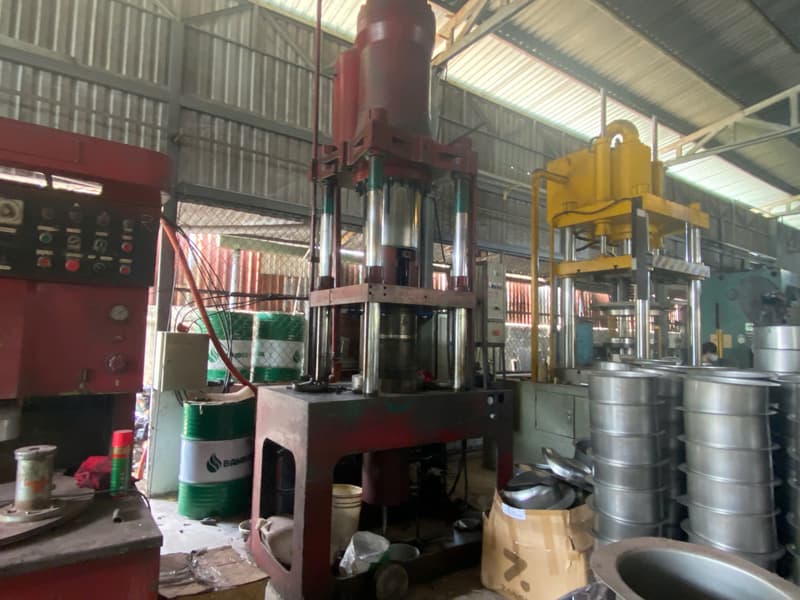
Choosing between a contract manufacturer (CM) and an OEM-style supplier for metal stamping depends on design ownership, tooling rights, quality control expectations, and customization scope. Contract manufacturing fits custom components built to buyer drawings, whereas OEM platforms suit standard off-the-shelf components with supplier-owned dies. Sourcing through sheet metal stamping capabilities enables full IP control and flexible production scaling.
Key Differences Between Contract Manufacturers and OEM Suppliers
A contract manufacturer builds stamped parts according to your engineering drawings, material specifications, and tolerance callouts, leaving design and IP ownership entirely with your organization. An OEM-style supplier offers standard catalog parts or components built on their proprietary platform, where the supplier retains the core design and tooling assets.
In automotive and industrial supply chains, Tier 2 suppliers commonly produce metal stampings and custom weldments for Tier 1 integrators. In this relationship, the Tier 2 stamper functions as a contract manufacturer. Conversely, a supplier offering off-the-shelf mounting brackets or standard hardware functions as an OEM supplier.
flowchart TD
    A[Stamping Component Need] --> B{Do you own the design & drawings?}
    B -- Yes --> C[Select Contract Manufacturer]
    B -- No --> D{Does a standard catalog part meet specs?}
    D -- Yes --> E[Select OEM Platform Supplier]
    D -- No --> C
    C --> F[Negotiate Tooling Ownership & NRE Terms]
    C --> G[Establish Inspection & Quality Protocols]
    E --> H[Verify Platform Customization Constraints]
Tooling Ownership and Financial Risk
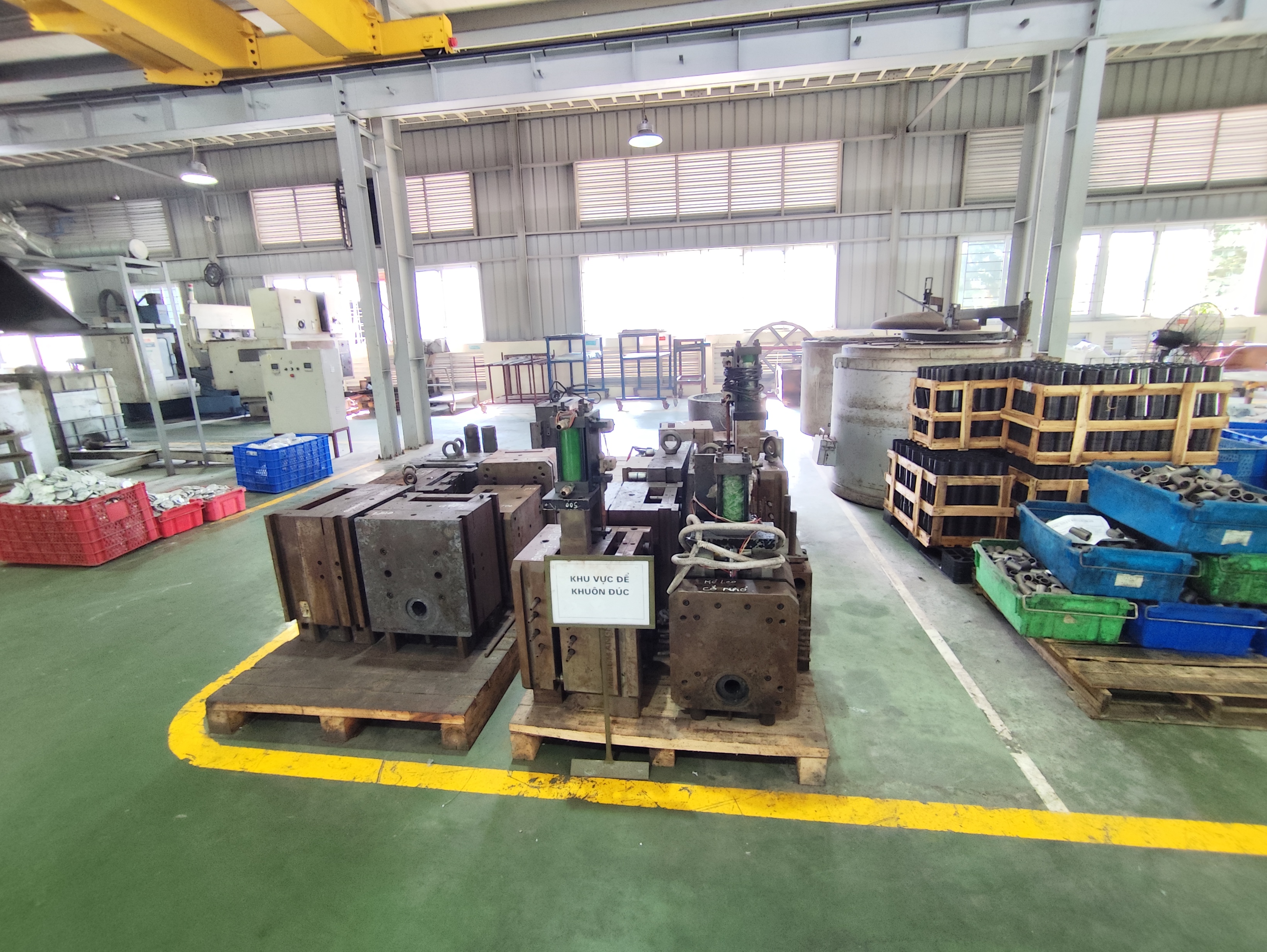
Stamping dies represent a major capital expense (NRE). When you engage a contract manufacturer and pay for the die, explicit contractual terms establish that your organization owns the tooling. This ownership provides switching leverage if supply chain adjustments become necessary. When partnering with an OEM supplier, the supplier typically owns the tooling, which significantly lowers initial startup costs but restricts design modifications and limits supplier mobility.
According to DEWIN listed supplier records across suppliers, 13 factories fall under the Stamping & Bending category and 17 under Sheet Metal, out of 179 total Vietnamese factories on file across 37 categories. Equipment inventories show that out of 163 factories with machine lists on file, 29 list bending machine and 7 list cnc laser cutting.
For example, Smctech (listed under Stamping & Bending in Vietnam) reports equipment including CNC laser cutting and punching machine 2, serving buyers requiring custom contract presswork.
| Evaluation Factor | Contract Manufacturer (CM) | OEM-Style Supplier |
|---|---|---|
| Design Ownership | Buyer retains 100% drawing & IP rights | Supplier owns platform design |
| Tooling Ownership | Buyer owns dies (when customer-funded) | Supplier retains die ownership |
| Customization Level | Full custom build to engineering drawing | Limited to supplier’s standard catalog |
| Startup Capital (NRE) | Higher (custom progressive dies, sample approval) | Lower (existing tooling amortized) |
| Time to Market | Longer (tool fabrication & sample submission) | Faster (off-the-shelf catalog availability) |
| Switching Leverage | Strong (buyer can relocate owned dies) | Weak (supplier controls design & dies) |
| Supply Chain Role | Common for Tier 2 custom stampings & weldments | Common for standard clips, brackets, & hardware |
Quality Control and Process Traceability
Contract manufacturing requires comprehensive process documentation because acceptance is defined entirely by the buyer’s drawing. Critical dimensions, flatness callouts, surface finishes, and hole-pattern locations must adhere strictly to agreed engineering drawings and inspection criteria.
graph LR
    A[Engineering Drawing & Specifications] --> B[Tooling Fabrication & Approval]
    B --> C[First Article Inspection / Quality Protocol]
    C --> D[Mass Stamping Production]
    D --> E[CMM Verification & Material Verification]
    E --> F[First Article Inspection & Quality Approval]
Quality Inspection Verification
To meet strict quality requirements, suppliers deploy dedicated dimensional inspection tools. Within DEWIN listed supplier records across suppliers, 8 factories list 3d cmm and 6 factories list cmm machine. As an example, Thanh Long Industrial Services Trade (listed under Stamping & Bending in Vietnam) lists 3D CMM, CNC laser cutting, CNC laser cuuting, and CNC milling machine 2, supporting high-accuracy first-article inspection and production verification.

Technical Procurement FAQ
Question: How do design specifications and quality standards apply to custom contract stamping?
Contract manufacturers build directly to customer drawing specifications, verifying dimensional callouts and material requirements against agreed project drawings and inspection protocols.
Question: How are tooling ownership and die maintenance handled during contract manufacturing?
Tooling ownership is assigned to the buyer when non-recurring engineering (NRE) charges are paid. Sourcing contracts specify die storage obligations, routine preventive maintenance schedules, and maintenance duties before production commences.
Question: What quality inspection and CMM protocols are used for stamped parts verification?
Contract stamper quality protocols utilize coordinate measuring machines (CMM) to complete inspection verification. In DEWIN’s listed database records, 8 factories list 3d cmm and 6 factories list cmm machine on file for multi-axis dimensional verification.
Question: How do production volume scaling and quality control impact sourcing?
Contract manufacturing supports high-mix low-volume programs as well as standardized volume production runs. Establishing clear process control, inspection reports, and drawing specs ensures full traceability throughout production.
To evaluate supplier capabilities or submit engineering drawings for custom stamping review, you can request a quote directly with the DEWIN engineering team.
FAQ
What quality controls should buyers require for how to choose between a contract manufacturer and oem for stamping parts in Vietnam?
Buyers should mandate incoming raw material verification (EN 10204 3.1 mill certificates), first-article dimensional inspection (FAI) against 2D GD&T callouts, in-process SPC tracking on critical-to-quality features, and pre-shipment AQL sampling before container loading.
How does DEWIN verify Vietnamese supplier machinery and inspection capabilities?
DEWIN engineers perform on-site 50-point Dolphin Audits across Quality, Cost, Logistics, Development, and Management (QCLDM), verifying press/spindle tonnage, calibration records, and 3D CMM metrology equipment directly on the shop floor.
What files are needed to request a custom manufacturing quote from Vietnam?
Submit 3D CAD models (STEP AP214/AP242) alongside 2D PDF engineering drawings specifying material grade, critical tolerances, burr/edge limits, surface treatment, and estimated annual volume via our online RFQ portal.