Sourcing from Vietnam: The Complete Guide for US Manufacturing Buyers
February 14, 2026 · 18 min read
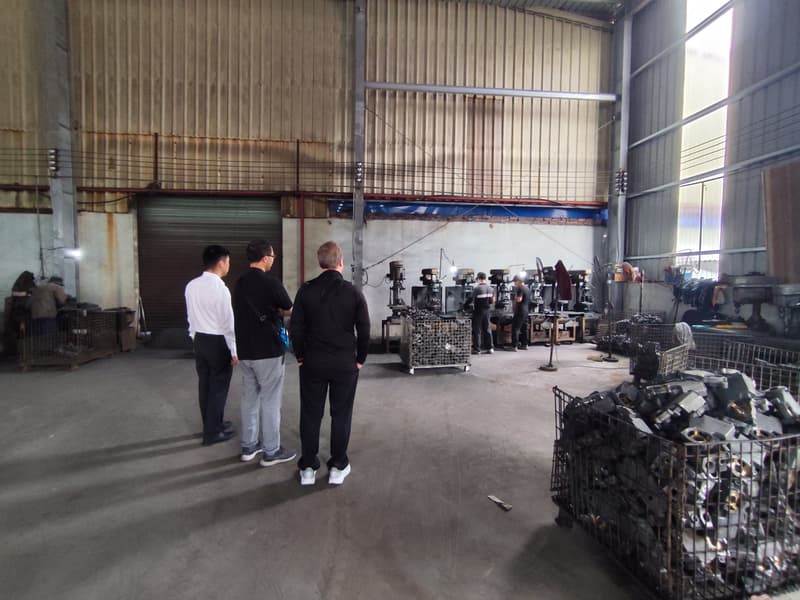
You've decided to explore Vietnam as a manufacturing source. Maybe you're diversifying from China, chasing tariff savings, or launching a new product and want competitive tooling costs. Whatever the reason, this guide walks you through the entire process — from finding suppliers to receiving parts at your US warehouse.
This isn't theory. We've managed hundreds of sourcing projects between US companies and Vietnamese factories. Here's exactly how it works.
Sourcing from Vietnam follows a repeatable path: define complete specs, vet and shortlist certified factories, run a structured RFQ to 3–5 suppliers, approve physical samples, then lock in quality control, payment terms, and DDP logistics. Skipping any step is where most first-timers get burned.
Step Inside a Real Vietnamese Factory with Our Sourcing Team
Watch on YouTube
Real footage from an audited DEWIN partner factory in Vietnam.
Step 1: Define Your Requirements Before You Start
The #1 mistake US buyers make when sourcing from Vietnam: sending vague RFQs. Vietnamese factories quote exactly what you ask for — if your specs are loose, your quotes will be all over the map and your parts will disappoint.
What to prepare before contacting suppliers:
- 2D engineering drawings (PDF) with complete GD&T callouts per ASME Y14.5. Vietnamese engineers read ASME standard natively — don't convert to ISO unless your supply chain requires it.
- 3D CAD models (STEP or IGES) — SolidWorks native files work too, but STEP is universal.
- Material specification — Be specific: "AL6061-T6 per AMS-QQ-A-200/8" not just "aluminum." See our materials guide for common options.
- Surface finish requirements — Ra values, coating type (anodize Type II/III, powder coat, zinc plating), color (RAL or Pantone numbers).
- Annual volume and batch sizes — "500 pcs/month, ordered quarterly in batches of 1,500" is ideal.
- Quality requirements — PPAP level, inspection criteria, certification needs (ISO 9001, IATF 16949, etc.).
- Target price — Optional but helpful. Vietnamese suppliers are more likely to find creative solutions if they know your budget.
/Century%20Creation%20-%20Photo/Die%20Cutting%20Workshop.jpg)
Step 2: Find and Vet Suppliers
Vietnam has thousands of manufacturing facilities, but quality varies enormously. Here's how to find the right ones:
Option A: Use a Sourcing Partner (Recommended for First-Timers)
A Vietnam-based sourcing partner like DEWIN pre-vets factories, manages communication, handles quality control, and coordinates logistics. This adds 8–15% to part costs but eliminates the learning curve and risk of working with unknown suppliers.
Best for: Companies spending $50K–$2M/year who don't have in-country staff.
Option B: Direct Supplier Sourcing
If you want to go direct, here are the main channels:
- Industry trade shows: Vietnam Manufacturing Expo (Hanoi, April), METALEX Vietnam (HCMC, October), Vietnam Mold & Die Expo
- Online platforms: Alibaba (filter by Vietnam), Vietnam Yellow Pages, Made-in-Vietnam.com
- Industry associations: VAMI (Vietnam Association of Mechanical Industry), VSME (Vietnam Small & Medium Enterprises Association)
- Referrals: Ask other US companies who've successfully sourced from Vietnam. The community is small and people share supplier names.
Supplier Vetting Checklist
Before sending an RFQ, verify:
- Certifications: ISO 9001 at minimum. IATF 16949 for automotive. ISO 13485 for medical. Ask for certificate copies — verify via the registrar's website.
- Equipment list: Request a detailed machine list with brand, model, and year. Look for Japanese/European brands (Mazak, DMG Mori, Fanuc, Makino) alongside Taiwanese/Chinese machines.
- Export experience: "How much of your revenue comes from export to US/EU?" Target suppliers with >50% export revenue — they understand Western quality expectations.
- Inspection equipment: CMM (Coordinate Measuring Machine) is essential for precision parts. Look for Hexagon, Zeiss, or Mitutoyo CMMs.
- Reference customers: Ask for 2–3 US or EU customer references. Legitimate factories will provide them.
- Factory visit or virtual tour: Never commit significant spend without seeing the facility — either in person or via video call walkthrough.
/Changzhi%20%20-%20Photo/Production%20Area.jpg)
Step 3: The RFQ Process
Send your RFQ package to 3–5 pre-vetted suppliers simultaneously. Include:
- All drawings and 3D files
- A clear RFQ form specifying quantities, delivery terms (FOB HCMC or DDP your warehouse), and required lead times
- Quality requirements (PPAP level, inspection scope)
- NDA if your design is proprietary
Expected Timelines
| Phase | Timeline | Notes |
|---|---|---|
| RFQ response | 3–7 business days | Complex assemblies may take 10–14 days |
| Quote evaluation & negotiation | 1–2 weeks | Expect 1–2 rounds of clarification |
| Sample/prototype production | 2–4 weeks | CNC parts faster; tooled parts longer |
| Sample approval | 1–2 weeks | Ship samples via DHL/FedEx (3–5 days) |
| Tooling (if needed) | 4–8 weeks | Injection molds, die casting dies |
| First production run | 2–4 weeks | After tooling/sample approval |
| Shipping to US | 3–25 days | Air (3–5 days) or ocean (18–25 days) |
Total time from first RFQ to parts in hand: 8–16 weeks for CNC parts, 12–22 weeks for tooled parts (injection molding, die casting). Subsequent reorders: 3–6 weeks.
Expect roughly 8–16 weeks from first RFQ to CNC parts in hand, or 12–22 weeks for tooled parts such as injection molding and die casting. Once tooling and samples are approved, subsequent reorders typically run just 3–6 weeks.
Step 4: Quality Control
Quality control is non-negotiable when sourcing from any country. In Vietnam, the QC infrastructure is mature but you need to be proactive:
- First Article Inspection (FAI): Require a full dimensional report (FAI per AS9102 or equivalent) on the first production parts. Every critical dimension measured and documented.
- In-process inspection: For production runs, require SPC (Statistical Process Control) data on critical dimensions at agreed sampling rates.
- Final inspection: AQL sampling per ISO 2859-1. Standard is AQL 1.0 for critical defects, AQL 2.5 for major, AQL 4.0 for minor.
- Material certificates: Require mill certs (MTRs) for all metals. Reputable Vietnamese suppliers provide these standard.
- Third-party inspection: For first orders, consider booking a pre-shipment inspection through SGS, Bureau Veritas, or Intertek. Cost: $250–$400 per man-day.
Learn more in our detailed Quality Control in Vietnam Manufacturing guide.
/Essence%20-%20Photo/Production%20Line%20(1).jpg)
Step 5: Payment Terms & Financial Safety
Payment practices in Vietnam follow standard international trade norms with some local specifics:
- Standard terms: 30% T/T deposit upon PO, 70% T/T before shipment. This is the default for new relationships.
- Established relationships (6+ months): Many factories will move to 30/70 with the balance payable within 30 days of shipment (supported by B/L copy).
- Large orders ($50K+): Letter of Credit (L/C) at sight is common and gives both parties protection.
- Tooling payments: Usually 50% deposit, 50% upon sample approval. You should own the tooling — get this in writing.
Currency: Most Vietnamese factories quote and accept USD. Wire transfers are the standard method. PayPal and credit cards are not typical for B2B manufacturing.
Protect yourself: Always use a formal Purchase Order with clear terms. For first orders over $10K, consider trade credit insurance (Euler Hermes, Coface) or an escrow service.
Step 6: Shipping & Logistics
Getting parts from Vietnam to your US facility is straightforward once you understand the options:
Incoterms: What to Use
- FOB Ho Chi Minh City / Hai Phong: You arrange ocean freight from the port. Best when you have a freight forwarder relationship.
- CIF US Port: Supplier arranges shipping and insurance to your port. Simpler but you lose control over carrier choice.
- DDP Your Warehouse: Supplier handles everything door-to-door including customs. Highest cost but zero logistics burden on you. DEWIN offers this as standard.
Customs & Import Compliance
- You need a customs broker — either your freight forwarder's in-house team or a standalone broker.
- Ensure correct HTS classification — misclassification can result in penalties or unexpected duties.
- Vietnam-origin goods require a Certificate of Origin (C/O) from the Vietnamese Chamber of Commerce. Your supplier provides this.
- Keep documentation for 3+ years: commercial invoice, packing list, B/L, C/O, and entry summary.
For a detailed cost breakdown of shipping options, see our Vietnam Manufacturing Costs 2026 guide.
Step 7: Building a Long-Term Supplier Relationship
The best Vietnam sourcing outcomes come from long-term partnerships. Here's how to build one:
- Visit annually: One factory visit per year keeps the relationship strong and gives you firsthand quality insights.
- Share forecasts: Vietnamese factories plan capacity 2–3 months ahead. Sharing your 6-month demand forecast helps them reserve capacity and raw materials.
- Pay on time: This sounds obvious, but late payments damage relationships faster than anything else in Vietnam. Suppliers prioritize on-time payers.
- Provide feedback: Constructive, specific feedback (not "quality was bad" but "3 out of 500 parts had burrs on Feature A") builds continuous improvement.
- Invest in tooling: Funding proper production tooling (not soft tooling) shows commitment and gets you better pricing.
Common Pitfalls & How to Avoid Them
| Pitfall | How to Avoid It |
|---|---|
| Choosing the lowest quote blindly | Evaluate total cost + quality + reliability. The cheapest quote often means corners cut. |
| Skipping sample approval | Always approve physical samples before production. Photos aren't enough. |
| Vague specifications | Complete GD&T drawings prevent 90% of quality disputes. |
| No factory audit | Visit or hire a third-party auditor before committing >$25K. |
| Ignoring Tet holiday | Vietnamese New Year (Jan/Feb) shuts factories for 1–3 weeks. Plan inventory accordingly. |
| No tooling ownership clause | Explicitly state you own all tooling in the PO. Get tooling IDs and photos. |
Ready to Start Sourcing from Vietnam?
DEWIN manages the entire process — supplier selection, quality control, logistics, and customs. Upload your drawings and get a quote within 48 hours.
Get Your Free Quote →Key Takeaways
- Prepare thorough RFQ packages with complete drawings and specs before approaching suppliers.
- Vet suppliers on certifications, equipment, export experience, and references — not just price.
- Expect 8–16 weeks for first CNC orders, 12–22 weeks for tooled parts. Reorders are 3–6 weeks.
- Budget for quality control: FAI, in-process SPC, and final AQL inspection are non-negotiable.
- Standard payment terms: 30/70 T/T. Move to L/C for orders over $50K.
- Using a sourcing partner saves 3–6 months of learning curve and significantly reduces risk.
For cost data, see our Vietnam Manufacturing Costs 2026 breakdown. For quality specifics, read our Quality Control guide.
Frequently Asked Questions
How much does using a Vietnam sourcing partner add to part cost?
A Vietnam-based sourcing partner adds 8–15% to part costs. In return it pre-vets factories, manages communication, handles quality control, and coordinates logistics, removing the learning curve and the risk of working with unknown suppliers. That model fits companies spending $50K–$2M a year who have no in-country staff.
How should I plan production around Vietnam's Tet holiday?
Tet, the Vietnamese New Year in January or February, shuts factories for one to three weeks, so build buffer inventory ahead of it. Ignoring Tet is a common pitfall for first-time buyers. Because Vietnamese factories plan capacity two to three months ahead, sharing your forecast before the shutdown also helps them reserve materials.
What AQL levels are standard for final inspection in Vietnam?
Final inspection uses AQL sampling per ISO 2859-1: AQL 1.0 for critical defects, AQL 2.5 for major, and AQL 4.0 for minor. On first orders it is worth adding a pre-shipment inspection through SGS, Bureau Veritas, or Intertek, which costs $250–$400 per man-day.
Who owns tooling I pay a Vietnamese factory to build?
Tooling ownership belongs to the buyer, but only if the purchase order states it explicitly — get it in writing, and collect tooling IDs and photos. Tooling is normally paid 50% deposit and 50% on sample approval. Having no tooling ownership clause is a common pitfall.