Quality Control in Vietnam Manufacturing: The Complete Guide for US Buyers
February 14, 2026 · 16 min read
"How do I know the parts will be good?" It's the most common question from US buyers considering Vietnam for the first time. The answer isn't hope or trust — it's systems. Structured quality control processes that catch defects before they ship, documented with data you can verify.
This guide covers every aspect of quality control in Vietnam manufacturing: the QC infrastructure available, certification standards, inspection methods, factory audit processes, and how to set up a quality system that protects your production.
You verify quality with systems, not trust: a five-stage process — incoming inspection, first article approval, in-process SPC, final AQL inspection, and pre-shipment checks — documented with CMM data, mill certificates, and photos you can audit before anything ships.
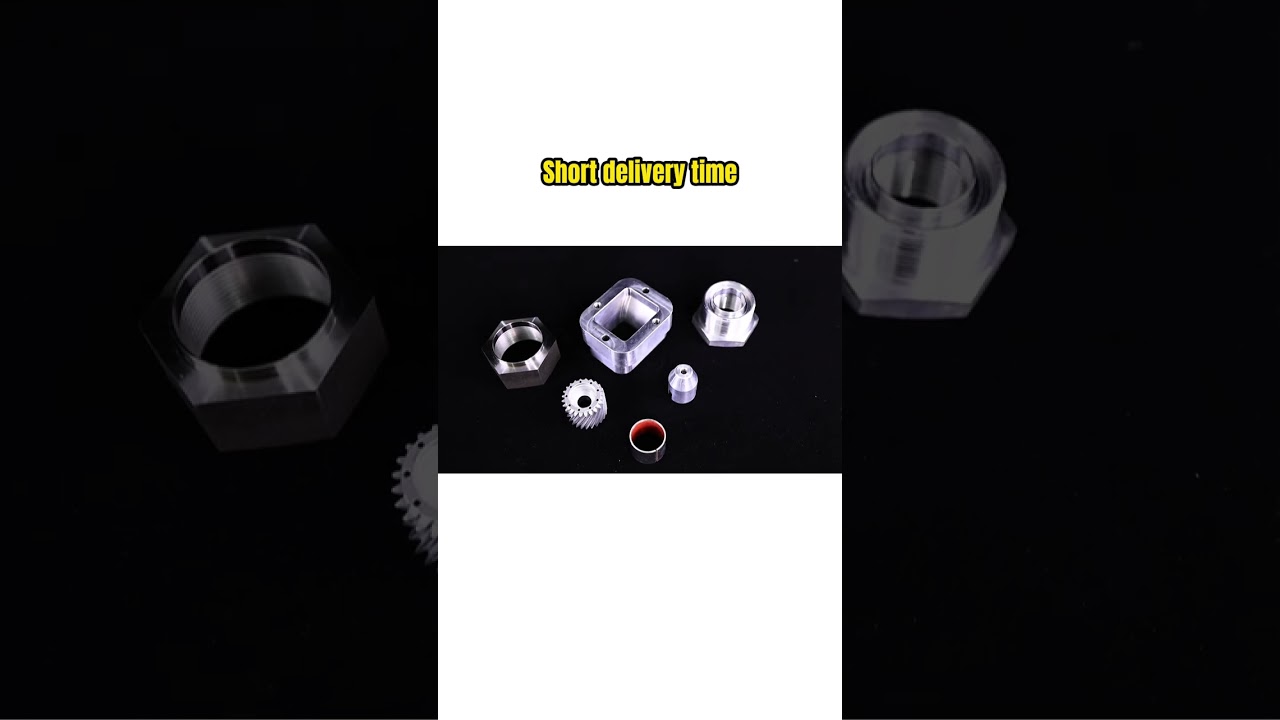
Real Vietnam Factory Samples — Custom Machined & Metal Parts
Watch on YouTube
Real footage from an audited DEWIN partner factory in Vietnam.
Vietnam's Quality Infrastructure: Current State
Vietnam's manufacturing quality infrastructure has matured significantly, driven by billions in FDI from quality-demanding companies like Samsung, Apple's supply chain, and Japanese automotive manufacturers. Here's what exists today:
- ISO 9001 adoption: Over 5,000 Vietnamese manufacturers hold current ISO 9001:2015 certification. For export-focused factories, it's essentially table stakes.
- IATF 16949: Approximately 200+ factories hold automotive quality certification, concentrated in the Ho Chi Minh City, Binh Duong, and Dong Nai industrial zones.
- ISO 13485: Growing number of facilities certified for medical device manufacturing, driven by Medtronic and B. Braun's Vietnam operations.
- AS9100: A smaller but growing number of shops hold aerospace quality certification.
- Third-party inspection: SGS, Bureau Veritas, Intertek, and TÜV all have offices and inspectors throughout Vietnam. Same-week inspection bookings are standard.
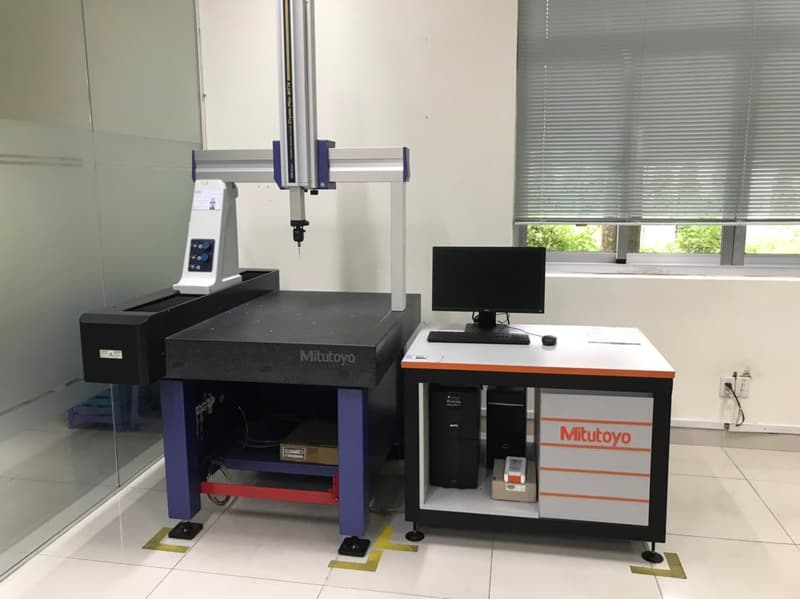
- Metrology equipment: Top-tier factories run Zeiss, Hexagon, and Mitutoyo CMMs. Optical comparators, profilometers, hardness testers, and spectrometers are common in quality labs.
/Changzhi%20%20-%20Photo/VMM.jpg)
The 5-Stage Quality Control Process
A proper Vietnam QC process runs five stages: incoming material inspection (IQC), first article inspection (FAI), in-process control (IPQC), outgoing final inspection (OQC), and pre-shipment inspection (PSI). No production run should start before you approve the FAI.
Whether you're ordering CNC machined parts, die castings, injection molded components, or sheet metal assemblies, a proper QC process in Vietnam follows five stages:
Stage 1: Incoming Material Inspection (IQC)
Quality starts with raw materials. Reputable Vietnamese factories verify incoming materials before they enter production:
- Mill Test Reports (MTRs): Every metal lot should come with a certified MTR from the mill, documenting chemical composition and mechanical properties. Verify against your material specification (e.g., AMS-QQ-A-200/8 for 6061-T6).
- Material verification: XRF (X-Ray Fluorescence) or OES (Optical Emission Spectroscopy) testing to confirm alloy composition. Critical for aerospace and medical applications.
- Dimensional verification: Bar stock and plate verified against ordered dimensions. Prevents machining issues from undersized material.
- Visual inspection: Check for surface defects, corrosion, contamination, or damage from shipping.
What to require: Ask your supplier to provide MTRs with every shipment. For critical applications, require XRF verification with results documented.
Stage 2: First Article Inspection (FAI)
The FAI is the single most important quality milestone. It's a complete dimensional verification of the first production part(s), documenting every feature against your drawing.
- Standard: AS9102 format is the gold standard, even for non-aerospace work. It includes three forms: Part Number Accountability, Product Accountability, and Characteristic Accountability (the balloon drawing with measurement data).
- Measurement: All GD&T callouts measured using CMM for critical dimensions, calipers/micrometers for general dimensions, and surface profilometer for Ra callouts.
- Documentation: Full FAI report delivered as PDF with balloon drawing + measurement data table. Photos of the part from multiple angles.
- Approval: You review and approve the FAI before production begins. Any out-of-spec dimensions are corrected and re-measured.
DEWIN practice: We require FAI on every new part number and every tooling revision. No production run starts without customer-approved FAI.
Stage 3: In-Process Quality Control (IPQC)
During production, quality is maintained through systematic in-process checks:
- First-off inspection: First 3–5 parts from each setup verified against FAI before full production continues.
- Statistical Process Control (SPC): Critical dimensions monitored using Xbar-R charts at agreed sampling intervals (typically every 25–50 parts). Cpk target: ≥1.33 for critical features, ≥1.0 for general.
- Tool wear monitoring: CNC tool life tracked; tools replaced on schedule, not when parts go bad. Modern shops use tool wear compensation in the CNC controller.
- In-process sampling: QC inspector checks parts at regular intervals (every 50–100 parts) against a reduced measurement plan covering critical dimensions.
- Process parameter monitoring: For injection molding and die casting, process parameters (pressure, temperature, cycle time) are logged and compared to qualified ranges.
Stage 4: Final Inspection (OQC — Outgoing Quality Control)
Before packing, every order undergoes final inspection per agreed sampling plans:
| Inspection Level | Standard | AQL (Critical) | AQL (Major) | AQL (Minor) |
|---|---|---|---|---|
| Standard | ISO 2859-1, Level II | 0 (zero defects) | 1.0 | 2.5 |
| Tightened | ISO 2859-1, Level III | 0 | 0.65 | 1.5 |
| 100% inspection | Every part checked | 0 | 0 | 0 |
Dimensional: Critical dimensions measured on sampled parts per AQL plan. Full CMM reports on a subset.
Visual: Every part visually inspected for surface defects, burrs, scratches, and cosmetic issues.
Functional: Go/no-go gauges, thread gauges, and assembly checks where applicable.
Stage 5: Pre-Shipment Inspection (PSI)
The final gate before parts leave the factory. This can be performed by the factory's QC team, your sourcing partner (like DEWIN), or a third-party inspection company:
- Quantity verification: Count matches PO quantity.
- Packing inspection: Parts properly protected — no metal-on-metal contact, VCI paper for corrosion protection, moisture barriers for ocean freight.
- Labeling: Part numbers, lot numbers, quantity per box, country of origin clearly labeled.
- Documentation check: Inspection reports, MTRs, Certificates of Origin, packing lists — all present and correct.
- Random re-measurement: Pull 3–5 parts from packed boxes and verify dimensions match the inspection report.
Certifications: What They Mean & What to Require
| Certification | What It Covers | When to Require |
|---|---|---|
| ISO 9001:2015 | General quality management system. Documented processes, continuous improvement, customer focus. | Always — baseline for any serious manufacturer |
| IATF 16949:2016 | Automotive quality. Adds PPAP, APQP, FMEA, MSA, SPC requirements to ISO 9001. | Automotive parts, or any application requiring PPAP |
| ISO 13485:2016 | Medical device quality management. Risk management, traceability, cleanroom requirements. | Medical devices, implants, surgical instruments |
| AS9100D | Aerospace quality. Configuration management, risk management, special process controls. | Aerospace and defense components |
| ISO 14001 | Environmental management system. | When your company requires supplier environmental compliance |
| NADCAP | Special process accreditation (heat treat, plating, NDT, welding). | Aerospace special processes |
Verification tip: Don't just accept certificate PDFs. Check the registrar's website (e.g., BSI, TÜV, SGS, Lloyd's) to verify the certificate is current and covers the correct scope and facility address.
Factory Audits: How to Evaluate a Vietnam Supplier
A factory audit is the most reliable way to assess a Vietnamese supplier's actual quality capability — not just their certifications on paper. Here's how to do it effectively:
Pre-Audit: Desktop Assessment
Before visiting, gather:
- Company profile with equipment list (brand, model, quantity, age)
- Certification copies (ISO, IATF, etc.)
- Client list and export percentage
- Organization chart showing QC department structure
- Sample inspection reports from recent orders
On-Site Audit Checklist
During the factory visit, evaluate these areas (scored 1–5):
| Area | What to Check | Red Flags |
|---|---|---|
| Facility & 5S | Cleanliness, organization, material flow, safety | Cluttered floors, mixed raw/finished material, no safety gear |
| Equipment | Machine condition, maintenance logs, calibration stickers | No maintenance records, expired calibration, excessive vibration |
| QC Lab | CMM, gauges, calibration records, temperature control | No CMM for precision work, no calibration program, dirty lab |
| Documentation | Work instructions, inspection records, NCR system, traceability | No work instructions at machines, missing inspection records |
| Personnel | Training records, operator skill matrix, QC staff ratio | No training program, QC staff <5% of workforce |
| Material Control | Storage conditions, FIFO, lot traceability, rejected material segregation | Mixed materials, no lot tracking, rejected parts not segregated |
/YuenFung%20-%20Photo/CMM%20inspector.jpg)
Can't visit in person? Options include:
- Video audit: Live video walkthrough via WeChat/Zoom. Less thorough but effective for initial screening.
- Third-party audit: SGS, Bureau Veritas, and Asia Inspection offer factory audit services in Vietnam for $300–$600 per day.
- Sourcing partner audit: DEWIN conducts factory audits as part of our supplier qualification process.
PPAP: Production Part Approval Process in Vietnam
If you're in automotive or require formal part approval, Vietnamese IATF-certified factories can execute PPAP to any level:
| PPAP Level | Deliverables | When Used |
|---|---|---|
| Level 1 | Part Submission Warrant (PSW) only | Simple, low-risk parts |
| Level 2 | PSW + samples + limited supporting data | Standard components |
| Level 3 | PSW + samples + complete supporting data (most common) | Default for most automotive parts |
| Level 4 | PSW + other requirements defined by customer | Customer-specific |
| Level 5 | PSW + samples + complete data available for review at factory | High-risk or safety-critical parts |
Level 3 PPAP from a Vietnamese factory typically includes: PSW, design records, process flow diagram, PFMEA, control plan, MSA studies, dimensional results, material/performance test results, initial process studies (Cpk), and sample parts.
Timeline: Full Level 3 PPAP takes 4–6 weeks after tooling is complete. Plan this into your project timeline.
Handling Quality Issues: NCR Process
Even with strong QC, issues occasionally arise. Here's how to manage them effectively:
- Document clearly: Photos, measurements, quantity affected, part/lot number. Vague complaints get vague responses.
- Issue formal NCR: Non-Conformance Report with clear description, evidence, and requested corrective action.
- Expect 8D response: Good Vietnamese factories will provide an 8D corrective action report within 5–10 business days, identifying root cause and preventive measures.
- Verify corrective action: On the next order, confirm the corrective action was implemented. Check SPC data for the affected dimensions.
- Track trends: Maintain a supplier scorecard tracking PPM (parts per million defective), on-time delivery, and responsiveness. Share quarterly with your supplier.
Cost of Quality: What to Budget
| QC Activity | Typical Cost | Who Pays |
|---|---|---|
| FAI report | $100–$500 per part number | Usually included in first order |
| CMM inspection (per order) | Included in part price | Supplier |
| Third-party inspection (SGS/BV) | $250–$400 per man-day | Buyer |
| Factory audit (third-party) | $400–$800 per day | Buyer |
| Material testing (XRF/OES) | $50–$150 per test | Usually included |
| PPAP Level 3 package | $500–$2,000 per part number | Often shared or buyer-funded |
As a rule of thumb, budget 2–5% of order value for quality management activities on initial orders. This drops to 1–2% on repeat orders with established suppliers.
Quality-Assured Manufacturing from Vietnam
DEWIN manages quality control end-to-end — supplier audits, FAI, in-process inspection, and pre-shipment verification. Every order ships with full documentation.
Get Your Free Quote →Key Takeaways
- Vietnam has mature QC infrastructure: ISO/IATF certifications, CMM-equipped labs, trained inspectors, and third-party services.
- Implement a 5-stage QC process: IQC → FAI → IPQC → OQC → PSI.
- Always require FAI before production. No exceptions.
- Verify certifications directly with registrars — don't rely on PDF copies alone.
- Factory audits (in-person or third-party) are essential before committing >$25K.
- Budget 2–5% of order value for QC on initial orders; 1–2% on repeat orders.
- Track supplier performance with scorecards (PPM, OTD, responsiveness) and review quarterly.
For cost data on Vietnam manufacturing, see our 2026 Cost Breakdown. New to Vietnam sourcing? Start with our Complete Sourcing Guide.
Frequently Asked Questions
How much should I budget for quality control on a Vietnam order?
Quality management on initial orders typically costs 2–5% of order value, dropping to 1–2% on repeat orders with established suppliers. Individual line items: an FAI report runs $100–$500 per part number, third-party inspection $250–$400 per man-day, material XRF/OES testing $50–$150 per test, and a Level 3 PPAP package $500–$2,000 per part number.
How do I verify a Vietnamese factory's ISO certificate is genuine?
Certificate verification means checking the registrar's own website — BSI, TÜV, SGS, or Lloyd's — rather than accepting a PDF from the supplier. Confirm the certificate is current and that its scope and facility address match the plant that will actually make your parts. A supplied PDF can be expired, out of scope, or issued to a different site.
How can I audit a Vietnam factory without traveling there?
Three options replace an in-person visit: a live video walkthrough via WeChat or Zoom, a third-party audit, or a sourcing-partner audit. SGS, Bureau Veritas, and Asia Inspection offer factory audit services in Vietnam for $300–$600 per day. Video audits are less thorough but effective for initial screening, while DEWIN audits factories as part of its supplier qualification process.
What should I expect from a supplier after reporting a defective lot?
Good Vietnamese factories provide an 8D corrective action report within 5–10 business days, identifying root cause and preventive measures. Your side of it is documenting the problem with photos, measurements, quantity affected, and part or lot number, then issuing a formal NCR — vague complaints get vague responses. On the next order, confirm the fix by checking SPC data for the affected dimensions.