/Essence%20-%20Photo/Welding%20Machine%20.jpg)
This guide is for engineers and sourcing managers who need welded parts or assemblies from Vietnam and have to answer one question with confidence: can this factory actually weld to my specification? Unlike machining, weld quality lives inside the joint — in procedures and welder skill — and can only be verified through documentation, testing, and disciplined auditing. This article covers reading capability from your drawings, mapping AWS and ISO frameworks onto Vietnamese shops, what WPS/PQR and welder records must show, and turning a promising-but-imperfect factory into a qualified supplier. For the general factory audit method underneath all of this, see our guide to qualifying a Vietnamese sheet metal fabricator.
To qualify a Vietnamese welding supplier, extract the weld map from your drawings, agree an AWS or ISO code framework, verify that the WPS-PQR-welder paper chain matches the people on the floor, evaluate sectioned samples against written acceptance criteria, and confirm ISO 9001 on-site against live records.
Key takeaways:
- Vietnam’s verified partner facility ecosystem provides Tier-1 precision manufacturing with direct engineering transparency and relief from Section 301 Chinese punitive tariffs for qualifying goods.
- Technical documentation must pair 3D models with 2D drawings detailing critical GD&T datums, tolerance limits, and material specs.
- On-site supplier auditing (50-point Dolphin Audit across QCLDM) verifies machinery capacity, CMM metrology, and material traceability.
- Sourcing through DEWIN guarantees Delaware LLC contracting, streamlined RFQ turnaround and engineering review turnaround, and door-to-door DDP logistics.
Key Takeaways
- Your drawing defines the qualification bar. Weld symbols, joint types, materials, and inspection callouts tell you which procedures and welder qualifications a supplier must hold.
- AWS D1.1 and ISO 3834 answer different questions: D1.1 qualifies specific procedures and welders; ISO 3834 certifies the factory’s overall welding quality system.
- Demand the full paper chain — WPS supported by a PQR, welders qualified to that WPS, records in date and matched to the people actually on the floor.
- Samples prove less than most buyers think unless they are evaluated against written acceptance criteria and, ideally, sectioned with a macro-etch.
- An ISO 9001 certificate is verified on-site, not by PDF: registrar lookup, entity match, scope match, and live records.
Start with Your Drawings: What Capability Do You Actually Need?
Before contacting a single factory, extract the qualification requirements hiding in your own drawing package. Every weld symbol implies a process, a position, and an acceptance standard. List them out:
- Joint types and positions. Fillet welds in the flat position are the easiest work in welding; full-penetration groove welds overhead or on pipe are among the hardest. A shop can be excellent at one and unqualified for the other.
- Materials and thickness range. Carbon steel, stainless, and aluminum each require different processes, filler metals, and welder qualifications — qualification on one does not transfer to another.
- Inspection callouts. Notes like “welds per AWS D1.1” or a UT requirement on critical joints determine which testing capability and NDE relationships the supplier needs.
- Distortion-critical dimensions. Flatness or position tolerances across a large weldment demand fixturing discipline and post-weld straightening or machining.
Send this summary with your RFQ — the response is your first capability screen. A serious shop asks about joint access, fixturing datums, or whether a callout allows a process change; a shop that quotes a complex weldment in hours without a single technical question has not read the drawings.
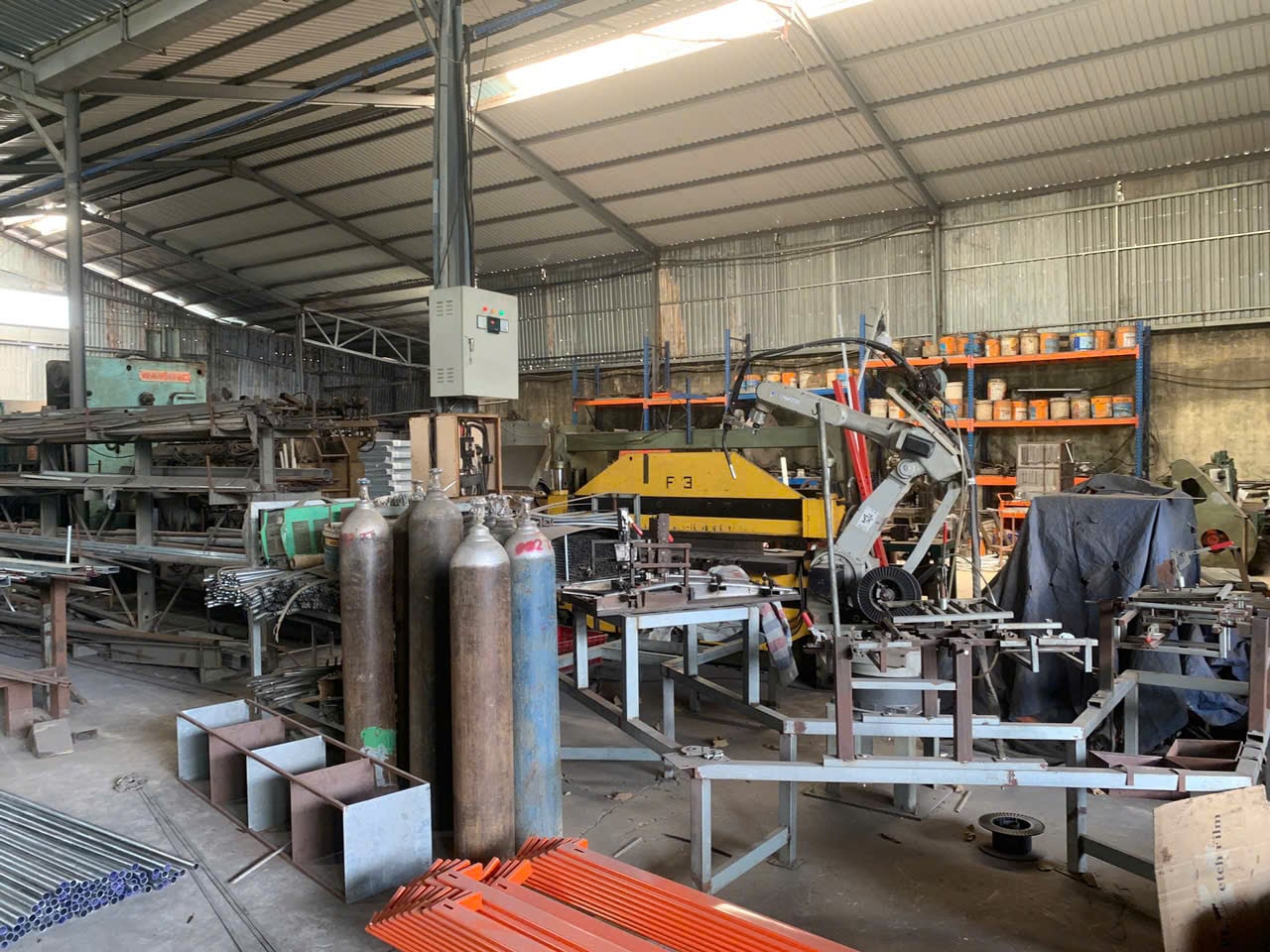
AWS D1.1 vs ISO 3834: Which Framework Fits My Parts?
US buyers usually specify AWS codes; Vietnamese factories often grew up on ISO and Japanese (JIS) frameworks, so knowing how the systems map prevents both false alarms and false comfort.
AWS D1.1 and ISO 3834 answer different questions: D1.1 qualifies specific welding procedures and welders for structural steel, while ISO 3834 certifies the factory’s whole welding quality system. A shop holding ISO 3834-2 is not automatically AWS-compliant, but qualifying its procedures to D1.1 is a bounded, testable exercise.
AWS D1.1 (Structural Welding Code — Steel) governs procedure qualification, welder performance qualification, workmanship, and inspection acceptance criteria for structural carbon and low-alloy steel. Its siblings cover other materials — D1.2 for aluminum, D1.6 for stainless steel. When your drawing says “welds per AWS D1.1,” the supplier needs procedures and welders qualified to that code for your joint configurations.
ISO 3834 takes a systems view: it certifies that a factory’s welding operations — personnel, equipment, procedure control, traceability — meet comprehensive (Part 2), standard (Part 3), or elementary (Part 4) quality requirements. Its companions, ISO 15614 for procedure qualification and ISO 9606 for welder qualification, are the functional equivalents of AWS procedure and performance qualification.
A Vietnamese factory holding ISO 3834-2 with ISO 15614 procedures is not automatically AWS-compliant, but it has demonstrated the same underlying discipline, and qualifying its procedures to D1.1 is a bounded, testable exercise rather than a leap of faith. Do not accept a shop with neither framework claiming its welders are “very experienced” — experience without qualification records is unverifiable.
The Paper Chain: What Must the WPS, PQR, and Welder Records Show?
Welding quality documentation forms a chain, and the chain is only as strong as its weakest document. Ask for all three layers and check that they connect.
Demand the full paper chain and check it connects: a WPS covering your material, thickness, and joint types; a PQR with actual test-coupon results supporting that WPS; and welder qualification records, in date, whose names match the people actually welding on the floor.
| Document | What It Is | What It Must Show |
|---|---|---|
| WPS (Welding Procedure Specification) | The recipe: process, filler metal, parameters, joint design, position, preheat | Covers your material, thickness range, and joint types; referenced on shop travelers |
| PQR (Procedure Qualification Record) | Test results proving the WPS produces sound welds | Tensile, bend, and/or macro-etch results from an actual test coupon; supports the WPS ranges |
| WQR (Welder Qualification Record) | Proof a specific welder can execute the WPS | Welder name matches floor staff; process, position, and thickness cover your work; in date |
Three failure patterns show up repeatedly in audits. First, WPS documents downloaded or copied from another company, unsupported by any PQR — ask to see the test coupons or lab reports behind two or three procedures. Second, welder qualifications that have silently lapsed — check dates and ask how requalification is managed. Third, a mismatch between the qualified welders on paper and the people actually welding: during your floor walk, pick two welders at their stations and ask the quality manager to pull their records on the spot. This five-minute test reveals more about welding control than an hour in the conference room.
This document review maps directly onto the Quality Management pillar of DEWIN’s 50-point Dolphin Audit, which our engineers apply to every factory in the network — 179+ audited so far — before it can quote. Only factories scoring Tier 1 (90–100) or Tier 2 (75–89) are ever quoted to customers.
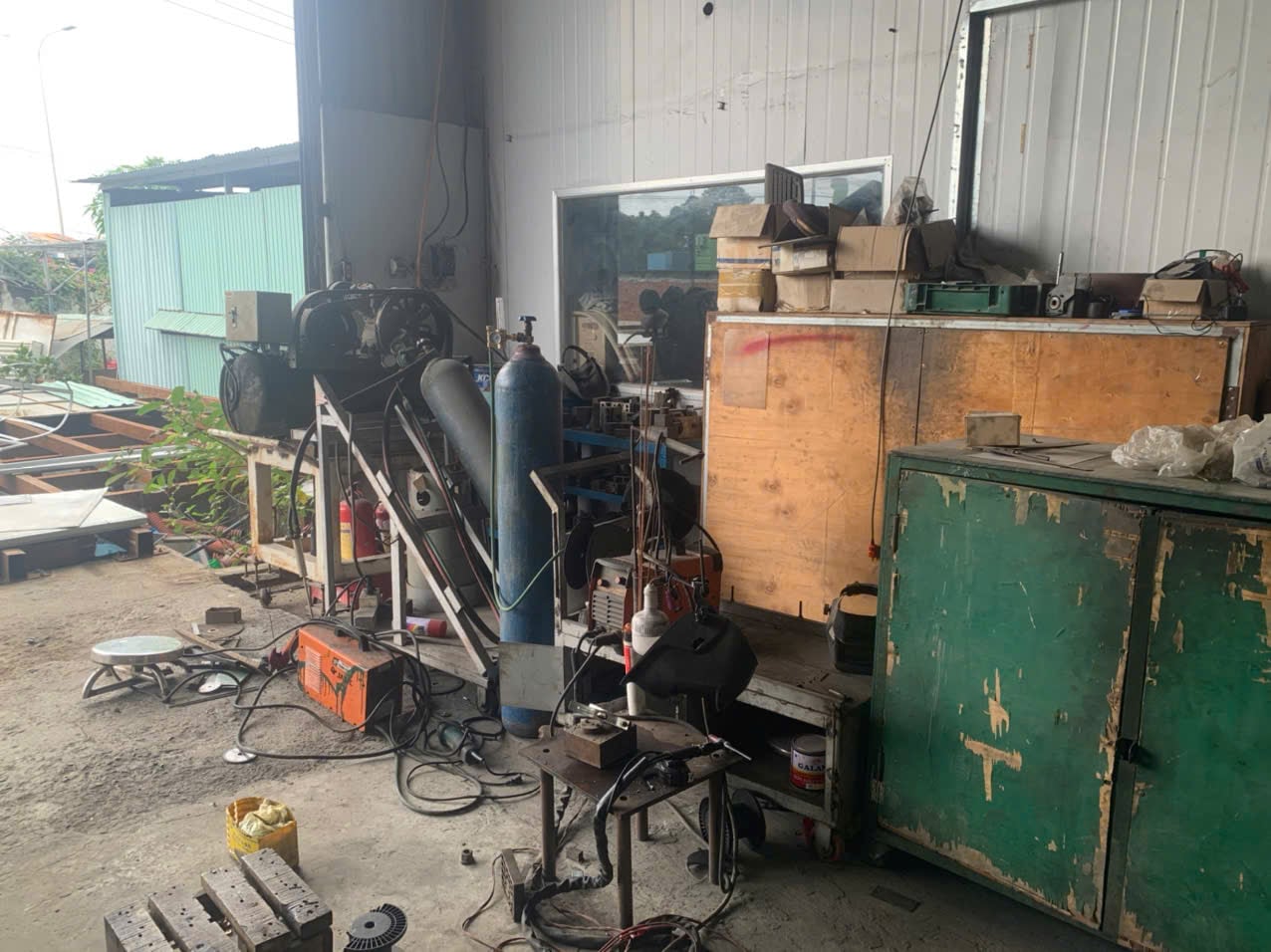
How Do I Evaluate Weld Samples Against AWS Acceptance Criteria?
Samples are useful only when judged against written criteria. Before samples ship, agree in writing which code and acceptance class applies — for structural steel, AWS D1.1 visual acceptance criteria are the common baseline. Then evaluate systematically:
- Visual inspection first. Check weld size with fillet gauges, plus profile, undercut, overlap, porosity, crater fill, and spatter — most disqualifying defects are visible to a trained eye.
- Dimensional check of the assembly. Weld-induced distortion is the silent killer of large weldments. Verify the critical dimensions and flatness callouts, not just the welds.
- Section at least one joint. A macro-etch of a cut cross-section shows penetration, fusion, and internal porosity for the cost of a coupon — the highest-value test to request from a first-time supplier on structural work.
- Document everything. Photograph defects with scale references and share them. The factory’s response — root-cause analysis versus excuses — is itself qualification data.
For production, convert this into a formal first article inspection so the acceptance criteria, measurement methods, and results are recorded against the drawing rather than negotiated after the fact.
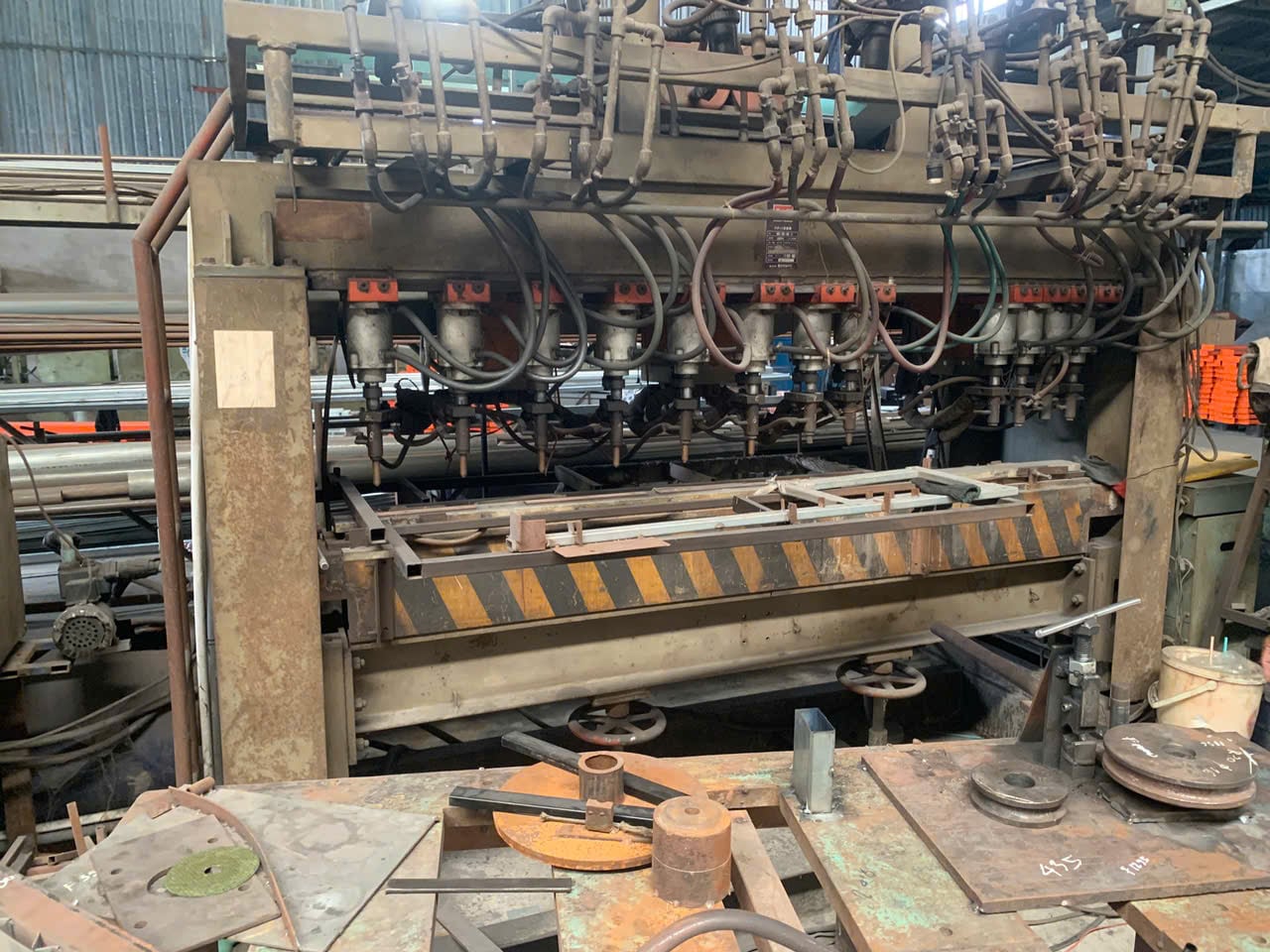
How Do I Verify a Factory’s ISO 9001 On-Site?
Certificate PDFs prove nothing by themselves. Verify any ISO 9001 certificate three ways: look up the certificate number with the issuing registrar, confirm the certified legal entity and address match the factory you are visiting and the entity on your contract, and read the scope line to confirm it covers manufacturing and welding — not just “trading of mechanical parts.”
Verify an ISO 9001 certificate on-site, never by PDF: look up the certificate number with the issuing registrar, confirm the legal entity and address match your contract, and read the scope line to confirm it covers manufacturing and welding — then test the system against yesterday’s live records.
Then test whether the system is alive. Ask for yesterday’s final inspection records, pull one finished weldment and trace it backward to its material certificates, and check calibration stickers on the fillet gauges and measuring equipment at the welding stations. A certificate plus dead records is worse than no certificate, because it tells you the factory knows how to perform for auditors.
While on-site, evaluate US-market export experience: evidence of sustained shipments to US or EU customers (redacted export declarations are fine where NDAs apply), export packaging in the warehouse, and whether engineering has handled imperial callouts and AWS-referenced drawings before. A factory exporting to demanding markets has already survived someone else’s qualification.
How Do I Turn Audit Findings into an Improvement Roadmap?
Few factories pass a first welding audit clean, and walking away from every imperfect shop means walking away from most of the market. The better approach for a promising factory is a time-bound technical improvement roadmap: convert findings into specific, verifiable actions — qualify a D1.1 procedure for the two joint types on your drawings, requalify welders whose records lapsed, add calibrated fillet gauges at each station, implement traveler-level traceability — each with an owner, a deadline, and a follow-up audit rather than email assurances.
This is how DEWIN works with its network: audit findings feed factory-specific improvement plans, and re-audits keep Dolphin scores current. Suppliers who close findings quickly are the ones worth long-term volume; suppliers who argue with findings rarely improve.
Welding Supplier Qualification Checklist
- Weld map extracted from drawings: joints, positions, materials, inspection callouts
- Code framework agreed (AWS D1.1/D1.2/D1.6 or ISO 3834 + ISO 15614/9606) and stated on the PO
- WPS reviewed for every joint type; each supported by a genuine PQR
- Welder qualification records in date and matched to welders on the floor
- ISO 9001 verified with registrar, entity name, and scope — then tested against live records
- Sample welds evaluated against written acceptance criteria; at least one macro-etch section
- US/EU export experience evidenced by shipping documents or references
- First article inspection agreed for production start
- Improvement roadmap documented with deadlines and a re-audit date
FAQ
What are the main benefits of sourcing qualifying vietnam welding suppliers: aws and wps/pqr in Vietnam?
Vietnam offers competitive machine-hour rates, a rapidly modernizing precision supplier ecosystem, relief from Section 301 Chinese punitive tariffs for qualifying goods into the United States, and preferential trade terms under EVFTA and CPTPP. Audited suppliers in the DEWIN network maintain ISO 9001, AS9100, and IATF 16949 certifications.
How does DEWIN ensure quality and dimensional accuracy?
Every manufacturing facility undergoes the rigorous 50-point Dolphin Audit evaluating Quality, Cost, Logistics, Delivery, and Management (QCLDM). Critical dimensions are verified using on-site 3D CMM inspection, optical comparators, and full material test reports (MTRs) before shipment.
What file formats and information are required for a streamlined RFQ turnaround and engineering review?
To generate a binding quotation within 24 hours, submit 3D CAD files in neutral STEP (AP214/AP242) or IGES format alongside 2D PDF technical drawings specifying critical tolerances, surface finishes, thread callouts, and raw material grades.