
If you are a procurement manager buying stamped metal parts for the first time — or an engineer moving an existing stamping program out of China — this guide gives you the working vocabulary, the technical parameters that actually drive piece price, and a realistic picture of what Vietnam’s metal stamping supplier base can and cannot do. Everything here is written for the person who signs the purchase order, not the person who builds the die.
To source metal stamping from Vietnam, classify your part by process and press tonnage, confirm material and tolerances, then compare tooling amortization against a no-tooling laser-and-bend route at your real annual volume — and vet each supplier’s presses and in-house toolroom before committing die cost.
Key takeaways:
- Vietnam’s verified partner facility ecosystem provides Tier-1 precision manufacturing with direct engineering transparency and relief from Section 301 Chinese punitive tariffs for qualifying goods.
- Technical documentation must pair 3D models with 2D drawings detailing critical GD&T datums, tolerance limits, and material specs.
- On-site supplier auditing (50-point Dolphin Audit across QCLDM) verifies machinery capacity, CMM metrology, and material traceability.
- Sourcing through DEWIN guarantees Delaware LLC contracting, streamlined RFQ turnaround and engineering review turnaround, and door-to-door DDP logistics.
Key Takeaways
- Stamping is a tooling-driven process: you pay for a die up front, then buy parts at very low piece prices. The economics only work when volume amortizes the tooling.
- Five operations cover most buying situations: blanking, piercing, bending, deep drawing, and progressive-die stamping. Knowing which one your part needs tells you what tooling cost to expect.
- Press tonnage, material thickness, and tolerance callouts are the three levers that move your quote most. Thicker and stronger material demands bigger presses and costs more per hit.
- Vietnam offers competitive labor and overhead, growing die-making capability, and tariff advantages for US buyers — but supplier capability varies widely, which makes equipment-level vetting essential.
- As a rule of thumb, hard tooling starts to pay for itself somewhere in the thousands of pieces; below that, laser cutting and CNC bending are usually the smarter route.
Which Stamping Process Does My Part Actually Need?
Metal stamping covers a family of operations in which a press drives a hardened steel die through or against sheet metal. You do not need to master die design, but you should recognize which operation your part requires, because each implies a different tooling investment and supplier skill set.
| Process | What It Does | Typical Parts | Relative Tooling Cost |
|---|---|---|---|
| Blanking | Cuts the finished outline of a flat part from a strip or sheet | Washers, flat brackets, gaskets, motor laminations | Low–medium |
| Piercing | Punches holes or slots into the part | Mounting holes, ventilation patterns, connector cutouts | Low–medium |
| Bending / forming | Bends flanges or forms features in a die (rather than a press brake) | Clips, clamps, Z- and U-brackets | Medium |
| Deep drawing | Stretches a blank into a hollow, seamless shape | Enclosure cans, cups, motor housings, sinks | High |
| Progressive-die stamping | Chains many operations into one die; the strip advances one station per press stroke | High-volume terminals, contacts, complex brackets | Highest |
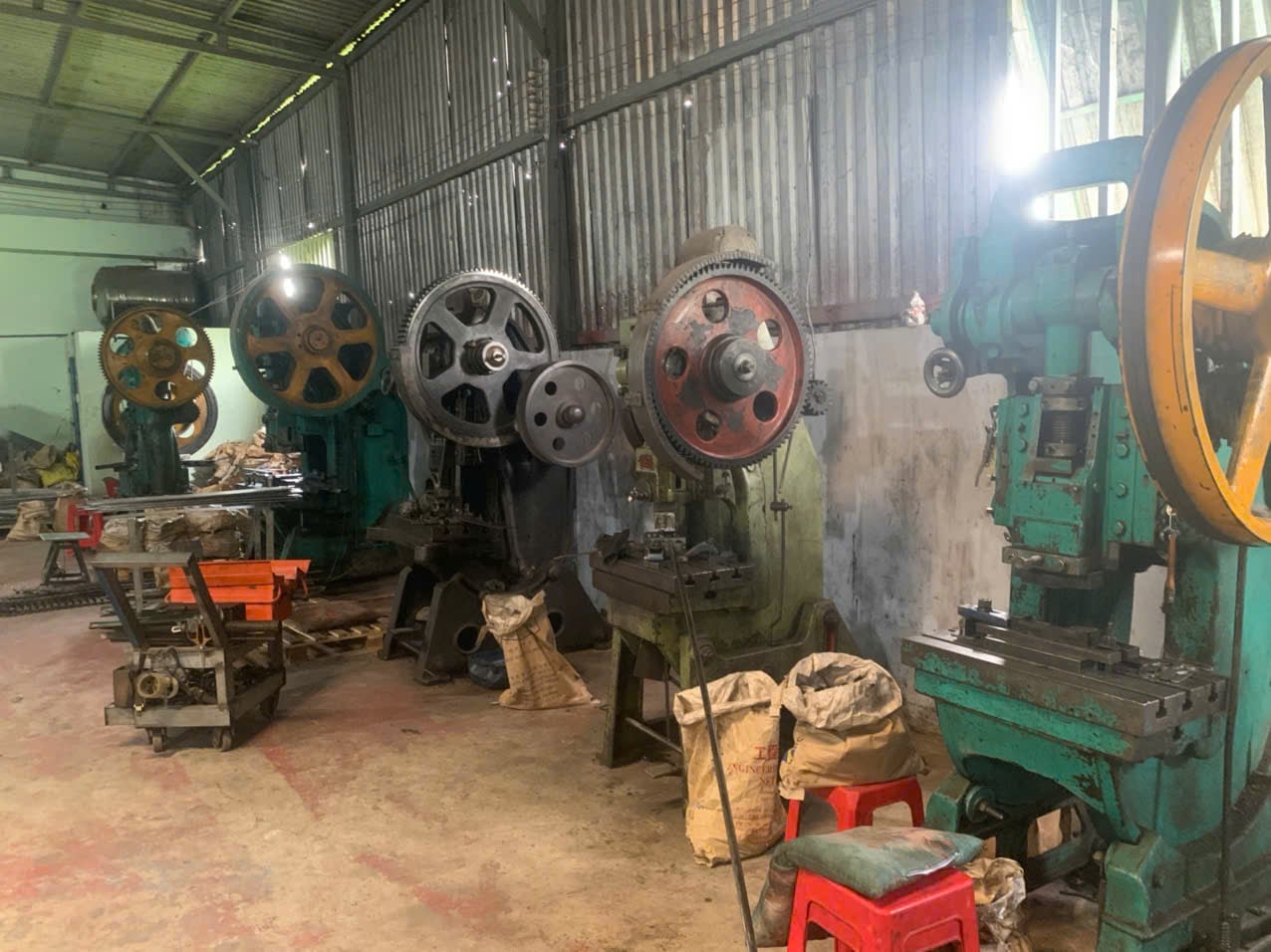
Two practical implications. First, a part that needs only blanking and piercing can often be prototyped by laser cutting with no tooling at all, then transitioned to a stamping die once volumes justify it — a path we cover in our custom metal stamping guide. Second, deep drawing and progressive dies are genuine specialist capabilities: a shop that runs simple blanking tools all day is not automatically qualified to build or run them. Our progressive-die stamping guide goes deeper on that distinction.
What Technical Parameters Drive My Stamping Piece Price?
Three levers move a stamping quote most: press tonnage, material thickness, and tolerance callouts. Thicker, stronger material needs a bigger press and costs more per hit, while every tightened tolerance adds die complexity, maintenance, and inspection time to your piece price.
Press tonnage
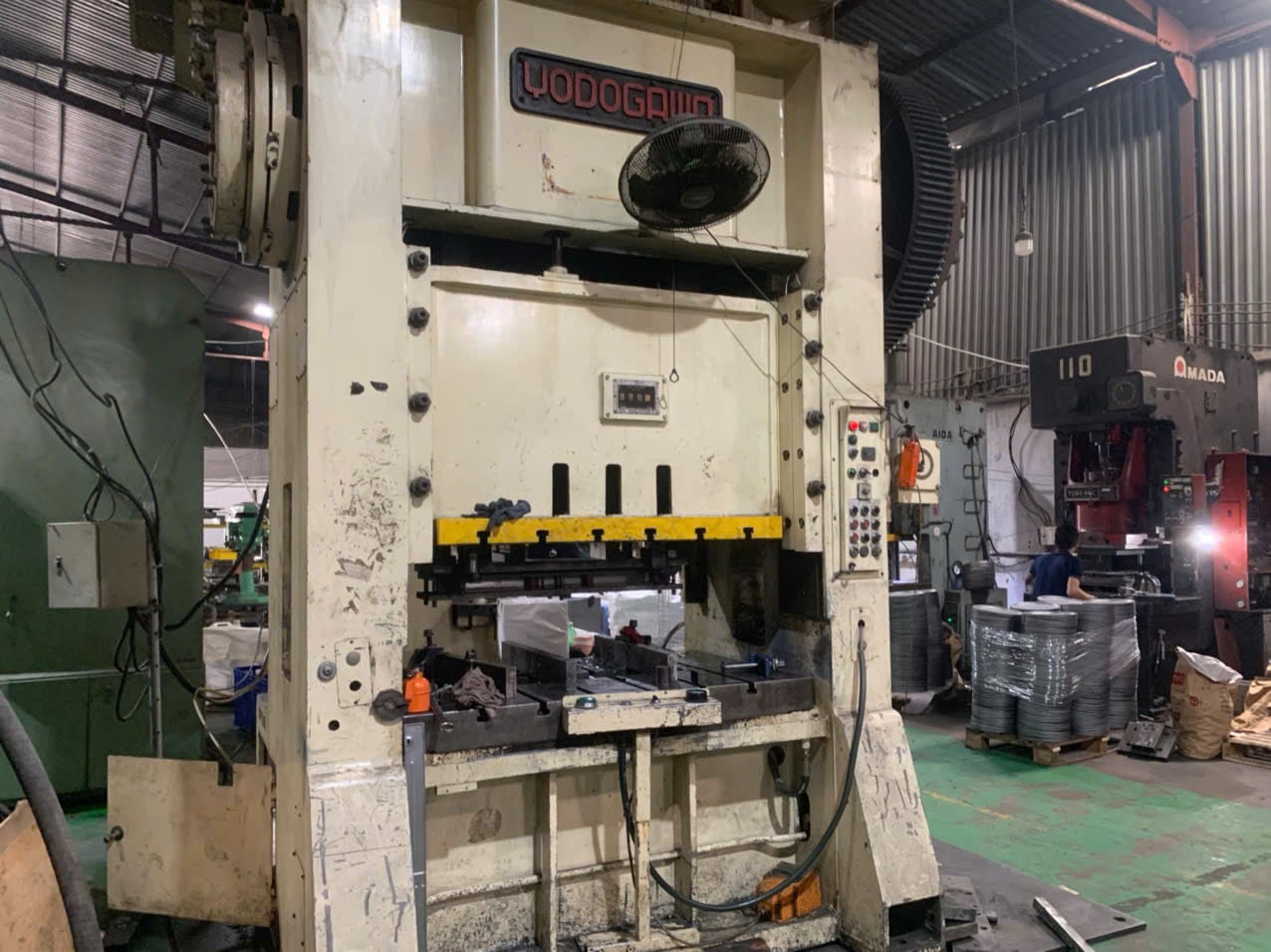
Every stamping quote starts with a tonnage calculation: the force needed to cut or form your part, driven by the cut perimeter, material thickness, and the material’s shear strength. A small connector terminal might need a 25-ton press; a 3 mm high-strength steel bracket can demand 200 tons or more. Tonnage matters to you as a buyer because it determines which suppliers can physically run your part — and because shops price press time by machine size, so a small part quoted on an oversized press carries that machine’s overhead.
Material thickness: the strength-versus-cost trade-off
Sheet thickness is usually the single largest cost input after tooling. Doubling thickness roughly doubles material cost per part, increases required tonnage, accelerates die wear, and can force a step up in press class. Before sending an RFQ, it is worth asking your design team one question: is this thickness structural, or inherited? Many legacy drawings carry 2.0 mm steel where 1.5 mm with a formed stiffening rib would perform identically. A good stamping supplier will flag this in DFM review — one of the reasons supplier engineering capability matters as much as press inventory.
Tolerances
Stamping is precise but not machining. Typical capability from a well-run die: ±0.1 mm on pierced hole diameters and hole-to-hole positions within one station, ±0.2–0.5 mm on formed dimensions across bends, and ±1° on bend angles. Precision progressive dies for terminals and contacts hold considerably tighter, but every tightened callout adds die complexity, maintenance frequency, and inspection time. Specify a general tolerance standard and tighten only the features that mate with something.
How Good Is Vietnam’s Stamping Supplier Base, Really?
The advantages are real. Vietnamese stamping shops benefit from competitive labor and factory overhead, a supply ecosystem built up around Japanese and Korean electronics and motorcycle manufacturing, and — decisive for many US buyers — Vietnamese-origin goods carry $0 in US Section 301 tariffs, unlike China-origin stampings. Vietnam’s 16+ free trade agreements also help buyers shipping to Europe, Japan, and ASEAN markets. In-house die making has matured meaningfully: many export-oriented shops now design and build their own progressive tooling with wire EDM and CNC-machined die components, rather than importing dies.
The risks are equally real. Capability is uneven — the spread between a Tier 1 supplier feeding Japanese OEMs and a domestic-market job shop is enormous, and both will answer your RFQ. Specialty materials (high-strength steels, specific spring tempers, unusual coatings) may need to be imported with longer lead times. And die-making lead times of 4–8 weeks are typical, so program timelines must account for tooling before first articles ever ship. This is why DEWIN gates suppliers through the 50-point Dolphin Audit and routes orders only to factories scoring QCLDM Tier 1–2 — across vetted Vietnamese manufacturing facilities, roughly the top slice of any capability category is genuinely export-ready.
How Do I Evaluate a Stamping Supplier’s Equipment and Automation?
You can learn most of what you need from an equipment list and a walkthrough, if you know what to look for:
- Press inventory and range. Does the tonnage range bracket your parts with headroom? A shop whose biggest press is exactly your calculated tonnage has no margin for material lot variation.
- Mechanical vs. hydraulic vs. servo presses. Mechanical presses dominate high-volume blanking; servo presses signal investment in forming flexibility and energy efficiency; hydraulic presses suit deep drawing.
- Coil feeding and decoilers. Automated coil lines (decoiler, straightener, servo feeder) are the difference between true progressive production and hand-fed sheet work. Hand feeding caps throughput and consistency.
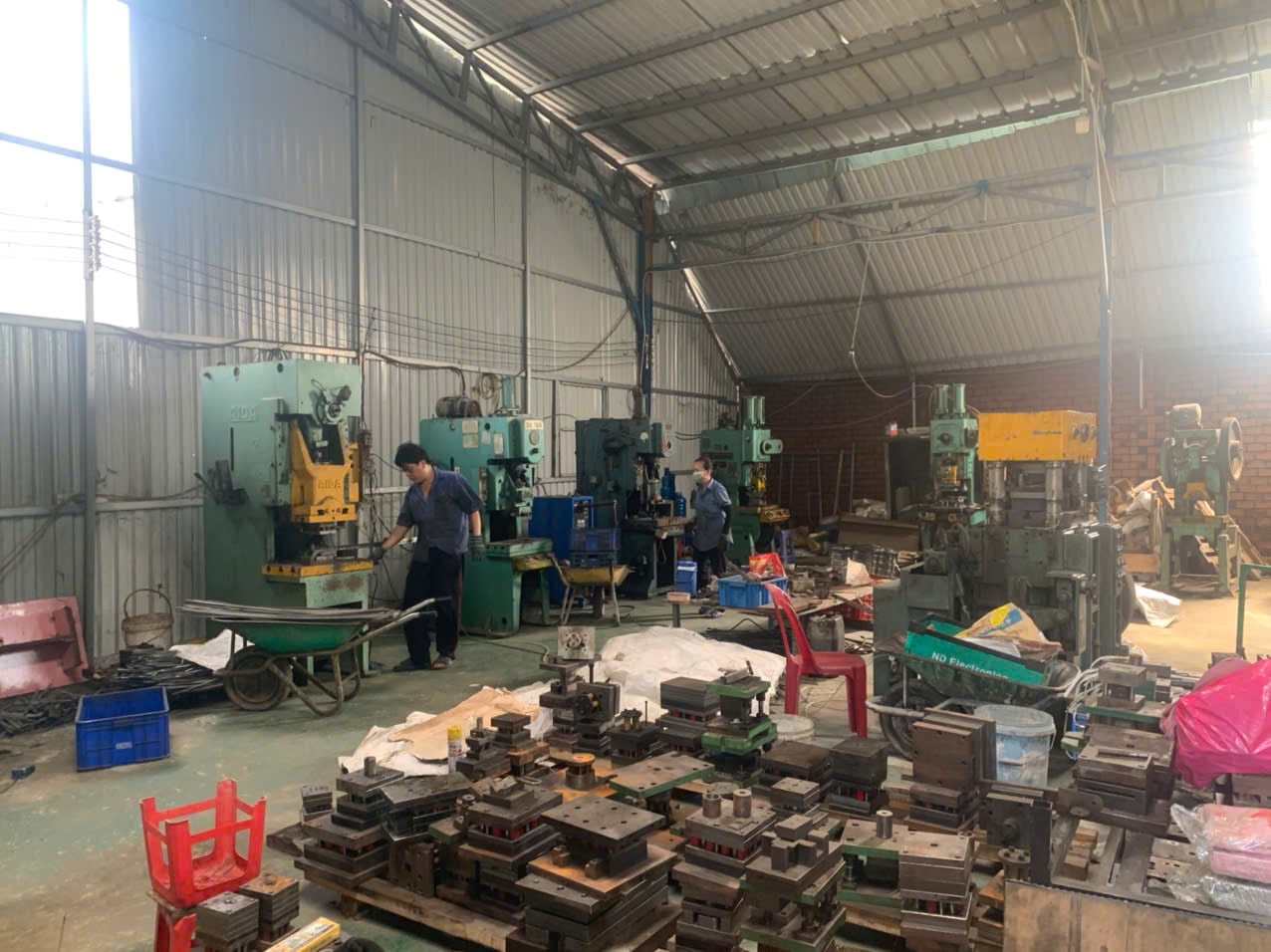
- In-house toolroom. Wire EDM, surface grinders, and CNC milling on site mean dies get maintained and repaired in days, not shipped out for weeks. Ask who built the dies currently in the press.
- Die maintenance discipline. Look for documented hit-count tracking and scheduled sharpening. A die run past its sharpening interval produces burrs long before it produces obvious scrap.
- Downstream integration. Many stamped parts also need bending, welding, tapping, or plating. A supplier who manages those steps — or a sourcing partner who orchestrates them across the wider fabrication ecosystem — removes an entire layer of logistics from your program.
What Order Quantities Make Stamping Economical?
Stamping trades high fixed tooling cost for very low piece cost, so it pays off only once annual volume amortizes the die. Below the break-even — typically the low thousands of pieces for a mid-complexity part — laser cutting plus CNC bending is usually cheaper.
The break-even against a no-tooling process such as laser cutting plus CNC bending is a simple amortization exercise. Typical industry figures for a mid-complexity steel bracket illustrate the shape of the decision:
| Annual Volume | Tooling Amortization per Part (on a typical $12,000 progressive die) | Stamped Piece Price (typical) | Effective Cost per Part | Laser + Bend Alternative |
|---|---|---|---|---|
| 1,000 pcs | $12.00 | $0.60 | $12.60 | ~$4–6 |
| 5,000 pcs | $2.40 | $0.60 | $3.00 | ~$4–6 |
| 25,000 pcs | $0.48 | $0.55 | $1.03 | ~$4–6 |
| 100,000 pcs | $0.12 | $0.50 | $0.62 | ~$4–6 |
The crossover for this example sits in the low thousands of pieces per year; simpler single-station tools cross over earlier, complex progressive dies later. Three buying rules follow. First, quote both routes when your volume is anywhere near the crossover. Second, negotiate die ownership in writing — you paid for the tool; the contract should say you own it and can move it. Third, remember that a die is a multi-year asset: evaluate amortization over the program life, not one PO.
Stamping Sourcing Checklist
Before you commit tooling dollars to any Vietnamese stamping supplier:
- Part classified by process (blanking/piercing, formed, deep drawn, progressive) and tonnage estimated
- Material grade, thickness, and coating confirmed as locally available or priced with import lead time
- General tolerance standard on the drawing; critical features individually toleranced
- Quotes compared for both stamping and no-tooling alternatives at your real annual volume
- Supplier press list, coil-feeding automation, and in-house toolroom verified on site or by audit
- Die ownership, maintenance responsibility, and expected die life written into the tooling contract
- Tooling lead time (typically 4–8 weeks) built into the program schedule
- First-article inspection and production ramp criteria agreed before die build starts
FAQ
What are the main benefits of sourcing metal stamping in vietnam: processes, tooling, costs in Vietnam?
Vietnam offers competitive machine-hour rates, a rapidly modernizing precision supplier ecosystem, relief from Section 301 Chinese punitive tariffs for qualifying goods into the United States, and preferential trade terms under EVFTA and CPTPP. Audited suppliers in the DEWIN network maintain ISO 9001, AS9100, and IATF 16949 certifications.
How does DEWIN ensure quality and dimensional accuracy?
Every manufacturing facility undergoes the rigorous 50-point Dolphin Audit evaluating Quality, Cost, Logistics, Delivery, and Management (QCLDM). Critical dimensions are verified using on-site 3D CMM inspection, optical comparators, and full material test reports (MTRs) before shipment.
What file formats and information are required for a streamlined RFQ turnaround and engineering review?
To generate a binding quotation within 24 hours, submit 3D CAD files in neutral STEP (AP214/AP242) or IGES format alongside 2D PDF technical drawings specifying critical tolerances, surface finishes, thread callouts, and raw material grades.