
If you buy fabricated sheet metal parts — brackets, enclosures, chassis, panels, weldments — and you are evaluating Vietnam as a sourcing destination, this guide breaks down exactly what you are paying for. It is written for procurement engineers and sourcing managers who need to read a quote line by line, benchmark it against market pricing, compare Vietnam against China on a landed-cost basis, and then use design and negotiation levers to bring the number down further.
Sheet metal fabrication in Vietnam is priced from six buckets — material (typically 40–60%), cutting and forming, tooling, welding, finishing, and logistics. Material dominates, so benchmark it by weight and grade, then cut cost through DFM and a landed-cost comparison against China.
Key takeaways:
- Vietnam’s verified partner facility ecosystem provides Tier-1 precision manufacturing with direct engineering transparency and relief from Section 301 Chinese punitive tariffs for qualifying goods.
- Technical documentation must pair 3D models with 2D drawings detailing critical GD&T datums, tolerance limits, and material specs.
- On-site supplier auditing (50-point Dolphin Audit across QCLDM) verifies machinery capacity, CMM metrology, and material traceability.
- Sourcing through DEWIN guarantees Delaware LLC contracting, streamlined RFQ turnaround and engineering review turnaround, and door-to-door DDP logistics.
Key Takeaways
- Material typically represents 40–60% of a fabricated sheet metal part’s cost. If a quote doesn’t itemize material by weight and grade, you can’t benchmark it.
- Vietnam’s shop labor rates typically run $4.50–$6.00/hour versus $6–$9 in China — and Vietnam-origin goods enter the US with relief from Section 301 Chinese punitive tariffs for qualifying goods, versus 25% on many China-origin fabrications.
- The biggest savings rarely come from negotiation. They come from DFM: fewer bends, standard gauges, relaxed non-critical tolerances, and consolidating hardware.
- A structured annual cost-reduction roadmap (2–5% per year, tied to volume commitments) outperforms one-off price battles and keeps the supplier relationship healthy.
What Makes Up the Cost of a Fabricated Sheet Metal Part?
Every sheet metal quote — whether from Vietnam, China, or a domestic shop — decomposes into the same six buckets. Understanding the typical weighting tells you where to push.
Material is the single biggest driver, typically 40–60% of unit cost, so a supplier’s steel-buying power and nesting software matter more than their hourly rate. Small-batch orders also carry heavy setup amortization, which is why 200-piece and 5,000-piece prices differ so sharply.
| Cost bucket | Typical share of unit cost | What drives it |
|---|---|---|
| Raw material | 40–60% | Sheet grade, gauge, nesting efficiency, scrap rate, mill price volatility |
| Cutting & forming labor/machine time | 15–25% | Cut length, pierce count, number of bends, setup time amortization |
| Tooling & fixtures | 0–15% | Hard tooling for stamping, press brake tooling, weld fixtures |
| Welding & assembly | 0–20% | Weld length, fit-up complexity, hardware insertion |
| Finishing | 5–15% | Powder coat, plating, anodizing, masking requirements |
| Packaging & logistics | 5–12% | Export packaging, ocean/air freight, duties, inland transport |
Two practical implications. First, because material dominates, a supplier’s steel purchasing power and nesting software matter more than their hourly rate. Second, small-batch orders are punished by setup amortization: a part that costs $8 at 5,000 pieces can easily quote at $19 at 200 pieces, and neither number is “wrong.”
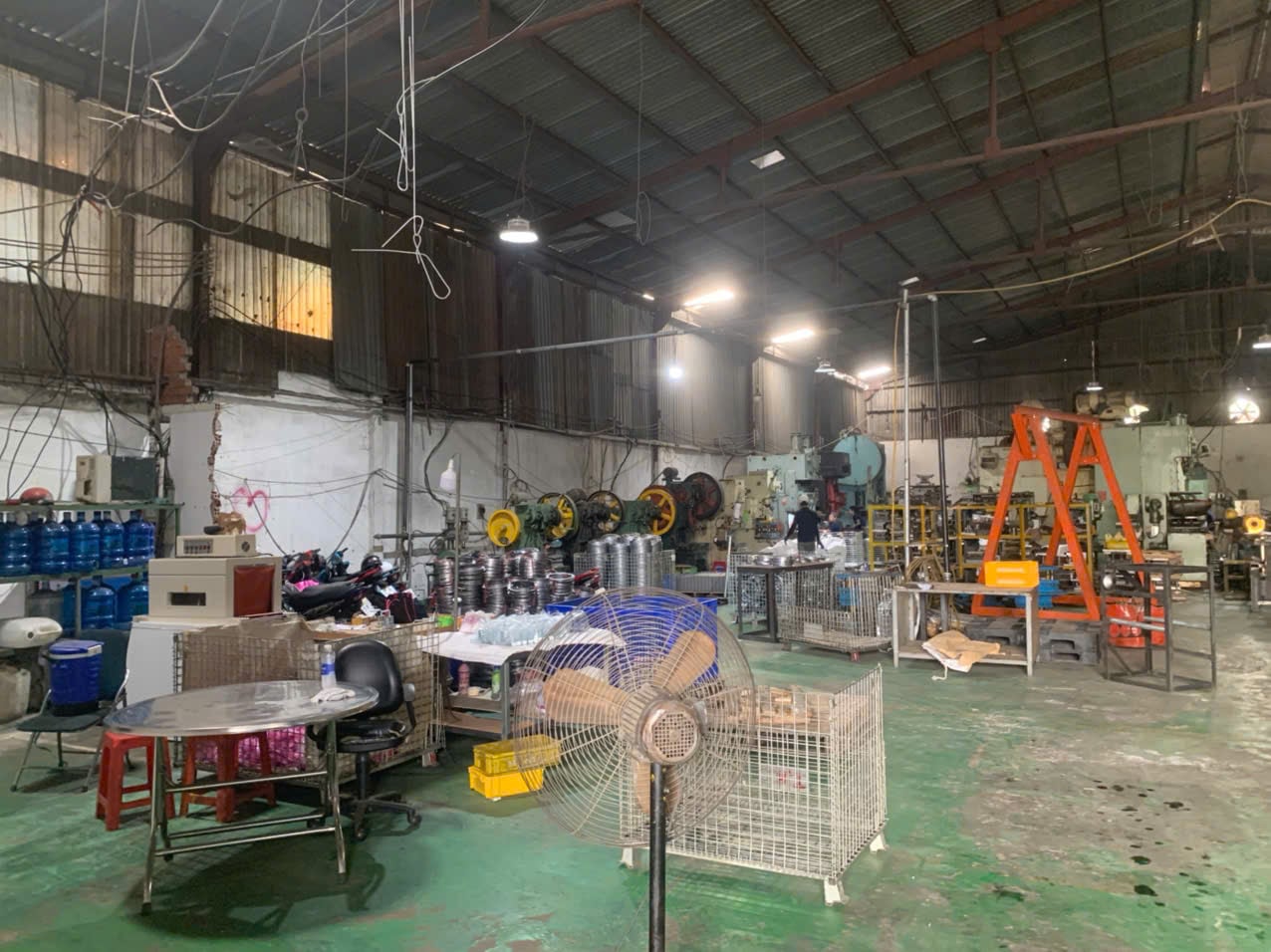
For a deeper dive into how Vietnamese factories build up quotes across processes, see our manufacturing cost guide.
How Do I Benchmark a Quote Against Market Pricing?
A quote you can’t decompose is a quote you can’t negotiate. Before comparing suppliers, normalize every quote to the same structure:
Normalize every quote to the same structure before comparing: check material cost against blank weight times market grade price, sanity-check cycle time against the shop rate, demand tooling and setup as separate one-time lines, and price finishing per square meter of coated surface.
- Material cost check. Weight of the flat blank (including scrap allowance) × market price for that grade. Cold-rolled steel, stainless 304, and 5052 aluminum all have published regional prices. If the implied material price is more than ~15% above market, ask why.
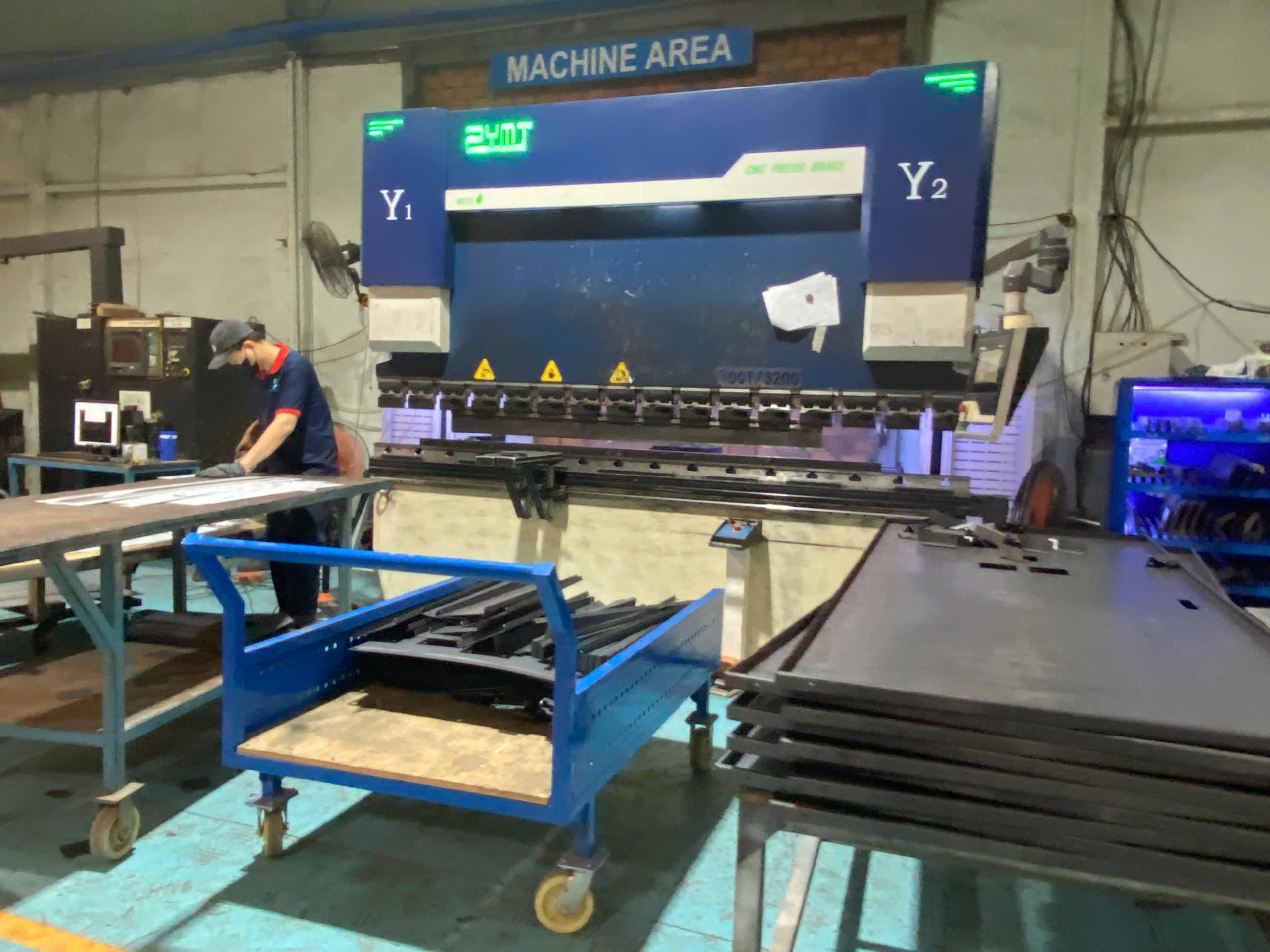
- Cycle-time sanity check. A fiber laser cuts thin mild steel at high speed; a CNC press brake bend takes roughly 10–30 seconds including handling. Multiply estimated minutes by the shop rate ($15–$30/hour fully burdened machine rate is typical in Vietnam) and compare against the labor line.
- Amortization transparency. Ask for tooling, programming, and setup as separate line items, quoted once — not buried in piece price. This lets you re-run the math at different volumes.
- Finishing per square meter. Powder coating in Vietnam typically quotes per square meter of coated surface. If your part is quoted per piece, back-calculate.
When you request quotes through DEWIN’s instant quote system, we return itemized pricing within 24 hours specifically so this decomposition is possible — and so you can compare it against your incumbent’s numbers line by line. Our instant quoting portal gives you a directional benchmark before you even upload drawings.
Vietnam vs China: Is Landed Cost or Unit Price the Right Comparison?
Ex-works unit price is the wrong number to compare. What matters is landed cost: unit price + tooling amortization + freight + duties + tariffs + the cost of cash tied up in transit.
Compare landed cost, not ex-works unit price. Vietnam’s labor runs roughly $4.50–$6.00/hour versus $6–$9 in China, and Vietnam-origin parts enter the US with relief from Section 301 Chinese punitive tariffs for qualifying goods versus 25% on many China-origin goods — a gap that appears only in the landed number.
Here is where the comparison has structurally shifted:
- Labor: Vietnamese fabrication labor typically runs $4.50–$6.00/hour versus $6–$9/hour in coastal China. On labor-heavy weldments and assemblies, this gap compounds.
- Tariffs: Vietnam-origin fabricated metal parts enter the US with relief from Section 301 Chinese punitive tariffs for qualifying goods. Many equivalent China-origin goods carry a 25% Section 301 tariff on top of base duty. On a $100,000 annual part spend, that is $25,000 of pure tariff exposure that disappears with a Vietnam-origin supply chain — before any unit-price difference.
- Trade agreements: Vietnam participates in 16+ free trade agreements, including CPTPP, EVFTA, and RCEP, which matters if you also sell into Europe, Japan, Canada, or Australia.
- Unit pricing: Even before tariffs, Vietnamese quotes on typical sheet metal work come in around 20–40% below comparable China pricing in our experience — though China retains advantages in exotic material availability and very deep tooling ecosystems.
The honest caveats: China’s raw material supply chain is deeper, and for parts requiring unusual alloys or extremely complex progressive dies, Chinese suppliers may still quote faster or lower. Run the comparison per part family, not as an ideology. Our detailed Vietnam vs China manufacturing comparison and our analysis of US–China tariffs and the Vietnam alternative cover the decision framework in depth.
Which Design Changes Reduce Cost the Most?
DFM is the highest-leverage cost tool you own, because it reduces the supplier’s actual cost rather than just their margin. The changes below are ranked roughly by typical impact:
The highest-impact DFM moves are standardizing gauges and grades, reducing bend count, relaxing non-critical tolerances, designing for standard tooling and hardware, improving nesting geometry, and specifying finish by function. Each lowers the factory’s real cost, not just its margin.
- Standardize gauges and grades. Every additional material/thickness combination adds a sheet inventory line and worse nesting. Consolidating a product family from six gauges to three routinely cuts material cost 5–10%.
- Reduce bend count. Each bend adds handling time and tolerance stack-up. Ask whether two bent parts can become one, or whether a bend can be replaced by a welded tab — bending is cheap, but not free.
- Relax non-critical tolerances. ±0.1 mm on a laser-cut hole is standard; ±0.05 mm triggers secondary operations. Tolerance callouts tighter than function requires are the most common self-inflicted cost we see on US drawings.
- Design for standard tooling. Use common bend radii (equal to material thickness), standard hole sizes, and hardware from the PEM catalog rather than custom inserts.
- Nest-friendly geometry. Rectangular-ish blanks nest better than sprawling L-shapes. A 10% nesting improvement flows almost directly to a 4–6% part cost reduction on material-heavy parts.
- Specify finish by function. “Powder coat, RAL 7035, 60–80 µm, exterior surfaces only” is cheaper than “coat everything” with masking callouts added later.
A good Vietnamese fabricator will run this review with you. All 179+ factories in the DEWIN network have passed our 50-point Dolphin Audit, which includes verifying that engineering staff can execute DFM feedback in English on your drawings — see our sheet metal fabrication service page for capability details.
How Do I Negotiate an Annual Cost-Reduction Roadmap?
Mature buyers don’t grind suppliers on every PO. They negotiate a roadmap:
- Year 1: Land the business at a fair benchmarked price. Fund tooling openly. Agree on a material price index (e.g., regional CRC steel price) so raw material moves pass through transparently in both directions.
- Years 2–3: Commit to volume bands in exchange for 2–5% annual productivity givebacks. Tie specific givebacks to specific projects: a nesting improvement, a fixture that cuts weld time, moving a part from laser-plus-bend to a stamped design at volume.
- Ongoing: Hold quarterly cost reviews where the supplier proposes DFM ideas and shares the saving 50/50 for the first year. This makes cost-down the supplier’s project, not a fight.
This structure works particularly well in Vietnam, where factories are actively investing in automation and want anchor customers to justify equipment purchases. Contracting through DEWIN’s US Delaware LLC also means your cost-reduction agreement is enforceable under US law with DDP delivery — the supplier relationship is managed for you.
Quote Review Checklist
Before accepting any sheet metal quote, confirm:
- Material grade, gauge, and weight itemized separately
- Tooling, programming, and setup quoted as one-time line items
- Piece price quoted at 2–3 volume breaks
- Finishing spec (coating type, thickness, color, coverage) explicit
- Tolerance assumptions stated (ask which callouts drove cost)
- Incoterm and packaging spec defined (EXW/FOB/DDP)
- Lead time for first article vs repeat production stated
- Price validity period and material surcharge mechanism agreed
FAQ
What are the main benefits of sourcing sheet metal fabrication costs in vietnam: price drivers in Vietnam?
Vietnam offers competitive machine-hour rates, a rapidly modernizing precision supplier ecosystem, relief from Section 301 Chinese punitive tariffs for qualifying goods into the United States, and preferential trade terms under EVFTA and CPTPP. Audited suppliers in the DEWIN network maintain ISO 9001, AS9100, and IATF 16949 certifications.
How does DEWIN ensure quality and dimensional accuracy?
Every manufacturing facility undergoes the rigorous 50-point Dolphin Audit evaluating Quality, Cost, Logistics, Delivery, and Management (QCLDM). Critical dimensions are verified using on-site 3D CMM inspection, optical comparators, and full material test reports (MTRs) before shipment.
What file formats and information are required for a streamlined RFQ turnaround and engineering review?
To generate a binding quotation within 24 hours, submit 3D CAD files in neutral STEP (AP214/AP242) or IGES format alongside 2D PDF technical drawings specifying critical tolerances, surface finishes, thread callouts, and raw material grades.